




Missed Calls Leave $44,800 per Physician on the Table. Here's How Specialty Practices Capture It.
Specialty practices miss 18% of patient calls in office hours and 81% after hours. See the cost per physician and how voice AI books every call.

A voice agent that confirms an appointment but never writes to the EHR is just a polite way to create more work. The confirmation felt complete. The record didn't change. Understanding exactly where that breaks down, and how to prevent it, makes the difference between a system that resolves calls and one that just deflects them.
TLDR:
"We integrate with your EHR" is something nearly every voice AI vendor will tell you. What it means varies wildly.
Read-only integration lets an agent pull data during a call: check existing appointments, confirm provider availability, verify a name. Useful, but incomplete. When the call ends, someone on your staff still has to open the EHR and do the actual work.
Read-write integration closes that loop. The agent commits structured outcomes directly back to the EHR: a booked appointment, an updated insurance field, a flagged follow-up task. As covered in the AI voice agents for healthcare guide, bidirectional data flow is what separates agents that resolve calls from those that merely deflect them. As one assessment of real EHR integration puts it, without bidirectional data flow, voice AI can add another queue for staff to work instead of eliminating one.
That distinction is where accuracy risk begins.
When a voice agent books an appointment, the data doesn't travel through the conversation itself. It moves through a structured API call made during or immediately after the call.
The typical path works like this:
Every write is a discrete, logged API transaction. That matters because errors are traceable, not hidden inside someone's manual entry at 4 pm. Different voice AI systems for patient call automation handle this traceability requirement differently.
This breaks down at the payload level. If the agent extracts the wrong provider ID, maps insurance to the wrong field, or misreads an available slot, the API call succeeds, and the wrong data lands cleanly in the EHR. The integration worked. The booking didn't.
Most EHR write errors aren't random. They cluster around a few predictable failure points:
In each case, the agent acted on incomplete or misrouted context. The API accepted the payload. The wrong data landed cleanly.
| Read-Only Integration | Read-Write Integration | |
|---|---|---|
| What the agent can do | Pull data, confirm availability, answer questions | Book appointments, update insurance fields, flag follow-up tasks |
| EHR write-back | No; agent collects intent only | Yes; structured API call commits data during the call |
| Staff work after the call | Yes; staff must open EHR and complete every booking manually | Minimal; transaction completes during the call |
| Call outcome | Deflected (reduced hold time, not reduced work) | Resolved (task completed, record updated) |
| Error traceability | Errors occur at manual staff entry, harder to trace | Every write is a discrete, logged API transaction |
A read-only agent can answer questions and collect information, but it cannot act on any of it.
For a front-desk team, that difference is felt immediately. Every call the agent handles still generates a task: open the EHR, find the patient record, enter the appointment, update the field. The agent reduced hold time. It did not reduce the work.
Read-write changes the unit of value. The agent completes the transaction directly inside the workflow, not by handing a completed conversation off to staff to finish. The EHR write happens during the call, not after it.
That's the line between a voice agent that deflects calls and one that resolves them.
Without the right architecture, a voice agent can say "you're all set for Tuesday at 2 pm" while the EHR has no record of that appointment. That gap is a real liability.
Tool calling closes it. Instead of generating a confirmation response freely, the agent routes every booking action through a structured call to the EHR's API. The EHR either confirms the write or returns an error. The agent generates its response only after that confirmation comes back. If the write fails, the agent cannot confirm a booking that didn't happen.
When vetting vendors, ask: does the agent's confirmation depend on the EHR's return state, or on what the agent believes happened? Those are not the same thing.
Of all the EHR write categories, insurance selection generates the most documented errors in production AI scheduling deployments. The reason is structural: appointment slots map to a finite set of available times, but insurance fields require the agent to correctly distinguish plan type, carrier, coverage tier, and sometimes payer-specific routing rules before writing anything.
Workers' compensation fields and standard medical insurance fields often sit adjacently in the EHR schema. An agent that misreads a payer name or plan code can route data to the wrong field, and the write succeeds without an error flag. Staff finds it later, or they don't.
HMO plans may require referral verification before confirming a slot. If the agent selects a slot before that check completes, the appointment lands against a plan that may not authorize the visit. The range of AI insurance verification tools varies widely in how they sequence this check. The booking looks clean. The authorization isn't.
The fix is sequencing: insurance verification has to run before slot confirmation, not after. Agents that confirm a time first and check eligibility second are writing appointments that may need to be unwound.
Generative AI agents can produce fluent, confident responses based on patterns learned during training. The scheduling problem is that those patterns don't update when a provider's schedule changes, a plan gets dropped, or an insurance rule changes. An agent working from model memory can quote availability that expired two weeks ago.
Retrieval grounding swaps that out. Before generating any response about an available slot or provider rule, the agent queries the EHR directly for current data. The response is built from what the system returns, not from what the model assumes is still true. If a slot isn't there, the agent can't offer it.
This differs from a scripted response library, which pre-loads a fixed set of answers at setup and can go stale the same way model memory does. Retrieval grounding pulls live at call time, so the agent always works against the schedule's current state. The scheduling accuracy payoff is direct: the agent cannot confirm a provider, time, or insurance-covered appointment type that the EHR doesn't recognize as available at that moment.
Voice AI deflection rates in healthcare tell you how many calls the agent finished. Action correctness tells you whether the agent did the right thing.
The distinction matters because a call can complete at a 90% rate while the underlying EHR writes contain errors on a meaningful share of those completions. Deflection counts the agent finishing the conversation. Action correctness tracks whether the structured outcome committed to the EHR matched what the patient actually requested, with zero input data errors.
When reviewing vendors, ask directly: what is your current right action accuracy rate, and what does it include? The primary error buckets to probe are insurance selection, new patient registration, and provider assignment. Those three categories account for most documented write failures in production deployments. A vendor who answers with a current number broken down by error type has an accuracy monitoring system. One who offers deflection rate as a proxy probably does not, a distinction worth keeping in mind when assessing AI-based call center solutions for healthcare.
A layered accuracy control system works in three stages.
Real-time error gates run during the API transaction itself, validating the payload against expected field types, required values, and payer routing rules before the write commits. If validation fails, the gate blocks the write and the agent either attempts correction in-call or transfers to staff. In production, this blocking layer intercepts 7.7% of EHR write attempts at first pass; 2.7% of those blocked attempts require a staff transfer when the error can't be resolved during the call (based on Prosper AI's customer deployment data).
Above that layer sits a flagged-call dashboard that surfaces accuracy issues to scheduling managers for selective review. Staff audit only the calls the system has already identified as higher-risk. LLM-based audits then run across call recordings to catch failure patterns the gate layer missed, an approach that healthcare voice AI practice leaders are increasingly requiring from vendors, giving quality assurance teams a second pass without manual review of full call logs.
The practical question for vendor evaluation: is error interception happening before the EHR write, or after? Post-call correction means the wrong data already landed and staff is cleaning it up. Pre-write gates mean the error never reaches the record.
Five questions cut through most vendor claims quickly:
As Deepgram's clinical deployment analysis notes, production clinical audio exposes accuracy problems that demos don't surface. Integration that looks complete in a controlled environment often reveals field-routing and sequencing gaps under real call volume. Ask for production error rates, not demo performance.
Prosper AI's right-gates framework intercepts EHR write errors before they reach the record. In production, that reduced hallucinated EHR writes from 10% to 1% (figures detailed in the accuracy monitoring section above).
A hallucination detector runs as a real-time quality control layer, flagging responses not grounded in live EHR or practice knowledge before generating a confirmation. Insurance verification runs before slot confirmation: the system attempts payer API verification first, then places outbound calls to the insurer for cases the API can't resolve. Appointments don't get confirmed until eligibility is known, which cuts the class of errors where a booking looks clean but authorization isn't there. Action correctness tracking gives scheduling managers a current error-rate number broken down by failure type across 80+ EHR connections.
Deflection rate is the easiest number for a vendor to show you, and the least useful one for predicting whether your EHR data stays clean. The questions that cut through are about write-back scope, action correctness by error type, and what happens when a write fails mid-call. Talk to Prosper AI if you want those answers tied to real production numbers.
Prosper AI sequences eligibility verification before slot confirmation: the system attempts payer API verification first, then places outbound calls directly to the insurer for cases the API cannot resolve. Appointments are confirmed only after eligibility is known, reducing errors where a booking looks clean, but authorization is missing. A real-time error-gate layer blocks write attempts at first pass when validation fails, routing those that cannot be corrected in-call to staff (see the accuracy monitoring section for production figures).
Ask vendors for their current action correctness rate broken down by error type, not deflection rate. Deflection counts calls the agent finished; action correctness tracks whether the structured outcome committed to the EHR matched what the patient actually requested, with zero input data errors. The primary error buckets to probe are insurance selection, new patient registration, and provider assignment. Those three categories account for most documented write failures in production deployments. A vendor that answers with a current number segmented by failure type likely has an accuracy monitoring system; one that offers deflection rate as a substitute answer likely does not.
EHR write-back is a voice agent's ability to commit structured outcomes (booked appointments, insurance field updates, flagged follow-up tasks) directly to the EHR during the call, instead of handing a completed conversation to staff to finish manually. Without it, every resolved call still generates a staff task, and the agent reduces hold time without reducing the work. Write-back is also where accuracy risk concentrates: a successful API call can land the wrong data cleanly into the record if the agent extracted an incorrect provider ID, misrouted an insurance field, or confirmed a slot before eligibility returned.
See the due-diligence checklist above for the five questions, with context on acceptable vendor answers. A vendor with production-grade accuracy controls will have specific answers to all five; a vendor without them will redirect to deflection rate or demo performance, neither of which reflects what happens under real call volume.
A read-only agent can pull available slots and collect patient intent, but every call still generates a manual staff task to open the EHR and complete the booking. Prosper AI's read-write integration commits the appointment, insurance update, or follow-up task directly to the EHR during the call through structured API tool calls, so the agent's confirmation depends on the EHR's return state, not on what the agent believes happened. That architectural difference separates call deflection from call resolution, and it determines whether scheduling accuracy is controlled at the write layer or left to staff to catch after the fact.
Discover how healthcare teams are transforming patient access with Prosper.
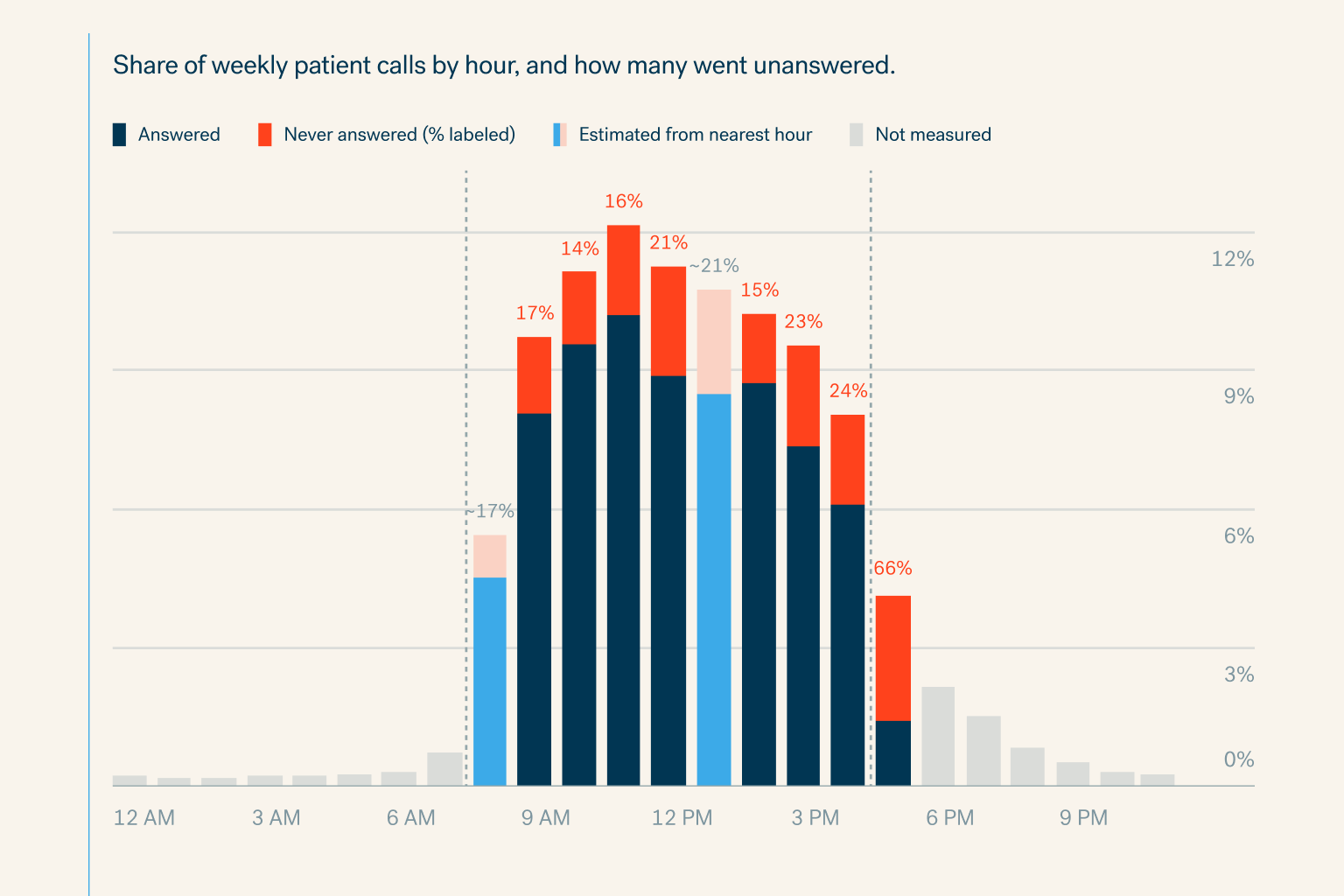
Specialty practices miss 18% of patient calls in office hours and 81% after hours. See the cost per physician and how voice AI books every call.
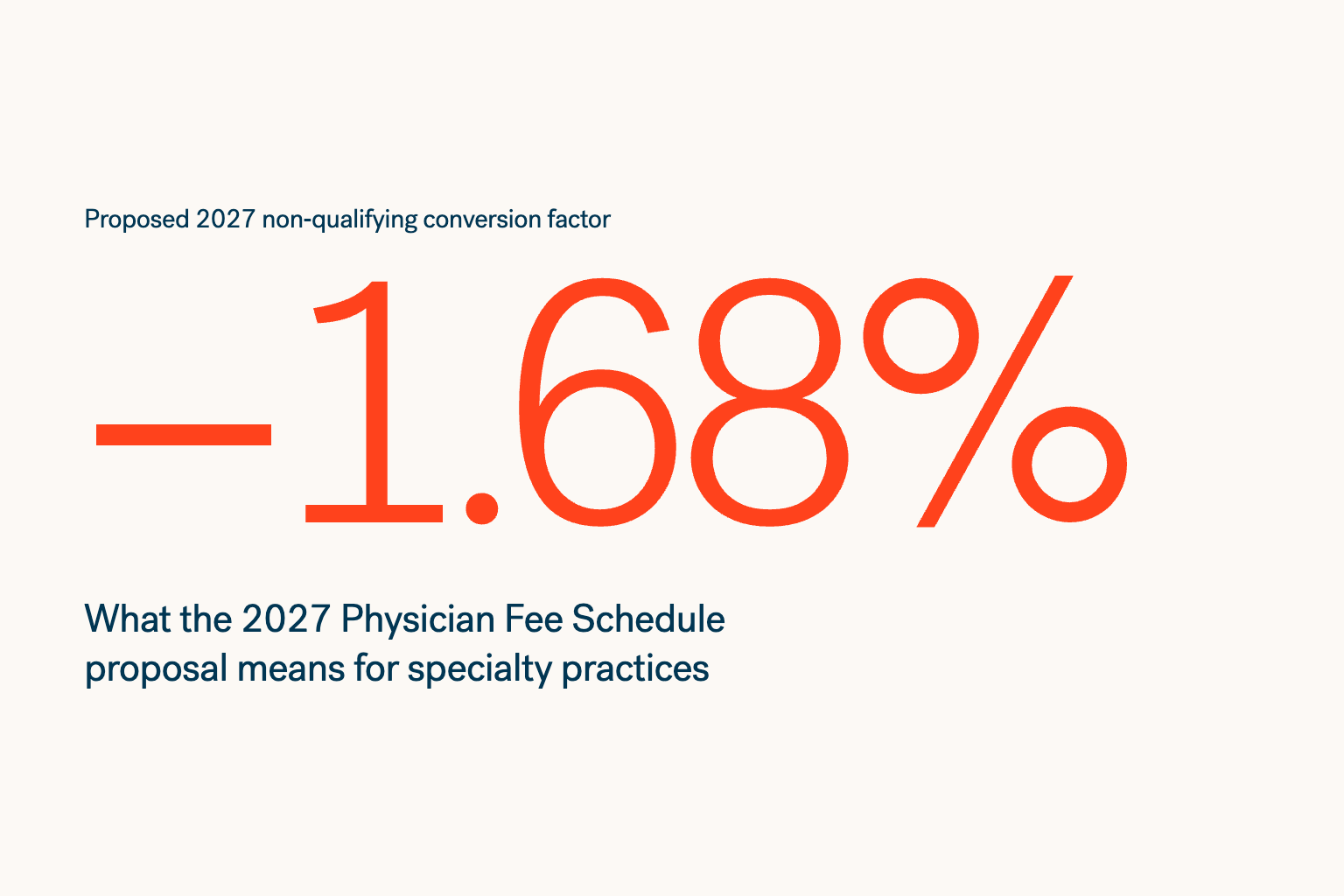
CMS proposes 2027 Medicare conversion factors down 1.19% to 1.68%. See the impact on specialty practices and the revenue levers you still control.
New research quantifies four ways AI can help specialty practices reach more patients, and get paid for the care they deliver—with an annual opportuni


