


Healthcare Call Center Metrics: Benchmarks and Cost per Call for Specialty Practices
Track 7 healthcare call center metrics for your specialty practice. Get abandonment, wait time, and cost per call benchmarks and how to improve them.

An AI voice agent for health systems and medical groups answers patient calls, schedules appointments, verifies insurance, and handles billing questions by phone, around the clock. Prosper builds AI voice agents as part of an AI workforce for patient access and revenue cycle management (RCM), not as a bot or an IVR system bolted onto an old phone tree.
The problem it solves starts at the front desk: when phones go unanswered, practices lose booked visits and the revenue that comes with them. The payoff shows up downstream, in RCM: every call an AI voice agent resolves at the front door is a step toward a financially cleared visit, with benefits verified and balances addressed before or at the time of care.
Quick answer: AI voice agents are part of Prosper's AI workforce for patient access and RCM. They answer calls, schedule and reschedule visits, verify insurance, handle billing questions, and manage refill requests, all connected to the EHR. The result is fewer missed calls, fewer no-shows, and more visits that reach financially cleared status before the patient walks in. One customer, Arkansas Pediatrics, automated 65%+ of calls with AI and saved 120+ hours monthly with Prosper.
Patient access is every point where a patient tries to reach a practice by phone, and it is where most financially cleared visits either start or stall. A clunky, frustrating experience can color their entire perception of care. AI voice agents for healthcare directly tackle these front door challenges.
For many clinics, over 50% of incoming calls are purely for appointment scheduling. Yet, during busy times, up to 20% of these calls go unanswered, which can mean hundreds of dollars in lost revenue per missed call. An AI scheduling assistant eliminates this problem entirely. It can:
One leading telehealth provider saw a 30% drop in administrative call volume after bringing in an AI assistant, freeing up their team for more complex patient needs.
Continuity of care doesn’t stop when a patient leaves the clinic. AI voice agents are perfect for handling outbound calls that keep patients engaged and deliver personalized care.
By automating these routine touchpoints, organizations like a Northeast GI group were able to handle over 50% of their scheduling backlog within weeks, dramatically improving patient access.
Ultimately, these improvements lead to a much better patient experience. When patients can reach the office immediately, schedule appointments on their first try, and receive helpful reminders, their satisfaction soars. An AI assistant ensures every caller is treated with consistent politeness and efficiency, which can reduce the frustration that often leads to negative online reviews and patient churn. One OB/GYN practice even reported an 89% drop in call abandonment after implementing an AI scheduler, a clear sign that patients were getting the help they needed without the wait.
Revenue cycle management (RCM) covers the steps a practice takes to verify coverage, bill accurately, and collect payment, and AI voice agents can run these steps by phone without adding staff. These are the repetitive, time consuming tasks that are essential for a provider’s financial health.
Manually verifying insurance can take staff 20 to 30 minutes per call, navigating confusing phone menus and waiting on hold. Billing questions are another major source of call volume, as patients are often confused by complex statements. This is an area where medical billing teams see immediate relief. An **AI voice agents healthcare** solution can automate these workflows entirely.
A significant number of calls to any practice are for prescription refills. An AI agent can handle the majority of these requests by verifying the patient’s identity, checking their record for an active prescription, and submitting the refill request to the pharmacy, all in a single, quick conversation. This frees up nurses and medical assistants from a task that can easily consume hours of their day.
The return on investment (ROI) for AI voice agents healthcare is compelling. The savings come from multiple areas:
Prosper AI's 2026 Growth Report sizes the opportunity at about $125,000 per physician per year across four levers: missed calls ($44,800), patient re-engagement ($37,400), avoidable denials ($28,500), and patient balances ($14,100). One customer, Arkansas Pediatrics, automated 65%+ of calls with AI and saved 120+ hours monthly with Prosper.
Care management calls, like medication check-ins and chronic disease monitoring, extend an AI voice agent's role beyond scheduling and billing into ongoing patient engagement.
For patients with conditions like diabetes or hypertension, regular check ins are vital.
With a growing need for mental health services, AI voice agents offer a scalable way to provide initial support and bridge gaps in care. They can conduct automated mental health screenings, offer empathetic check ins, and guide patients to the right resources, all while ensuring 24/7 availability. This helps reduce the workload on therapists, allowing them to focus on more complex cases.
Collecting patient reported outcome measures (PROMs) is crucial for understanding treatment effectiveness from the patient’s perspective, but it can be a manual and time consuming process. AI voice agents can automate this by calling patients to administer standardized surveys. This method improves data accuracy by reducing entry errors and makes it easier for patients who may have vision impairments or limited digital literacy to participate.
The technology that makes an AI voice agent usable in a clinical setting combines EHR integration, low-latency conversation, and configurable workflows.
For an AI agent to be truly effective, it must connect with the systems a clinic already uses.
The goal is a conversation that feels fluid, not robotic. Several key technologies make this possible.
Trust in an AI voice agent depends on clear disclosure, a documented escalation path to a human, and equitable performance across accents, languages, and abilities.
For patients to trust AI, they need to understand its role. It’s essential to be transparent and obtain clear patient consent before an interaction begins. This involves informing the patient they are speaking with an AI agent and explaining how their data will be used. Providing patients with a clear option to opt out or transfer to a human at any time is a fundamental part of building and maintaining trust.
For technology to be effective, it must work for the entire patient population. This requires a conscious effort to promote equity and accessibility.
Trust is the bedrock of healthcare. While some patients are wary of AI making clinical decisions, surveys show that 72% are comfortable using it for routine tasks like scheduling and reminders. Trust is built through transparency (knowing you’re talking to an AI), reliability (the AI gets the job done correctly), and having a clear path to a human when needed. When AI voice agents eliminate hold times and make communication easier, they can actually increase a patient’s trust and engagement with their provider.
Deploying an AI voice agent well requires clinical validation, regulatory awareness, and a plan for how front-desk and billing staff work alongside it.
AI is designed to augment human staff, not replace them entirely. This creates a powerful partnership.
What tasks can AI voice agents healthcare systems handle?
They can answer calls, schedule and reschedule appointments, verify insurance, answer billing questions, process prescription refill requests, and send reminders and follow-up calls, all tied to the practice's EHR.
Are AI voice agents in healthcare HIPAA compliant?
Prosper's AI voice agents operate under a Business Associate Agreement and use encryption, access controls, and audit trails to protect patient information.
How do AI voice agents improve the patient experience?
By answering calls immediately and verifying coverage before the visit, AI voice agents reduce missed calls and incomplete registrations, two of the most common reasons a visit is not financially cleared before the patient arrives.
What is the typical ROI for implementing AI voice agents?
The ROI is often significant and can be realized within 6 to 12 months. Savings come from reduced labor costs in call centers, increased revenue from fewer no shows and more filled appointment slots, and improved collections from automated billing and denial follow up processes.
How do you ensure AI voice agents understand patients with different accents?
Prosper tests its voice agents against diverse accents, dialects, and age groups, and offers multilingual support so patients can be served in their preferred language.
Can AI voice agents be used for sensitive topics like mental health?
The agent escalates the call to a staff member or clinician immediately, without putting the patient on hold or ending the call.
Every unanswered call, every unverified benefit, and every uncollected balance is a visit that did not get financially cleared, and revenue a practice does not see. Prosper's AI voice agents close that gap by handling patient access and RCM as one connected workflow, not two separate problems.
Schedule a demo with Prosper AI to see how an AI workforce can help your practice turn more calls into financially cleared visits.
Discover how healthcare teams are transforming patient access with Prosper.

Track 7 healthcare call center metrics for your specialty practice. Get abandonment, wait time, and cost per call benchmarks and how to improve them.
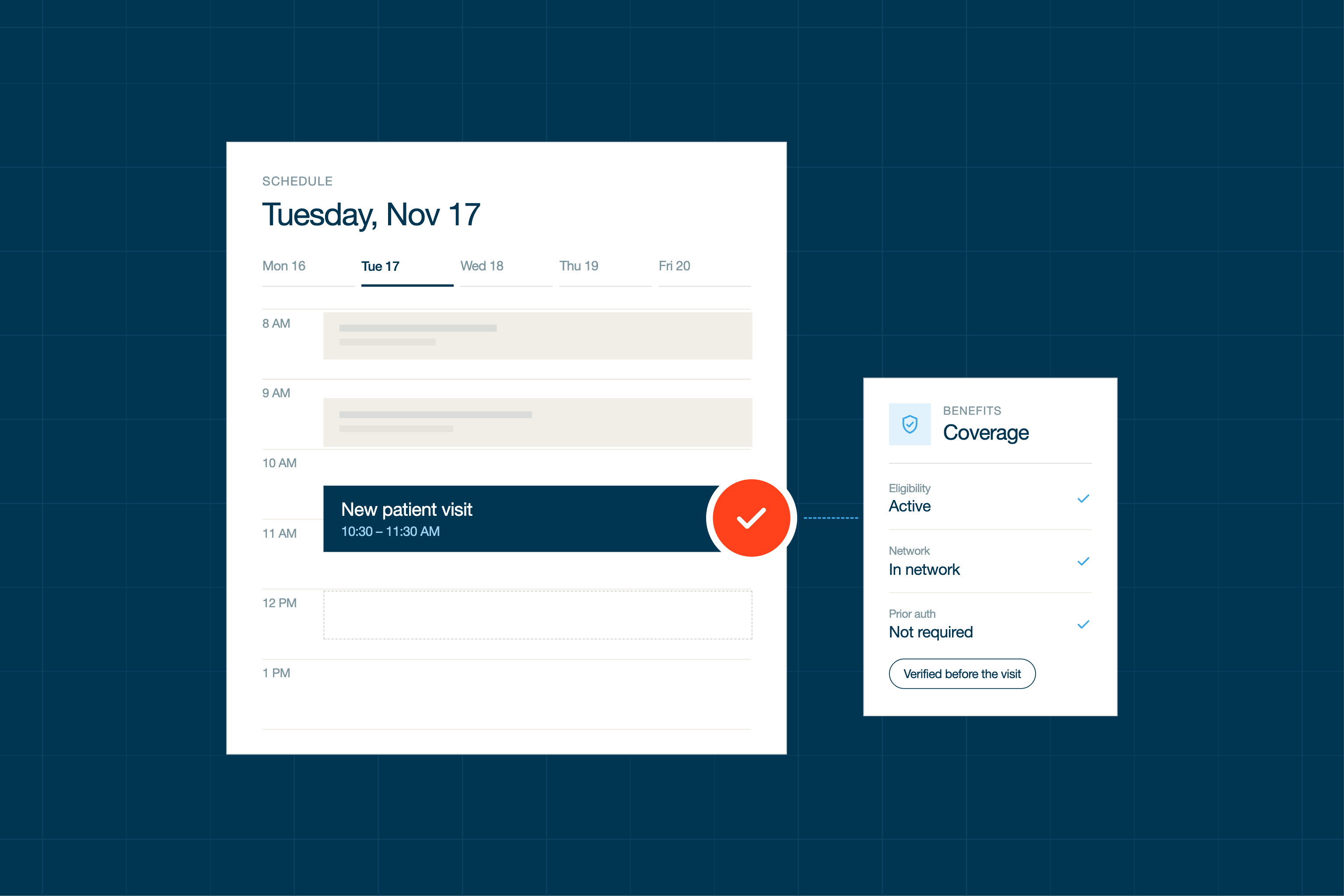
A financially cleared appointment means coverage, benefits, and patient cost are confirmed before the visit. Here is how to check at booking and again
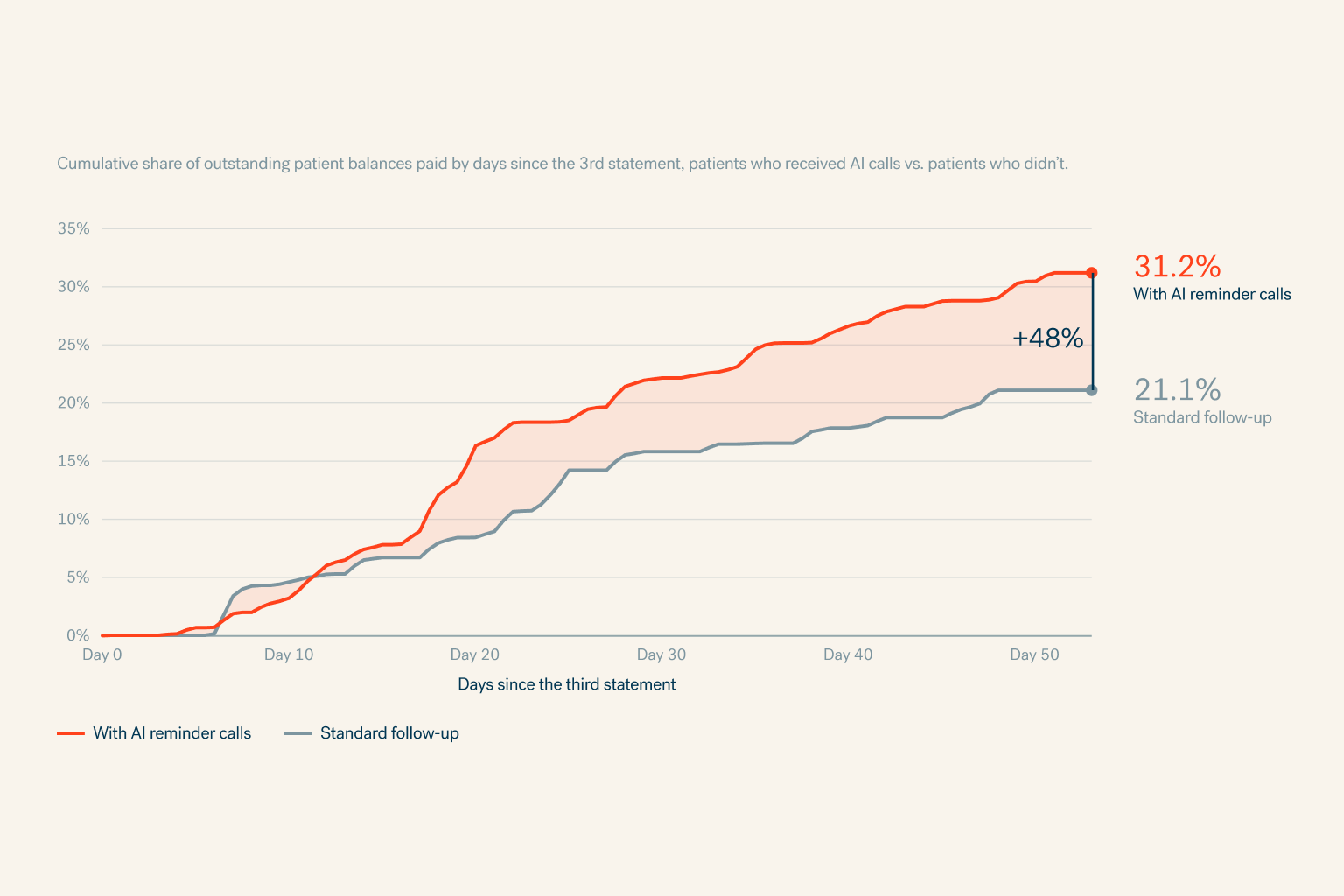
Patients pay 36% of specialty care costs, and nearly 8% goes unpaid. See what recovering balances is worth per physician and how to collect more.


