




Patient Recall for Specialty Practices: How to Bring Back the 46% Who Miss Their Follow-Up
Only 54% of follow-up patients return on schedule. See what late and lost patients are worth per physician and how voice AI brings them back.

Patients often arrive for a visit without knowing what their plan covers, and staff often find out the same thing at check-in, after the appointment is already booked. AI insurance verification closes that gap before the visit happens, using electronic 270/271 checks for standard plans and voice AI agents for the calls that portals cannot complete.
Prosper AI runs both patient scheduling and phone-based verification on one platform, so visits arrive at the front desk already financially cleared.
AI insurance verification matters because incomplete or delayed benefit checks lead to confused patients at check-in, denied claims after the visit, and hours of staff time spent on hold with payers. A single manual eligibility check by phone takes about 24 minutes and costs roughly $14 in staff time per transaction, according to the CAQH Index. Multiply that across a busy practice doing 50 verifications a day, and you’re burning through $700 daily on phone calls alone.
The downstream costs are worse. When verification fails or returns incomplete data, claims get denied. The administrative cost per denied claim jumped from $43.84 in 2022 to $57.23 in 2023. And between 35% and 60% of denied claims are never resubmitted. That’s money left on the table.
AI insurance verification tools exist to solve this. But here’s what most comparison articles won’t tell you: the term covers two fundamentally different product categories, and picking the wrong one leaves a significant gap in your workflow.
Electronic eligibility engines (portal/API-based) automate X12 270/271 transactions. They’re fast, cheap per transaction, and handle standard eligibility checks well. But they often return incomplete data for specialty benefits, carve-outs, and complex plans.
Voice AI agents make actual phone calls to payers. They navigate IVRs, wait on hold, talk to representatives, and capture detailed benefit information that portals can’t provide. They cost more per transaction but tackle the verification calls that eat the most staff time.
The 2024 CAQH Index found that automation helped the healthcare industry avoid $222 billion in administrative spending, a 15% increase from the prior year. Yet dental eligibility and benefit verification spending alone still increased 15% to $2.1 billion, largely because providers report that automated transactions don’t return reliable enough information for many plan types.
That gap between what portals return and what practices actually need is where AI insurance verification technology creates the most value. For a deeper look at how AI fits into verification workflows, see our AI benefit verification guide for healthcare providers.
The table below groups each tool by verification type, so you can see at a glance whether it runs electronic checks, phone calls, or both.
We assessed every tool across six dimensions: verification type, EHR and PM integration depth, compliance posture, pricing transparency, user feedback, and payer coverage breadth. Where available, we pulled practitioner perspectives from forums and review sites rather than relying solely on vendor claims.
Voice AI tools place the phone calls that electronic systems cannot complete, which matters most for specialty benefits, carve-outs, and plans that require verbal confirmation. When a 270/271 transaction returns incomplete data, when a plan has carved-out benefits, or when you need details on specialty coverage, voice AI agents pick up where portals leave off.
Best for: Health systems and outpatient specialty groups that need phone-based verification when portals fall short
Prosper AI’s benefits verification agent calls payers directly. It navigates IVR systems, waits on hold, converses with payer representatives, and writes structured results back into your EHR or practice management system. The benefits verification agent is part of Prosper's wider set of AI agents, which also handle patient scheduling and reminders.
Verification results can feed scheduling workflows, so visits are booked with benefits already checked. That is the idea behind scheduling and insurance verification in one system: the visit is booked and the coverage is confirmed on the same call.
Pricing: Usage-based, custom quotes.
Key features:
Tradeoffs:
Results: Northeast OB/GYN runs benefits verification through Prosper AI, along with several other workflows. Across its Prosper deployment, the practice cut operational costs by 40% and improved EBITDA by $100K.
Prosper AI stands out because it targets the exact problem that other tools sidestep: the 20 to 40% of verifications that come back incomplete from electronic systems. For specialty groups dealing with complex plans and carve-outs, that gap is where most revenue leakage happens.
Funding: $30M Series A led by a16z
See how Prosper AI’s voice agents work or request a demo.
Best for: Enterprise payers and large health systems running high-volume, phone-based benefit verification at scale
Infinitus has been in the voice AI for insurance verification space longer than most competitors. The platform automates clinical and administrative phone calls to payers and providers, covering benefit verification, prior authorization, and claim status.
Pricing: Not publicly disclosed. Enterprise-focused with custom contracts.
Key features:
Tradeoffs:
Funding: $51.5M Series C raised October 2024, signaling serious market confidence.
Best for: RCM teams and billing companies automating payer phone calls, particularly in dental
SuperDial builds voice AI agents that make outbound calls to insurance companies for benefits verification, claims status, and prior authorization. The company has carved out a notable niche in dental insurance verification.
Pricing: Not publicly disclosed.
Key features:
Tradeoffs:
Funding: $15M Series A raised June 2025.
These tools automate electronic 270/271 transactions, the standard protocol for checking insurance eligibility. They’re fast, affordable at scale, and handle the bulk of routine verification. But they have limits when plans return incomplete data or when payers don’t support full electronic transactions.
Best for: Small to mid-size practices needing affordable, transparent-pricing eligibility checks
pVerify is one of the few AI insurance verification tools with fully public pricing. The platform runs real-time eligibility checks via 270/271 transactions, with batch processing and a business rules engine.
Pricing (publicly available):
At the Standard tier, that works out to roughly $0.25 per transaction, making it one of the most cost-effective options for electronic checks.
Key features:
Tradeoffs:
User perspective: On Capterra (41 reviews), an RCM Team Lead wrote: “PVerify does help in some areas… But in a lot of cases I am finding we have to follow up with separate insurance portals to confirm benefits. It is a 50/50 for me.” Another reviewer noted: “Can not check eligibility of BCBS on Sundays and some Saturdays.” Positive reviews highlight minimal technical issues and responsive support.
Best for: Large health systems running Epic or Oracle Health that need enterprise-grade eligibility verification with the broadest payer coverage
Experian Health is the market incumbent. With 900+ payer connections and deep EHR integrations, it’s the default choice for large hospital systems that need coverage detection at scale.
Pricing: Enterprise. Not publicly disclosed.
Key features:
Tradeoffs:
Results: Providence cut denial exposure by $18M in five months. MLK Community Healthcare saved 2 to 3 minutes per patient registration.
Best for: Enterprise revenue cycle teams already using Waystar for claims management who want integrated eligibility verification
Waystar combines eligibility verification with coverage detection, patient estimation, charity screening, and authorization management. It makes the most sense when you’re already on the Waystar platform.
Pricing: Enterprise. Not publicly disclosed.
Key features:
Tradeoffs:
User perspective: On Capterra, one reviewer noted: “Waystar is easy to use. Eligibility works pretty good.” Others cited integration issues and slow support responses.
Best for: Practices wanting free basic eligibility checks with the option to upgrade
Availity is the only tool on this list with a genuinely free tier. As a major clearinghouse, it connects to a wide payer network and handles eligibility, claims, and prior auth in one portal.
Pricing: Free (Essentials tier) with paid upgrade options (Essentials Plus).
Key features:
Tradeoffs:
Availity works well as a starting point, but most practices outgrow the free tier once they see how much staff time is still spent calling payers for the details Availity doesn’t return.
Best for: Practices wanting AI-driven benefits verification combined with patient cost estimates
Aarogram pairs insurance verification with patient-facing cost estimates, a combination that helps set financial expectations before appointments.
Pricing (publicly available):
At the included volume, that’s roughly $1 per transaction, positioning it between the cheapest electronic checks and the more expensive voice AI solutions.
Key features:
Tradeoffs:
Best for: Digital health companies and behavioral health providers that need API-first insurance verification
Sohar Health is built for engineering teams. If your organization has developers who can integrate an API, Sohar provides real-time eligibility, network status verification, and cost estimate generation.
Pricing: Not publicly disclosed.
Key features:
Tradeoffs:
Results: Rula scaled patient intake by 30% using Sohar. Mindful Health Solutions achieved a 25% boost in cost estimate accuracy compared to their previous system.
Best for: Dental practices and DSOs needing instant, tooth-specific benefit breakdowns
Pearl Precheck is the only dental-specific AI insurance verification tool on this list. It pulls real-time data from 300+ dental insurers and provides coverage details down to the individual tooth.
Pricing: Not publicly disclosed.
Key features:
Tradeoffs:
Portals handle routine eligibility checks at low cost; voice AI handles the calls that portals return incomplete, and most practices need both to clear every visit financially.
Use portal/API-based tools when:
Use voice AI agents when:
Most practices need both. The portal handles 60 to 80% of verifications quickly and cheaply. Voice AI handles the remaining 20 to 40% that would otherwise require staff to pick up the phone and spend 24 minutes per call.
An athenahealth analysis identified six persistent challenges in insurance verification: incorrect patient information, coordination of benefits confusion, data entry errors, 900+ payers with different requirements, insufficient staff, and difficulty managing patient coverage expectations. AI tools address staffing and payer complexity most directly, but the combination of electronic and voice AI covers the broadest range of these pain points.
For medical billing companies handling verification across multiple clients, the two-tool approach is especially powerful. Portal-based engines process the bulk volume while voice AI agents handle the exceptions that slow down your entire billing pipeline.
Not every tool fits every practice. Here are the dimensions that matter most:
EHR integration depth. A tool that can’t write results back into your system creates double entry. Look for native connections to your specific EHR, not just generic “healthcare integrations.”
Payer coverage breadth. With 900+ health insurance companies operating in the U.S., no tool covers everyone. Ask vendors about coverage rates for your top 20 payers specifically.
Compliance posture. HIPAA compliance is table stakes. Ask about BAA availability, SOC 2 certification (Type I vs. Type II), data retention policies, and whether the vendor uses third-party AI models. If they do, ask about data sharing agreements with those model providers.
Data points captured. A basic eligibility check might confirm active coverage. A thorough verification captures copay amounts, deductible status, coinsurance rates, out-of-pocket maximums, referral requirements, and plan-specific exclusions. The difference between 10 data points and 60 can mean the difference between a clean claim and a denial.
Turnaround time. For scheduled appointments, same-day verification may be fine. For same-day adds or urgent referrals, a sub-2-hour SLA matters. Understand what the tool promises and what happens when it misses the window.
Implementation speed. Enterprise tools can take months. Some voice AI platforms go live in days for batch processing. Match the implementation timeline to your urgency. If you’re already drowning in verification backlogs, a 6-month rollout won’t help.
For a broader look at how verification fits into the full revenue cycle, our guide to AI for revenue cycle management covers the end-to-end picture.
Every verification that goes unresolved before the visit becomes a denied claim, an appeal, or a write-off after the fact, which is why clearing benefits before the appointment protects both the patient and the practice.
Providers spend $25.7 billion annually on claim adjudication. About 19% of in-network claims submitted through HealthCare.gov insurers were denied in 2023. Eligibility and coverage verification errors consistently rank among the top five denial causes. Accurate AI benefits checks before a visit can eliminate avoidable denials, worth an estimated $28,500 per physician per year, according to data from Prosper AI's 2026 Growth Report.
Beyond the direct financial impact, there’s the human cost. Staff spending hours on hold with payers burn out faster. Turnover in front desk and billing roles is already high, and manual verification is one of the most tedious parts of the job. When experienced staff leave, institutional knowledge about payer quirks and plan-specific requirements leaves with them.
The CAQH estimates $12.3 billion in potential savings if the medical and dental industries switched to fully electronic transactions. AI insurance verification, both electronic and voice-based, is the fastest path to capturing that savings.
Every verification that goes unresolved before the visit creates a cascade: a missed prior authorization becomes a denied claim, which becomes an appeal, which becomes 30 to 90 days of delayed payment. It also creates a worse first impression for the patient, who shows up uncertain of what they owe. Clearing benefits before the visit, whether through an electronic check or a phone call, prevents both problems at once: the patient knows what to expect, and the visit arrives at the front desk already financially cleared.
What is AI insurance verification?
AI insurance verification confirms a patient's coverage and benefits before a visit. Electronic tools run 270/271 transactions for standard plans. Voice AI agents call payers directly for the specialty benefits, carve-outs, and complex plans that electronic checks often return incomplete.
How accurate is AI insurance verification?
Accuracy depends on the tool and the plan type. Electronic checks are generally reliable for standard coverage confirmation, but less so for specialty benefits. Prosper AI's benefits verification agent includes a QA review step on every call. Northeast OB/GYN runs benefits verification through Prosper AI, along with several other workflows. Across its Prosper deployment, the practice cut operational costs by 40% and improved EBITDA by $100K.
Does AI insurance verification replace front-desk staff?
No. It changes what staff spend time on. Instead of waiting on hold for a payer, staff can focus on patient communication and the exceptions that still need a human.
Is AI insurance verification HIPAA compliant?
Any tool that handles protected health information needs to be HIPAA compliant and willing to sign a business associate agreement. Ask vendors about SOC 2 certification type, data retention policy, and whether they use third-party AI models that also need a data agreement in place.
Can AI verification handle complex specialty benefits?
Electronic checks often return incomplete data for specialty benefits and coordination-of-benefits cases because payers do not always support full electronic transactions for these plan types. Voice AI agents are built to call the payer directly and capture that detail, which is what lets a visit move to financially cleared status before the patient arrives.
Is there a platform that handles both scheduling and insurance verification?
Yes. Prosper AI's agents handle patient scheduling, reminders, and payer calls for benefits verification on one platform, so a verified benefit can move directly into a financially cleared appointment without a separate handoff between systems.
Discover how healthcare teams are transforming patient access with Prosper.
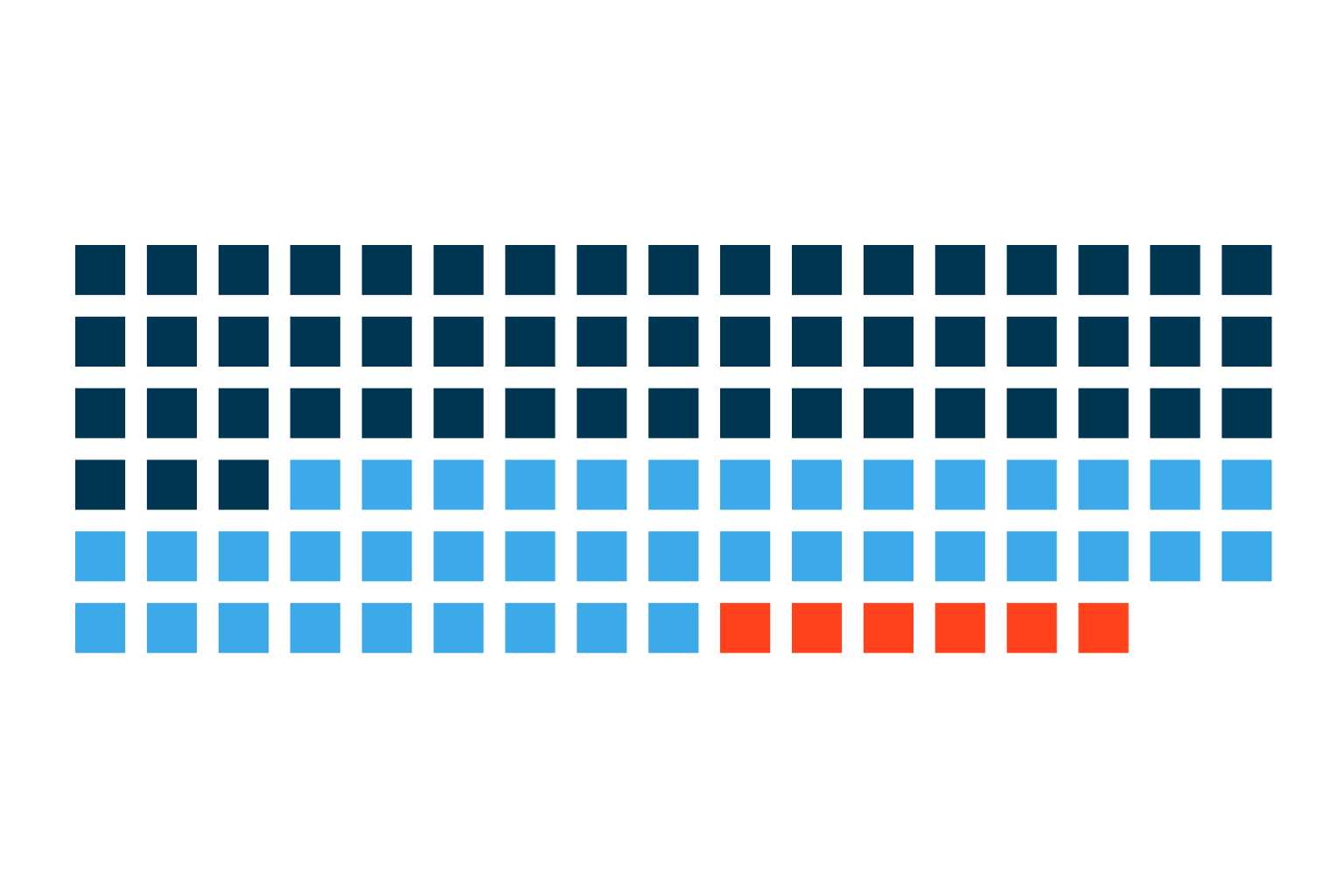
Only 54% of follow-up patients return on schedule. See what late and lost patients are worth per physician and how voice AI brings them back.
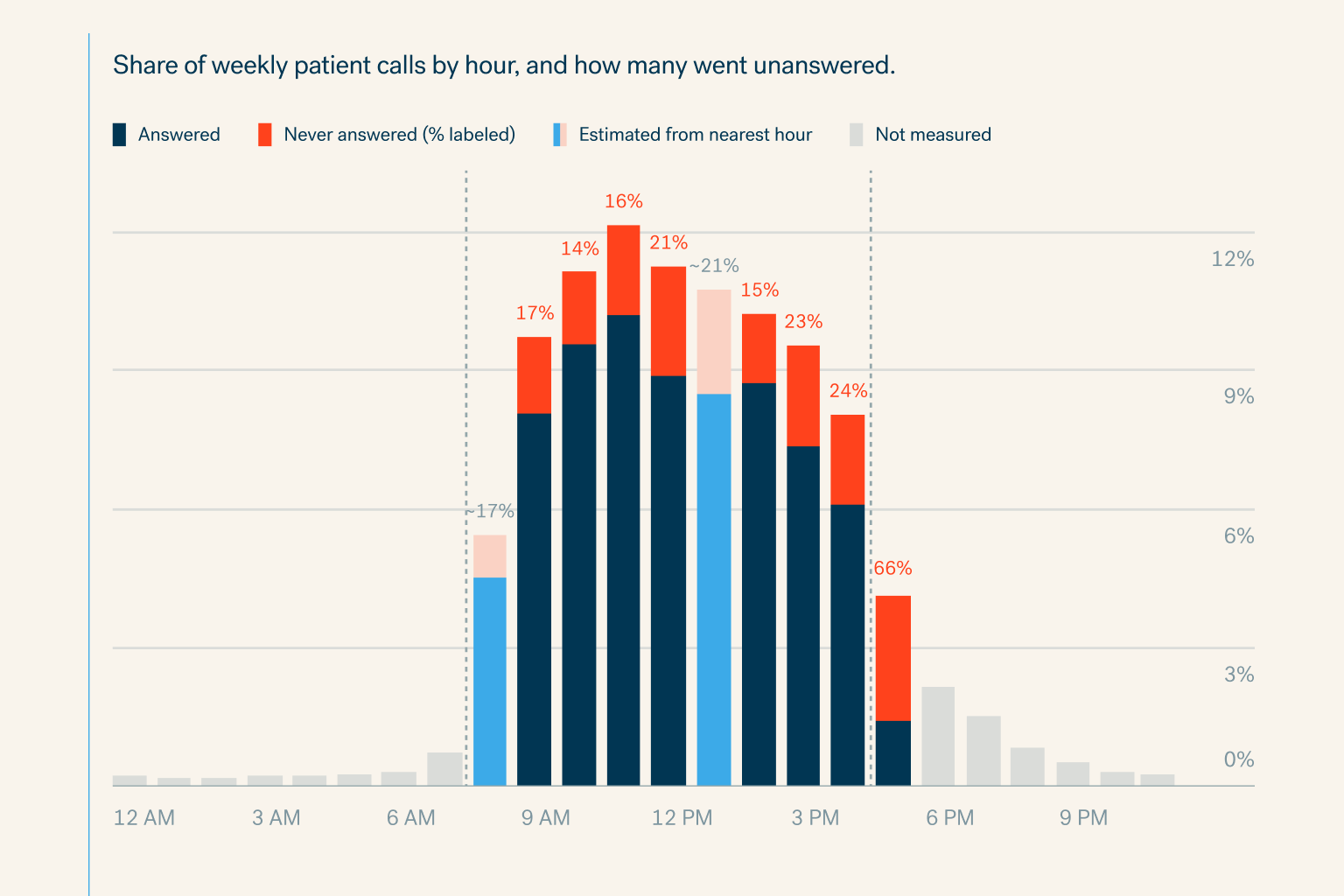
Specialty practices miss 18% of patient calls in office hours and 81% after hours. See the cost per physician and how voice AI books every call.
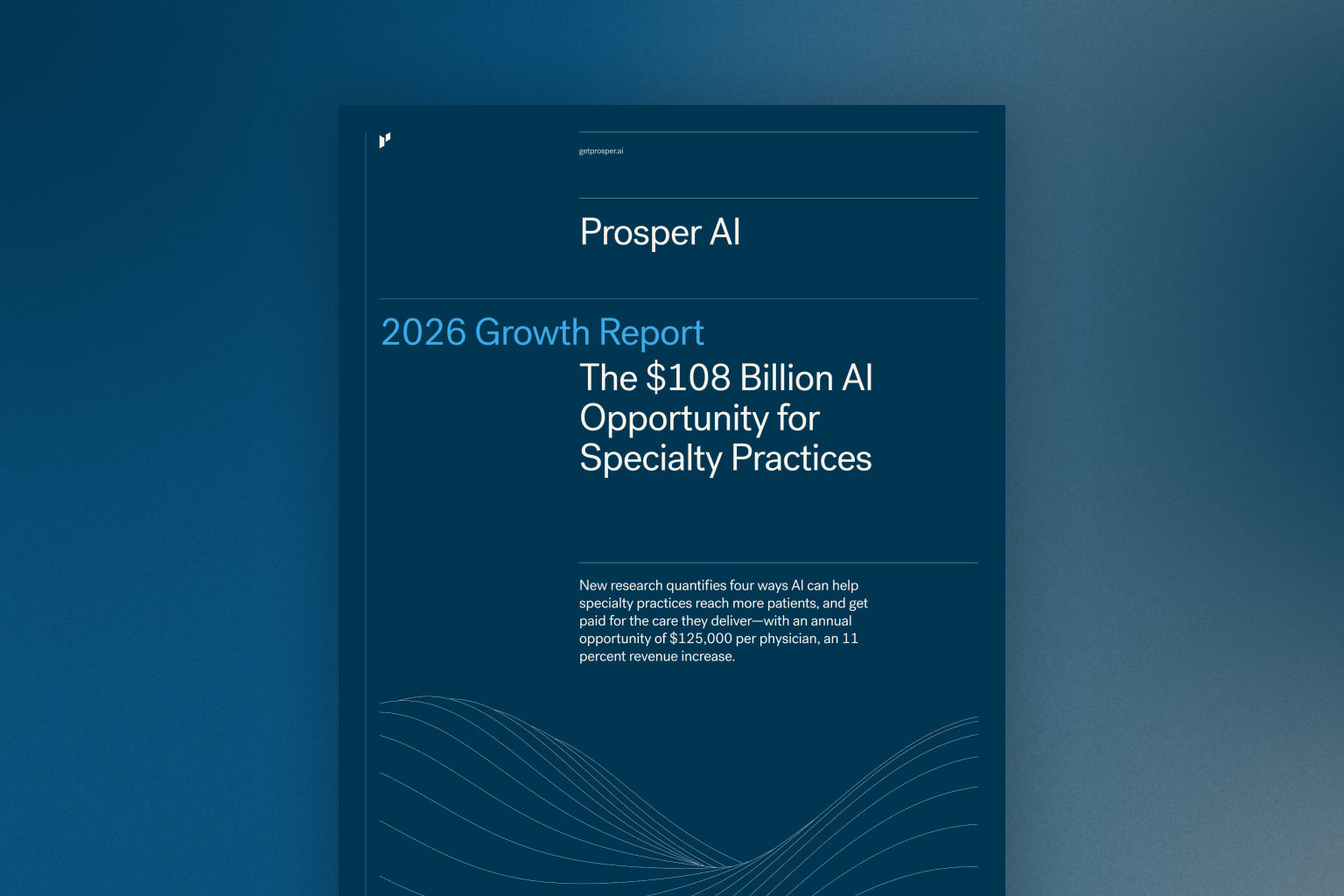
New research quantifies four ways AI can help specialty practices reach more patients, and get paid for the care they deliver—with an annual opportuni


