




Best AI Agents for Orthopedics: September 2026
Best AI agents for orthopedic practices compared on prior auth, outbound payer calling, and billing. Only 1 vendor resolves 60%+ of calls end-to-end.

Voice AI deflection rate measures the share of inbound healthcare calls resolved without a live agent. Realistic production benchmarks run 30% to 50% across a full call mix, well below the 60% to 80% vendors often quote on scheduling calls alone. Your call mix sets that ceiling, more than the technology does
Most voice AI vendors will tell you their deflection rate. Few will tell you how they calculated it, what call types it covers, or whether the number came from a pilot or production traffic. That gap matters, because the difference between a vendor quoting 70% deflection on scheduling calls and your practice seeing 70% deflection across all inbound volume is the difference between a working solution and one that deflects 28% of calls while your front desk still handles 720 of 1,000 weekly inbound calls.
We're going to walk through what realistic voice AI deflection rate healthcare benchmarks actually look like when you account for call mix, architecture limits, and the measurement games vendors play.
Deflection rate measures the share of inbound calls resolved without a live agent ever picking up. In healthcare, that sounds simple — but the math gets slippery fast.
Most vendors count deflection at the IVR or triage layer: if a caller hung up after hearing options, that call gets marked "deflected." Whether the patient actually got what they needed is a separate question nobody volunteers to answer.
A more honest measure is end-to-end resolution — the call was handled, the patient's need was met, and no callback or staff follow-up was required.
Reported deflection rates in healthcare voice AI vary widely, and the gap between vendor claims and production reality is where most buyers get burned. Most vendors cite deflection rates between 40% and 80%.
That range is nearly useless without knowing what call types were included, how deflection was defined, and whether the number came from a controlled pilot or live production traffic. Healthcare call center performance benchmarks show wide variation depending on how metrics are measured and what call types are included.
A few anchor points worth knowing (though general deflection benchmarks across industries run 20% to 40%):
The honest benchmark is not a single number. It depends on call mix, workflow depth, and EHR integration fidelity.
Healthcare's call mix is fundamentally harder to automate than other industries. A retail or banking AI handles a narrow set of intents, each with predictable data inputs. A healthcare front desk fields prior auth status checks, referral coordination, prescription refill routing, insurance verification, and appointment scheduling, often within a single call.
That complexity drives deflection rates down. Most voice AI in healthcare today handles only scheduling, which covers roughly 30 to 40 percent of inbound call volume. Even at a strong 70 percent containment rate on scheduling calls, that translates to roughly 21 to 28 percent end-to-end deflection across the full call mix.
Vendors quoting 60 or 70 percent deflection are often reporting per-workflow containment, not total call resolution.
▶ Case Study: How Arkansas Pediatrics automated 65%+ of calls with AI and saved 120+ hours monthly
Vendors control the numbers they share, and that creates a predictable problem. Most report deflection based on calls that entered their system — not total inbound call volume. If a voice AI handles 80% of the calls it receives, but only receives 40% of total calls (because the other 60% bypass it entirely or get transferred before the system engages), the real deflection rate is closer to 32%. That gap rarely appears in a sales deck.
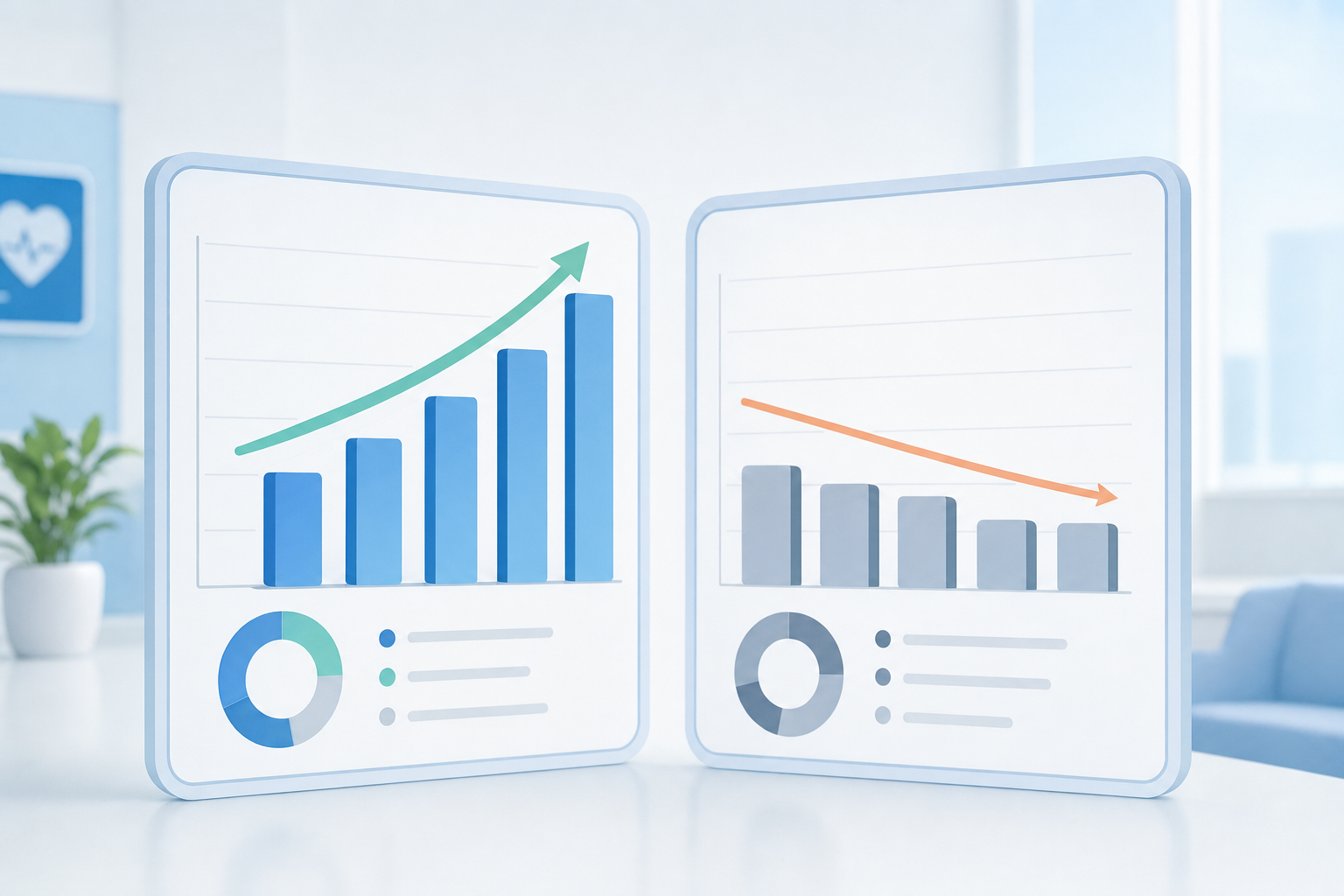
Deflection rates are largely determined by what your callers are actually asking for. A practice where 70% of inbound calls are appointment scheduling will see very different containment numbers than one where the call mix skews toward prior auth status checks, billing disputes, or complex triage questions.
Voice AI handles scheduling and appointment reminders reliably. It struggles with nuanced insurance questions, escalated complaints, and anything requiring clinical judgment. So a vendor quoting you an 80% deflection rate may be accurate for their reference customer, whose call mix happened to be 90% scheduling. That number won't hold at your clinic.
Before accepting any benchmark, ask the vendor what call types their quoted rate covers and what percentage of your specific call volume falls into those categories.
Scripted voice AI reads from fixed decision trees. If a caller's request falls outside the script, the system fails or routes to staff. Generative AI, built on LLMs, handles open-ended requests and recovers from unexpected phrasing.
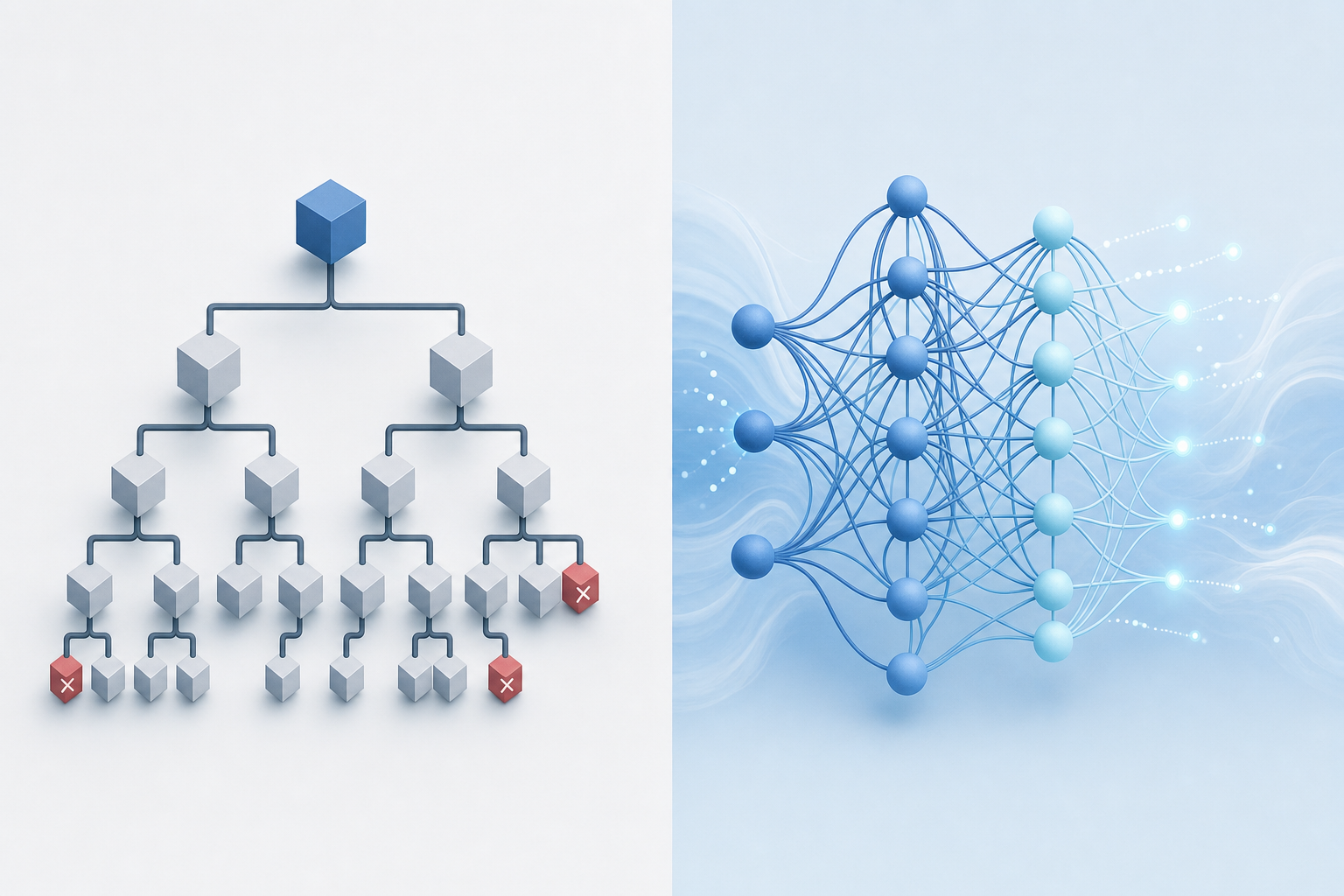
That architectural gap shows up directly in deflection rates. Scripted systems tend to cap out around 30 to 40% containment. LLM-based systems that cover scheduling, benefits verification, and prior auth can reach 60% or higher in production.
The ceiling a vendor quotes you is largely determined by which category their product falls into, not by how their marketing describes it.
Deflection rates look clean on a slide. In practice, several variables quietly drag the real number down — and most vendors won't surface them unprompted.
Ask any vendor you're considering: what percentage of deflected calls resulted in a confirmed outcome, like a booked appointment or a resolved inquiry? That number tells you far more than the headline rate.
Pick three call types your team agrees are "clearly automatable" — appointment confirmations, prescription refill routing, and basic insurance verification questions are common starting points.
Track four numbers weekly: total calls handled by the voice AI, calls fully resolved without transfer, calls escalated to staff, and call duration versus your human-agent average.
At day 30, run the math yourself. Divide fully resolved calls by total calls offered to the system. That's your real deflection rate — not the vendor's dashboard number, which may exclude transfers initiated mid-call or calls that rang in outside configured hours.
Each deflected call saves real money. Industry estimates for front-desk labor typically run $18 to $22 per handled call when fully-loaded staff costs are factored in, and missed calls that convert to no-shows carry an estimated revenue cost of $150 to $200 per appointment slot, based on commonly cited industry figures.
A practice fielding 1,000 calls per week that moves from a 30% deflection rate to 60% recaptures roughly $9,000 to $11,000 in weekly labor alone, before accounting for recovered appointment revenue.
Prosper AI targets 60%+ end-to-end resolution in production deployments, and that goal comes from scope, not a single clever feature.
Most voice AI tools automate one slice of the call mix, typically scheduling, and hand everything else back to staff. When 40% of inbound calls are scheduling and a vendor resolves 80% of those, the real containment across all calls is closer to 32%.
Prosper AI handles scheduling, insurance eligibility verification, benefits verification, prior auth status, prescription inquiries, and billing questions within the same conversation, which is why the production number is designed to hold across a broader call mix rather than a narrow one.
What's the difference between deflection rate and end-to-end resolution?
End-to-end resolution means the patient's need was fully met without requiring staff follow-up or a callback — the call was handled and closed. Deflection rate often just measures whether a human agent picked up, which can include situations where the caller hung up without getting their question answered.
Can voice AI handle insurance verification calls or just scheduling?
Yes, but architecture matters. LLM-based generative systems can handle benefits verification, prior auth status checks, and billing questions within the same conversation as scheduling. Scripted systems typically cap out at scheduling-only, which is why their real deflection rates across your full call mix run 30-40% while broader systems reach 60% or higher.
Voice AI deflection rate healthcare benchmark — what should I expect in production?
Most vendors claim 40-80%, but realistic production benchmarks for full call mix run 30-50% for scheduling-only systems and 60%+ for platforms that cover scheduling, insurance, billing, and refills. The honest answer depends on your specific call mix — a practice where 70% of calls are appointment requests will see very different containment than one handling complex prior auth and billing inquiries.
How do I test if a vendor's deflection claim is real?
Run a 30-day pilot on three clearly automatable call types and track four numbers yourself: total calls offered to the system, calls fully resolved without transfer, calls escalated to staff, and average call duration. Divide fully resolved calls by total calls offered — that's your real deflection rate, not the vendor's dashboard number.
What deflection rate do I need to justify the cost of voice AI?
Each deflected call saves $18-22 in fully-loaded labor costs, and missed calls that become no-shows cost $150-200 in lost appointment revenue. A practice handling 1,000 calls weekly that moves from 30% to 60% deflection recaptures roughly $9,000-11,000 per week in labor alone before counting recovered revenue from better appointment fill rates.
Does deflection rate differ between patient-facing scheduling calls and payer-facing RCM calls?
Yes. Scheduling calls are narrow and repeatable, so even scripted systems can hit 60-70% containment on that slice alone. Payer-facing calls — prior auth status, benefits verification — involve more variable, multi-step conversations, which is why platforms built for only one side of the call see their blended deflection rate drop once RCM volume enters the mix.
Prosper AI build voice AI agents that cover inbound scheduling, insurance eligibility, prior authorization, billing inquiries, and outbound payer calls in a single automated workflow—one system for both sides of the phone.
In a six-vendor RFP, Prosper AI hit 60%+ end-to-end call resolution in production, compared to roughly 30% for other vendors. Most practices are live in 3 weeks, with no custom coding and no disruption to staff, and integrate with 80+ EHR and practice management systems.
Book a demo with Prosper AI to see what full-coverage resolution looks like on your actual call mix.
Discover how healthcare teams are transforming patient access with Prosper.

Best AI agents for orthopedic practices compared on prior auth, outbound payer calling, and billing. Only 1 vendor resolves 60%+ of calls end-to-end.

The 7 best AI voice agents for ophthalmology practices. Find platforms with ModMed & Nextech integrations, prior auth support, and patient automation.

Our September 2026 FQHC voice agent comparison covers Medicaid verification, payer calls, prior auth, and multilingual support across five tools.


