




Missed Calls Leave $44,800 per Physician on the Table. Here's How Specialty Practices Capture It.
Specialty practices miss 18% of patient calls in office hours and 81% after hours. See the cost per physician and how voice AI books every call.

Most AI voice agents look similar until you get into the details of what happens after the scheduling question. For FQHCs, those details matter a lot: Medicaid verification, prior auth holds, billing calls, after-hours access in the patient's preferred language. We reviewed each option with those workflows in mind so you can choose what fits your operation.
TLDR:
An AI voice agent for FQHCs is an AI-powered phone agent that handles administrative calls your staff currently manage by hand: scheduling appointments, answering billing questions, verifying insurance eligibility, following up on prior authorizations, and sending outbound reminders. It works across inbound and outbound calls, around the clock, without adding headcount.
For community health centers, the stakes differ from a private specialty clinic. FQHCs serve patient populations with complex payer mixes spanning Medicaid, uninsured patients on sliding-scale fees, and multiple commercial plans simultaneously. Many patients speak languages other than English. And operating margins leave little room for administrative waste. When calls go unanswered, or staff spend hours chasing prior authorizations, that cost lands directly on the bottom line.
We assessed every tool on this list against the specific demands of safety-net care, based on publicly available information and known architectural distinctions, not hands-on testing.
Prosper AI is built for organizations where a single call can touch scheduling, Medicaid eligibility, a prior auth hold queue, and a billing question before it's done. That's a normal Tuesday at an FQHC. Most voice agents handle one of those steps. Prosper handles all of them.
As a Gen 3, LLM-native agent, Prosper AI resolves 60%+ of inbound calls end-to-end in production (per Prosper AI's customer deployment data) across scheduling, billing, insurance, FAQs, and refills. AI benefits verification runs on a two-stage architecture: payer APIs first, then direct outbound phone calls to the insurer for the roughly 20% of cases APIs can't resolve. Prior authorization automation is fully automated end-to-end, including waiting on payer hold times up to 45 to 60 minutes. No staff hand-off required at any step.
For FQHC patient populations with limited English proficiency, Prosper AI opens calls in the patient's preferred language from the first greeting. After-hours and weekend coverage runs on the same workflow as peak hours. Integration covers 80+ EHRs with native read-and-write capability, and pricing is outcome-based: you're only charged for calls the agent fully resolves.
Assort Health was founded in 2023 and originated in orthopedic scheduling. Its architecture is a scripted agentic state machine — Assort's own description — with hundreds of hand-built nodes that route calls based on hardcoded logic. An LLM generates the language at each node but does not direct the overall conversation.
Realistic inbound deflection across all call types sits at 20 to 35% for scripted architectures — a range consistent with Assort's own positioning of its agent against phone trees, and with general industry estimates for decision-tree-based systems. That gap matters for FQHCs, where Medicaid eligibility checks, sliding-scale billing questions, and prior authorization inquiries make up a large share of daily call volume. Scripted architectures cannot adapt to this intent variance. Assort's scripted approach doesn't handle any of those call types in production.
High intent variance is where scripted architectures hit a ceiling. Adding new call types after go-live requires vendor engineering, not self-configuration. A good fit for orthopedic or dermatology practices with narrow, predictable appointment types. A poor architectural fit for community health environments where a single call can shift between scheduling, Medicaid eligibility, and a billing question before it resolves.
Hyro is a conversational AI company focused on patient-facing contact center workflows at large health systems. It handles inbound scheduling, provider search, FAQ resolution, and prescription management across voice, web chat, and SMS.
Good fit for large hospital systems or enterprise health networks with substantial IT infrastructure and budget.
The limitation for FQHCs is structural. As a third-party review of Hyro notes, enterprise-level pricing excludes smaller practices, and the focus is large health systems, not safety-net providers. Hyro covers no payer-facing workflows: no outbound insurance calls, no prior authorization automation, no RCM billing support. For a community health center where Medicaid eligibility verification and prior auth follow-up are daily realities, that gap matters.
Hyro is a credible option if your primary need is patient-facing call containment at health-system scale. If you need payer-facing automation alongside scheduling, it falls short.
Parakeet Health is an AI patient engagement tool listed on the Optum Marketplace. It automates scheduling, referral management, care gap outreach, and appointment backfilling.
Per the Optum Marketplace listing, Parakeet's agent calls patients, automates patient intake calls, and gets them scheduled for referrals without staff intervention. That makes it a reasonable fit for value-based care organizations running outbound care gap and referral outreach at scale.
The limitation for FQHCs is scope. Based on publicly available information, Parakeet does not document payer-facing capabilities: no real-time Medicaid eligibility verification, no outbound insurance calls for prior auth, and no patient billing workflows. At a community health center, those workflows are routine, not edge cases. A tool that handles scheduling but stops at the insurance question leaves staff picking up the rest.
The table below compares eight capabilities across four AI voice agents for healthcare vendors that serve FQHCs. Coverage gaps widen quickly once you look past inbound scheduling.
| Feature | Prosper AI | Assort Health | Hyro | Parakeet Health |
|---|---|---|---|---|
| Inbound scheduling | Yes | Yes | Yes | Yes |
| After-hours coverage | Yes | Yes | Yes | Yes |
| Multilingual support | Yes | Yes | Limited | Limited |
| Real-time eligibility/benefits verification | Yes | No | No | No |
| Outbound payer calls (prior auth/insurance) | Yes | No | No | No |
| Patient billing call handling | Yes | No | No | No |
| EHR write-back integration | Yes | Limited | Limited | Yes |
| RCM automation | Yes | No | No | No |
FQHCs operate at the intersection of every workflow that point-solution voice agents skip. Medicaid verification, payer phone calls, sliding-scale billing inquiries, multilingual call handling, prior authorization holds running 45 to 60 minutes: these are daily volume, not edge cases. Prosper AI's two-stage architecture covers all of them in a single automated system, with no staff hand-off required between the scheduling question and the insurance call that follows. For a broader look at AI voice agent use cases in healthcare, the deployment patterns extend well beyond FQHCs.
No other vendor in this comparison automates both sides of that workflow. Prosper AI's LLM-native architecture handles call types that scripted systems cannot encode, and its outbound payer calling closes the verification loop that API-only eligibility tools leave open. For a community health center where underserved patients depend on consistent, after-hours access in their preferred language, that coverage difference is the whole reason to weigh architecture over feature lists.
The feature comparison above makes one thing clear: inbound scheduling is the floor, not the ceiling, for what a voice AI needs to do at an FQHC. Your call mix includes payer calls, Medicaid verification, and billing questions that most tools don't cover. Building your evaluation criteria around that full call surface will save you from deploying a tool that only handles the easy calls. Start a conversation with Prosper AI to walk through how that looks for your specific call volume.
Start by mapping your actual call mix: scheduling volume, Medicaid eligibility checks, sliding-scale billing questions, and prior authorization follow-ups. Then confirm whether each vendor handles those call types end to end or transfers them back to staff. A tool that covers scheduling but stops at the insurance question leaves your team picking up where the AI left off, which is where most point solutions fall short for community health environments.
For FQHCs, yes. The core issue is architectural, not a matter of which specialties a vendor markets to. Assort Health's scripted state machine routes calls through hardcoded nodes — a design that works for narrow, predictable appointment types but cannot adapt to the intent variance common in community health calls. When a call shifts from scheduling to a Medicaid eligibility question to a billing inquiry, a scripted system hits a structural ceiling. Adding new call types after go-live requires vendor engineering, not self-configuration. Prosper AI's LLM-native architecture handles the full call mix within one system, including Medicaid eligibility verification, prior authorization, and outbound calls to payers for cases that API-based eligibility checks cannot resolve.
Hyro is worth considering if your primary need is patient-facing call containment at enterprise health-system scale and a separate RCM team handles payer-facing workflows. Parakeet Health fits organizations focused on outbound care gap outreach and referral scheduling within value-based care programs. Neither covers outbound payer calls, Medicaid eligibility verification, or patient billing workflows, so if those are daily volume at your health center, both fall short of full coverage.
Call any vendor's live customer number and test three things: whether the agent answers a Medicaid eligibility question without transferring, how it handles a mid-call shift from scheduling to a billing inquiry, and whether it opens the call in the patient's preferred language. These scenarios are routine at community health centers, and most scripted or workflow-based tools fail at least one of them under real call conditions.
Prosper AI opens calls in the patient's preferred language from the first greeting, so patients with limited English proficiency don't need to request a language switch mid-call. Assort Health documents support for 29 to 37 languages, making it the only other vendor on this list with broad multilingual coverage. Hyro and Parakeet Health document limited or unspecified multilingual support, which matters for FQHC patient populations where non-English calls are daily volume, not occasional exceptions.
Discover how healthcare teams are transforming patient access with Prosper.
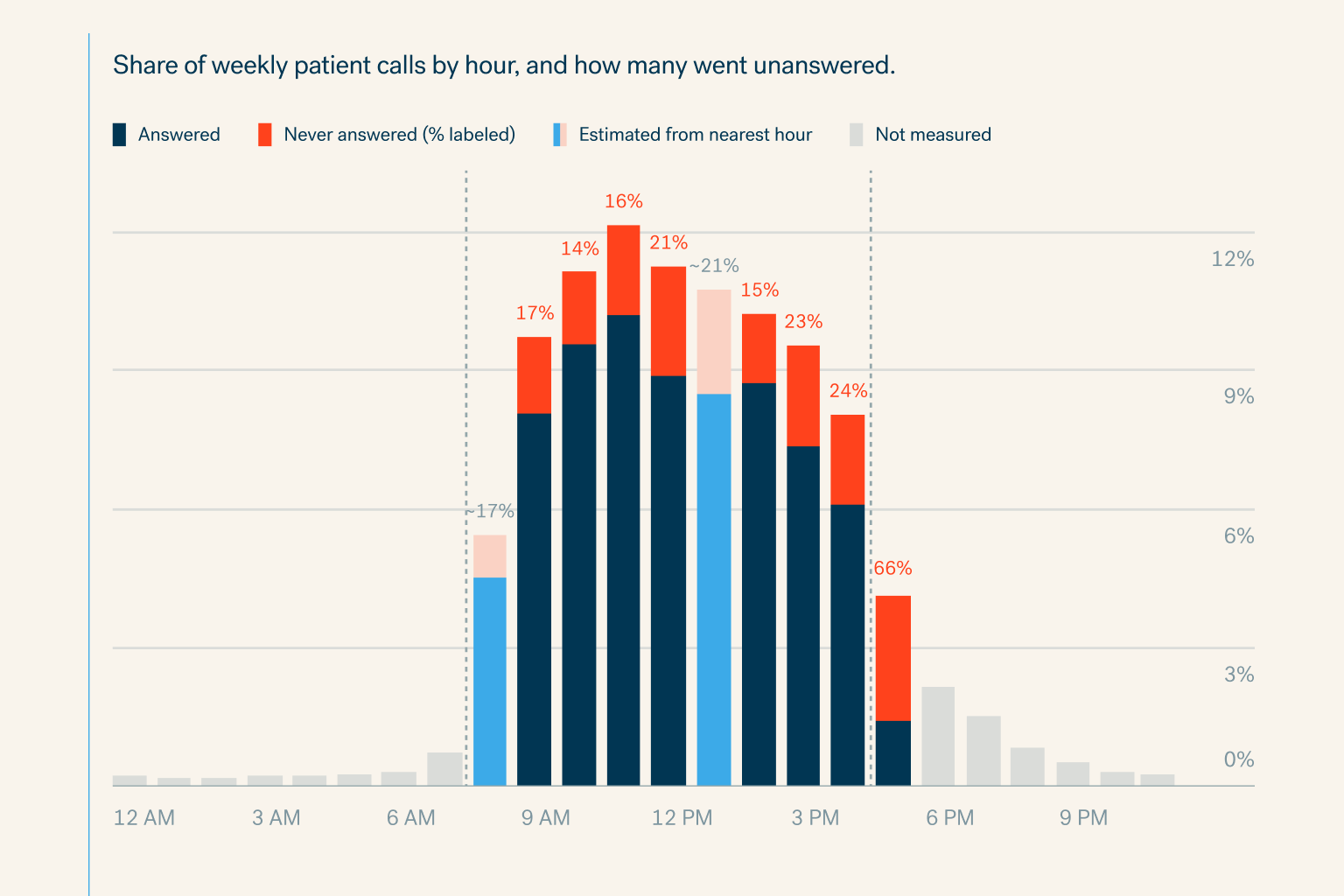
Specialty practices miss 18% of patient calls in office hours and 81% after hours. See the cost per physician and how voice AI books every call.
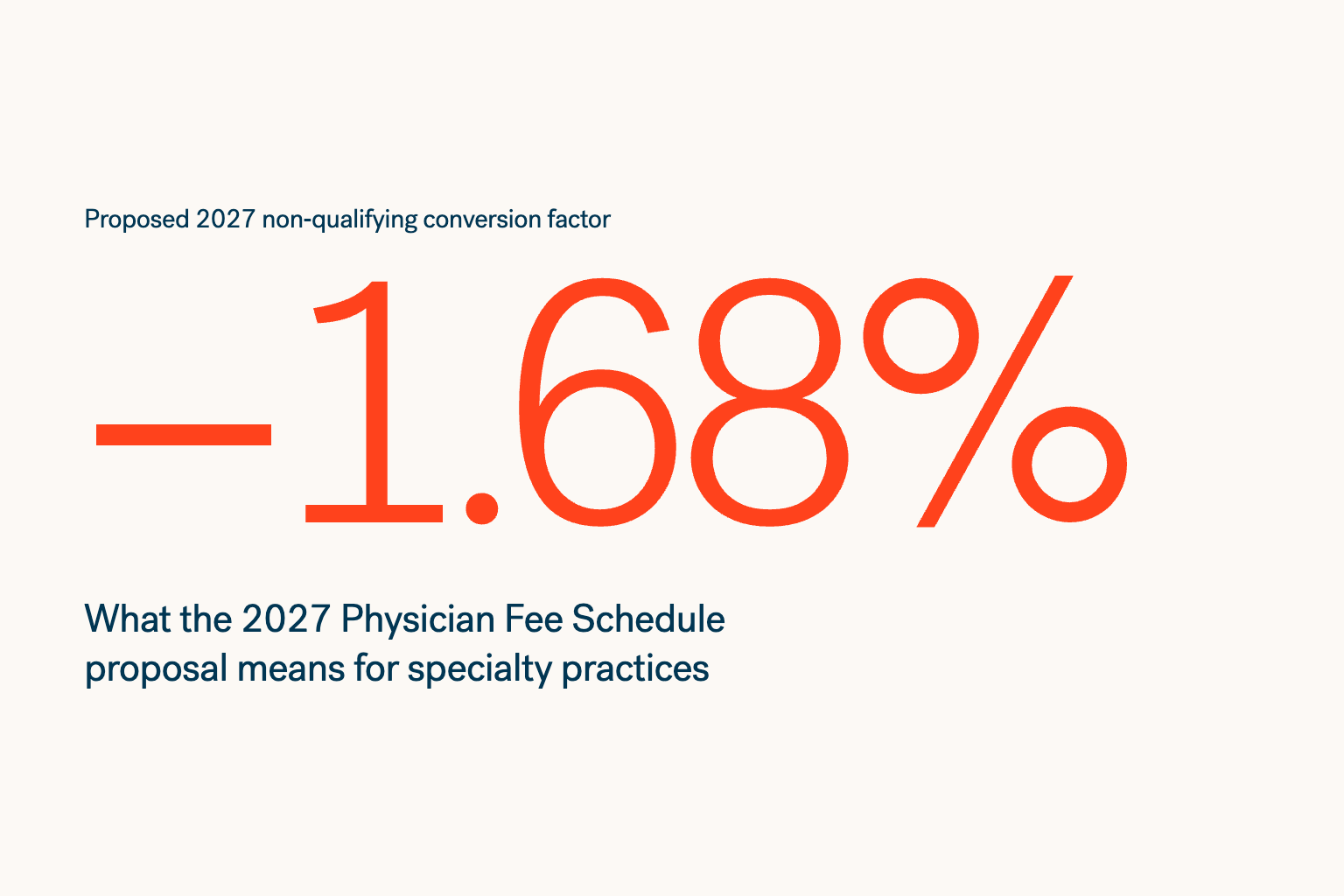
CMS proposes 2027 Medicare conversion factors down 1.19% to 1.68%. See the impact on specialty practices and the revenue levers you still control.
New research quantifies four ways AI can help specialty practices reach more patients, and get paid for the care they deliver—with an annual opportuni


