




Missed Calls Leave $44,800 per Physician on the Table. Here's How Specialty Practices Capture It.
Specialty practices miss 18% of patient calls in office hours and 81% after hours. See the cost per physician and how voice AI books every call.

If you're comparing scheduling apps right now, they all sound similar until you ask about insurance verification or billing calls. That's where the real differences show up. This guide breaks down what each option handles in production, so you can spot coverage gaps before you sign anything.
TLDR:
A patient appointment scheduling app is software that manages how patients book, change, or cancel appointments with a medical practice. The basic version replaces a paper calendar. The current version is something considerably more capable.
For ambulatory practices and specialty groups running 10,000 or more calls a month, "scheduling app" has become a loose term covering a wide range of tools. That range spans web-based self-service portals all the way to AI voice agents vs. traditional IVR systems: tools that answer the phone, collect patient information, write appointments directly to the EHR, and verify insurance without a staff member touching the call.
The working definition that matters for practice administrators: a scheduling app is anything that reduces the volume of calls reaching your front desk while maintaining or improving booking accuracy. Older tools captured online requests and routed them to staff for manual entry, while newer systems handle the full workflow end-to-end, including EHR write-back, insurance eligibility checks, and after-hours coverage. The gap between those two generations is large, and the category label alone does nothing to close it.
We reviewed every app on this list against the same set of questions a practice administrator should ask any vendor before signing.
Tools reviewed in our medical appointment scheduling software roundup score lower when RCM coverage is a requirement, because scheduling is often 40 to 50% of total inbound volume. The remaining call mix is where the gaps show up.
Prosper AI is a healthcare-native AI voice agent built on a generative, LLM-native architecture, designed for outpatient groups and health systems that have outgrown point solutions. It automates the full administrative call mix, from AI patient scheduling through insurance verification, prior authorization, and patient billing, with native read-and-write integration across 80+ EHRs.
Core strengths:
Prosper AI is the only option on this list that covers both patient-facing and payer-facing calls within a single automated workflow. For multi-site outpatient groups and health systems that need more than a scheduling tool, that scope difference is the deciding factor.
Assort Health reviews reveal a specialty-focused AI voice agent founded in 2023. Its architecture is a scripted agentic state machine: hundreds of hardcoded nodes manage call flow, with an intent classifier routing each utterance and an LLM generating per-node language. The result is deterministic, auditable scheduling automation that works well within a narrow scope.
Good fit for single-specialty practices with stable, low-variance scheduling needs and no RCM complexity.
The ceiling hits quickly outside that scope. Assort's architecture does not handle insurance lookup, billing calls, or off-script FAQ responses, which is a key reason practices look at Assort Health competitors. Adding any new call type after go-live requires vendor engineering, not self-configuration, which caps coverage at about 40% of total inbound volume. Practices that anticipate needing broader coverage post-launch should factor that constraint into their vendor review before signing.
Prosper AI vs Hello Patient is a common evaluation pairing. Hello Patient is a multi-channel patient engagement tool whose AI agent, Mia, handles scheduling and communication across voice, text, and chat around the clock.
Here is a quick look at what the tool covers:
Hello Patient fits practices whose call volume is mostly routine scheduling and reminder confirmations with limited RCM complexity. It falls short on insurance verification, prior authorization, and outbound payer calling, including workflows covered in voice AI for cardiology claim intake. Insurance verification and prior auth calls remain unautomated and staff-handled, leaving a meaningful share of a typical inbound call mix unresolved. For practices running high RCM call volume, that gap requires either additional staffing or a separate tool layered on top.
Prosper AI vs Artera is a comparison worth reviewing closely. Artera is an enterprise patient communication tool that combines human and AI agents across text, phone, and web, serving large health systems and IDNs with high patient communication volume, with integrations covering Epic, Oracle Health (Cerner), MEDITECH, Veradigm (formerly Allscripts), athenahealth, eClinicalWorks, and NextGen, with bidirectional, real-time data exchange across major systems.
A good fit for large multi-site health systems that need SMS scale and mature patient engagement workflows across a complex EHR environment.
The coverage gap shows up on the RCM side. Artera does not automate outbound payer calls or complete end-to-end insurance eligibility verification the way Prosper does, and billing, prior auth, and payer-facing calls still route to staff. Practices that need those workflows automated within the same tool will need a separate vendor to fill that gap.
The table below compares key capabilities across four patient appointment scheduling apps, based on publicly available product information. Coverage gaps become visible quickly when you look beyond calendar management.
| Feature | Prosper AI | Assort Health | Hello Patient | Artera |
|---|---|---|---|---|
| Native EHR read-and-write integration | Yes | Yes | Yes | Yes |
| Full inbound call mix coverage | Yes | No | No | No |
| Billing call automation | Yes | No | Limited | No |
| Prior authorization automation | Yes | No | No | No |
| Outbound payer calling | Yes | No | No | No |
| After-hours and weekend coverage | Yes | Yes | Yes | Yes |
| Off-script FAQ handling | Yes | No | Limited | Limited |
| Dedicated implementation support | Yes | No | No | No |
The comparison table makes the architectural answer clear. Practices reviewing AI voice agents for cardiology and other specialties find that when scheduling is 40 to 50% of total inbound volume, a tool that covers only scheduling leaves the rest of the queue for staff. Prosper AI covers the full mix, including billing, insurance, and payer calls, which is why its production resolution rate runs at 60%+ (based on Prosper AI's customer deployment data) while narrower tools top out around 30%. Scripted and workflow-based tools handle scheduling well because booking an appointment maps to a linear decision tree, but billing inquiries, insurance questions, and off-script FAQs require dynamic reasoning across live practice knowledge with native EHR write-back; generative platforms cover more of the call mix because they resolve those call types without routing to staff, and that capability gap compounds over time rather than closes.
The outbound payer calling capability has no equivalent on this list. Completing insurance verification end-to-end, including placing live calls to insurers when payer APIs fall short, removes the manual staff steps that every other option leaves in place. A dedicated AI PM who owns ongoing workflow optimization at a 1:5 ratio means the gap between Prosper AI and point solutions compounds over time instead of closing.
Most of the tools in this category solve the scheduling piece well. The real question is what happens to the rest of your inbound call mix once scheduling is covered. Billing calls, insurance verification, and prior auth questions don't disappear just because your scheduling queue shrank. If you want to see what full-mix call automation looks like in production, see Prosper AI in production.
Start by mapping your full inbound call mix across at least three months of data, including billing, insurance, and FAQ volume alongside scheduling. If those non-scheduling call types make up 50% or more of your queue, a tool that covers only scheduling will leave half your call volume for staff to handle manually, which means the coverage gap determines the ROI ceiling before you sign anything.
Assort Health works well for single-specialty practices with stable, low-variance scheduling needs, but its scripted architecture does not cover insurance verification, billing calls, or off-script FAQ responses. Adding those workflows after go-live requires vendor engineering, not self-configuration, which caps coverage at roughly 40% of total inbound volume.
Prosper AI runs a two-stage verification process: real-time payer API first, then automated outbound phone calls to the insurer for the cases APIs cannot resolve, without staff involvement at either stage. Hello Patient and Artera both leave insurance verification and prior authorization calls to staff, which means a meaningful share of the inbound call mix remains unresolved by the tool itself.
Artera fits large health systems and IDNs that need broad EHR compatibility across a mixed-EHR environment from M&A activity, particularly for SMS-scale patient communication and population-health outreach. Practices that also need billing, prior authorization, or payer-facing calls automated within the same tool will need a separate vendor to cover that gap.
Of the four apps covered here, only Prosper AI automates the full RCM call surface, including prior authorization, outbound payer calls, and patient billing, within a single workflow. Assort Health, Hello Patient, and Artera each leave RCM workflows to staff, making them better fits for practices where scheduling and reminder volume drives most of the call load.
Discover how healthcare teams are transforming patient access with Prosper.
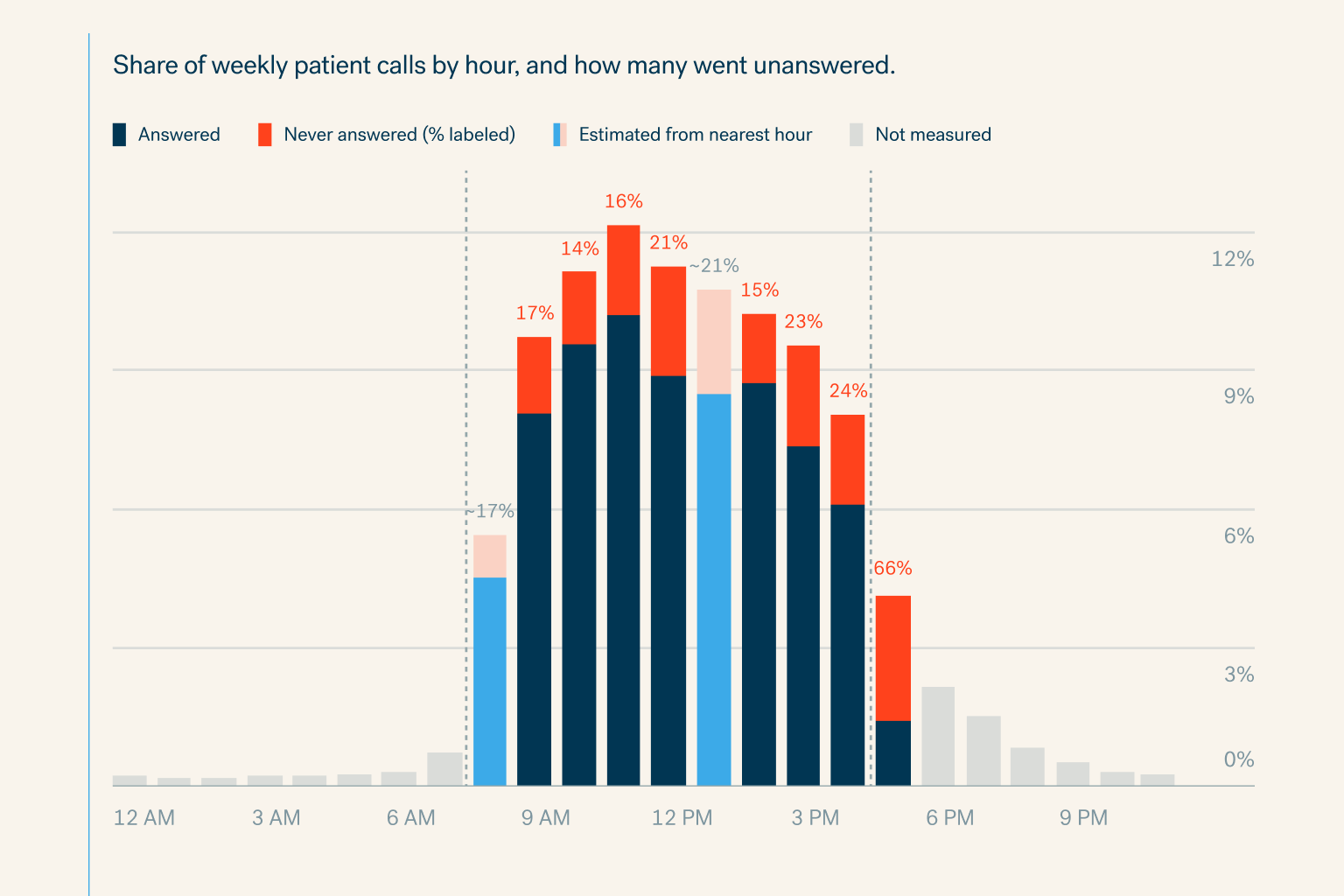
Specialty practices miss 18% of patient calls in office hours and 81% after hours. See the cost per physician and how voice AI books every call.
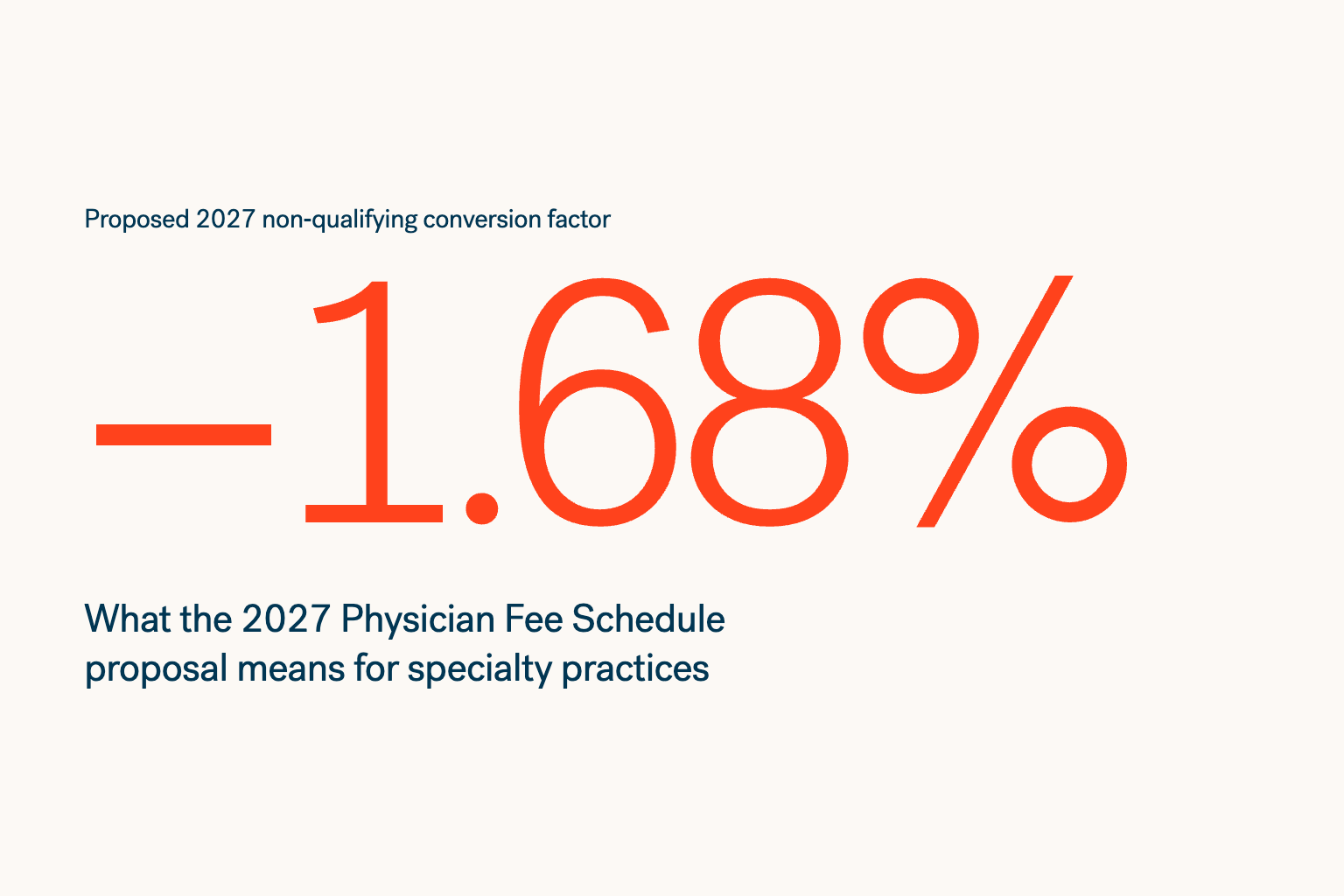
CMS proposes 2027 Medicare conversion factors down 1.19% to 1.68%. See the impact on specialty practices and the revenue levers you still control.
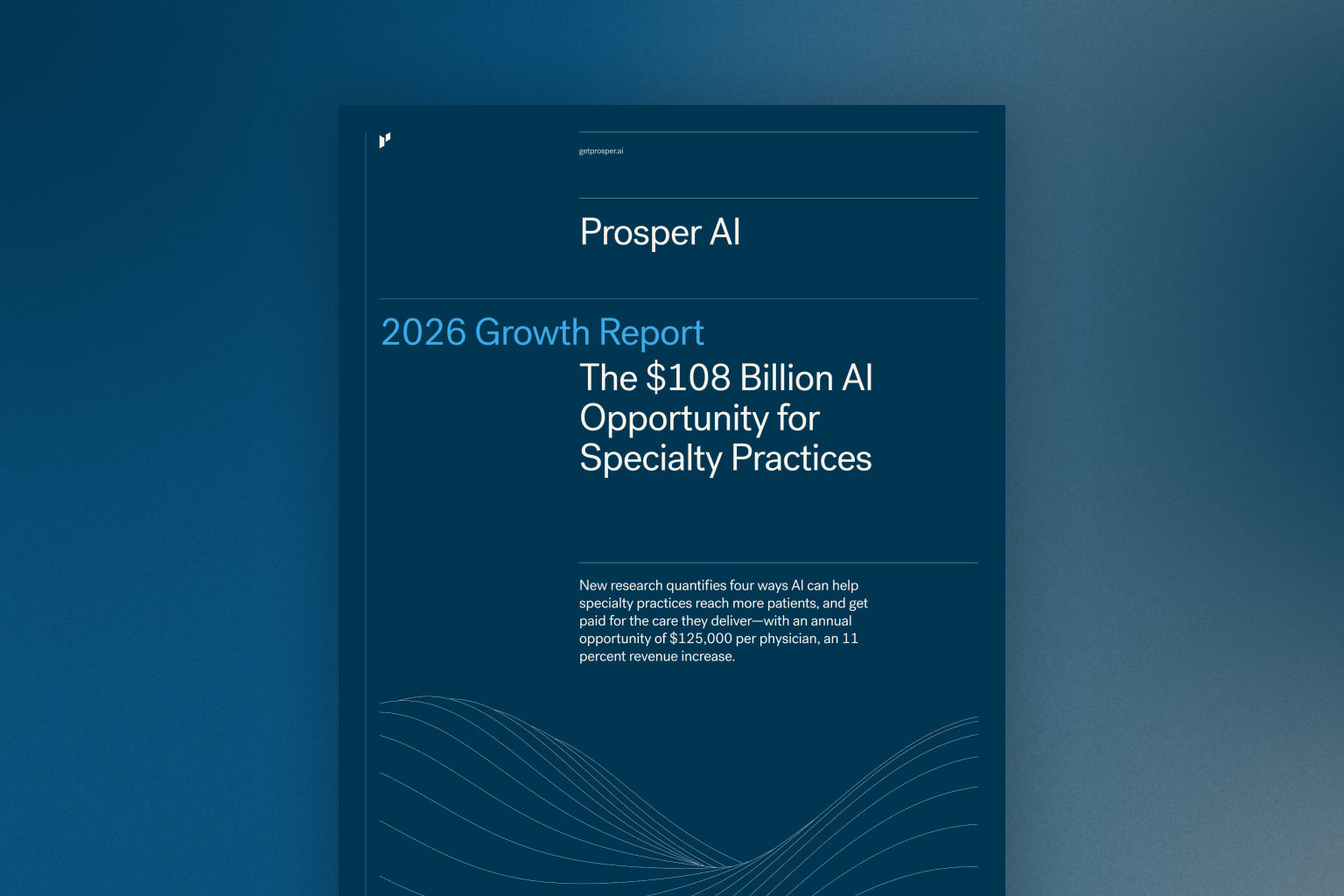
New research quantifies four ways AI can help specialty practices reach more patients, and get paid for the care they deliver—with an annual opportuni


