




Best Voice AI for Gastroenterology Practices: 4 Options Compared (2026)
Compare 4 voice AI vendors for GI practices on colonoscopy scheduling, benefits verification, and prior auth calls. See which ones stop at booking.

Hello Patient and Prosper AI both reduce front-desk work, but they do it in very different ways and for very different call volumes. If you're mid-evaluation and trying to figure out which one belongs in your stack, this breakdown maps out exactly where each tool starts and stops.
TLDR:
Hello Patient is a multi-channel engagement platform whose AI agent (Mia) handles inbound voice, text, and chat, including 24/7 scheduling. Its scope spans appointment reminders, recall messaging, two-way texting, and online reputation management, helping practices reduce no-shows and keep recall lists active through automated outreach.
The core workflow looks like this: Mia answers inbound calls and handles scheduling, rescheduling, and patient questions around the clock, while also sending appointment reminders via text, email, or voice and letting patients confirm or cancel directly from the message. Recall campaigns prompt lapsed patients to rebook, and review requests go out automatically after visits.
Where Hello Patient stops is worth noting. It covers scheduling and communication end to end, but payer-facing work — insurance eligibility and benefits verification, prior authorization, denials management, and outbound calls to payors — sits outside its scope and remains staff-handled. For practices comparing tools on payer-side call containment rather than scheduling and communication, that's the gap that matters.
Prosper AI is a voice AI built for healthcare, designed to handle the full range of routine patient calls that flood front desks every day. Scheduling, rescheduling, cancellations, prescription refill requests, referrals, benefits verification, prior auth status checks, and general FAQs are all within scope.
In production, Prosper AI resolves 60%+ of inbound patient calls end-to-end, based on Prosper AI's customer deployment data, without transferring to staff.
Prosper AI integrates directly with EHR and PMS systems, writing data back automatically so there is no manual reconciliation after the call. It works across the specialties and call types that define ambulatory care, from OB/GYN to podiatry to multi-site health systems.
The goal is straightforward: fewer calls reaching your front desk staff, handled correctly, at any hour.
Both tools handle inbound patient scheduling calls, but the workflow coverage diverges quickly once you get past the calendar.

Hello Patient's Mia answers inbound calls and handles scheduling, rescheduling, and patient questions around the clock, while also sending appointment reminders via text, email, or voice and letting patients confirm or cancel directly from the message. That covers a real slice of inbound volume, but it leaves most call types, including insurance questions and prescription refill routing, back on the front desk.
Prosper AI handles the full inbound call mix: scheduling, rescheduling, cancellations, insurance verification questions, prescription routing, and general inquiries. In production, Prosper resolves 60%+ of inbound calls end-to-end without staff involvement (based on Prosper AI's customer deployment data), writing confirmed appointments directly back to the EHR with no manual staff review required.
Prosper AI goes well beyond inbound call handling. On the outbound side, it runs automated appointment reminders, recall campaigns, and gap-in-care outreach, reducing no-show rates and keeping schedules full without staff manually working call lists.
Payer-facing workflows get the same treatment. Prosper automates benefits verification and prior auth status checks, writing results back directly to the EHR so staff aren't toggling between payer portals and patient records. AI-driven prior auth workflows can compress what once took days into minutes, a meaningful shift for any practice managing high authorization volume.
These are the workflows that eat up the most administrative time in a typical ambulatory practice, and most scheduling-focused tools leave them entirely to staff. Practices using Hello Patient still need a separate process for benefits verification and prior auth follow-up.
If outbound recall and payer-side automation matter to your evaluation, that gap is worth mapping against your current call mix before making a decision.
Hello Patient's agents run on the EHRs practices already use. Agents see your live calendar and write appointments back into it, with no one on your front desk retyping anything.
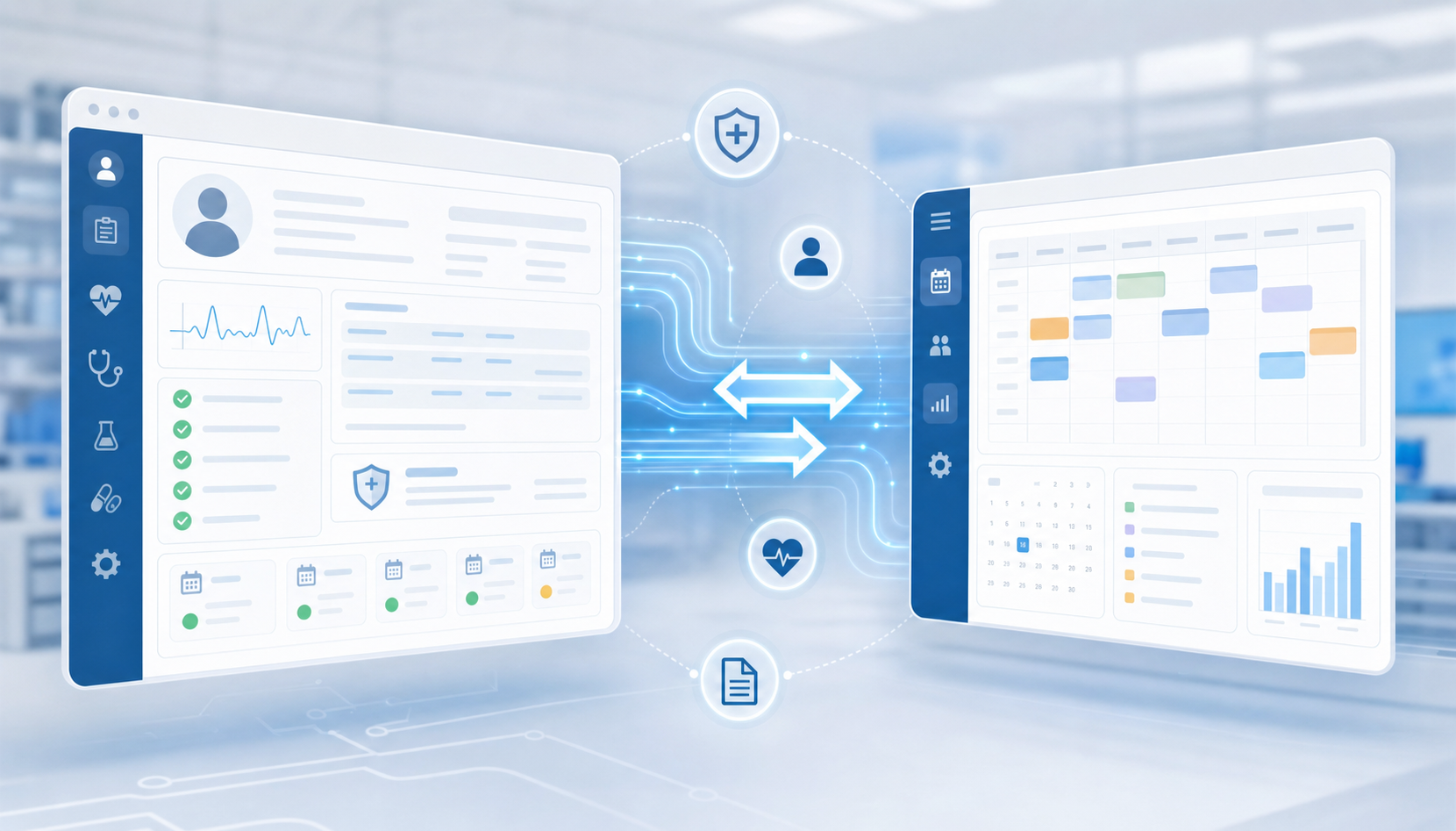
Prosper AI connects directly to your EHR and PMS to read scheduling rules, insurance eligibility data, and patient history, then writes outcomes (appointment confirmations, intake responses, and call dispositions) back to the record automatically. Supported systems include athenahealth, Epic, Modmed, and others. Implementation typically runs four to six weeks, a reflection of that bidirectional data exchange depth, not unnecessary complexity.
Hello Patient tends to serve smaller independent practices and solo or small group providers who want a lightweight patient messaging and recall solution. Its feature set maps well to practices where the primary need is reducing no-shows through automated reminders and two-way texting, without requiring deep EHR integration or multi-workflow automation.
Prosper AI is built for ambulatory practices, specialty clinics, and health systems that carry higher call volume and need end-to-end coverage across scheduling, benefits verification, prior auth, and billing inquiries. Practices handling roughly 1,100 or more inbound calls per week tend to see the strongest fit, where routing routine call types away from staff has a measurable impact on front-desk capacity.
If your primary problem is appointment reminder delivery and basic recall outreach, Hello Patient's scope may be sufficient. If your call mix includes insurance questions or prior auth status checks, a reminder-focused tool leaves most of that volume unaddressed and staff still fielding the bulk of inbound calls manually.
Prosper AI is built for the full scope of what a busy front desk actually handles. Where Hello Patient focuses on appointment reminders and two-way patient messaging, Prosper AI covers the entire patient access workflow: inbound call handling, scheduling, benefits verification, prior auth support, and billing inquiries, all within a single AI-driven system.
In production, Prosper AI resolves 60%+ of inbound patient calls end-to-end (based on Prosper AI's customer deployment data), meaning staff never touch those calls. That kind of containment rate goes well beyond what reminder-focused tools can offer, since those tools only intercept a fraction of total call volume to begin with.
Prosper AI also integrates directly with major EHR and PMS systems, writing data back automatically so staff never need to manually sync separate records. For practices fielding hundreds of calls weekly across scheduling, insurance, and billing, that coverage gap matters.
If your evaluation is weighing a messaging and reminder tool against a system that handles the broader call mix, the scope difference is worth quantifying before you decide.
The right call here depends on what your front desk actually handles every day. For small practices with a straightforward reminder and recall need, Hello Patient fits that scope. For practices carrying heavier inbound call volume across scheduling, insurance, and billing, a messaging tool covers only a fraction of the work. If the broader call mix is your problem, Prosper AI is worth a closer look.
Hello Patient fits smaller independent dental and optometry practices where the primary need is reducing no-shows through automated reminders and two-way text confirmations. Prosper AI is built for ambulatory practices, specialty clinics, and health systems handling roughly 1,100 or more inbound calls per week across scheduling, insurance questions, prior auth status checks, and billing inquiries, where a reminder tool leaves most of the call volume untouched.
Hello Patient automates outbound patient messaging and lets patients reply to confirm or cancel appointments, which covers confirmation-related call volume. Prosper AI handles the full inbound call mix end-to-end, writing outcomes directly back to the EHR, and also calls payers directly for benefits verification and prior auth follow-up, workflows that remain staff responsibilities in a Hello Patient deployment.
Start by mapping your actual call mix across three months of data. If your inbound volume is dominated by appointment confirmations and basic recall, a messaging tool may cover your primary need. If your staff fields insurance questions, after-hours scheduling requests, or prior auth status calls in meaningful volume, a reminder-focused tool intercepts only a fraction of total inbound calls, and the remaining volume stays on the front desk regardless.
Prosper AI does not require you to change your EHR system or rip out existing software to go live.
Onboarding follows a phased rollout: agents are configured to your workflows in the first two weeks, then go live on a limited call surface, often starting with after-hours coverage, before expanding incrementally over roughly six weeks. As of mid-2026, implementation slots are in high demand, so clarifying your start date during the sales process is worth doing early to set accurate expectations around time-to-value.
Discover how healthcare teams are transforming patient access with Prosper.
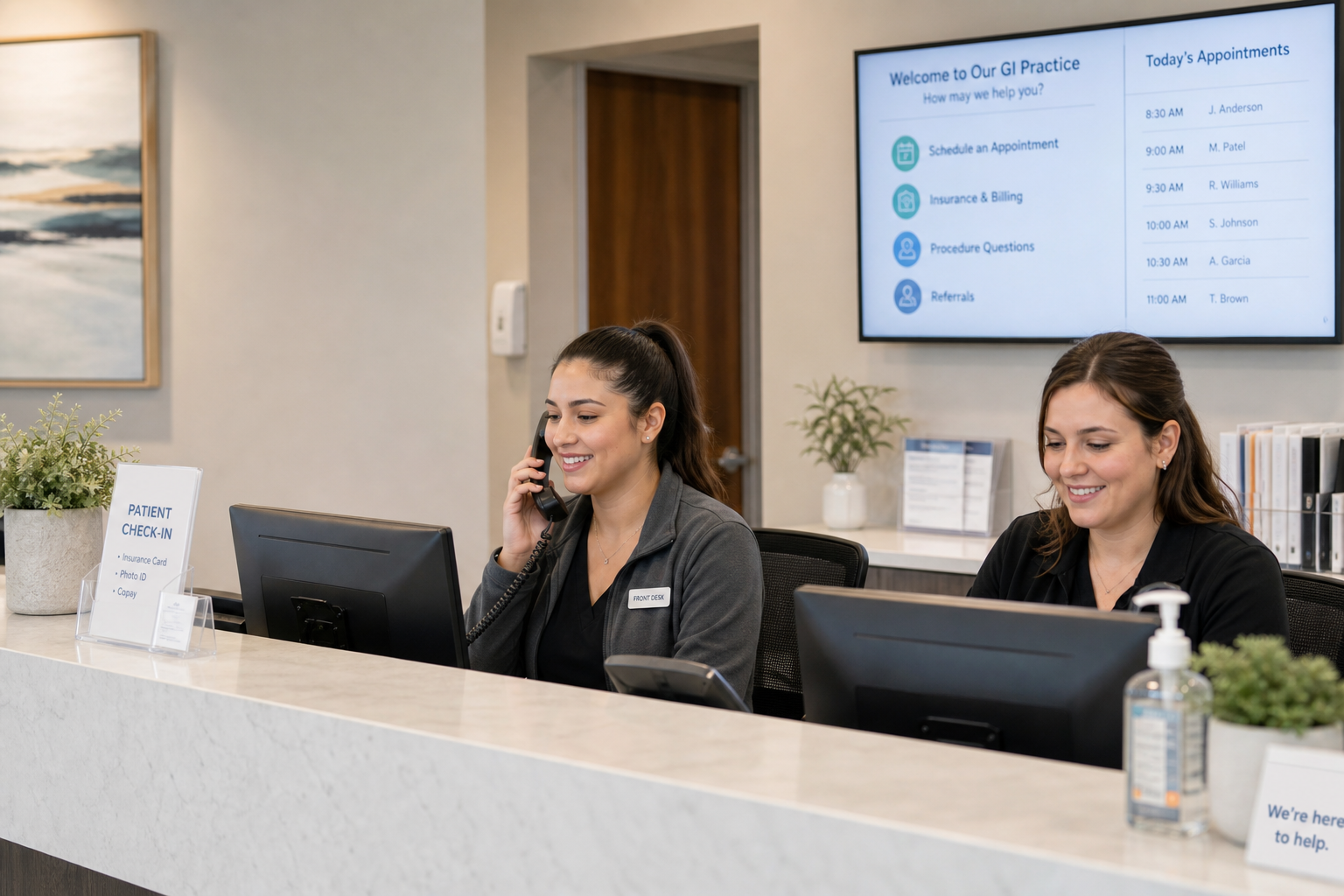
Compare 4 voice AI vendors for GI practices on colonoscopy scheduling, benefits verification, and prior auth calls. See which ones stop at booking.

Compare 5 AI voice agents for ENT and allergy practices. See which handle scheduling and the payer calls for prior auth and benefits checks.

Best AI agents for orthopedic practices compared on prior auth, outbound payer calling, and billing. Only 1 vendor resolves 60%+ of calls end-to-end.


