




Best AI Agents for Orthopedics: September 2026
Best AI agents for orthopedic practices compared on prior auth, outbound payer calling, and billing. Only 1 vendor resolves 60%+ of calls end-to-end.

Medical appointment scheduling software demos always show you the same thing: a clean booking flow, a reminder going out, maybe a cancellation getting rescheduled. But when you walk through your actual call mix with the vendor, the math stops working. Scheduling is maybe half your inbound volume. The rest is benefits verification, billing questions, prior auth coordination, and referral routing. Most medical appointment scheduling software handles the first part and leaves the second part to staff. This ranking breaks down which tools cover scheduling alone and which ones close the gap on the rest of your patient access call surface.
TLDR:
Medical appointment scheduling software is purpose-built for healthcare operations, not adapted from generic calendar tools. At minimum, these systems handle patient booking, rescheduling, reminders, and provider calendar coordination. The more capable options go further: bidirectional EHR integration, insurance verification, HIPAA-compliant data handling, and multi-provider scheduling logic built in from the start. The medical scheduling software market reached $503 million in 2024, reflecting growing adoption across healthcare organizations.

The gap between a basic EHR scheduling module and dedicated software is more than cosmetic. EHR modules record appointments; they don't manage the full workflow around them. Staff still field calls, chase confirmations, and manually verify coverage. Purpose-built scheduling software is designed to close that gap.
Every tool on this list was assessed against criteria that come up in real vendor comparisons at multi-location groups processing thousands of calls a month. These are the questions practice administrators actually ask before signing.
Prosper AI goes well beyond scheduling. It handles the full patient access call surface: appointment booking, cancellations, rescheduling, insurance verification, prior auth support, and billing inquiries, all without routing calls to your front desk staff.
Most medical appointment scheduling software stops at the calendar. Prosper handles roughly 60% of inbound calls end-to-end in production, across a call mix that includes scheduling but also benefits verification, referral coordination, and prescription refill routing.
Where narrow-scope tools hand off anything outside a booking flow to staff, Prosper resolves it. The AI writes back to your EHR or PMS directly, so appointment data, insurance details, and patient records stay current without manual entry. Practices running Prosper have reported 60%+ of inbound calls resolved end-to-end, with staff freed to focus on exceptions that genuinely require human judgment. For more on patient scheduling systems, see our detailed comparison.
Prosper AI is worth considering if your scheduling problem is really a patient access problem, and your current tools are only solving part of it.
Hello Patient is a multi-channel patient engagement platform whose AI agent, Mia, handles inbound voice, text, and chat, including 24/7 scheduling. It also covers appointment reminders, confirmations, and online booking.
Hello Patient's scope stops at the payer. Insurance eligibility and benefits verification, prior authorization, denials management, and outbound calls to payors all remain staff-handled. Practices whose call volume is weighted toward those workflows, rather than scheduling and patient communication, will find that gap adds up.
Assort Health focuses on patient intake and scheduling coordination, with tools built around insurance verification and referral management. It works well for practices that need structured intake workflows, particularly in specialty care settings where referral routing adds complexity.
That said, its scope is narrower. Assort Health handles the front end of scheduling but leaves much of the phone-based patient access work to staff. If your call volume is high and your team is fielding repetitive inbound requests, you may find the coverage gap noticeable.
Pricing is available on request.
Luma Health is a patient engagement tool that handles appointment reminders, recalls, and self-scheduling through SMS and web. It works well for practices that want to reduce no-shows and fill cancellation slots without heavy IT involvement. Healthcare no-show rates average 15%, making reminder systems a practical tool for day-to-day use.
Where it fits
Luma connects with many EHR systems and lets patients confirm, cancel, or reschedule via text. Staff see fewer inbound calls for routine scheduling changes, and waitlist management is largely self-serve.
Limitations to consider
Zocdoc is a consumer-facing appointment marketplace that lets patients search for in-network providers and book appointments directly. It works well for practices that want new patient acquisition through Zocdoc's directory, but that focus shapes its limitations as a scheduling tool.
Many practices find Zocdoc's value tied almost entirely to the marketplace itself. If your goal is reducing front desk call volume or automating inbound scheduling requests from existing patients, Zocdoc offers little on that front. It also carries a per-booking fee structure that can become costly at scale, and it does not integrate deeply with EHR workflows for things like prior auth or benefits verification.
For practices comparing medical appointment scheduling software, Zocdoc fits best as a new patient acquisition channel, not an end-to-end scheduling solution.
Weave is an EHR-integrated scheduling tool built for multi-specialty and dental group practices. It connects appointment booking directly to patient communication workflows, so confirmations, reminders, and recalls go out without staff intervention.
The scheduling interface pulls from existing patient records, which cuts down on duplicate data entry and reduces the chance of booking errors. Front desk teams can see real-time availability across providers and locations from a single view.
Weave also handles two-way texting with patients, which means rescheduling requests and cancellations get resolved faster without tying up phone lines.
The table below maps each tool against the capabilities that matter most in a real vendor evaluation. Use it to spot coverage gaps quickly before going deeper on any single product.
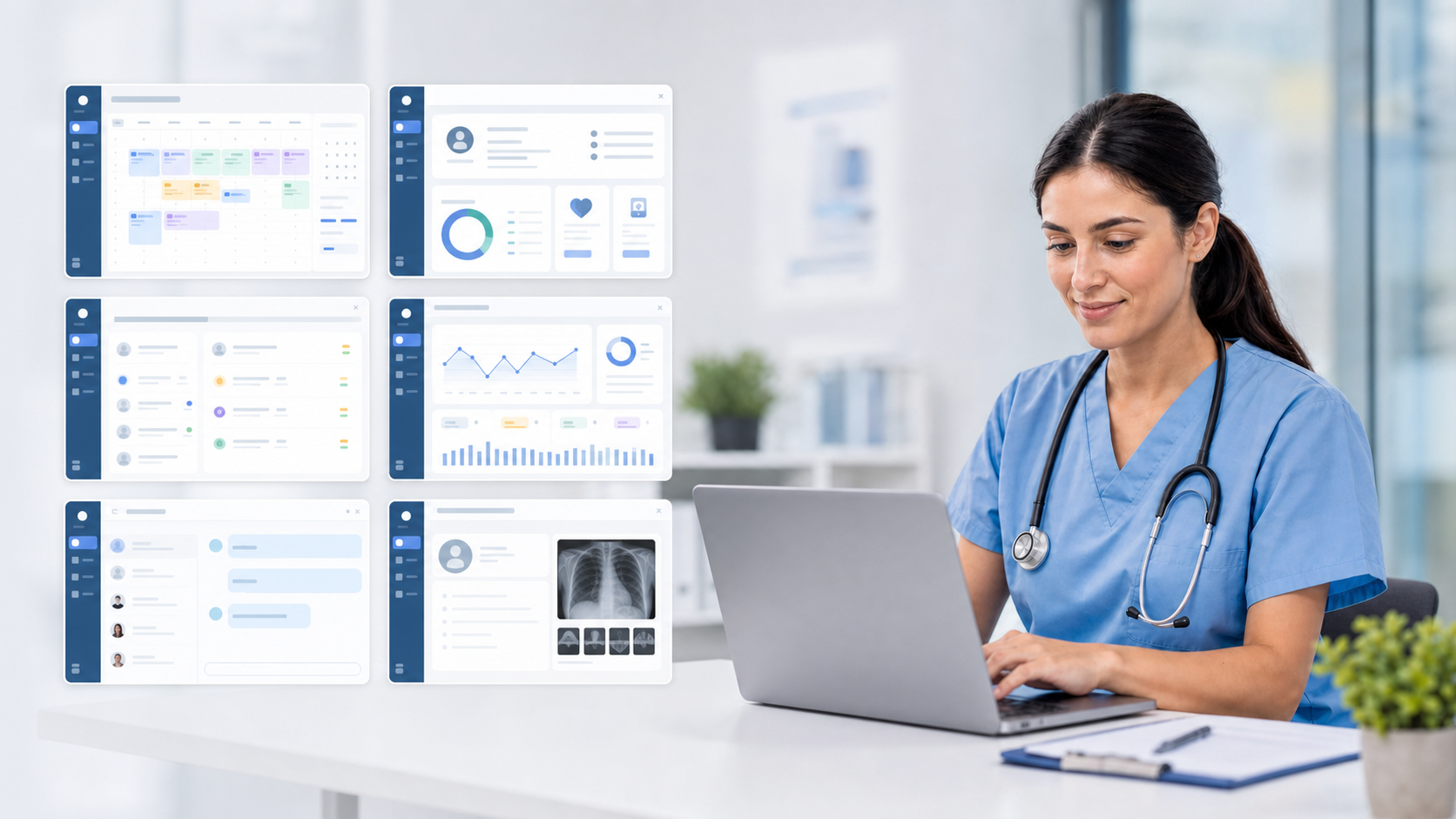
Prosper AI goes beyond scheduling to handle the full patient access call mix, including benefits verification, prior auth, and billing inquiries. Most medical appointment scheduling software tools stop at the calendar, leaving your front desk to absorb the rest.
Prosper achieves 60%+ end-to-end call resolution in production, well above what narrow-scope scheduling tools typically handle. That gap comes from architecture: narrow-scope tools automate one workflow; Prosper covers the broader call surface.
It integrates directly with your EHR and PMS, with no manual reconciliation needed. Staff handle exceptions. Prosper handles volume.
Narrow-scope scheduling tools automate the easy part and leave the rest to your staff. The real patient access problem shows up in benefits verification calls, prior auth requests, and billing inquiries that still hit your front desk after you've deployed a booking widget. If you're comparing vendors and finding the same coverage gaps across multiple demos, talk to us about what it looks like when automation actually covers your call mix.
Online-only tools work well for straightforward appointment booking with tech-comfortable patients, but they leave phone-based requests, insurance questions, and after-hours calls to staff. AI voice automation handles the full inbound call mix (booking, verification, billing) so your team isn't absorbing everything the self-scheduling widget can't resolve.
Look for bidirectional EHR integration, real-time availability across providers and locations, and automation that covers your full call mix: scheduling, benefits verification, billing, and more. Multi-location groups typically need tools that handle insurance verification, after-hours coverage, and complex intake workflows without requiring staff to sync data manually between systems.
EHR modules record appointments; dedicated scheduling software manages the workflow around them. That includes automated reminders, insurance verification, inbound call handling, and EHR write-back without manual data entry. If your staff is still fielding calls and chasing confirmations, your EHR module isn't solving the problem.
If your practice requires referrals, deals with multiple insurance plans with different authorization requirements, or experiences high claim denial rates, real-time verification during scheduling prevents downstream revenue cycle problems. It's particularly important for specialties like physical therapy, pain management, and surgical practices where coverage requirements vary widely by plan.
Discover how healthcare teams are transforming patient access with Prosper.

Best AI agents for orthopedic practices compared on prior auth, outbound payer calling, and billing. Only 1 vendor resolves 60%+ of calls end-to-end.

The 7 best AI voice agents for ophthalmology practices. Find platforms with ModMed & Nextech integrations, prior auth support, and patient automation.

Our September 2026 FQHC voice agent comparison covers Medicaid verification, payer calls, prior auth, and multilingual support across five tools.


