




AI Voice-Enabled Patient Engagement: What Specialty Practices Should Expect in 2026
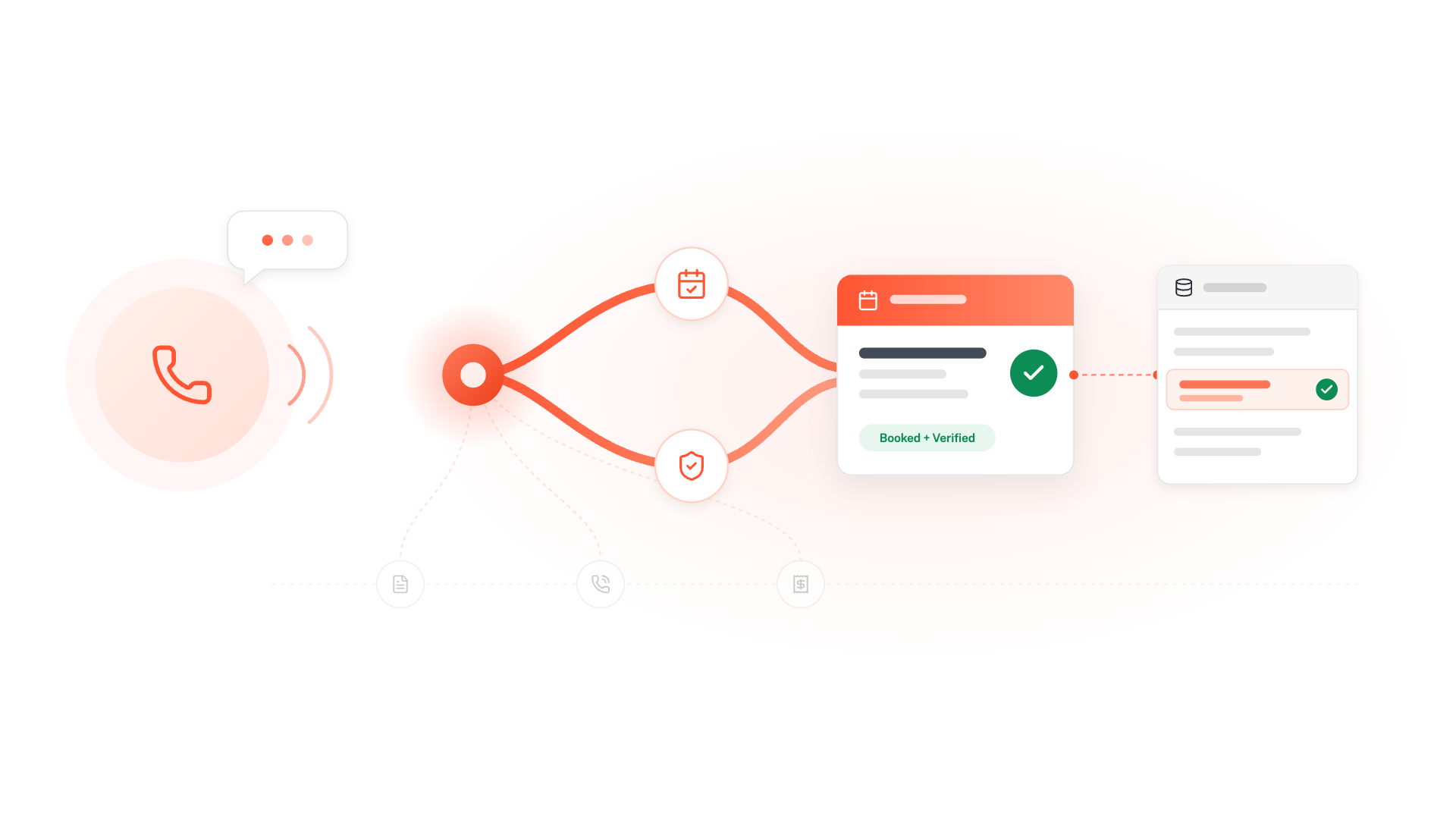
AI voice-enabled patient engagement now covers scheduling, benefits verification, prior auth, and billing calls in one system. See what to evaluate be

AI voice agents for podiatry are phone-based AI systems that handle scheduling, insurance verification, and prior authorization calls for foot and ankle practices without routing every call to staff. Finding the right one is trickier than it looks: most tools on the market are built around general scheduling, while podiatry call volume runs deeper, covering diabetic foot care follow-ups, orthotics fittings, and payer calls that scheduling-only tools skip.
This list ranks the top 5 by how much of that full call mix each one actually resolves end-to-end, not just the easy scheduling calls.
AI voice agents are phone-based AI systems that handle inbound and outbound patient calls without requiring a human staff member to pick up. For podiatry practices, that means a patient can call to schedule a follow-up after bunion surgery, ask about insurance coverage, or request a prescription refill callback, and the agent handles it conversationally from start to finish.
The scope matters here. Many tools on this list handle appointment scheduling. Fewer handle billing inquiries, prior auth status checks, or post-visit follow-up calls. The gap between those two categories is where most practices feel the friction.
Podiatry-specific call volume tends to cluster around a handful of repeating request types:
An AI voice agent that covers all four of those without routing to staff on every call is a materially different tool from one that handles scheduling alone.
▶ Case Study: How Northern Illinois Foot & Ankle avoided $350K in hiring costs with Prosper AI
Ranking AI voice agents for podiatry is different from ranking general-purpose phone AI. Podiatry practices carry a specific call mix: appointment scheduling around nail care, orthotics consultations, wound checks, and diabetic foot exams, plus insurance verification, prior auth for surgical procedures, and frequent after-hours inquiries from patients managing chronic conditions.
We measured each tool against that reality, not a generic healthcare checklist.
Prosper AI ranks first because it's the only tool on this list that resolves scheduling, insurance verification, and prior authorization calls end-to-end, without routing the harder ones to staff.
Where many AI voice tools stop at appointment scheduling, Prosper AI handles the full range of calls that hit a podiatry front desk: scheduling, rescheduling, cancellations, insurance benefits verification, prescription refill routing, referral coordination, and post-visit follow-up.
Prosper AI is best suited for podiatry practices fielding high inbound call volume across multiple call types, particularly those running on athenahealth or ModMed who want EHR write-back without manual reconciliation. If your front desk is fielding calls across scheduling, insurance, and refill routing, Prosper AI covers that full surface so two-thirds of it doesn't stay on staff.
Hyro is an AI voice agent built for health systems, with deployments at large academic medical centers and regional hospital networks. It handles appointment scheduling, FAQ responses, and basic triage routing across voice and chat channels.
Where Hyro performs well is in high-volume, standardized call types at the enterprise level. Its conversational layer is capable, and it integrates with several major EHR systems.
The limitation for podiatry practices is one of fit. Hyro is architected for health system scale, which means its configuration, onboarding, and support model reflect that. Smaller specialty practices often find the implementation timeline longer and the customization process less self-directed than they need.
For a podiatry group weighing Hyro, the real question is whether your call volume and IT resources match what the product was designed around.
Assort Health is an AI voice agent built for high-volume ambulatory care, with particular traction in orthopedics, physical therapy, and musculoskeletal practices. For podiatry, that adjacent specialty focus means the system arrives with reasonable familiarity around appointment types, referral workflows, and insurance patterns common to foot and ankle care.
The agent handles inbound scheduling, appointment reminders, and basic insurance verification. Call routing logic is configurable, and the system integrates with several major EHRs used across specialty practices.
Where Assort Health shows its limits is call coverage breadth. Practices fielding calls across billing questions, post-visit follow-up, and prior auth status tend to find the system well-suited to scheduling volume but less equipped for the wider call mix a busy podiatry front desk actually sees.
Hello Patient is a multi-channel patient engagement platform. Its AI agent, Mia, handles scheduling conversations, appointment reminders, two-way confirmations, and basic intake across voice, text, and chat — with coverage across all hours. For practices whose primary call volume is routine scheduling confirmations and reminders, that covers meaningful ground.
Where Hello Patient runs short is call coverage depth. Hello Patient provides AI billing conversations that handle billing questions and facilitate payments, but practices fielding calls that require insurance verification or prior auth status checks will find those call types remain staff-handled.
Practices considering Hello Patient should weigh whether multi-channel coverage on scheduling and reminders meets enough of their call mix, or whether the RCM portion of their inbound volume requires a deeper solution.
How do I choose the right AI voice agent for my podiatry practice from this list?
Start by mapping your actual call mix before comparing features: if your front desk handles scheduling only, Assort Health may cover enough ground, but if your volume includes insurance verification, prior auth status checks, and post-visit follow-up, only Prosper AI covers that full surface in a single workflow. Run a live call test on each vendor's customer number to check how the agent handles off-script questions and mid-call topic changes before committing.
Is Prosper AI a better fit for podiatry than Assort Health when the practice handles surgical prior authorizations?
Yes, for practices with high prior auth volume, Prosper AI handles prior authorization calls end-to-end, including outbound calls directly to the payer, while Assort Health's architecture is built around scheduling-heavy ambulatory workflows where those RCM call types tend to remain staff-handled. If prior auth routing is a meaningful share of your weekly call volume, the coverage gap between the two systems adds up quickly.
When should a podiatry practice consider Hello Patient instead of a dedicated AI voice agent?
Hello Patient fits practices where the primary goal is reducing inbound confirmation calls through two-way text messaging, not resolving live inbound calls. If your call volume is weighted toward routine scheduling confirmations and your staff can still handle real-time inbound calls, Hello Patient covers that slice, but practices with after-hours call volume or insurance-related inquiries will need a voice-first solution alongside it.
What call types should I expect an AI voice agent to handle versus leave to staff in a podiatry setting?
AI voice agents work well for appointment scheduling, rescheduling, cancellations, insurance eligibility questions, prescription refill routing, and post-visit follow-up calls. Clinical judgment calls, complex triage, and situations requiring chart review still go to staff. The right framing is that the agent handles the high-volume routine work so staff can focus on the calls that genuinely require them.
Does Hyro work for smaller podiatry groups, or is it built for health system scale?
Hyro is architected for large health system deployments, which means the configuration, onboarding, and support model reflect that scale. Smaller specialty podiatry groups often find the implementation timeline longer and the customization process less self-directed than they need, particularly for specialty-specific workflows like diabetic foot care follow-up cadences or orthotic authorization calls that typically require vendor-side configuration instead of self-service setup.
Does Prosper AI integrate with ModMed and athenahealth for podiatry practices?
Yes. Prosper AI connects directly to athenahealth and ModMed, the two EHR platforms most common among podiatry practices, and writes appointment and call-outcome data back automatically rather than leaving it in a separate system for staff to reconcile.
Prosper AI was built around the call patterns that define podiatry front desks: appointment scheduling, insurance verification, recall outreach, and after-hours intake. Where most AI scheduling tools stop at the calendar, Prosper handles the full call surface so staff can focus on patients in the room.
In production across podiatry deployments, Prosper AI resolves 60%+ of inbound calls end-to-end (based on Prosper AI's customer deployment data), including same-day scheduling requests, eligibility checks, and post-visit follow-up calls that would otherwise queue up for a front desk coordinator.
Prosper AI connects directly to your EHR, writes appointments back automatically, and handles insurance rule logic without requiring staff to intervene on routine calls.
Book a demo with Prosper AI to see what full-coverage resolution looks like on your actual call mix.
Discover how healthcare teams are transforming patient access with Prosper.
AI voice-enabled patient engagement now covers scheduling, benefits verification, prior auth, and billing calls in one system. See what to evaluate be
Compare 4 voice AI vendors for GI practices on colonoscopy scheduling, benefits verification, and prior auth calls. See which ones stop at booking.

Compare 5 AI voice agents for ENT and allergy practices. See which handle scheduling and the payer calls for prior auth and benefits checks.


