




AI Voice-Enabled Patient Engagement: What Specialty Practices Should Expect in 2026
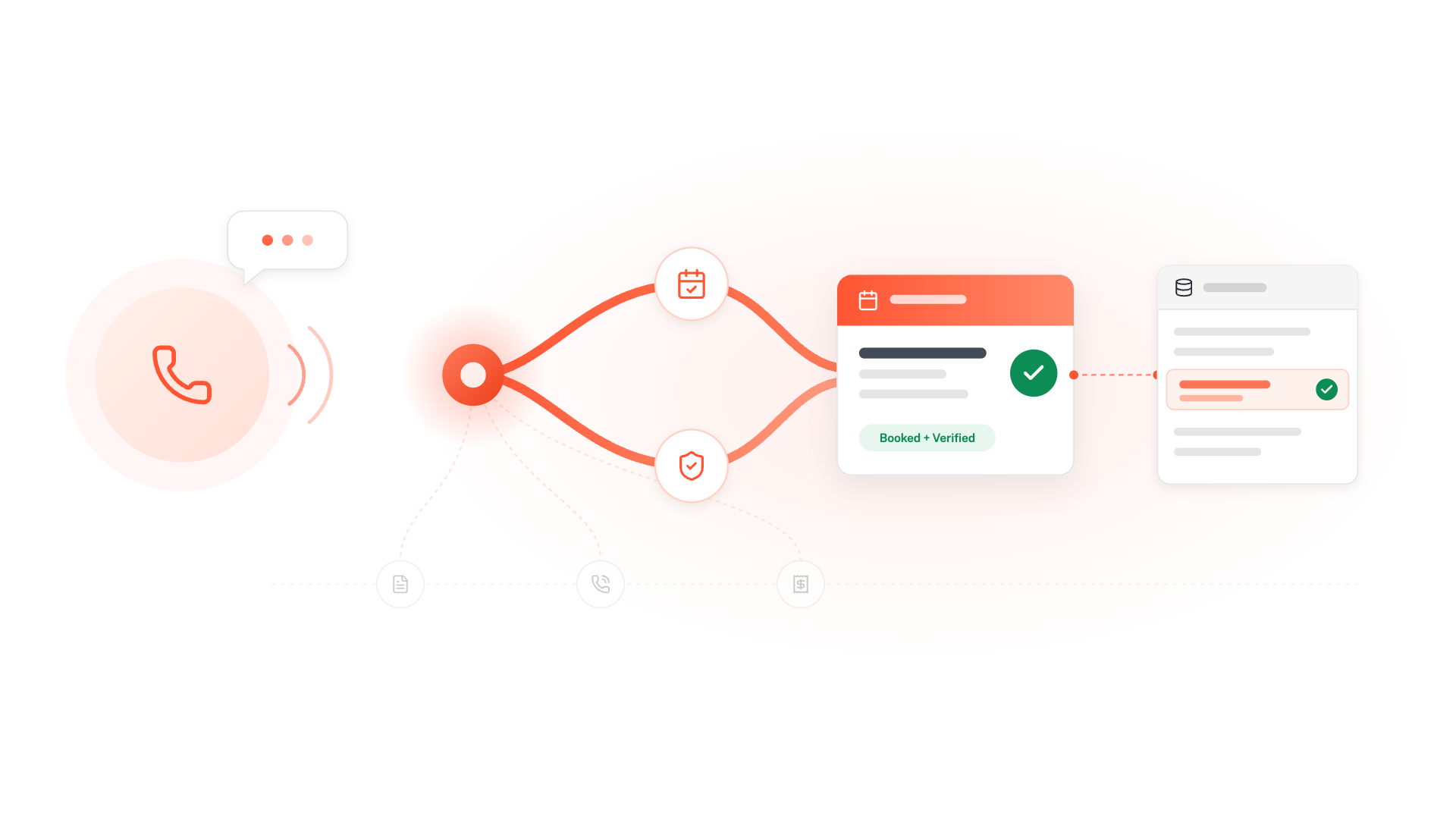
AI voice-enabled patient engagement now covers scheduling, benefits verification, prior auth, and billing calls in one system. See what to evaluate be

Your billing calls are carrying more weight than your scheduling calls ever did. Patients calling about balances are often working off an EOB they don't fully understand, a statement that arrived weeks after the visit, or a number that changed after insurance posted. AI voice agent patient billing automation has come far enough to handle most of that end-to-end, but only if the architecture was built for billing from the ground up. Here's what that looks like in practice.
TLDR:
Billing calls carry a different kind of weight than scheduling calls. A patient asking to book an appointment has a simple goal with a predictable resolution path. A patient calling about a bill may be confused, frustrated, or facing a balance they weren't expecting after insurance processed their claim.
The stakes are higher on both sides. Practices risk bad debt and patient attrition when billing calls go poorly. Patients risk financial harm when they misunderstand their options.
Several factors make billing calls structurally harder to automate than scheduling:
Most AI scheduling tools stop at the calendar because their architecture was built for a single, well-defined task. AI voice agents for healthcare require a different design: live EHR and billing system reads, branching conversation logic, and the ability to execute transactions mid-call instead of capturing intent and handing off to staff.
Most billing call automation stops at simple account lookups or reroutes callers to a human the moment complexity appears. A well-built AI voice agent for patient billing goes considerably further.
On a single call, it can confirm outstanding balances, walk a patient through their payment options, accept a payment directly, set up an installment plan, and send a post-call confirmation. For billing inquiries, it can pull explanation of benefits details, clarify what insurance covered versus what the patient owes, and flag accounts that need staff review without dropping the call.
The scope matters because billing calls rarely arrive clean. Patients often call with partial information, frustration, or multiple questions layered into one conversation. An AI voice agent that handles only the lookup but hands off everything else still leaves most of the call volume on staff.
Billing calls aren't monolithic. A patient calling to ask why their EOB shows a balance they didn't expect needs a different response than one calling to set up a payment plan or dispute a charge. AI voice agents built for billing handle this by recognizing call intent at the start of the conversation and routing each interaction through the appropriate workflow.
| Call Type | What the Patient Needs | How AI Handles It | Staff Involvement |
|---|---|---|---|
| Balance inquiry | Current amount owed | Pulls live account balance from billing system and explains what the charge covers | None for routine reads |
| Payment collection | Pay a balance over the phone | Walks patient through payment, processes via PCI-compliant tokenization layer, confirms transaction | None for standard payments |
| Payment plan setup | Installment arrangement | Offers plan options based on balance, confirms schedule, logs agreement in billing system | None for standard plans; staff handle out-of-parameter requests |
| EOB & billing statement questions | Understand insurance paid vs. patient owes | Explains line items, clarifies responsibility split, flags disputed charges for a specialist | Billing specialist for genuine disputes |
| Insurance & coverage questions | Benefit-level information | Answers benefit-level questions directly | Staff for anything requiring live verification |
The most common inbound billing call types, and how AI handles them:
Each of these flows runs end-to-end without a staff handoff for routine cases, a key advantage of healthcare call center automation. Calls that involve a dispute, a hardship request, or something outside standard parameters get escalated with full context, so staff aren't starting from scratch.
Billing voice agents are often scoped as inbound-only tools. That assumption leaves revenue sitting in aging AR.
Outbound campaigns run on account-level timing, not a fixed calendar. A call goes out after claim adjudication posts a patient balance, when an installment payment is coming due, or when an account crosses a defined aging threshold. Each trigger reflects where the account actually stands in RCM automation in healthcare, not an arbitrary reminder schedule that ignores claim status.
Outbound voice to patients carries specific consent requirements and calling-window rules that a mailed statement does not. A well-built system tracks consent records and schedules calls within compliant windows automatically, so staff are not manually managing that exposure.
The practical advantage over a paper statement: patients can respond immediately, confirm a balance, and pay in the same call.
Every payment captured over the phone must meet PCI DSS requirements, which means the system handling it cannot store raw card data in call recordings or logs. AI voice agents built for billing calls route payment entry through a PCI-compliant tokenization layer, so card numbers never touch the call transcript. Common questions about this process are covered in patient financial services FAQs. The patient keys in digits, the token is passed to the payment processor, and the recording resumes without sensitive data in it. Staff never hear card numbers, and no manual redaction is needed after the fact.
Billing calls only go as far as the data behind them. AI voice agents that can read from and write to EHR and billing systems handle calls end-to-end instead of creating more work for staff to finish later.
When a patient calls about a balance, the agent pulls the outstanding amount directly from the billing system. When a payment is collected, it posts back without manual entry. When a patient asks why their insurance didn't cover a procedure, the agent retrieves the explanation of benefits and reads it back in plain language.
This two-way integration, covered in depth in the AI voice agents HIPAA and EHR guide, is what separates fully contained billing calls from ones that still require a staff callback.
Billing voice agents operate across two distinct compliance regimes simultaneously. HIPAA call center compliance governs any patient health information spoken, stored, or transmitted during a call. PCI DSS in healthcare governs any payment card data captured during that same interaction.
Most voice agents handle these separately, which creates gaps. A well-architected billing agent keeps both active throughout the call, from the opening verification through the payment step.
AI voice agents handle the majority of billing calls without any human involvement, but some situations genuinely require staff. Knowing where that line sits matters when vetting any vendor.
Common escalation triggers include:
A well-configured voice AI system for patient call automation recognizes these scenarios, tells the patient clearly what's happening, and transfers the call with context intact so staff aren't starting from zero.
Three metrics tend to separate well-configured AI voice agents from ones that quietly underperform on billing calls.
This is the share of billing calls resolved without any staff involvement. A well-scoped deployment handling balance inquiries, payment processing, and plan explanations should reach 50%+ containment in production. See the complete revenue cycle management guide for how containment fits the broader RCM picture. Lower numbers usually point to an intent coverage gap, not a volume problem.
Did the patient leave the call with an answer or a completed payment? Transfers and callbacks add cost and erode patient satisfaction.
AI-handled billing calls should clock in well under the staff-handled baseline, particularly for balance reads and payment confirmations where no judgment call is needed.
When vetting any AI voice agent for patient billing calls, the questions that matter most aren't about voice quality. They're about workflow depth.
Ask whether the agent can pull a live balance, accept a partial payment, and send a confirmation in a single call without staff involvement. Ask how it handles patients who dispute a charge or ask about their EOB. Ask what happens when a call genuinely needs a human.
A few practical evaluation criteria:
The right question isn't whether an AI voice agent sounds good on billing calls. It's whether it can close the call.
Prosper AI handles the full arc of a patient billing call without routing it to staff. When a patient calls about a balance, the AI voice agent pulls their account, confirms what they owe, and walks them through payment options in real time. Patients can pay in full, set up a payment plan, or request an itemized statement without waiting on hold or leaving a voicemail.
For billing inquiries, the agent fields questions about charges, insurance adjustments, and explanation of benefits line items, then logs the interaction back to the patient record.
Most billing call tools stop well before the resolution. The right AI voice agent pulls a live balance, walks through payment options, collects a payment, and logs everything back to the billing system without a staff handoff for routine cases. Your team still owns the exceptions, and those are the calls that actually need human judgment. For everything else, containment is achievable. Prosper AI handles that scope in production if you want to see where the line sits.
Scheduling bots are built for a single, linear task: confirming a slot in the calendar. Patient billing calls require live reads from the EHR and billing system, branching conversation logic based on account status, secure payment capture, and the ability to post transactions back to the system of record mid-call. A scheduling bot hands off the moment a patient asks about a balance; a billing-capable AI voice agent closes that call without staff involvement.
Yes. A well-built AI voice agent for patient billing handles the full arc of that interaction, including pulling the live account balance, walking the patient through available payment options, processing a payment through a PCI-compliant tokenization layer, logging the installment agreement, and sending a post-call confirmation, without routing to staff for routine cases. Prosper AI handles this end-to-end, with card numbers routed through a secure vault so they never appear in the call recording or transcript.
Ask the vendor to walk through a live scenario: can the agent pull a real-time balance, accept a partial payment, explain an explanation of benefits line item, and send a confirmation, all in one call without a staff handoff? Then ask what triggers escalation and what context transfers with the call. Bidirectional EHR integration is the clearest filter: if the agent can read balances but cannot post payments back to your billing system, staff still own the resolution step.
A well-scoped deployment covering balance inquiries, payment processing, and payment plan explanations should reach 50% to 65% containment in production. Numbers below that range typically point to an intent coverage gap (call types the agent was not configured to handle), not a volume problem. Prosper AI's production data shows 60%+ end-to-end resolution across the full inbound call mix, based on Prosper AI's customer deployment data, which includes billing alongside scheduling, insurance questions, and FAQs.
Two regimes apply simultaneously: HIPAA governs any patient health information spoken, stored, or transmitted during the call, and PCI DSS governs any payment card data captured in that same interaction. Call recordings containing protected health information must be encrypted at rest and in transit with audit-trail access logs. Payment card entry should route through a PCI-compliant vault so raw card numbers never touch the voice agent's core infrastructure. EHR and billing system integrations should carry access controls scoped to the minimum data required per call type.
Discover how healthcare teams are transforming patient access with Prosper.
AI voice-enabled patient engagement now covers scheduling, benefits verification, prior auth, and billing calls in one system. See what to evaluate be
Compare 4 voice AI vendors for GI practices on colonoscopy scheduling, benefits verification, and prior auth calls. See which ones stop at booking.

Compare 5 AI voice agents for ENT and allergy practices. See which handle scheduling and the payer calls for prior auth and benefits checks.


