




AI Voice-Enabled Patient Engagement: What Specialty Practices Should Expect in 2026
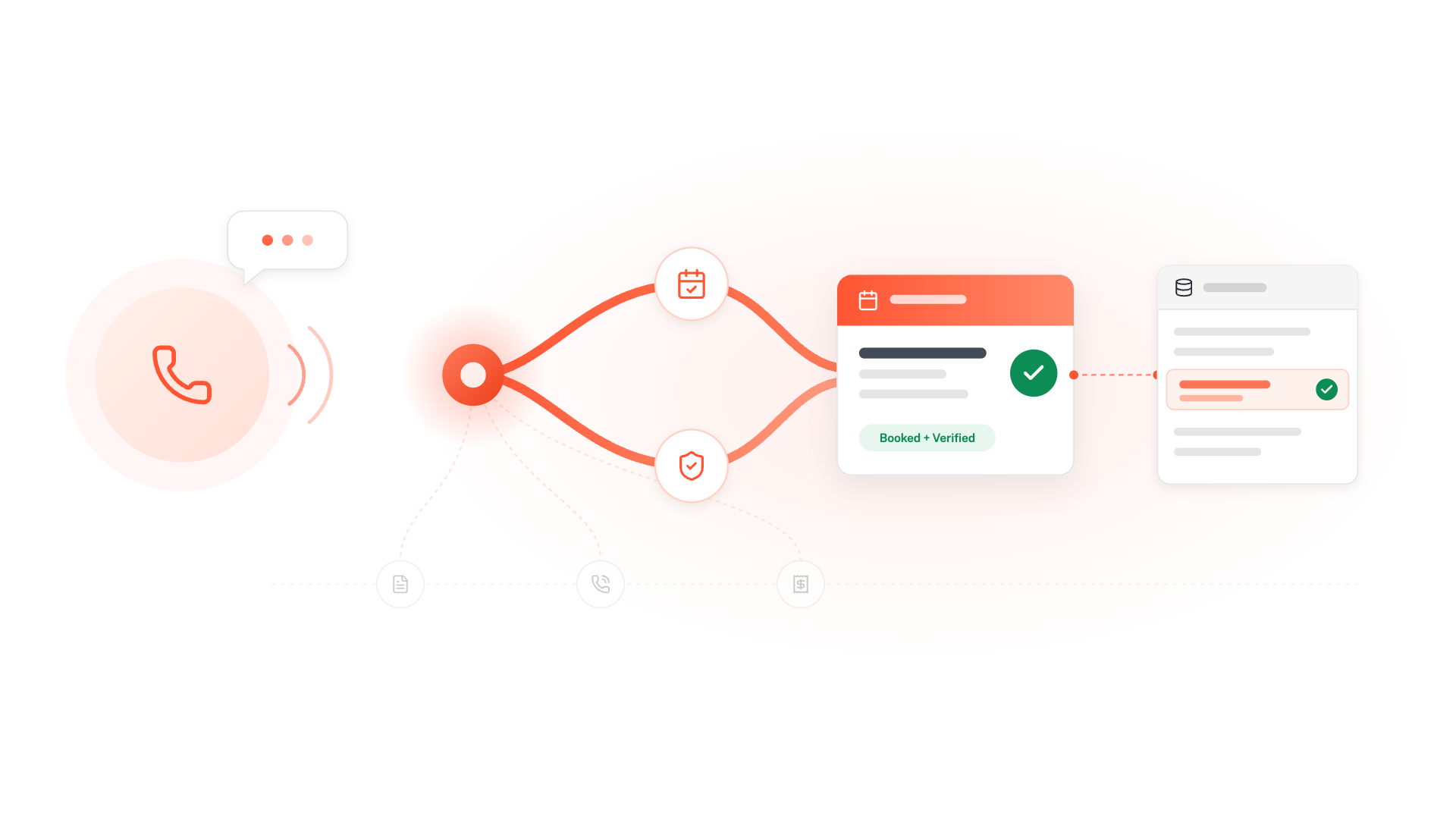
AI voice-enabled patient engagement now covers scheduling, benefits verification, prior auth, and billing calls in one system. See what to evaluate be

AI voice agents for behavioral health are software systems that answer inbound and outbound practice calls, handling scheduling, benefits verification, prior authorization, and after-hours coverage without a staff member on the line. Behavioral health carries the highest no-show rate of any medical specialty, which makes call-handling capacity a bigger lever here than almost anywhere else in healthcare.
Behavioral health call volume skews toward sensitive interactions where hold times and missed calls have real consequences, and most tools only automate a slice of that. This rundown covers the options worth considering in 2026, and what actually separates them.
AI voice agents are software systems that carry on spoken phone conversations with patients without a staff member on the line. They can schedule appointments, verify insurance eligibility, answer FAQs, collect intake information, and route complex calls to the right person.
In behavioral health, the need for care is rising while workforce supply is shrinking, so every mishandled call adds friction before a patient ever reaches an appointment.
The call mix tends to skew toward sensitive, high-stakes interactions. Patients calling about behavioral health therapy and crisis support often face long hold times and missed connections that can delay care. AI voice agents can absorb the routine call volume so staff have more bandwidth for those moments that genuinely require a human.
Ranking AI voice agents for behavioral health requires criteria that go beyond generic call-handling performance. We weighted five factors specific to how behavioral health front desks actually operate.
Before the vendor-by-vendor breakdown, here's the comparison at a glance. No-shows and missed appointments cost the healthcare industry an estimated $150 billion a year, and behavioral health carries the highest no-show rate of any specialty — so containment and outbound reminder coverage both carry outsized weight below.
Prosper AI resolves the call types that drain behavioral health staff time most: scheduling, benefits verification, and prior auth status checks. That last category carries real weight — 94% of physicians say prior authorization contributes to burnout, and automating those payer-facing calls removes one of the heaviest, most repetitive tasks from a behavioral health front desk.
Where many AI scheduling tools stop at the calendar, Prosper AI handles the full administrative call surface, resolving over 60% of inbound calls end-to-end in production (based on Prosper AI's customer deployment data).
The voice agent speaks in a calm, measured tone suited to behavioral health patients, many of whom may be calling during a difficult moment. It integrates directly with your EHR, handles AI insurance benefit verification in real time, and routes complex or clinical calls to staff without making patients repeat themselves.
What sets Prosper AI apart for behavioral health
Best fit: Behavioral health practices that want a single deployment covering scheduling, benefits verification, prior auth, and after-hours coverage, without routing the bulk of that volume back to staff.
Hyro is an AI voice agent built for health systems, with deployments at large hospital networks and academic medical centers. It handles inbound patient calls for scheduling, FAQs, and basic triage routing, and integrates with EHR systems including Epic.
Scope:
Where the scope ends: Call containment rates vary by deployment, but the product is generally scoped around scheduling and patient information retrieval, stopping short of the full administrative call mix that includes billing inquiries, benefits verification, or prior auth support. Deployment complexity and implementation timelines tend to suit large health system IT teams more than independent specialty practices, and pricing is typically enterprise-tier.
Best fit: Large health systems that need a credible conversational AI layer over complex scheduling infrastructure, not mid-size behavioral health groups needing broader call coverage on a tighter budget.
Hello Patient is a multi-channel engagement platform whose AI agent (Mia) handles inbound voice, text, and chat, including 24/7 scheduling.
Scope:
Where the scope ends: Practices that need payer-facing call containment for billing and insurance inquiries will still need a separate solution layered on top.
Best fit: Practices focused on outbound patient communication and reminder workflows.
Assort Health is an AI voice agent built for health systems and large specialty groups. It handles inbound scheduling, referral coordination, and some post-visit follow-up, with integrations into Epic and a handful of other enterprise EHRs.
Scope:
Where the scope ends: The product scope does not include autonomous resolution of calls involving insurance questions, prior auth status checks, or billing inquiries — those call types route to staff without end-to-end resolution. That handoff rate matters for behavioral health groups running complex payer mixes or high prior auth volumes, since prior auth delays are linked to treatment interruptions and worse outcomes in behavioral health specifically.
Best fit: Larger systems where scheduling volume is the primary bottleneck, not groups needing autonomous handling of insurance, billing, or prior auth calls.
How do I choose the right AI voice agent for my behavioral health practice?
Start by mapping your full call mix across scheduling, insurance verification, prior auth, and after-hours volume, then compare each vendor's containment rate against that mix. Scheduling calls are only part of the picture. Tools like Assort Health perform well on scheduling-heavy workflows, while Prosper AI covers a broader administrative surface including benefits verification and prior auth, which matters if your practice manages complex payer mix or high intake volume.
Why does call handling capacity matter more for behavioral health than other specialties?
Behavioral health has the highest no-show rate of any medical specialty, and workforce supply is shrinking as burnout drives providers to consider leaving the field. That combination makes call handling an access bottleneck rather than a scheduling convenience, since every mishandled call adds friction between a patient and an already-strained supply of care.
Is Prosper AI better than Assort Health for behavioral health practices with complex payer workflows?
For practices where prior auth status checks, insurance verification, and billing inquiries make up a meaningful share of call volume, Prosper AI covers more of that surface autonomously, whereas Assort Health tends to hand those call types off to staff without resolving them end-to-end. If your primary bottleneck is high-volume scheduling in a narrower call mix, Assort Health may be sufficient, but practices with RCM-heavy workflows will see a lower staff handoff rate with Prosper AI.
What features matter most for behavioral health practices choosing an AI voice agent?
Crisis call detection, after-hours coverage with full scheduling capability (not a voicemail fallback), and EHR write-back are the three features with the highest clinical and practical stakes in behavioral health. Most tools in this category cover scheduling but leave crisis detection and benefits verification to staff, which the feature comparison table in this post makes visible across Prosper AI, Hyro, Assort Health, and Hello Patient.
Is Hyro a good fit for independent or mid-size behavioral health groups?
Hyro is built for large health systems with enterprise IT teams and complex scheduling infrastructure, and its pricing and deployment requirements reflect that. Independent and mid-size behavioral health groups that need broader call type coverage across a leaner operation, including billing inquiries and benefits verification, will likely find Hyro's scope and cost structure a poor match for their needs.
Prosper AI build voice AI agents for behavioral health practices that cover inbound scheduling, insurance eligibility, prior authorization, billing inquiries, and outbound payer calls in a single automated workflow—one system for both sides of the phone.
In a six-vendor RFP, Prosper AI hit 60%+ end-to-end call resolution in production, compared to roughly 30% for other vendors. Most practices are live in 3 weeks, with no custom coding and no disruption to staff, and integrate with 80+ EHR and practice management systems.
Book a demo with Prosper AI to see what full-coverage resolution looks like on your actual call mix.
Discover how healthcare teams are transforming patient access with Prosper.
AI voice-enabled patient engagement now covers scheduling, benefits verification, prior auth, and billing calls in one system. See what to evaluate be

Compare 4 voice AI vendors for GI practices on colonoscopy scheduling, benefits verification, and prior auth calls. See which ones stop at booking.

Compare 5 AI voice agents for ENT and allergy practices. See which handle scheduling and the payer calls for prior auth and benefits checks.


