




AI Voice-Enabled Patient Engagement: What Specialty Practices Should Expect in 2026
AI voice-enabled patient engagement now covers scheduling, benefits verification, prior auth, and billing calls in one system. See what to evaluate be

Prior authorization is a checkpoint in healthcare where providers must get approval from insurers before a patient can receive certain treatments, medications, or procedures. While intended to control costs, it has become a major source of administrative waste, patient care delays, and staff burnout. Physicians and their teams spend nearly 12 hours weekly on these tasks, and over 90% of doctors report that the process delays necessary care.
The good news is that technology is finally catching up. Specifically, prior authorization AI is transforming this broken system from a manual, phone and fax based headache into a streamlined, automated workflow. Let’s explore how.
Applying artificial intelligence to the prior authorization process brings a host of benefits, including faster approvals, lower administrative costs, and fewer care delays. Traditional manual requests can take days or even weeks to process. In contrast, electronic prior authorization (ePA) systems already save significant time. A fully electronic request takes about 9 minutes on average, compared to 20 minutes for a manual one.
By automating prior authorizations, the healthcare industry could save around $450 million each year. More importantly, it gives time back to providers and ensures patients get the care they need without unnecessary waiting.
An AI powered prior authorization workflow uses software bots and intelligent algorithms to handle the tasks humans traditionally perform. This includes checking if a PA is needed, gathering clinical information, submitting forms, and tracking responses.
A typical workflow looks like this:
Requirement Check: The AI automatically verifies a patient’s insurance benefits and checks if the service requires authorization, saving staff from having to look up rules or make phone calls.
Data Extraction: Using Natural Language Processing (NLP), the AI pulls necessary patient data from the Electronic Health Record (EHR), like clinical notes and lab results.
Automated Submission: The system populates and submits the request electronically through the fastest available channel, whether it’s a direct API connection, a payer portal, or even an automated phone call.
Status Tracking and Follow Up: The AI monitors the status of all pending requests and updates the patient’s record in real time, alerting staff when a decision is made or if more information is needed.
This end to end automation can turn a process that takes days into one that takes hours or even minutes.
Several key technologies work together to make automated prior authorization possible. Understanding them helps clarify how the magic happens.
Natural Language Processing (NLP): This technology allows AI to read and understand unstructured text, like a doctor’s clinical notes, to find the specific information needed for a submission.
Machine Learning (ML): ML models can be trained on historical data to predict whether a request will be approved or denied, helping to flag high risk cases for extra review before submission.
Robotic Process Automation (RPA): RPA uses software “bots” to mimic human actions, like logging into a payer’s web portal to submit a request when a direct connection isn’t available. One case study showed that RPA helped a lab achieve 90% faster submission of PA packets.
Optical Character Recognition (OCR): OCR converts images of text, like a faxed document, into digital text that other AI systems can process and use.
An AI decision engine is a system that automatically makes an approval or denial decision without human review. When a PA request is processed from start to finish with zero manual intervention, it’s called straight through processing (STP). The goal of any good prior authorization AI system is to maximize the STP rate for routine requests, freeing up human staff to handle only the most complex cases.
Even with advanced AI, human oversight is critical. A human in the loop (HITL) approach ensures that complex or borderline cases are routed to a clinical expert for review. This acts as a safety net, combines the efficiency of automation with the nuance of human judgment, and builds trust in the system. Each time a human handles an exception, that data can be used to make the AI smarter over time.
To gauge the effectiveness of a prior authorization AI solution, healthcare organizations track several key performance indicators (KPIs):
Turnaround Time (TAT): The time from submission to decision. AI aims to reduce this from days to hours.
Auto Approval Rate: The percentage of PAs approved without manual review. A high rate indicates effective automation.
Denial and Appeal Rates: A successful AI implementation should lower initial denial rates. Tracking how many denials are overturned on appeal also provides valuable insight.
Staff Time per Authorization: This metric directly measures efficiency gains and cost savings.
Backlog Size: The number of pending authorizations. AI helps keep this number low by working continuously.
By monitoring these metrics, organizations can quantify their return on investment and continuously improve their automated workflows.
Connecting provider and payer systems is the biggest challenge in automating prior authorizations. The industry is moving from outdated methods to modern, integrated solutions.
Historically, providers used third party clearinghouses or individual payer portals (a hub model) to submit PAs. This often required duplicate data entry and was not integrated with the EHR.
An API driven approach, in contrast, allows the provider’s EHR integrations to communicate directly with the payer’s system in real time using Application Programming Interfaces (APIs). This enables instant decisions and seamless workflows. While the legacy hub model added some efficiency, the API driven model aims for true end to end digital automation.
Modern APIs are a perfect fit for integrated health systems with advanced EHRs that connect to payers regulated by the Centers for Medicare & Medicaid Services (CMS). However, they are not yet a universal solution. The CMS mandate for these APIs does not currently apply to many commercial health plans, and smaller provider practices may lack the technical infrastructure to use them.
This means for the foreseeable future, most providers will operate in a hybrid environment, using APIs where possible and relying on other methods for payers who haven’t yet adopted the new standards.
Because not all payers support the same submission methods, a multi channel approach is essential. A robust prior authorization AI platform can intelligently choose the best channel for each request:
API/EDI: The preferred channel for fast, direct, electronic submission.
Portal Automation: RPA bots can automate submissions through payer web portals.
Fax/Email: For legacy systems, the AI can automatically generate and send a digital fax.
Phone Calls: For payers who only accept requests by phone, AI voice agents can place the call, navigate the phone menu, wait on hold, and even speak with a payer representative to initiate the PA.
This flexibility ensures that every PA can be submitted through the most efficient channel available. Solutions from companies like Prosper AI use this multi channel strategy, employing AI voice agents to handle phone based workflows that other automation tools cannot reach.
Direct integration connects a provider’s EHR straight to Pharmacy Benefit Managers (PBMs) for medication authorizations and to medical payers for procedure authorizations. This eliminates intermediaries and manual work, resulting in real time approvals, reduced effort, and greater transparency for everyone involved.
New standards and regulations are accelerating the shift toward automated, electronic prior authorization.
FHIR (Fast Healthcare Interoperability Resources) is a modern data standard that allows different healthcare systems to exchange information. The Da Vinci Project is an industry group that creates FHIR based guides for specific workflows, including prior authorization.
The three key Da Vinci components for PA are:
Coverage Requirements Discovery (CRD): Lets a provider’s EHR ask a payer in real time, “Does this service need a PA?”
Documentation Templates and Rules (DTR): Provides smart templates to ensure all required clinical information is gathered upfront.
Prior Authorization Support (PAS): Electronically submits the request and receives the payer’s decision.
Together, these standards create a framework for seamless, automated prior authorization within the clinician’s workflow.
The CMS Interoperability and Prior Authorization final rule is a game changer. It requires Medicare Advantage, Medicaid, and certain other health plans to implement electronic PA processes with specific APIs and faster turnaround times. For a deeper dive into the risks, rules, and ROI of prior authorization AI, see our guide.
Starting in 2026, these payers must respond to urgent requests within 72 hours and standard requests within 7 calendar days. In 2027, impacted payers must implement and maintain a Prior Authorization API (renamed from PARDD) to support prior authorization requests and responses. These changes are projected to save the healthcare system approximately $15 billion over ten years.
To prepare, providers should talk to their EHR vendors about API support, update their internal workflows, and consider solutions that can manage both API and non API based payers during the transition period.
Implementing a new AI solution requires careful planning and consideration of several key factors.
Before you begin, it’s important to have a solid foundation in place:
Data Quality: AI is only as good as the data it’s fed. Ensure your clinical data is accurate, complete, and structured wherever possible.
Terminology Alignment: Your system’s codes (like for procedures and diagnoses) must be mapped to what the payer expects to avoid errors and denials.
Enterprise Master Patient Index (EMPI): You need a reliable way to match patient identities across different systems to ensure the AI is always working with the correct patient’s information.
A comprehensive prior authorization software platform should handle the entire process, including:
Determining PA requirements.
Collecting and organizing clinical information.
Submitting requests through multiple channels.
Tracking the status of pending requests.
Managing appeals for any denied authorizations.
Providing analytics and reporting on performance.
Any system that handles Protected Health Information (PHI) must be secure and HIPAA compliant. Look for vendors who can sign a Business Associate Agreement and hold certifications like SOC 2 Type II. The AI must also be configured to comply with all federal and state regulations regarding PA timelines and denial reasons. Finally, a successful implementation depends on integrating the AI smoothly into existing workflows and ensuring staff are trained to use the new tools effectively.
The benefits of prior authorization AI are not just theoretical. Providers, payers, and patients are all seeing positive results.
For Providers:
Reduced Administrative Burden: Frees up staff from hours of phone calls and paperwork.
Faster Patient Care: Patients get treatments sooner with quicker approvals.
Improved Revenue: Fewer denials and write offs mean better financial performance.
Less Staff Burnout: Automating tedious tasks improves morale and retention.
For Payers:
Lower Operational Costs: Automation reduces the need for large call centers and review teams.
Better Provider Relations: A smooth PA process is a major satisfier for network providers.
Consistent and Compliant Decisions: AI applies medical policies uniformly, reducing errors.
Greater Scalability: Handle growing PA volumes without a proportional increase in staff.
WPS Health Solutions, a health insurer and Medicare contractor, implemented an AI and RPA solution to streamline their prior authorization process. The results were impressive. They achieved a 30.27% reduction in average processing time for the targeted services. This was accomplished by increasing their straight through processing rate, using AI to assist human reviewers, and proactively communicating with providers. For their provider network and members, this meant faster decisions and quicker access to care.
When a PA is denied, the fight isn’t always over. Many denials are overturned on appeal, but the appeal process itself can be just as burdensome as the initial submission. Appeal automation technology can help by auto generating appeal letters, gathering the necessary supporting documents, and tracking the outcome, ensuring that every denial gets a fair second chance without adding to staff workload.
The best prior authorization AI systems are not static. They use a continuous learning and feedback loop, meaning the system gets smarter over time. By analyzing the outcomes of the decisions it makes, the AI refines its algorithms to become more accurate and efficient with every PA it processes.
By tackling one of the biggest administrative challenges in healthcare, prior authorization AI is helping create a more efficient, responsive, and patient centered system. To see how AI voice agents can automate your most time consuming prior authorization workflows, you can explore solutions from Prosper AI.
1. What is prior authorization AI?
Prior authorization AI is the use of artificial intelligence technologies like machine learning, NLP, and robotic process automation to automate the steps involved in getting approval from an insurance company for a medical service or medication. It replaces manual tasks like phone calls, faxes, and data entry with an intelligent, automated workflow.
2. How does AI speed up the prior authorization process?
AI speeds up the process in several ways. It automatically checks if a PA is needed, extracts required clinical data from the EHR, submits requests electronically 24/7, and provides real time status updates. This can reduce a multi day process to just hours or minutes.
3. Is prior authorization AI secure and HIPAA compliant?
Yes, reputable prior authorization AI vendors build their platforms with security as a top priority. They must be HIPAA compliant and should offer a Business Associate Agreement (BAA). Look for solutions with security certifications like SOC 2 Type II, data encryption, and strict access controls.
4. Can AI handle all types of prior authorizations?
Modern AI solutions are very versatile and can handle a wide range of medical and pharmacy prior authorizations. The most advanced platforms use a multi channel approach, leveraging APIs, web portals, fax, and even AI powered phone calls to handle requests for virtually any payer, regardless of their technology level.
5. What is the difference between RPA and a true AI solution?
Robotic Process Automation (RPA) is great for mimicking repetitive, rules based human tasks like filling out a form on a website. A true prior authorization AI solution incorporates RPA but also includes more advanced technologies like Natural Language Processing (NLP) to understand clinical notes and Machine Learning (ML) to predict outcomes, making the entire process more intelligent and adaptive.
6. Will AI replace the staff who handle prior authorizations?
The goal of prior authorization AI is not to replace staff, but to augment them. By automating the most repetitive and tedious tasks, AI frees up skilled staff to focus on more complex cases that require clinical judgment, manage exceptions, and spend more time on direct patient care activities.
7. How do I get started with implementing prior authorization AI?
Getting started involves assessing your current workflows, data quality, and system integrations. The next step is to partner with a vendor that specializes in healthcare automation. A good partner will help you identify the best use cases for a pilot program and guide you through a phased implementation. You can request a demo to see how an AI platform could fit into your specific environment.
8. What are the main benefits for a medical practice?
The main benefits are significant time savings for administrative staff, faster scheduling of patient care, a reduction in claim denials related to authorizations, and improved staff morale due to less time spent on frustrating, low value tasks.
Discover how healthcare teams are transforming patient access with Prosper.
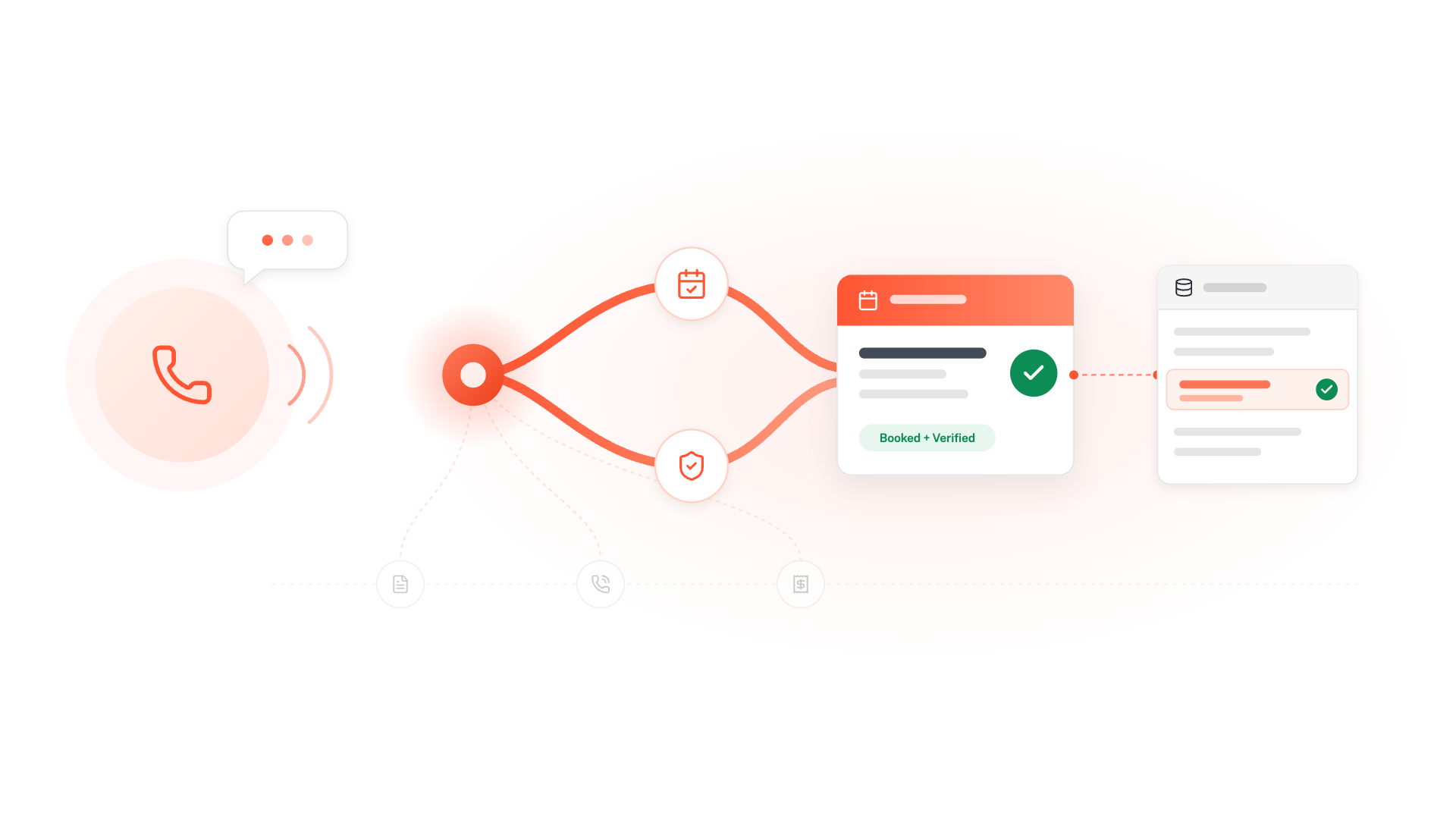
AI voice-enabled patient engagement now covers scheduling, benefits verification, prior auth, and billing calls in one system. See what to evaluate be

Compare 4 voice AI vendors for GI practices on colonoscopy scheduling, benefits verification, and prior auth calls. See which ones stop at booking.

Compare 5 AI voice agents for ENT and allergy practices. See which handle scheduling and the payer calls for prior auth and benefits checks.


