




Best Voice AI for Gastroenterology Practices: 4 Options Compared (2026)
Compare 4 voice AI vendors for GI practices on colonoscopy scheduling, benefits verification, and prior auth calls. See which ones stop at booking.

Missed appointments are more than just a scheduling headache. They create care gaps for patients and represent a significant financial drain on healthcare organizations, costing the U.S. healthcare system an estimated $150 billion annually. While manual reminder calls are time consuming and inefficient, the solution isn’t just any automated system. This is where hipaa-compliant conversational ai for healthcare appointment reminders comes in. This technology uses secure, intelligent automation to conduct interactive conversations with patients via voice or text, allowing them to confirm, cancel, or reschedule their appointments 24/7. It’s a robust approach that transforms how you engage patients while rigorously protecting their privacy.
This comprehensive guide breaks down everything you need to know, from the legal foundations of HIPAA to the advanced technology that makes modern AI agents so effective. For broader context, see our AI voice agents for healthcare complete guide.
Before deploying any technology, it’s crucial to understand the core privacy principles that govern patient communications. These rules form the bedrock of any compliant reminder strategy.
At its core, HIPAA compliance for appointment reminders means every communication respects the privacy and security rules of the Health Insurance Portability and Accountability Act. The good news is that HIPAA explicitly allows healthcare providers to send appointment reminders without special patient authorization, as they are considered part of a patient’s treatment. However, this permission comes with important guardrails. Providers must use reasonable safeguards, get patient consent for preferred contact methods, and only include the minimum necessary information to get the job done.
Protected Health Information (or PHI) is any identifiable health information related to a patient’s health, care, or payment. This includes obvious details like names, phone numbers, and birthdates when connected to health information, such as an upcoming appointment. Even a patient’s name paired with a clinic visit date is considered PHI and must be protected.
Proper PHI handling means restricting access to authorized staff, using security measures like encryption, and never sharing more information than is absolutely needed. For appointment reminders, this means ensuring any third party vendor, like a conversational AI provider, is contractually obligated to protect this data.
The minimum necessary standard is a simple but powerful HIPAA principle: only use or disclose the absolute minimum amount of PHI required to accomplish a task. For an appointment reminder, this means you should include just enough information for the patient to know when and where they need to be.
A reminder should say, “Your appointment with Dr. Smith is on Tuesday at 10 AM,” not “Your follow up for your chemotherapy treatment is on Tuesday at 10 AM.”
Applying the minimum necessary rule directly leads to HIPAA safe message template design. This involves creating pre approved scripts and message formats that prevent the accidental disclosure of PHI. A safe template is generic and focuses only on logistics.
For voicemails, an even safer approach is to leave a simple callback request, such as, “This is Dr. Smith’s office with a message for Jane. Please call us back at your earliest convenience.” This avoids confirming that an appointment even exists to anyone who might overhear the message.
Using a third party vendor for communications introduces another layer of compliance. Your practice is responsible for vetting your partners and ensuring they meet HIPAA’s stringent requirements.
Whenever a healthcare provider shares PHI with a third party vendor (known as a Business Associate), a Business Associate Agreement (BAA) is legally required. This contract binds the vendor to the same HIPAA rules you follow. The BAA outlines the vendor’s responsibility to safeguard PHI, use it only for the contracted services, and report any breaches.
Before you share a single patient’s name with a hipaa-compliant conversational ai for healthcare appointment reminders provider, you must have a signed BAA in place. If a potential vendor hesitates or doesn’t know what a BAA is, that’s a major red flag. Reputable partners readily sign BAAs with all healthcare clients, giving you documented peace of mind. See our Privacy Policy for data handling details.
Beyond a BAA, a truly secure partner will provide a suite of technical and operational safeguards. When evaluating vendors, look for the following criteria:
The HIPAA Security Rule requires mechanisms to record and examine activity in systems containing PHI. A compliant AI platform must provide detailed audit logs that track who accessed data, when they accessed it, and what actions they took. This is crucial for detecting unauthorized access and demonstrating due diligence.
Equally important is the vendor’s data retention policy. Inquire about how long they store your data and their policies with underlying AI model providers. Top tier partners will have a zero day data retention agreement, ensuring your PHI is never stored long term by third party AI models.
Role Based Access Control (RBAC) is a security method that restricts system access based on an individual’s job function. It’s the technical enforcement of the “minimum necessary” principle. For example, a scheduler can see appointment times but not clinical notes. This approach significantly reduces the risk of unauthorized data exposure. Today, a majority of HIPAA compliant software platforms include RBAC as a standard feature.
Regional data residency refers to the requirement of storing and processing data within a specific geographic location to comply with local laws. Regulations like GDPR in Europe place strict rules on where patient health data can live. A flexible AI partner should offer deployment options that meet these needs, such as hosting data in an EU data center for European clients or offering on premise solutions for maximum control.
Compliance isn’t just about technical safeguards. It’s also about respecting patient preferences and communicating clearly.
While HIPAA allows reminders without special authorization, you should still obtain and honor a patient’s preferences for how they wish to be contacted (voice call, text, or email). This is not only respectful but also more effective. Good preference management also means diligently tracking and honoring opt out requests.
Your reminders are useless if they don’t reach the right person. Contact information verification is the ongoing process of ensuring patient phone numbers and emails are accurate. This can be as simple as confirming details at check in or as technical as using automated validation services. Regular verification is key to avoiding privacy breaches and ensuring your messages are delivered successfully.
To ensure equitable access and clear communication, it is essential to engage patients in their preferred language. A capable conversational AI platform should offer multilingual support, allowing you to deploy reminders and conduct conversations in languages common among your patient population, such as Spanish. This small step can significantly improve patient understanding, confirmation rates, and overall satisfaction.
Every reminder should clearly state who it’s from. For phone calls, the caller ID should show your clinic’s name. For texts and emails, your practice’s name should be in the message body or “From” field. This builds trust and ensures patients don’t dismiss a legitimate reminder as spam. Modern telecom frameworks like STIR/SHAKEN help authenticate caller ID, further increasing the chance your calls are recognized and not marked as a scam.
Patients must always have an easy way to stop receiving reminders. For texts, this is typically the ability to reply “STOP.” For automated calls, it might be a prompt like “Press 9 to unsubscribe.” This is a legal requirement under regulations like the Telephone Consumer Protection Act (TCPA), which mandates that even exempt healthcare messages provide a clear opt out option.
A truly effective solution goes beyond simple message blasts. It uses sophisticated technology to create seamless, interactive, and intelligent patient experiences.
An automated voice agent is an AI powered system that can call patients, understand their spoken responses, and have a natural conversation to confirm or reschedule appointments. Unlike a simple robocall, a modern voice agent is interactive. If a patient says, “I can’t make it then,” the AI can check the live schedule and offer alternative times. This 24/7 availability is a game changer for both patient convenience and staff workload. With a solution like AI agents, practices can offload repetitive calls, reduce patient hold times, and ensure every patient is contacted. Explore how AI automates patient scheduling calls.
Different patients prefer different channels. An omnichannel strategy uses a coordinated mix of voice calls, SMS texts, and emails to maximize reach and effectiveness. This is more than just sending the same message everywhere. It involves creating an intelligent workflow. For example:
This layered approach is proven to be more effective than relying on a single channel.
The best AI platforms empower your operational teams, not just your IT department. A no code workflow builder provides a simple, visual interface that allows non technical staff to customize conversation flows, update scripts, and adjust reminder logic without writing any code. This agility means you can quickly adapt to changing needs, such as modifying a script for a new flu shot clinic, ensuring the technology serves your practice instead of the other way around.
To be truly automated, your reminder system must connect directly to your Electronic Health Record (EHR) or Practice Management (PM) system. EHR integration allows the AI to pull the daily schedule in real time and write confirmations or rescheduling updates directly back into the system. This eliminates manual data entry, prevents errors, and ensures the schedule is always up to date. Leading platforms provide over 80 native integrations to systems like Epic, athenahealth, Cerner, and NextGen.
Fast Healthcare Interoperability Resources (FHIR) and OAuth 2.0 are the modern standards that make secure EHR integration possible.
Together, these standards create a secure and standardized plug and play environment for connecting innovative tools to your core systems.
For a conversation with an AI to feel natural, it must be fast. Low latency architecture ensures the AI can process what a patient says and respond in milliseconds, avoiding awkward pauses that can confuse callers. A high performance system that responds in under a second feels more attentive and human, leading to higher engagement and better outcomes. Learn how it works.
Implementing advanced AI is not just about technology. It’s about solving critical business challenges and generating a clear return on investment.
Appointment reminders are the cornerstone of any effective no show reduction strategy. Studies have shown that implementing a reminder system can cut no show rates significantly. With the vast majority of healthcare organizations already using automated reminders, it’s a proven and essential tactic for maintaining a full schedule. For specialty group practices, see how AI supports specialty scheduling workflows.
To measure the impact of your AI reminder system, you should monitor several key metrics, including:
The return on investment for AI reminders is typically very strong, driven by recovered revenue from fewer no shows and significant labor savings. When evaluating vendors, it is important to understand their pricing. Common models include:
Clinics using voice agents have seen no show reductions of around 30% while automating up to 50% of their scheduling calls. The system often pays for itself within months through recovered revenue and increased staff efficiency. Ready to see the financial impact for your practice? Schedule a demo today.
1. Is conversational AI truly HIPAA compliant for appointment reminders?
Yes, when implemented correctly. A compliant solution uses a vendor that will sign a BAA, employs strong encryption and security certifications like SOC 2 Type II, adheres to the minimum necessary standard in its messaging, and includes all the necessary patient consent and security controls discussed in this guide.
2. How does an AI voice agent handle rescheduling a complex appointment?
Modern conversational AI can be surprisingly sophisticated. It can access the EHR’s live schedule, understand patient requests like “next Tuesday afternoon,” and offer available slots. For highly complex cases it cannot solve, it can intelligently route the call to a human staff member with all the context of the conversation.
3. What is the difference between an AI voice agent and a chatbot?
A voice agent communicates using spoken language over the phone, making it ideal for proactive outbound calls and for patients who prefer to talk. A chatbot communicates via text, typically on a website or through SMS, offering a convenient self service option for patients who prefer messaging. A comprehensive strategy often uses both.
4. How much can our practice realistically save with AI reminders?
The savings depend on your current no show rate, appointment volume, and average revenue per visit. However, given the high cost of no shows and the efficiency gains from automation, most practices see a significant positive ROI. A good first step is to calculate your current monthly revenue lost to no shows.
5. How difficult is it to integrate a HIPAA compliant conversational AI with our EHR?
With modern platforms, it’s easier than ever. Vendors often have pre built integrations with dozens of major EHRs. A typical integration using modern standards like FHIR can often be completed in a few weeks, allowing you to go live quickly and start seeing results.
6. Can we customize the AI’s voice and script?
Absolutely. Leading platforms allow you to customize the AI’s voice, name, and conversation flows to match your practice’s brand and specific needs, all while staying within pre vetted, HIPAA safe templates, often using a no code editor.
7. What happens if a patient provides a wrong phone number?
This highlights the importance of contact information verification. A good system will flag undeliverable numbers. In addition, HIPAA safe message design minimizes risk, as a message sent to a wrong number will not contain sensitive health details.
8. How do AI reminders improve the patient experience?
AI offers 24/7 convenience. Patients can confirm or request to reschedule at any time without waiting on hold. The communication is timely, consistent, and delivered on their preferred channel and in their preferred language, leading to higher patient satisfaction and a more modern, professional experience.
Discover how healthcare teams are transforming patient access with Prosper.
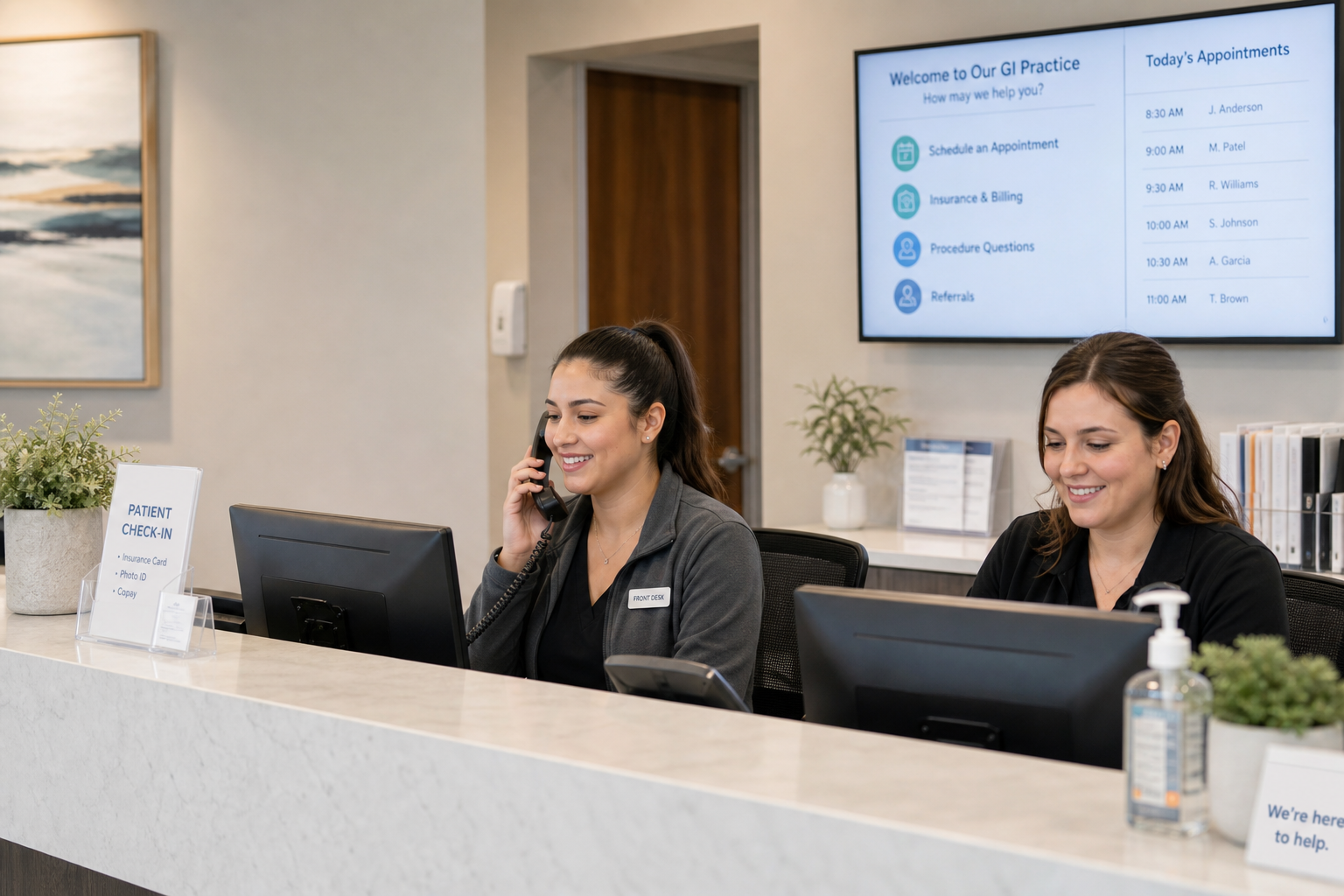
Compare 4 voice AI vendors for GI practices on colonoscopy scheduling, benefits verification, and prior auth calls. See which ones stop at booking.

Compare 5 AI voice agents for ENT and allergy practices. See which handle scheduling and the payer calls for prior auth and benefits checks.

Best AI agents for orthopedic practices compared on prior auth, outbound payer calling, and billing. Only 1 vendor resolves 60%+ of calls end-to-end.


