


Financially Cleared Appointments: Verifying Benefits at Booking and Before the Visit
A financially cleared appointment means coverage, benefits, and patient cost are confirmed before the visit. Here is how to check at booking and again
Your phone report counts the calls your team answered. The calls that ended before anyone picked up leave no record, and each one is a visit your practice did not book.
Healthcare call center metrics are the measures a specialty practice uses to judge phone access: call abandonment rate, average speed of answer, service level, first call resolution, patient satisfaction, after-hours answer rate, and cost per call. Together they show how many patients reach your team and what each call costs.
Track seven metrics: call abandonment rate, average speed of answer, service level, first call resolution, patient satisfaction, after-hours answer rate, and cost per call. The first three show whether patients reach you. The last four show whether the call worked and what it cost. Start with abandonment, because it counts the patients you lost.
A good call abandonment rate is under 5%. HFMA lists under 5% as the goal and 7% as the general call center average, and the Children's Hospital Association cites 5% as the industry benchmark. Treat 5% as your ceiling and measure it by location and by hour, because a blended average hides peak-hour losses.
HFMA states its call center standards are general and not specific to healthcare, and that patient calls take more time on the phone.
The Children's Hospital Association reports Nemours saw abandonment spikes in the 30% range before it simplified its phone tree. The average held at 8% in 2019 and about 3% in 2020.
HFMA cites 67 seconds as a general average wait and a service level goal of 80% of calls answered within 20 seconds. HFMA also notes these standards are not healthcare specific. Set your own target from your abandonment curve: find the wait where callers start hanging up, then staff to stay under it.
Build that curve in four steps:
Answered callers still wait. Per Prosper AI's 2026 Growth Report, answered callers wait 1.5 minutes on average and 20% are held more than 5 minutes.
Abandonment counts the patients who hung up. First call resolution and patient satisfaction describe what happened to the patients who stayed. A practice with low abandonment and low first call resolution still creates callbacks, and callbacks refill the queue. Track all three together and review them by call type.
Phone access is a priority for practice leaders. In MGMA's December 2025 poll of 236 respondents, 22% named phone access as their top patient access priority, behind no-shows (27%) and online scheduling (24%).
Call types with the most repeat calls are the place to look first: scheduling changes, benefits questions, and balance questions.
Use HFMA, MGMA, and AHRQ as reference points, and treat vendor blogs as opinion. HFMA publishes call center KPI standards. MGMA DataDive lists call hold time, answer speed, and abandonment rate as call center benchmarks. AHRQ's CAHPS improvement guide includes standards for customer service. Then baseline your own queue.
Cost per call equals your monthly phone operating cost divided by calls handled. A published study of a large urology community practice found $4.02 per call for its internal call center and $3.59 for an outsourced one, with no statistically significant difference. Your number depends on call volume, staffing mix, and workflows, so calculate it from your own payroll, phone system, and call counts.
Those figures come from one practice that handled 134,799 calls in six months internally, so a smaller group may see a higher cost per call. The study measured total operating expenses divided by calls.
Calculate it in four steps:
Prosper AI's 2026 Growth Report values missed calls at $44.8K per physician per year, the largest of four revenue levers worth $125K per physician combined. The report found 18% of daytime calls go unanswered and 81% of after-hours calls go unanswered.
Here is an illustration with example inputs. A 20-physician group that fields 10,000 calls a month and leaves 18% unanswered misses 1,800 calls (10,000 x 0.18).
Missed calls also feed no-shows and late returns. See how missed calls cost specialty practices and how patient recall closes the gap.
Prosper AI answers every inbound call, resolves routine scheduling and benefits calls end to end, and writes the outcome back to your EHR as structured data. Your staff take the exceptions. Abandonment, speed of answer, and first call resolution improve together because no caller waits for an open seat.
Practices using Prosper AI report these results:
A booked visit is not a paid visit. Before the patient arrives, your team still verifies benefits, secures prior authorization, and fixes the errors that become denials. Prosper AI's agents make these patient and payer calls in the same workflow, so your schedule fills with financially cleared visits.
Read more on financially cleared appointments and preventable claim denials.
Prosper AI deployments start with a limited call scope and expand as results hold. Per Prosper AI's positioning materials, go-live typically takes about three weeks and full ramp runs 10 to 12 weeks, with a dedicated implementation partner. Confirm timing for your EHR and locations during scoping.
A phased rollout follows five steps:
See how Prosper AI works for the implementation model.
Prosper AI treats HIPAA and SOC 2 compliance as core product requirements, with enterprise security and uptime built in. Confirm the current Business Associate Agreement terms and security documentation during evaluation, and have your compliance team review them before any patient call goes live.
Prosper AI writes structured call outcomes back into your EHR so staff do not re-enter them. Per Prosper AI's brand materials, it integrates with dozens of EHR systems, including ModMed, athenahealth, and eClinicalWorks. Ask which write-back fields are supported for your EHR version before you commit.
Prosper AI handles routine, high-volume calls and routes exceptions to your staff, so your team spends less time on the phone and more on work that needs a person. It does not replace clinical judgment or triage. At Northeast OB/GYN, appointments scheduled rose 12% with three fewer staff on the call schedule.
Yes. Prosper AI covers benefits verification and prior authorization calls as well as scheduling and patient billing, so one platform runs the front and back office. Its agents call payers directly and write outcomes to your EHR. Confirm which call types and payers are live for your specialty during scoping.
Yes. Prosper AI deployments start small and scale. Northeast OB/GYN began with a limited scope, validated performance, refined escalation rules, and then expanded to new patient intake and insurance updates. Start with one location or one call type that has high volume and a measurable abandonment rate.
Bring your abandonment rate and cost per call by location, and see where Prosper AI closes the gap: Get started with Prosper.
Discover how healthcare teams are transforming patient access with Prosper.
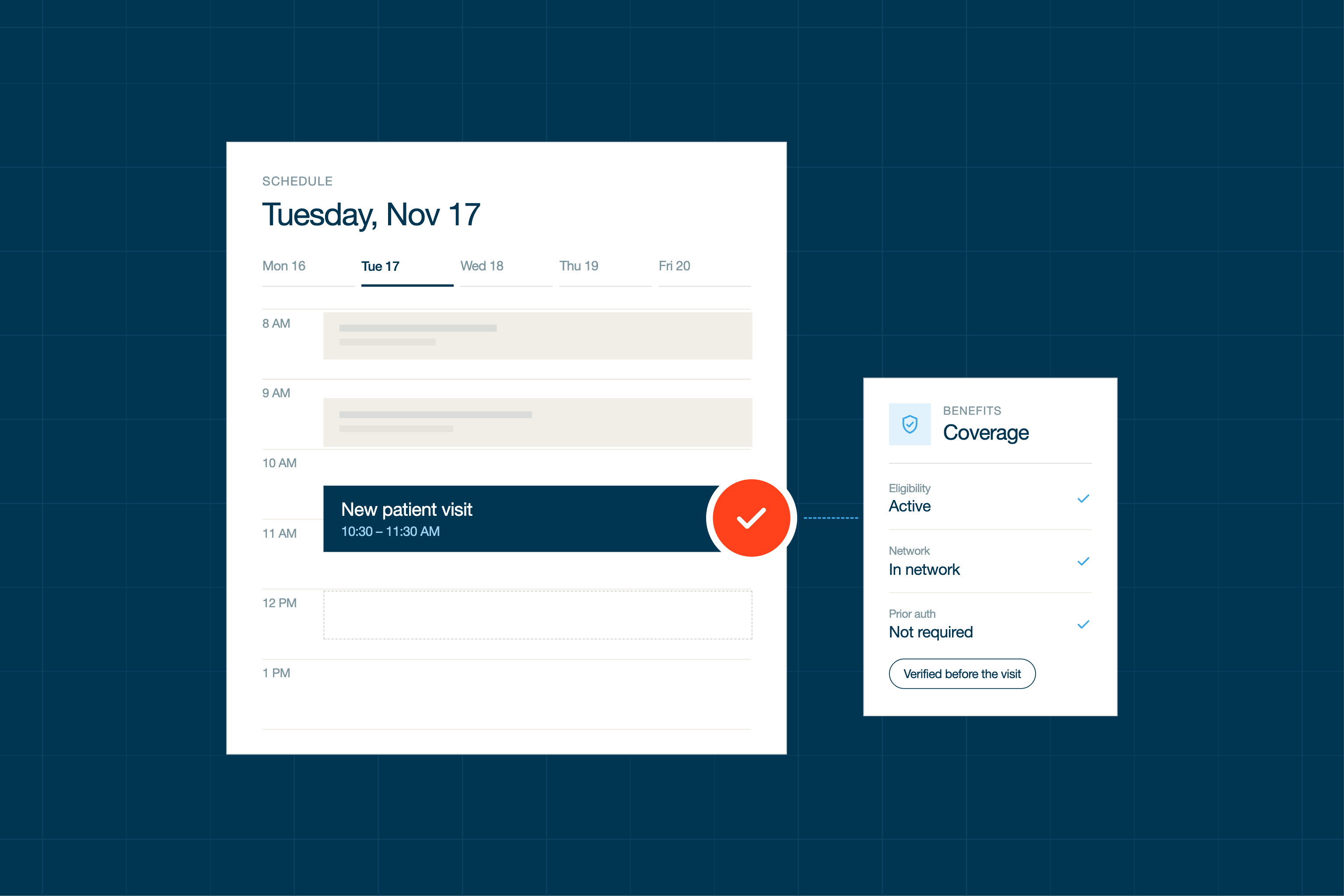
A financially cleared appointment means coverage, benefits, and patient cost are confirmed before the visit. Here is how to check at booking and again
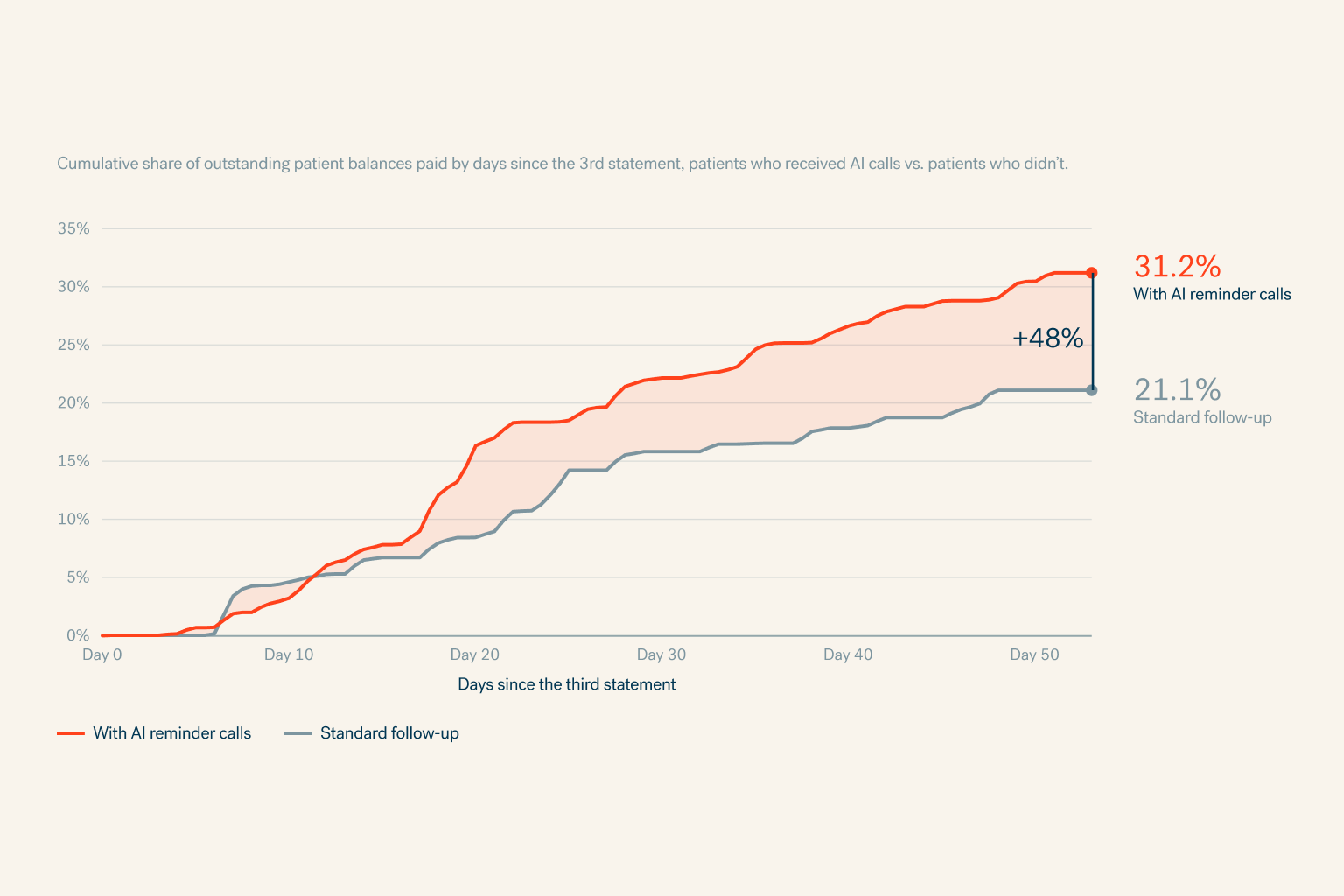
Patients pay 36% of specialty care costs, and nearly 8% goes unpaid. See what recovering balances is worth per physician and how to collect more.
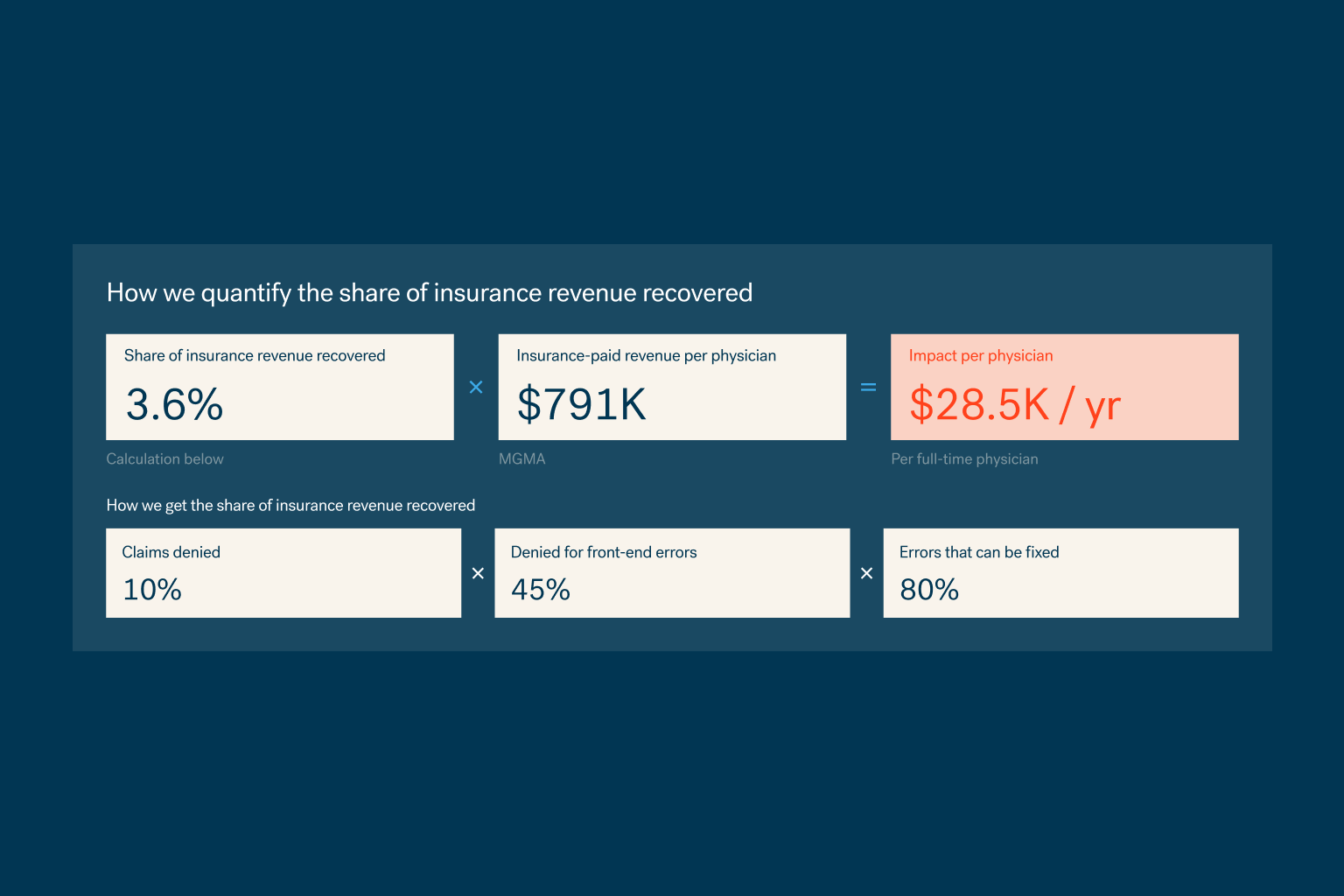
45% of claim denials start at the front desk. See what preventing them is worth per physician, by specialty, and how to catch errors before the visit.


