


Healthcare Call Center Metrics: Benchmarks and Cost per Call for Specialty Practices
Track 7 healthcare call center metrics for your specialty practice. Get abandonment, wait time, and cost per call benchmarks and how to improve them.
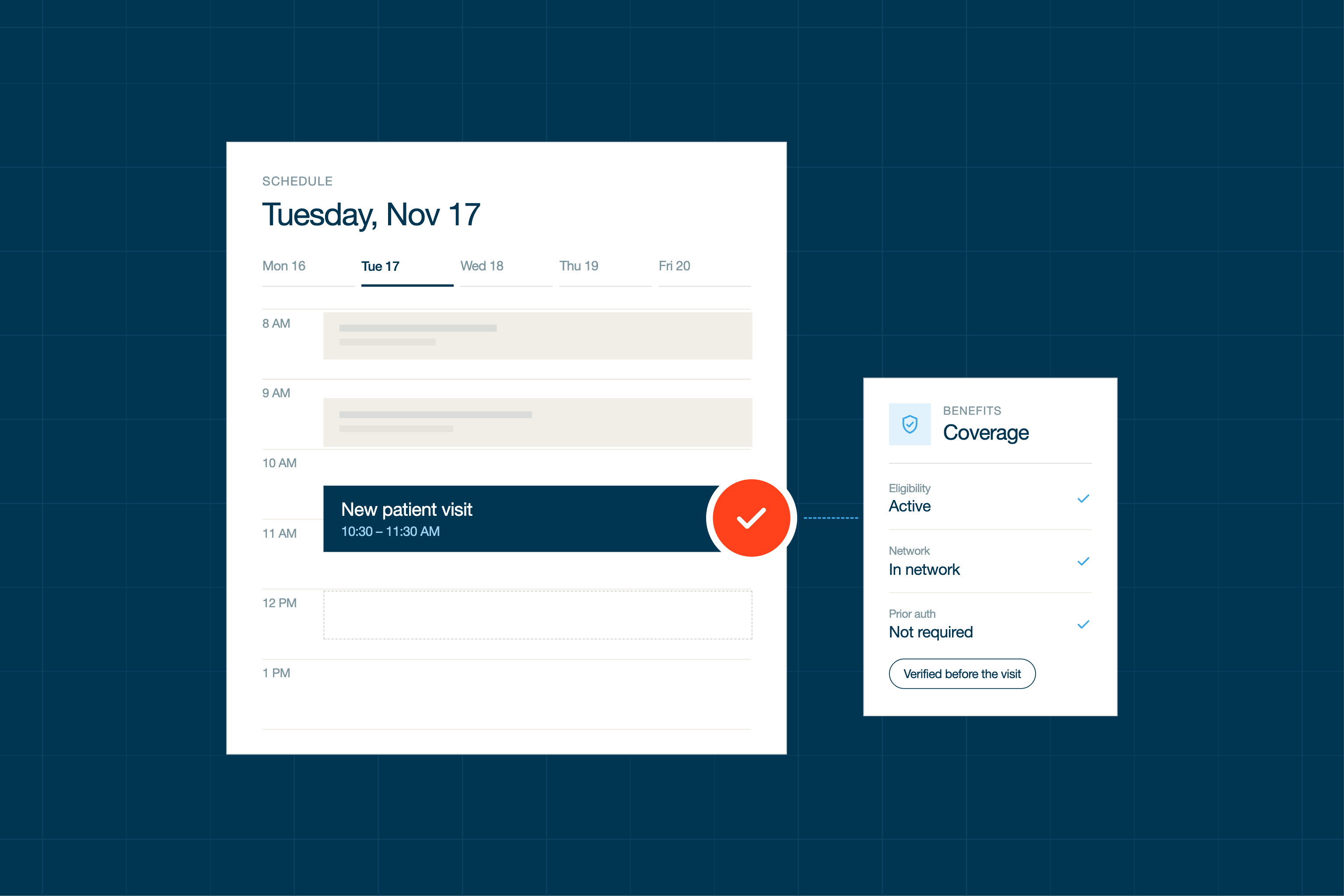
A financially cleared appointment is a visit where the practice knows, before the patient arrives, that the plan is active, that it covers the scheduled service, and what the patient will owe. A booked slot is not the same thing. A slot can be full and still turn into a denied claim, a same-day reschedule, or a balance the practice chases for months.
Most specialty practices already verify insurance. The gap is usually depth and timing. The check at booking confirms the plan exists. The deeper check, the one that says what the plan pays for a Mohs excision or a cataract procedure, often happens later, by hand, if it happens at all. For a step-by-step view of the manual process, see benefits verification: 7 steps for fewer denials.
This guide covers the checkpoints that get an appointment to "cleared," what each one needs to confirm, and where most practices lose visibility.
Front-end errors are a large share of the denial problem. According to Experian's State of Claims 2025 report, 41% of providers say at least 1 in 10 claims gets denied, and 54% say claim errors are getting worse, not better.
Prosper AI's 2026 Growth Report found that practices see an average of 10% of first-submission claims denied, with rates of 22% in orthopedics and 16% in gastroenterology. The report notes that many of these denials start before the patient arrives, from an inactive plan, a missing authorization, or a registration error.
The cost is not small at the industry level either. The American Hospital Association reports that hospitals spent $43 billion in 2025 trying to collect payments from insurers for care already delivered, including nearly $18 billion spent overturning claims denials. These are hospital figures, so treat them as context for the scale of the problem rather than a benchmark for a specialty practice.
The electronic eligibility check (EDI 270/271) answers one question well: is the plan active? Many EHRs run it automatically, often days after the booking call. For specialty visits, the answer often stops short of what the front desk needs.
Three gaps show up repeatedly:
The most common errors that turn into denials are a wrong coinsurance tier, a missed referral, and an out-of-area plan mistaken for out-of-network.
The first checkpoint happens while the patient is still on the phone. An electronic eligibility check runs during the call, so an inactive or outdated plan surfaces before the slot is filled. The scheduler can take the new insurance on the spot instead of sending staff to chase a card days later.
At this checkpoint, the goal is narrow:
This is also where scheduling and revenue cycle connect. Our guide to AI voice agents for patient access and RCM covers how one call can both book the visit and start the check.
The second checkpoint goes past the 271 your EHR already runs. Verifiers log into payer portals to find service-level benefits, and apply the practice's own rules: which benefit line applies to an office visit versus surgery, how deductible logic works, and how to handle dual-eligible patients.
Manual work takes time. Per Experian's State of Claims 2025 report, manual eligibility checks now take over 10 minutes for more than half of the providers still doing them by hand. When the portal is vague or silent, someone calls the payer, and those calls can run from 15 minutes to an hour in some practices. This is a general estimate based on what specialty practices have described to us, not an industry benchmark.
The result needs to land where the team works. A note in the EHR that states the patient's expected responsibility lets the front desk collect, or set expectations, before the patient walks in. The reason this matters is on the collections side: according to MGMA Stat, practices collected about 72% of copayments at the time of service but only 26.83% of patient-due balances. Prosper AI's 2026 Growth Report found that patients pay 36% of the cost of their care on average across specialty practices, and 55% in dermatology. Knowing the amount before the visit gives the front desk a chance to collect it at the visit.
Some clearance happens after the visit. When a physician orders surgery or a CT scan, or orders equipment such as a cast, a boot, or a wheelchair, the plan needs to cover that specific code, and prior authorization or pre-cert may apply. Portals often do not show equipment coverage or pre-cert requirements, so staff call the payer. A miss can mean a denied claim, or equipment dispensed that the patient then cannot afford.
Prior authorization carries its own cost. The American Medical Association reports that physicians complete an average of 40 prior authorizations per week, that nearly one in three (32%) say requests are often or always denied, and that prior authorization consumes an average of 13 hours of physician and staff time each week.
Order-triggered checks tend to sit with a different team, such as surgical coordinators or DME staff, which is why they are easy to leave out of a clearance process. This is most common in dermatology, ophthalmology, orthopedics, gastroenterology, and podiatry.
Most eligibility tools run a single check and stop. A thorough approach layers the methods: confirm the plan is active electronically, go to the payer portal for service-level benefits, and call the payer when the portal is vague or silent, staying with the call until there is an answer the team can bill against.
For a broader comparison of vendors, see this list of the 10 best AI insurance verification tools, and for the AI-specific approach, this AI benefit verification guide for providers.
The same agents that book the patient also clear the appointment with the payer. Those two calls depend on each other: the booking decides which benefits get checked, and what the payer says decides what the patient hears about cost.
When one tool talks to patients and nobody talks to payers, that gap is where surprise bills and same-day reschedules come from. Patient access tools fill your schedule. Prosper makes sure it's filled with revenue you can count on.
What is a financially cleared appointment?
It is an appointment where the plan is confirmed active, the scheduled service is confirmed covered, and the patient's expected cost is documented before the visit.
What is the difference between eligibility verification and benefits verification?
Eligibility verification confirms the plan is active. Benefits verification confirms what the plan covers for a specific service, including copay, deductible remaining, coinsurance, referral, and prior authorization requirements. See the insurance eligibility verification guide for more.
Does a 271 response show surgery benefits?
Not reliably. A 271 can return general benefit information, but service-level and CPT-level detail often requires a payer portal or a call to the payer.
When should benefits be verified: at booking or before the visit?
Both. Check coverage at booking so an inactive plan surfaces while the patient is on the phone, and verify benefits again before the visit so the practice knows what the patient will owe.
How does an AI agent call a payer?
The agent places an outbound call, navigates the payer's phone tree, waits on hold, speaks with a representative, and records the answer in the EHR.
Is AI payer calling HIPAA compliant?
Yes. Prosper AI is HIPAA compliant, SOC 2 Type 2, and signs BAAs.
What should a practice ask a vendor before buying benefits verification?
Ask which payer portals it covers, what it does when a portal cannot answer, how it applies your rules for office versus surgery benefits, where the result is written, and what staff see when something cannot be resolved.
Prosper AI works alongside your team. Forward-deployed consultants set up and iterate on your rules for office versus surgery benefits, deductible logic, and dual-eligible handling, so the benefits note that lands in your EHR reads the way your best verifier would write it.
If you want to see how Prosper checks eligibility on the booking call, goes to the portal and the payer before the visit, and sends your staff only the exceptions, book a demo with the Prosper AI team.
Discover how healthcare teams are transforming patient access with Prosper.

Track 7 healthcare call center metrics for your specialty practice. Get abandonment, wait time, and cost per call benchmarks and how to improve them.
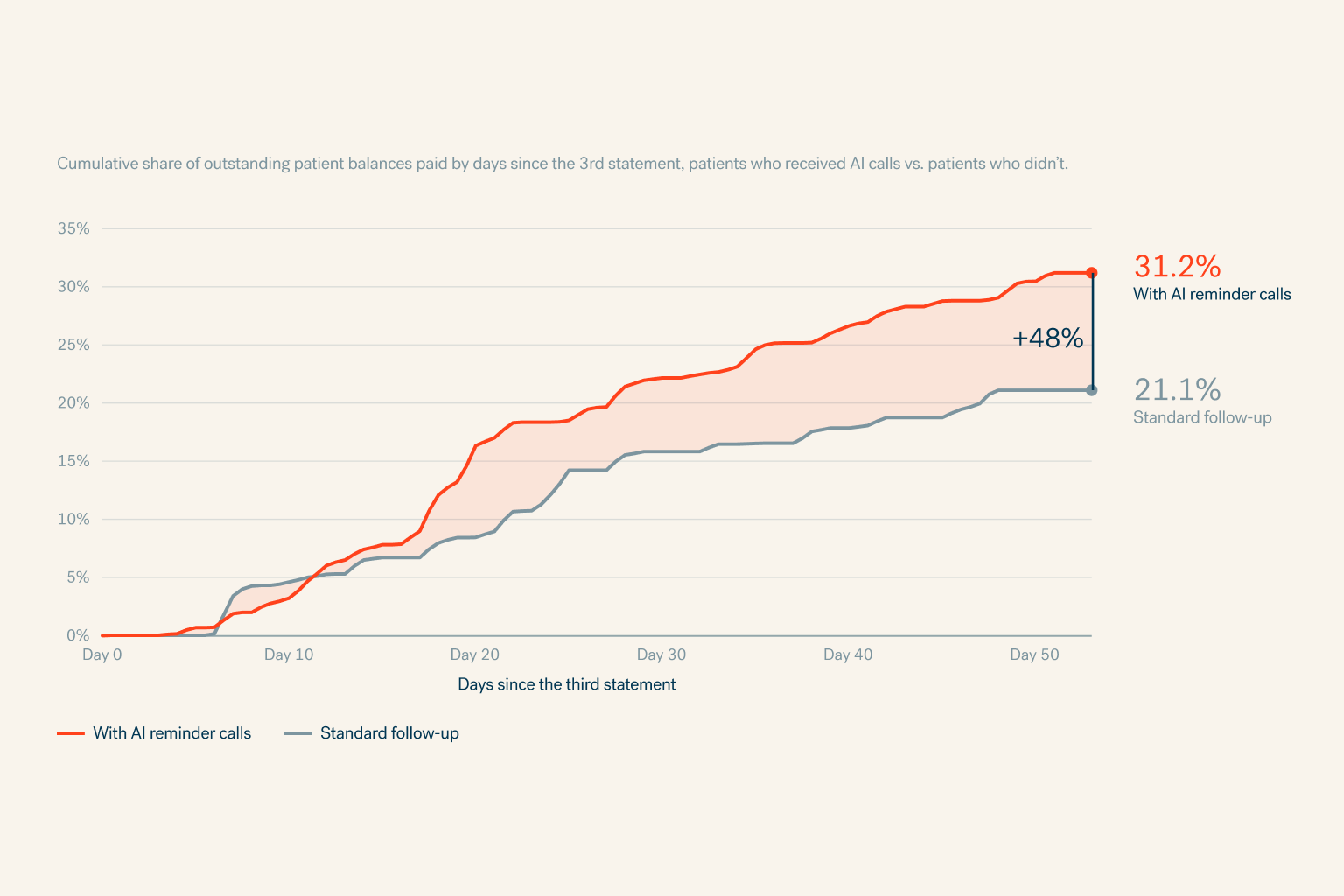
Patients pay 36% of specialty care costs, and nearly 8% goes unpaid. See what recovering balances is worth per physician and how to collect more.
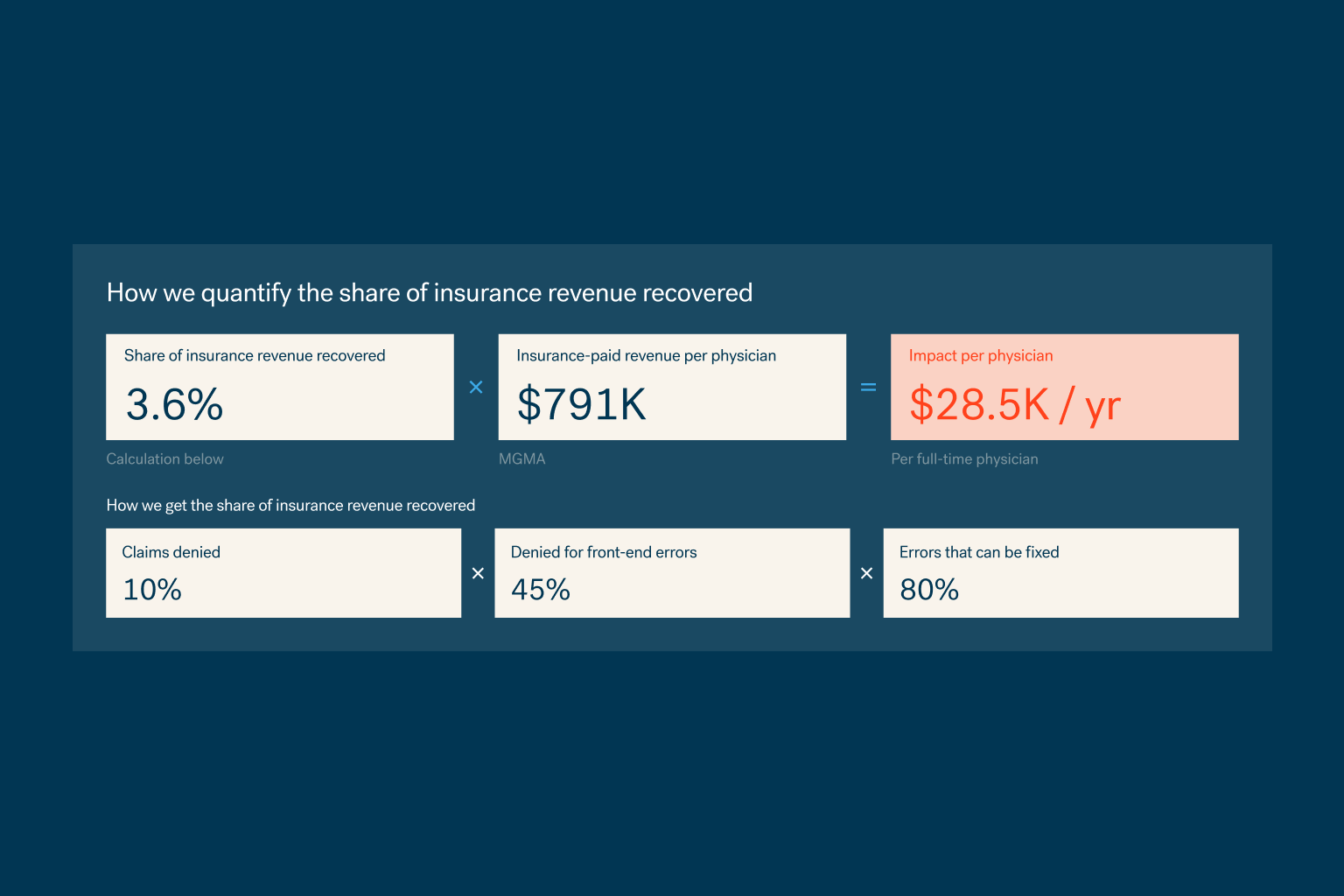
45% of claim denials start at the front desk. See what preventing them is worth per physician, by specialty, and how to catch errors before the visit.


