




AI Voice-Enabled Patient Engagement: What Specialty Practices Should Expect in 2026
AI voice-enabled patient engagement now covers scheduling, benefits verification, prior auth, and billing calls in one system. See what to evaluate be

In healthcare, the phone is a lifeline for everything from scheduling appointments to asking about bills. AI call answering is a technology that uses artificial intelligence to manage these conversations automatically. It acts as a virtual receptionist that can schedule appointments, answer questions, and route calls 24/7 without human intervention. This is a game-changer because high call volumes and limited staff often lead to long hold times and frustrated patients. A typical healthcare call center can field around 2,000 calls a day, struggling to keep up.
This guide breaks down everything you need to know about how ai call answering securely integrates with your systems to optimize your practice.
The real value of an ai call answering service is solving common patient frustrations. Did you know that about 60% of patients will hang up if they are on hold for over a minute? This is a huge problem when the average hold time in a healthcare call center is over four minutes. Every one of those dropped calls is a missed opportunity.
Instant ai call answering eliminates this issue entirely.
Zero Hold Times: No more frustrating hold music.
24/7 Availability: Patient needs don’t stick to a 9 to 5 schedule. An AI agent is always on, ready to help a patient book an appointment at 10 PM or answer a question on a Sunday.
Handle Call Spikes: A human receptionist can only handle one call at a time. An AI system can handle dozens simultaneously, ensuring every caller gets an immediate response, even during the Monday morning rush.
Essentially, an ai call answering solution acts as a perfectly trained, always available receptionist that never gets overwhelmed.
When dealing with patient information, security isn’t just a feature, it’s a legal and ethical requirement. A trustworthy ai call answering platform is built on a foundation of robust security protocols.
Any conversation involving protected health information (PHI) must follow the rules of the Health Insurance Portability and Accountability Act (HIPAA). This means verifying caller identity, protecting call content, and ensuring patient privacy. The penalties for violations are steep, with fines that can reach up to $50,000 per violation. A compliant ai call answering service will always sign a Business Associate Agreement (BAA) and build its technology around these strict privacy standards.
End to end encryption is a security method that scrambles data so that only the communicating parties can understand it. Think of it as a digital sealed envelope. Even the service provider can’t access the unencrypted content of a call or message. With healthcare data breaches costing an average of $9.23 million per incident in 2021, encrypting PHI both in transit and at rest is a non negotiable security layer.
Role Based Access Control ensures that users can only access the information and functions necessary for their jobs. A front desk team member might be able to view scheduling information, but not sensitive billing records. By limiting access based on roles, RBAC minimizes the risk of both accidental data exposure and malicious snooping.
An audit log is a detailed, chronological record of all system activity. It tracks who accessed data, what they did, and when they did it. HIPAA’s Security Rule requires this level of tracking to ensure accountability. If a privacy incident ever occurs, audit logs provide a forensic trail to understand exactly what happened, making them the digital equivalent of a system’s black box recorder.
Many practices record calls for quality assurance, but these recordings contain PHI and must be protected. Secure call recording involves encrypting the audio files, restricting access to authorized personnel, and storing them on HIPAA compliant servers. It also requires getting patient consent before recording, which is a key part of both privacy law and building patient trust.
Tying everything together is a commitment to data security and integrity. Security protects data from being stolen, while integrity ensures data remains accurate and unaltered. A top tier ai call answering platform uses a combination of encryption, access controls, and regular backups to keep patient information safe, confidential, and correct.
Beyond answering calls, a smart AI platform becomes a core part of your operational engine, driving efficiency and reducing costs.
A standalone answering service creates more work. An integrated one saves time and eliminates errors. The best ai call answering platforms connect directly with your Electronic Health Record (EHR) and Practice Management systems. When a patient calls, the AI can see their information, check the schedule in real time, and book an appointment that instantly appears in your system. Providers like Prosper AI offer integrations with over 80 major EHR platforms like Epic, Cerner, and athenahealth, turning the AI into a seamless extension of your team.
On average, callers needed to make 2.7 calls to secure an appointment. That’s a lot of wasted time and effort. With direct scheduling integration, an ai call answering agent can handle the entire process in a single, quick conversation. This not only makes patients happier but also helps reduce no show rates by up to 30% through automated reminders, keeping your schedule full and productive.
Repetitive, manual tasks are a primary cause of staff burnout. 39% of respondents pointed to staff burnout and turnover as the top drivers of inefficiencies in their call center. An ai call answering service optimizes workflows by automating these routine calls. It can handle appointment scheduling, billing questions, and prescription refill requests, freeing your skilled staff to focus on complex patient cases and in person care. Some AI agents can handle up to 87% of phone calls without staff, dramatically boosting your team’s capacity.
A traditional call center is expensive, with labor making up a huge portion of the cost. The average cost per call handled by a human is around $4.90. By automating even a third of these calls, a healthcare organization can save tens of thousands of dollars per day. Furthermore, by preventing abandoned calls, you stop revenue leakage. One analysis showed that a 7% call abandonment rate could cost a practice up to $45,000 in lost revenue daily. An effective ai call answering service doesn’t just cut costs, it protects and grows your revenue. For a deeper dive into financial impact, see our AI for revenue cycle management guide.
When you’re ready to explore solutions, keep these key factors in mind to find the right partner for your practice.
HIPAA Compliance and Security: This is table stakes. Ensure the provider will sign a BAA and ask about their security certifications, like SOC 2.
24/7 Instant Availability: Your patients expect immediate answers. Look for a service that guarantees zero hold time and around the clock coverage.
Deep Integration Capabilities: The service must connect with your existing EHR and practice management software. Without it, you’re just creating more manual work.
Proven Healthcare Workflows: Does the AI understand healthcare specific conversations? Can it handle your most common call types, like scheduling, billing, and referrals? Explore common use cases.
Reliability and Quality: The AI should sound natural and be easy for patients to talk to. Ask about system uptime and what happens if the AI doesn’t understand a caller.
Cost and ROI: Look beyond the sticker price. Calculate the potential return on investment from saved labor costs, reduced no shows, and captured revenue that would have been lost.
Solutions like Prosper AI are built specifically for these healthcare challenges, offering HIPAA compliant voice agents that integrate directly into your workflows.
The primary benefit is providing a better patient experience while improving operational efficiency. Patients get instant answers 24/7 without hold times, and your staff is freed from repetitive calls to focus on more complex tasks.
Yes, when you choose a reputable provider. A healthcare focused platform must be HIPAA compliant, sign a BAA, and use security measures like end to end encryption, role based access controls, and secure data storage to protect patient information.
Modern AI is designed to understand natural language and intent. However, it’s also trained to recognize its limits. For complex medical questions, urgent situations, or frustrated callers, the AI can be programmed to seamlessly transfer the call to a specific human agent or department for assistance.
Absolutely. This is one of the most powerful features. A properly integrated ai call answering service can read your schedule availability and write appointments directly into your EHR or practice management system in real time, eliminating any manual data entry. For implementation best practices, see our EHR integration guide.
This varies, but it’s faster than you might think. With pre built workflows for healthcare, some providers can get a basic system running in just a few days. A full integration with an EHR typically takes a few weeks. If you’re curious about the process, you can schedule a demo to see what implementation looks like.
Not at all. While large health systems see massive benefits, ai call answering is scalable for specialty groups, multi location clinics, and even smaller practices looking to improve efficiency and provide a better patient experience without hiring more staff.
Discover how healthcare teams are transforming patient access with Prosper.
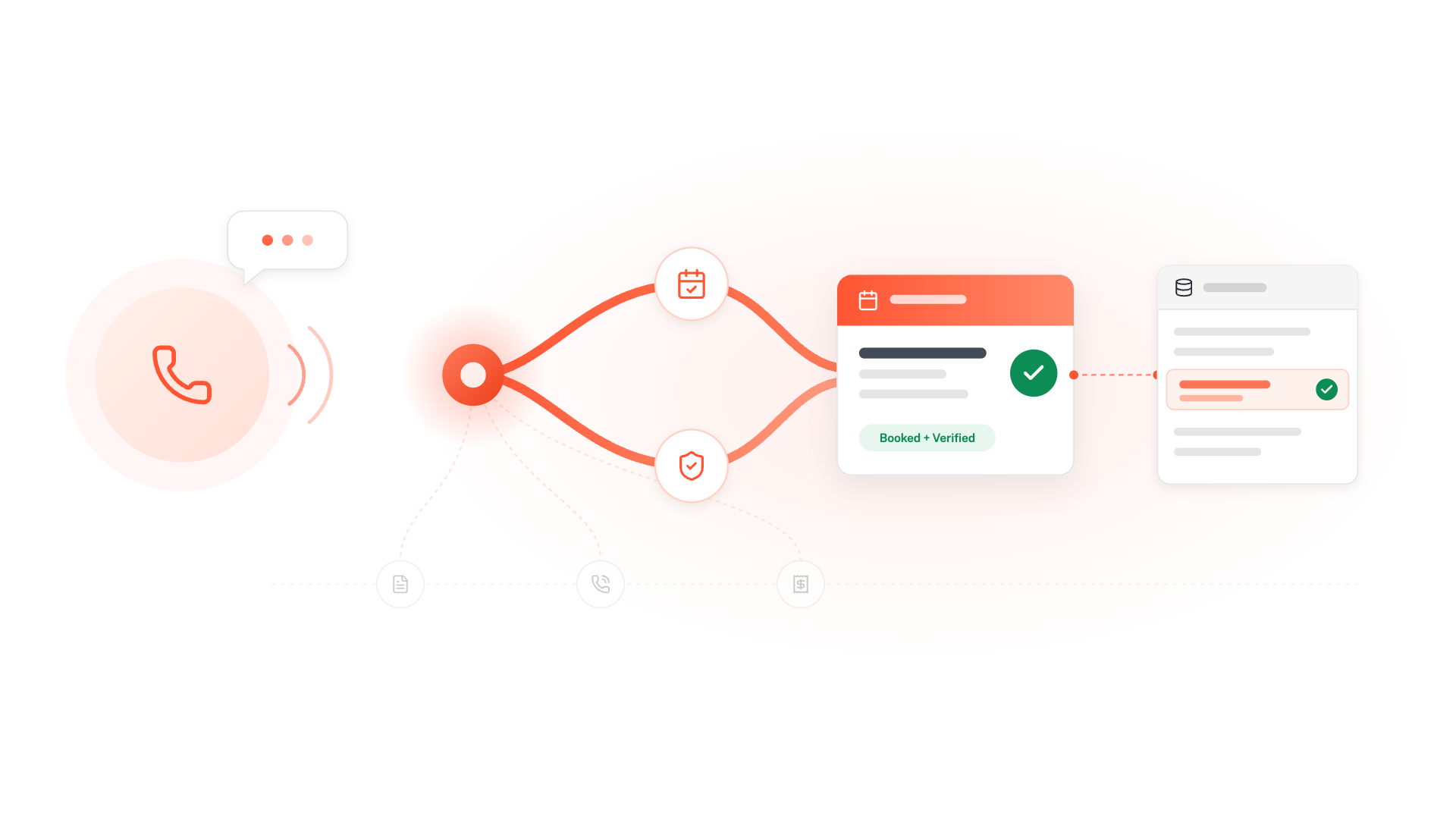
AI voice-enabled patient engagement now covers scheduling, benefits verification, prior auth, and billing calls in one system. See what to evaluate be
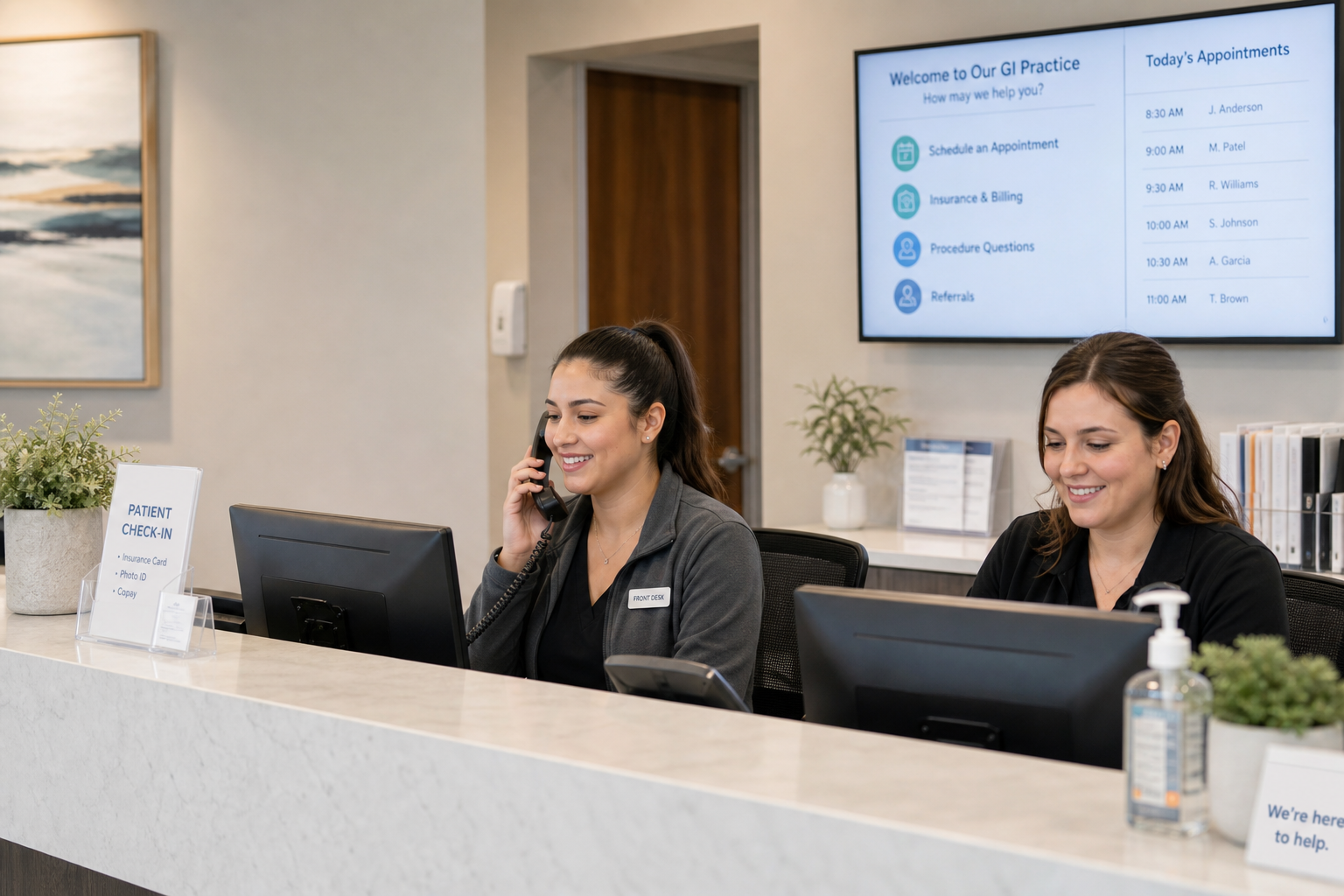
Compare 4 voice AI vendors for GI practices on colonoscopy scheduling, benefits verification, and prior auth calls. See which ones stop at booking.

Compare 5 AI voice agents for ENT and allergy practices. See which handle scheduling and the payer calls for prior auth and benefits checks.


