




Best Voice AI for Gastroenterology Practices: 4 Options Compared (2026)
Compare 4 voice AI vendors for GI practices on colonoscopy scheduling, benefits verification, and prior auth calls. See which ones stop at booking.
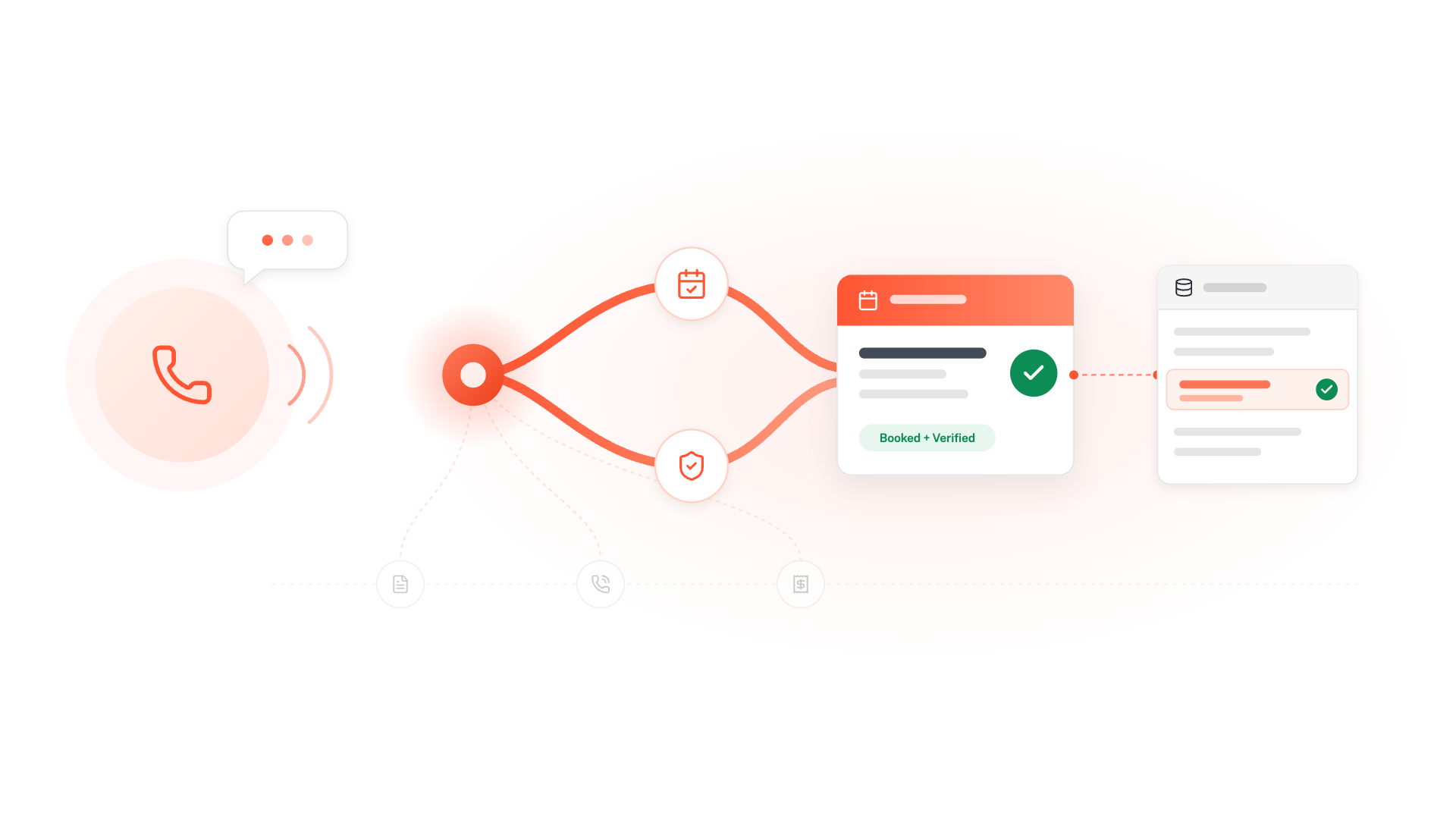
AI voice-enabled patient engagement is the use of conversational voice AI to handle patient phone calls. Those calls include scheduling, rescheduling, benefits verification, prior authorization status, and billing questions.
Prosper AI is an AI workforce for patient access and revenue cycle management that schedules visits, verifies insurance, and writes outcomes back to the EHR. Write-back means the AI records scheduling, insurance, and call-note outcomes directly in the practice's EHR, so staff do not re-enter them.
The strongest systems handle all of these calls in one workflow instead of one call type at a time.
Modern AI voice-enabled patient engagement resolves calls instead of sending messages. The AI holds a real conversation, checks a live schedule, books a slot, confirms coverage, and records the outcome in the EHR.
For several years, "patient engagement" meant reminders, recalls, and broadcast messages. That model is still common. It reaches patients, but it does not resolve the calls that consume front desk hours.
Most vendors have extended only part of the way. Narrow-scope tools tend to stop at the calendar or at the message, which leaves insurance and billing calls in the staff queue.
That gap matters because the calls are connected. A patient who books a visit is also asking, implicitly, whether it will be covered. Treating those as two separate products creates handoffs, rework, and visits that reach the front desk with unresolved eligibility.
Yes. Prosper AI schedules, reschedules, and confirms appointments directly in the practice's EHR, including procedure-specific slots and follow-up rules configured by the practice. Scheduling is one part of a connected workflow, not a separate module.
Here is what that looks like on a single call:
The result is a financially cleared visit: scheduled, verified, and ready, with fewer surprises at check-in.
▶ Case Study: How Preferred Dermatology scaled to 54% more appointments without adding staff
Practices often buy these as separate tools. The cost shows up later.
For the economic buyer, the argument is revenue leakage: every unverified visit is a risk to collections, and every unfilled slot is lost provider utilization. For the internal champion, it is operational: fewer queues, fewer callbacks, and one workflow to configure and monitor.
Most vendors answer "does it do X?" with a yes. Experienced evaluators ask better questions.
An AI workforce for patient access is a set of coordinated AI agents that handle scheduling, benefits verification, prior authorization, and patient billing within one system. A voice agent that handles a single workflow is a point solution by comparison.
Prosper AI is built this way. It connects a practice's own SOPs across scheduling, benefits, prior authorization, and patient billing into a single system of intelligence and action.
The system is built on 62k+ pathways across 27 specialties and 190M+ patient interactions, and it has completed 1M+ insurer calls for athenahealth. That depth is why it can handle the long tail of call types, not only the most common ones.
Expect three shifts through 2026:
What is AI voice-enabled patient engagement?
AI voice-enabled patient engagement is the use of conversational voice AI to handle patient phone calls end-to-end, including scheduling, insurance verification, prior authorization status, and billing, with outcomes written back to the EHR.
What is Prosper AI?
Prosper AI is an AI workforce for patient access and revenue cycle management that schedules visits, verifies insurance, and writes outcomes back to the EHR.
Does Prosper AI schedule appointments?
Yes. Prosper AI schedules, reschedules, and confirms appointments in the practice's EHR, and it verifies insurance benefits as part of the same workflow.
Can one AI platform handle both scheduling and insurance verification?
Yes. Prosper AI handles scheduling, benefits verification, prior authorization inquiries, and billing questions in one system, so visits are scheduled and verified in the same workflow.
What is a financially cleared visit?
A financially cleared visit is an appointment where eligibility is verified and any required prior authorization is identified before the patient arrives.
How is it different from patient messaging and reminder tools?
Messaging tools reach patients but typically leave the call itself to staff. Voice AI resolves the inbound and outbound calls directly.
What share of calls can AI resolve?
It depends on the call mix and the vendor. In production, Prosper AI resolves 60%+ of calls end-to-end.
Which EHRs does it work with?
Prosper AI integrates with 80+ EHR and practice management systems, including ModMed, and writes outcomes back to the EHR.
Is it HIPAA compliant?
Ask any vendor for a signed BAA, encrypted storage and transmission of PHI, and an audit trail for every call and EHR write.
What happens to calls the AI cannot handle?
Clinical, urgent, and out-of-scope calls escalate to staff with context. The AI handles routine volume so the team can focus on exceptions.
Prosper AI is an AI workforce for end-to-end patient access and RCM. It schedules the visit, verifies the coverage, and writes the result back to your EHR.
Book a demo with Prosper AI to see scheduling and insurance verification run on your actual calls.
Discover how healthcare teams are transforming patient access with Prosper.
Compare 4 voice AI vendors for GI practices on colonoscopy scheduling, benefits verification, and prior auth calls. See which ones stop at booking.

Compare 5 AI voice agents for ENT and allergy practices. See which handle scheduling and the payer calls for prior auth and benefits checks.

Best AI agents for orthopedic practices compared on prior auth, outbound payer calling, and billing. Only 1 vendor resolves 60%+ of calls end-to-end.


