




Best Voice AI for Gastroenterology Practices: 4 Options Compared (2026)
Compare 4 voice AI vendors for GI practices on colonoscopy scheduling, benefits verification, and prior auth calls. See which ones stop at booking.

A standard two-way text reminder is better than nothing. But if a patient doesn't respond, your staff is still chasing the gap manually and your slot is still at risk. No-show rates for doctor appointments tend to cluster between 20% and 40% in behavioral health and above 20% in FQHCs, and those numbers don't move much when the only tool in play is a message patients can ignore. AI outbound calls confirm attendance, offer real-time rescheduling, and recover waitlist slots before the revenue disappears. If you're trying to figure out how to reduce patient no-shows without adding headcount, that's the workflow worth understanding.
TLDR:
No-show rates vary widely depending on specialty, patient population, and payer mix, but some patterns hold across the industry.
Primary care typically sees no-show rates between 5% and 30%. Mental health and substance use clinics often run higher, with some outpatient behavioral health practices reporting rates above 40%. Federally Qualified Health Centers (FQHCs) tend to cluster between 20% and 30%, partly reflecting the socioeconomic barriers faced by Medicaid-heavy patient panels. MGMA benchmarks generally place an acceptable no-show rate below 10% for most specialties.
To calculate your own rate: divide missed appointments by total scheduled appointments, then multiply by 100.
| Specialty | Typical no-show rate |
|---|---|
| Primary care | 5% to 30% |
| Mental health / behavioral health | 20% to 40%+ |
| FQHCs | 20% to 30% |
| MGMA benchmark (acceptable) | Below 10% |
Each missed slot carries an estimated revenue cost of $150 to $200 per appointment, making even a modest reduction meaningful at scale.
Most no-shows have identifiable causes, and how you respond depends on which category they fall into.
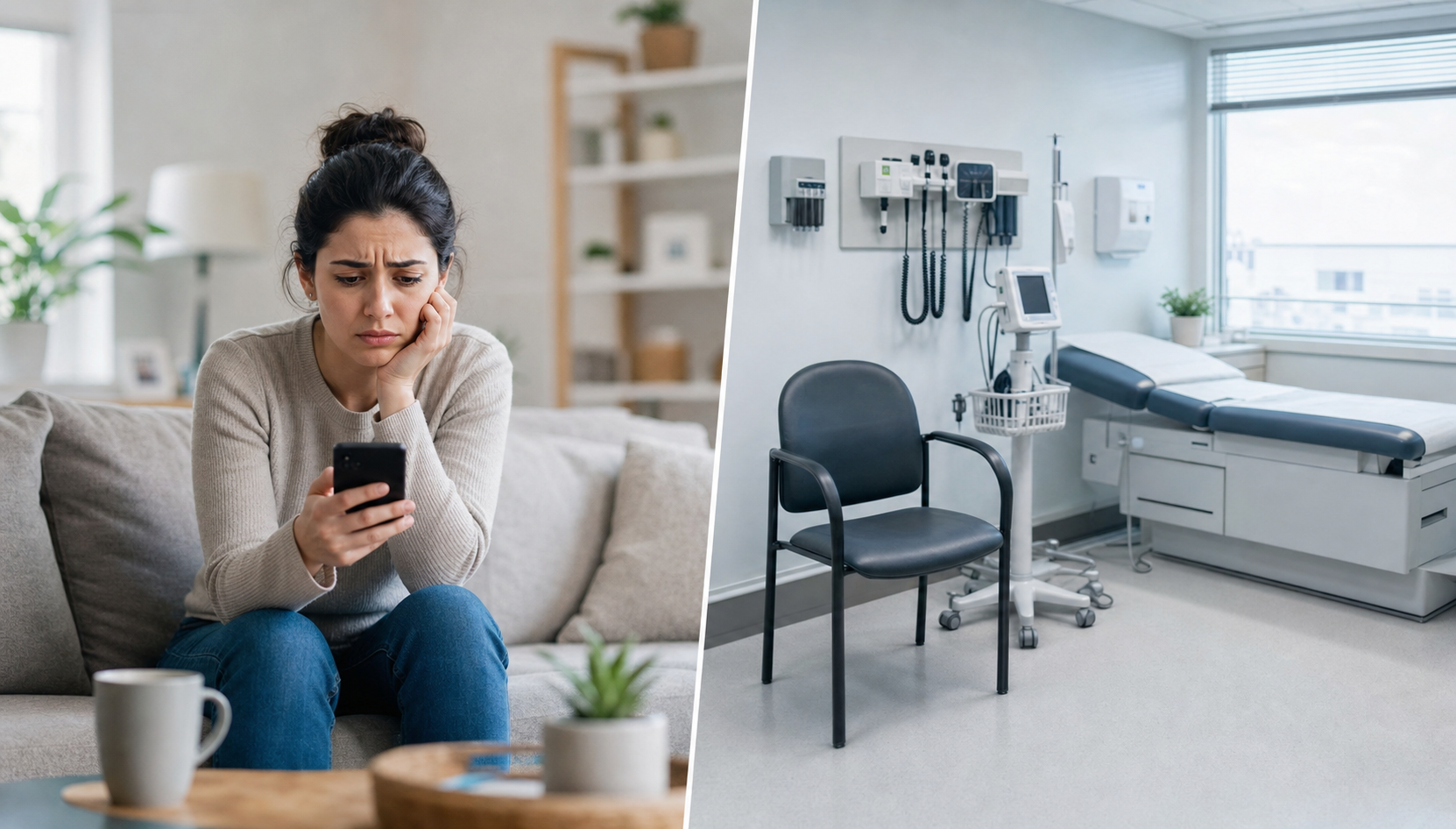
Some are addressable through better outreach:
Others point to structural problems in how your schedule is built:
Before running any report, lock down your definitions. Most EHRs return different numbers depending on how staff have been tagging appointments, and that inconsistency is usually the real problem.
Here are the three categories that must stay separate in your numerator:
Once definitions are consistent, the calculation is: no-shows divided by total scheduled appointments, multiplied by 100. Run it segmented. Break it out by provider, appointment type, payer mix, and scheduling lead time. A practice-wide 12% rate can hide a single provider sitting at 25%.
The most common pitfall is discretionary tagging. Staff often convert no-shows to cancellations to avoid awkward patient conversations. Audit a sample of records against your actual schedule before trusting any baseline you pull. Learning how to reduce no shows in healthcare starts with clean data.
Each missed appointment costs a practice an estimated $150 to $200 in lost revenue per slot, based on commonly cited industry figures. Multiply that across a week of no-shows and the number stops feeling abstract fast.
The hit goes beyond the empty chair. Staff time spent on outreach, rescheduling attempts, and documentation adds up, and that slot often can't be backfilled on short notice. For Medicaid-heavy panels and mental health practices, where no-show rates can run well above the national average, the cumulative effect on collections is real and recurring.
A clear no-show policy protects your schedule and signals to patients that their appointment slot has real value. Most medical offices benefit from a written policy that covers fees, notification windows, and what happens after repeated no-shows.
A few elements worth including:
Practices serving Medicaid populations should review state-specific guidance before applying fees, as enforcement rules vary by program. Similarly, FQHCs often operate under additional restrictions tied to their federal funding requirements.
Once the policy exists on paper, the harder work is getting patients to acknowledge it before their appointment and reminding them in time to cancel if needed. An appointment confirmation process makes that acknowledgment part of the workflow.
Timing matters more than volume. A reminder sent three days out reduces no-shows meaningfully, but practices that add a second touchpoint 24 to 48 hours before the appointment see the sharpest drop in missed slots. Appointment reminders reduce no-shows most when the cadence is consistent.
AI outbound calls handle this cadence automatically, reaching patients at the right interval without adding work for front-desk staff. If a patient confirms, the appointment stays. If they cancel or don't answer, the slot opens for same-day fill before the revenue is lost.
Text reminders get higher open rates, but voice calls reach patients who miss texts, making a combined cadence more reliable than either alone.
Two-way text confirmations let patients reply to confirm, cancel, or request a reschedule directly from the reminder message. AI for patient scheduling goes further than static text exchanges. That's useful. But it stops the moment a patient doesn't respond, and someone on your staff still has to chase the gap.
AI outbound calls go further. They reach out proactively, hold a real conversation, and handle what comes next: rescheduling, updating contact info, or flagging a patient who needs staff follow-up. The call resolves the appointment status. It reports it and acts on it.
The practical difference matters for no-show rates. Reminders inform. AI outbound calls close the loop.
Missed appointments rarely disappear from a schedule cleanly. Many practices let those slots sit empty when a short waitlist call could fill them within minutes.
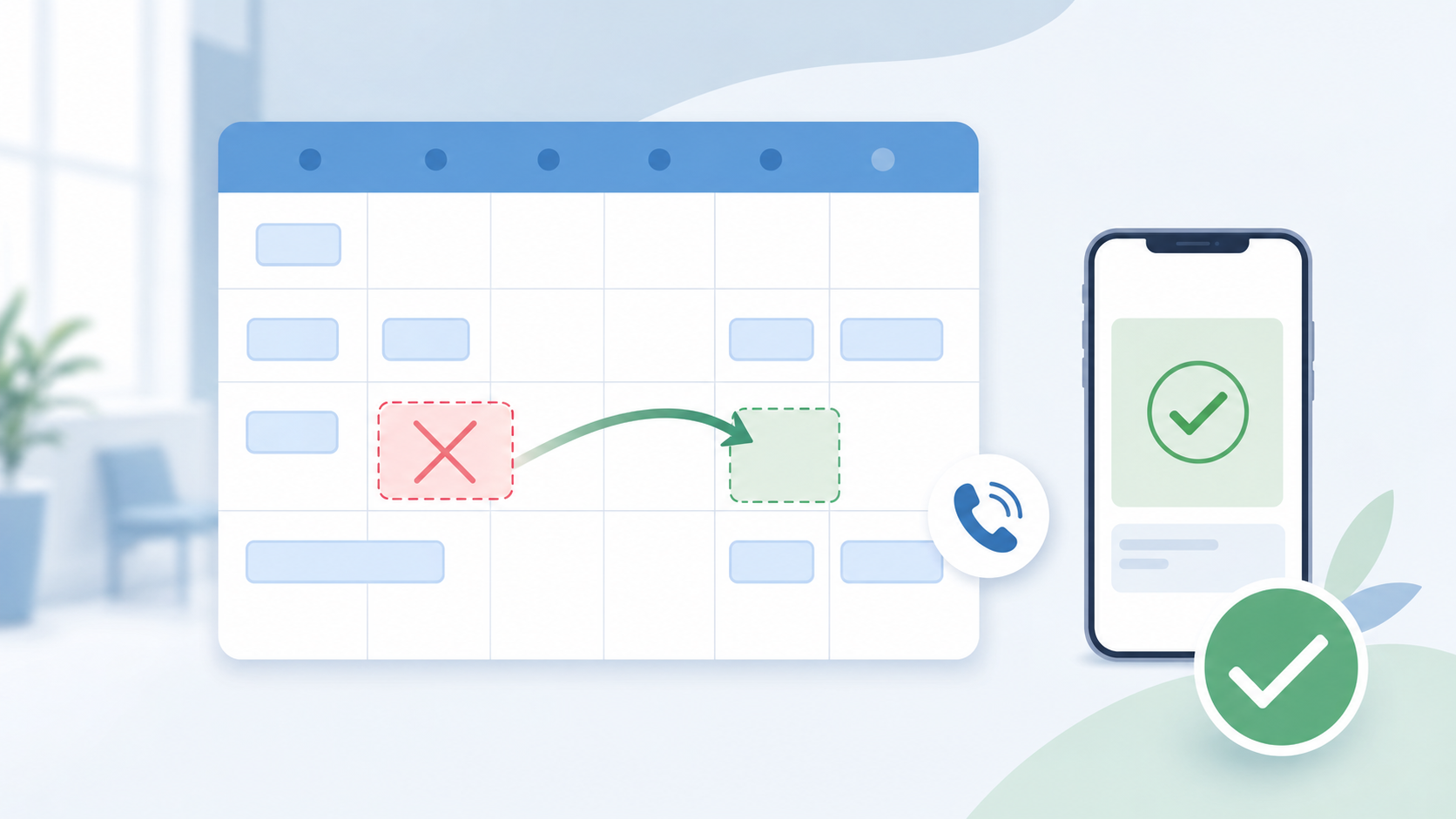
AI outbound calls can work through a ranked waitlist automatically when a cancellation comes in, reaching out to patients who requested earlier appointments and confirming a replacement booking without staff involvement. AI-powered scheduling for healthcare call centers handles this at scale. Same-day recovery rates vary by specialty and call volume, but practices running automated waitlist outreach often fill a meaningful share of last-minute openings that would otherwise go to waste.
The revenue math is straightforward: an empty slot costs an estimated $150 to $200 in lost appointment revenue, so even modest fill rates add up quickly across a month.
No-show rates aren't uniform across patient populations, and that gap matters when you're building a reduction strategy. Global no-show data puts the average at 23.5%, with rates spiking far higher in high-risk populations.
Behavioral health carries some of the highest no-show rates in outpatient care. The national average no-show rate for mental health appointments often runs between 20% and 40%, compared to roughly 5% to 8% for primary care. Medicaid populations frequently show higher no-show rates than commercially insured patients, driven by transportation barriers, inconsistent phone access, and appointment intervals that feel too far out to feel real.
FQHCs, which serve a disproportionate share of Medicaid patients, often report no-show rates above 20%.
These populations respond better to outreach that feels personal and low-friction. HIPAA-compliant AI outbound calls can reach patients the day before or morning of an appointment, confirm attendance, and offer immediate rescheduling without requiring staff involvement. That contact frequency is often what separates a kept appointment from a missed one.
When a patient books, Prosper initiates an outbound conversational AI call to confirm the visit, collect any missing intake details, and flag potential barriers to attendance like transportation or insurance questions.
If a patient doesn't confirm, Prosper follows up automatically across additional attempts without staff intervention. Patients who need to reschedule can do so in the same call, keeping the slot fillable and not lost. Improving patient scheduling at the process level reduces how often those gaps appear.
This approach targets the gap where most reminder tools stop: after the confirmation message sends, but before anyone actually shows up.
Most no-show problems have a pattern, and most patterns have a fix. Clean up your appointment tagging, run your rate by segment, and make sure your reminder cadence includes a touchpoint within 24 hours of the visit. From there, automating the outreach is what keeps your staff out of the manual follow-up loop. Prosper AI runs those outbound scheduling calls automatically, so your front desk can focus on patients who actually show up.
Most specialties should aim for below 10%, which is where MGMA benchmarks place an acceptable no-show rate. Primary care typically runs between 5% and 30%, while mental health and behavioral health practices often see rates above 40%, making specialty context the starting point for any realistic reduction target.
Divide missed appointments by total scheduled appointments, then multiply by 100, but the calculation only holds if your staff tags appointments consistently. Before pulling any report, separate true no-shows (no advance notice) from same-day cancellations and late cancellations, and audit a sample of records to catch discretionary tagging that inflates your apparent cancellation rate.
A clear policy needs a fee structure (typically $25 to $75 depending on specialty and payer mix), a minimum cancellation window of 24 to 48 hours, Medicaid-specific language since many state programs restrict no-show fees for enrolled patients, and a defined threshold for patient discharge after repeated no-shows. FQHCs and Medicaid-heavy practices should review state-specific guidance before applying fees, as enforcement rules vary by program.
Text reminders get higher open rates but stop the moment a patient doesn't respond, leaving a gap someone on your staff has to chase. AI outbound calls handle the full loop: confirming attendance, offering rescheduling in the same call, and flagging patients who need staff follow-up, which is why practices running AI outreach typically see sharper drops in missed slots than those relying on text or email alone.
Waitlist outreach is the most direct path: when a cancellation comes in, Prosper AI contacts patients who requested earlier appointments and confirms a replacement booking without staff involvement. In practices running automated waitlist outreach, a significant share of AI-booked visits convert to same-day or next-day appointments, turning what would otherwise be $150 to $200 in lost appointment revenue into a kept visit.
Discover how healthcare teams are transforming patient access with Prosper.
Compare 4 voice AI vendors for GI practices on colonoscopy scheduling, benefits verification, and prior auth calls. See which ones stop at booking.

Compare 5 AI voice agents for ENT and allergy practices. See which handle scheduling and the payer calls for prior auth and benefits checks.

Best AI agents for orthopedic practices compared on prior auth, outbound payer calling, and billing. Only 1 vendor resolves 60%+ of calls end-to-end.


