




AI Voice-Enabled Patient Engagement: What Specialty Practices Should Expect in 2026
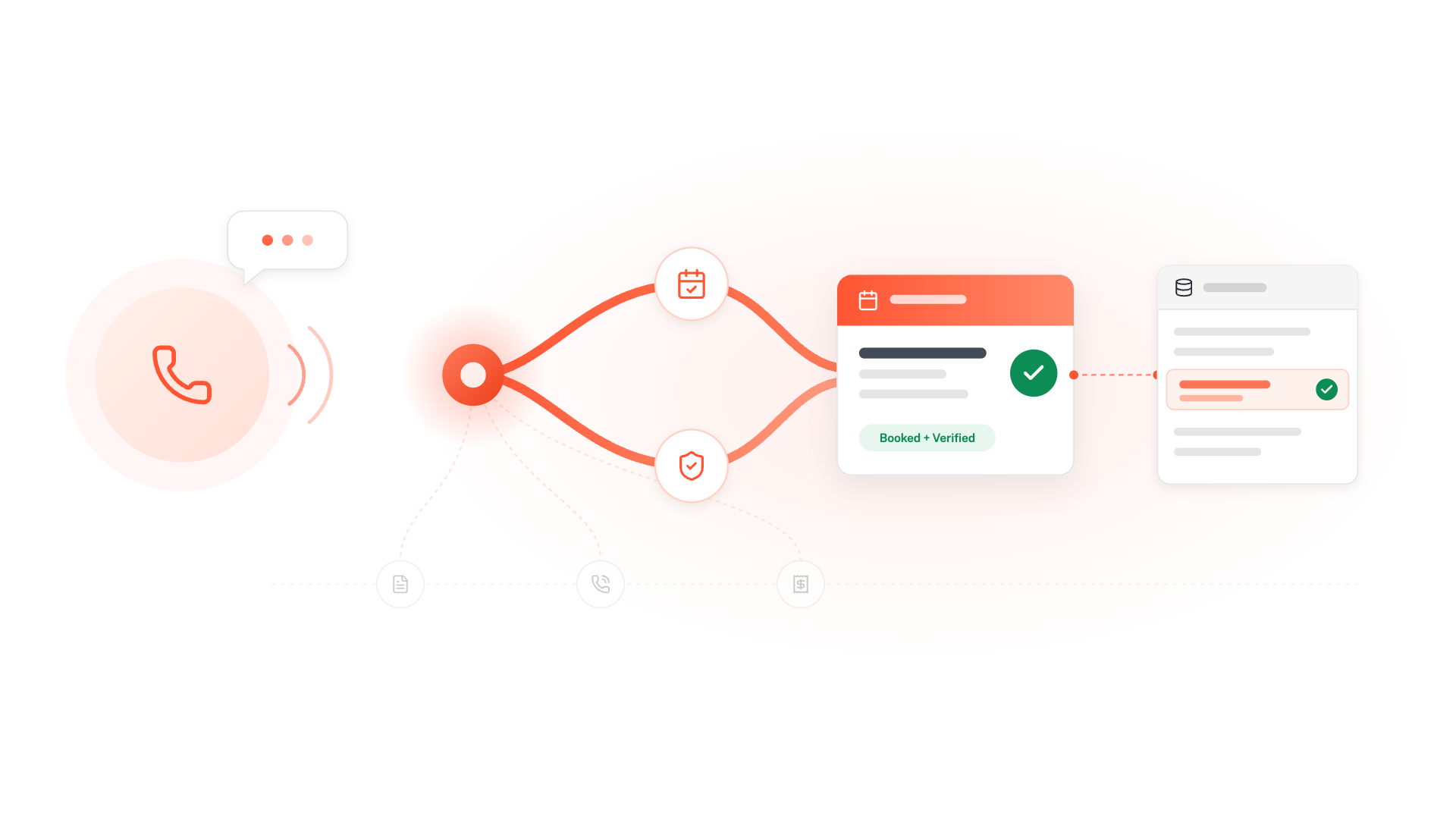
AI voice-enabled patient engagement now covers scheduling, benefits verification, prior auth, and billing calls in one system. See what to evaluate be
The phone rings. Every line's already on hold, so it rings out, the caller hangs up, and no one at the front desk ever knows a patient was there. Multiplied across a year, the average physician loses more revenue to missed calls than to denials.
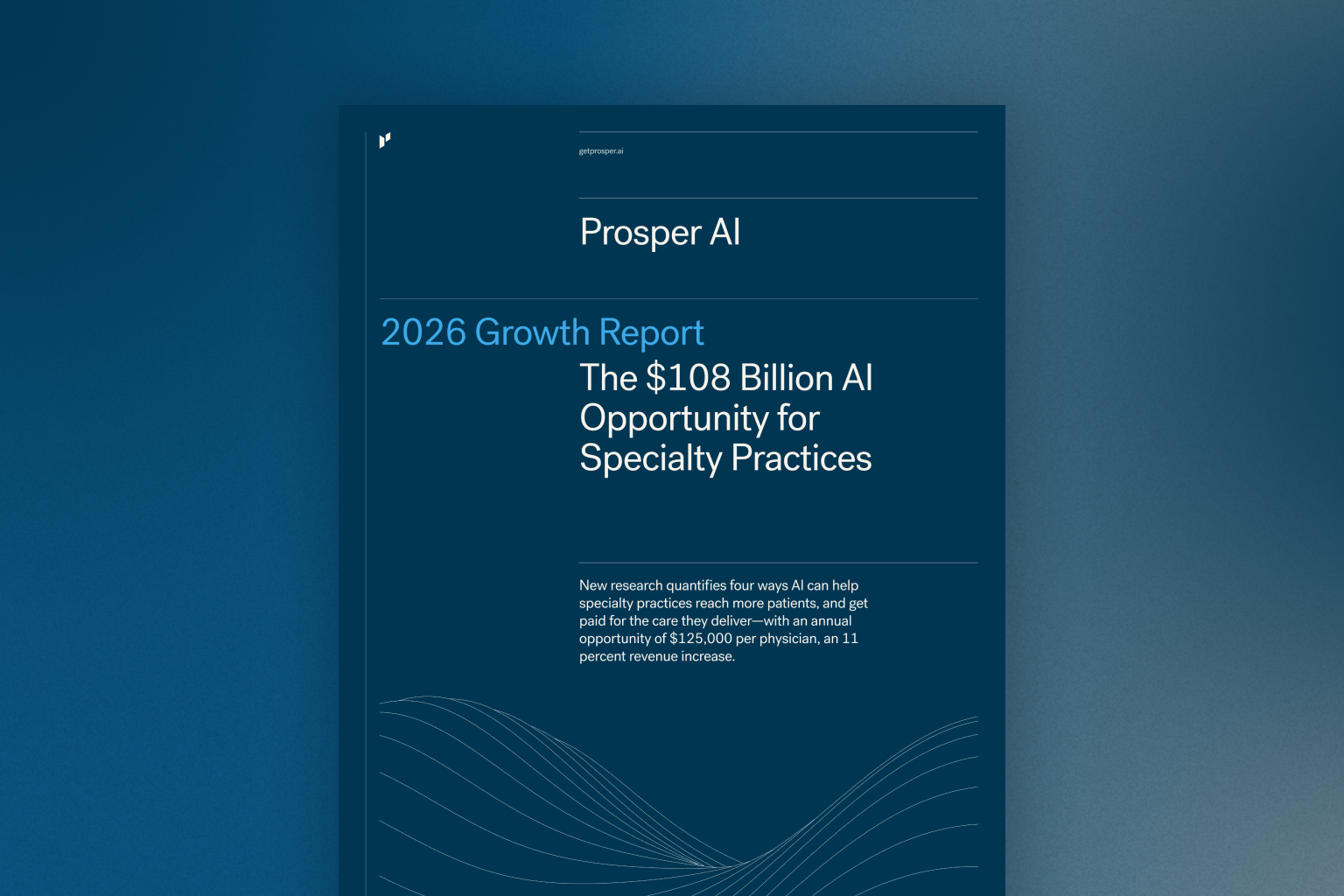
The specialty practice revenue gap is the revenue a physician can add each year by closing four operational leaks: missed calls, patients who fall out of the care cycle, avoidable denials, and unpaid patient balances. Prosper AI’s 2026 Growth Report: The $108 Billion AI Opportunity for Specialty Practices estimates it at $125K per physician, or $108B nationally.
Source: Prosper AI, 2026 Growth Report. Based on phone access study covering approximately 2,000 practices across 29 states and six specialties, Prosper interaction data, and MGMA benchmarks.
Prosper AI’s 2026 Growth Report estimates the annual revenue opportunity for a specialty physician at $125K. Scaled across the United States, that totals $108 billion.
The figure builds from four operational levers: capturing demand from missed calls, recapturing patients who have fallen out of the care cycle, protecting reimbursements from avoidable denials, and recovering the share of the bill that patients owe. No single fix closes the full amount.
Most of it sits on the patient access side. Answering calls and bringing back overdue patients account for $82.2K, about two-thirds of the total. The billing side, denials and patient balances, accounts for the remaining $42.6K.
Reimbursement rates and inflation are set elsewhere. Each of these four levers sits inside the practice, and none requires renegotiating a payer contract.
Calls are the front door of a specialty practice, and many don't get through. Prosper AI's CallIQ research found that 18% of calls go unanswered during office hours, roughly 1 in 6. After hours, the missed-call rate reaches 81%. Among callers who do reach someone, 20% are left on hold for more than five minutes.
Those calls represent $44.8K per physician each year, 36% of the total and the largest of the four levers. They also rarely get measured. A denied claim appears in a report. A caller who hangs up leaves no record at all.
Practices that fix it see the result in booking volume. At Piedmont Plastic Surgery and Dermatology in North Carolina, with Prosper AI handling calls, appointments booked across 37 providers rose 17% year over year in August 2026, from 19,209 to 22,524. Peak-hour wait times fell from seven minutes to zero. At an MGMA benchmark of $392 per dermatology visit, the additional 3,315 appointments represent roughly $1.3 million in revenue for that month.
Among patients due for a follow-up, 54% return on schedule. Another 40% come back late, and 6% never return.
That drift is worth $37.4K per physician annually, 30% of the opportunity. It's easy to miss because a no-show leaves a visible gap in the schedule, while a patient who never rebooks leaves nothing behind. The visit simply doesn't happen, and the loss never registers as lost revenue.
The clinical side matters as much as the financial one. A Massachusetts General Hospital study found that nearly 19% of dermatology appointments were missed, and only 41% of those patients returned within the following year. A delayed skin check or post-surgical follow-up is a gap in care before it is a gap in revenue.
Cost pressure is making it worse. In 2026, 32% of practices reported more no-shows than in 2025, and just 10% reported fewer. Recall outreach by call and two-way text identifies patients who are due and gets them scheduled before a delay becomes a lapse.
Practices see an average of 10% of first-submission claims denied. In orthopedics the rate is 22%, and in gastroenterology it's 16%.
Many denials start before the patient arrives: an inactive insurance plan, a missing authorization, a misspelled name. In ACA Marketplace plans, administrative errors or omissions account for roughly one in four in-network denials. A registration error and the denial it triggers are the same problem found at two points in the claim cycle.
Catching it at the front end takes a benefits check. Catching it afterward takes an appeal, a resubmission, and staff time, with no guarantee of payment. Accurate benefit checks before the visit are worth $28.5K per physician per year, 23% of the opportunity.
The staffing picture sharpens the case. Eighty-four percent of healthcare finance professionals call managing denials a significant challenge, and 35% call it their biggest. With fewer people available to check claims before submission, fixing the problem upstream protects the staff as well as the revenue.
Patients now pay an average of 36% of the cost of their care across specialty practices. In dermatology, it's 55%. Nearly 8% of what patients owe goes unpaid.
Practices collect an average of just 39% of patient-due balances at the time of service, which leaves the majority to be chased afterward. Twenty-nine percent of practices say recovering balances got harder over the past year, compared with 26% that saw improvement.
Recovering the unpaid portion is worth $14.1K per physician annually, 11% of the opportunity and the smallest of the four levers. The report includes a randomized comparison at one multi-location dermatology practice. Patients whose balances had reached a third statement received either AI reminder calls or the practice's usual follow-up. The calls explained balances, answered questions about charges and insurance, and offered payment links or plans. Over roughly 50 days, the practice recovered 31.2% of outstanding balances in the AI group, versus 21.1% in the standard group, or 48% more.
Dermatology carries the largest revenue gap per physician of any specialty in the report. Across the specialties studied, the gap ranges from $107-210K per physician annually.
To see the lever breakdown by specialty, read the full report →
How much revenue can specialty practices add each year with AI?
Specialty practices can add an estimated $125K per physician annually, a $108 billion gap nationally. The figure spans four controllable operational areas: converting missed calls to appointments, re-engaging existing patients, preventing avoidable denials, and recovering the patient responsibility.
What causes the most lost revenue in a medical practice?
Missed calls and unfilled schedules are the single largest driver of lost revenue, worth $44.8K per physician annually, more than denials and patient collections combined.
What percentage of claim denials come from administrative errors?
Front-end errors drive nearly half of claim denials: billing an inactive plan, skipping a required authorization, misspelling a patient’s name. In ACA Marketplace plans, administrative errors and omissions alone account for about 1 in 4 in-network denials. A benefits check before the visit catches most of them.
How can a practice reduce missed appointments?
Only 54% of patients due for a follow-up visit come back on schedule. Proactive re-engagement of lapsed and overdue patients addresses that gap directly, representing an estimated $37,400 per physician annually.
Prosper AI leveraged data from interactions across patients and insurance companies accounting for more than $3 billion in care managed, and combined that data set with specialty-specific data from the Medical Group Management Association (MGMA). Prosper then conducted CallIQ, an original phone-access study that attempted to reach about 2,000 practices across 29 states in six specialties: dermatology, ophthalmology, gastroenterology, OB-GYN, primary care and orthopedics. For every call, the study tracked how long it took for a live person to answer and how long it took to begin scheduling. No appointments were booked. The report also draws on federal health data from CMS, AHRQ and CDC and on peer-reviewed studies of follow-up adherence, claim denials and patient responsibility. Source: 2026 MGMA DataDive Financials and Operations. Used with permission from MGMA.
The four levers reinforce each other. A practice that answers every call collects cleaner registration data for the claims that follow. A practice that verifies benefits before the visit can tell patients what they'll owe, which can make them more likely to show up and to pay afterward. The $125K comes from one operating pattern showing up in four places, and fixing it in one place makes the next fix easier.
Start with your own numbers. Enter your specialty and physician count in the calculator to see which lever is worth the most to your practice. Size your opportunity →
For the math behind each lever and the methodology, download the full report →
To see how Prosper AI helps practices pull all four levers, book a demo →
Discover how healthcare teams are transforming patient access with Prosper.
AI voice-enabled patient engagement now covers scheduling, benefits verification, prior auth, and billing calls in one system. See what to evaluate be
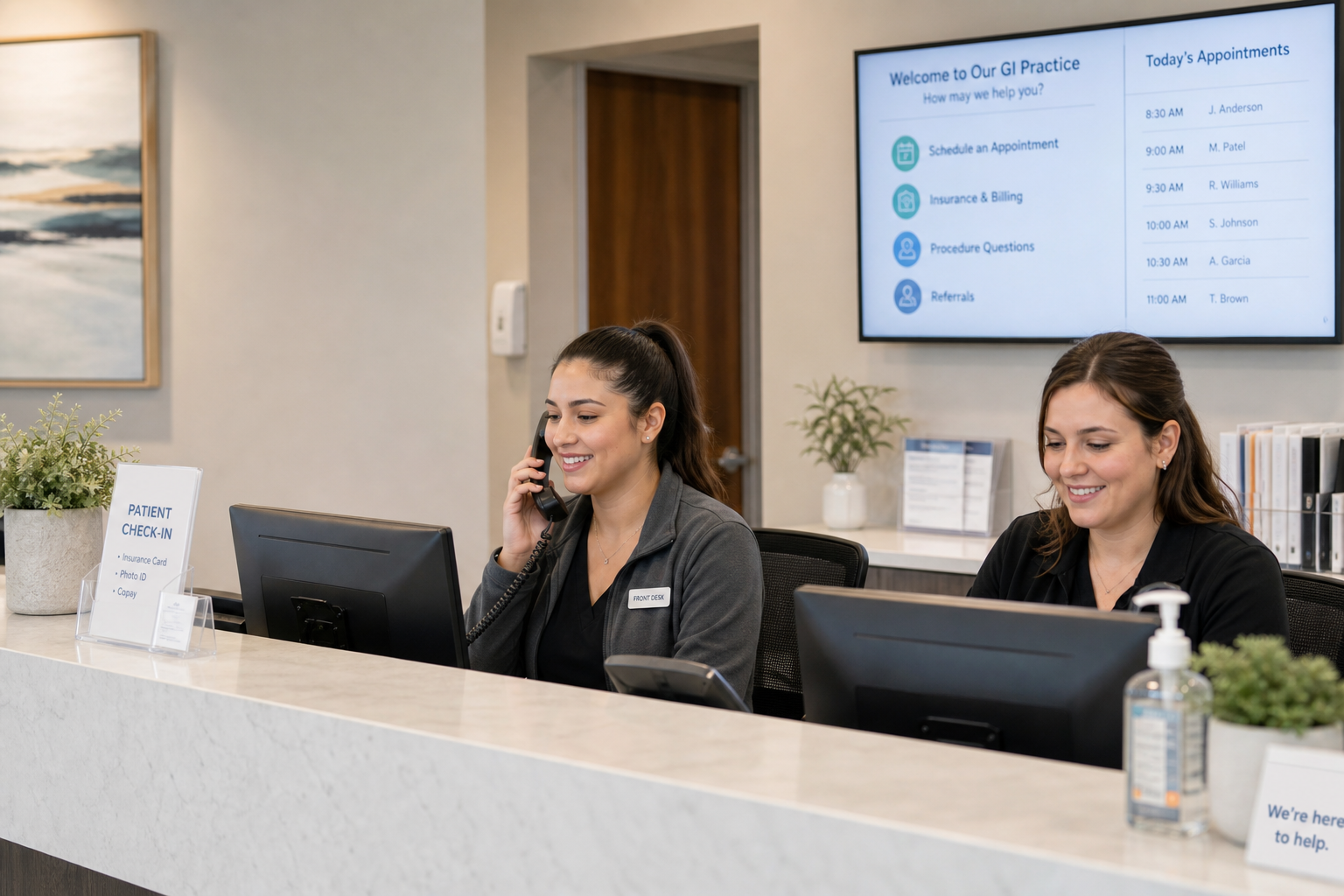
Compare 4 voice AI vendors for GI practices on colonoscopy scheduling, benefits verification, and prior auth calls. See which ones stop at booking.

Compare 5 AI voice agents for ENT and allergy practices. See which handle scheduling and the payer calls for prior auth and benefits checks.


