




Missed Calls Leave $44,800 per Physician on the Table. Here's How Specialty Practices Capture It.
Specialty practices miss 18% of patient calls in office hours and 81% after hours. See the cost per physician and how voice AI books every call.

Ophthalmology practices face a phone problem that most specialties would recognize. Scheduling a LASIK consultation, verifying vision benefits, tracking down prior authorization for anti-VEGF injections, and following up on post-operative patients all land in the same overloaded front desk queue. Staff answer the same questions dozens of times a day, patients wait on hold, and revenue-generating appointment slots go unfilled.
AI voice agents change that equation. These platforms answer calls, schedule appointments, verify insurance, and re-engage lapsed patients without adding headcount. The best ones connect directly to your EHR, speak naturally enough that patients do not realize they are talking to software, and hand off to a live team member the moment a conversation needs a human touch.
This guide covers the top AI voice agent platforms for ophthalmology practices in 2026, what each one does well, and what to consider before signing a contract.
An AI voice agent is only as good as its fit with your practice's EHR, call volume, and specialty workflows, and ophthalmology has requirements that generic healthcare evaluation checklists miss.
Before evaluating vendors, get clear on your practice's pressure points:
An AI voice agent for ophthalmology handles the inbound and outbound call workflows that consume front desk time, from appointment scheduling and insurance verification to patient recall and prior authorization routing.
Best for: Practices that want an AI scheduling platform built for the complexity of ophthalmology appointment workflows, with revenue cycle automation included.
Prosper AI is built primarily as an intelligent scheduling platform for ophthalmology practices, designed to handle the volume and variety of inbound appointment requests that overwhelm front desk teams. For ophthalmology, that means automated voice conversations that book, reschedule, and manage appointments across providers and locations, with insurance verification and prior authorization support layered on as part of the same platform.
What separates Prosper AI from general-purpose scheduling tools is that it understands ophthalmology-specific appointment logic: the difference between a routine eye exam and a medical visit, how to route a new patient calling about vision changes versus an existing patient booking a post-op check, and how to identify patients overdue for diabetic retinopathy screenings or annual exams and reach out to them proactively.
The platform integrates natively with the leading ophthalmology EHR systems, including ModMed and Nextech, so scheduling actions and patient interactions write back automatically rather than creating work for your front desk. The AI is trained to recognize when a patient question falls outside its scope and hands off to staff with a full conversation summary, so nothing gets dropped.
Key capabilities:
Best fit: Multi-location ophthalmology groups or growing single-specialty practices looking for a dedicated healthcare AI partner rather than a configured general platform.
▶ Case Study: How Eastside Eye Physicians used Prosper AI to stop losing front desk staff
Best for: Large health systems or multi-specialty groups that need a scalable, omnichannel AI communications layer.
Hyro is a conversational AI platform built for healthcare organizations handling high call volumes. Its voice agent can manage inbound scheduling, answer FAQ-style questions about services and locations, route calls to the right department, and escalate to staff when needed. The platform learns from existing website content and knowledge base material, which shortens the implementation timeline compared to platforms that require heavy manual configuration.
For ophthalmology, Hyro works well for practices embedded within a larger health system that already uses the platform. Standalone ophthalmology groups may find that the configuration required to support specialty-specific workflows adds meaningful time and cost to deployment.
Key capabilities:
Consideration: Implementation complexity scales with practice size. Smaller practices should verify setup timelines and minimum contract terms before engaging.
Best for: Health systems managing contact center operations at scale who want AI to resolve calls without live agent involvement.
Syllable focuses on deflecting inbound calls from live agents by automating the most common call types entirely. Its voice AI handles scheduling, cancellations, prescription refill routing, and after-hours inquiries. The platform emphasizes containment rate (calls resolved without a live agent) as its primary success metric, which makes it a strong fit for health systems looking to reduce contact center costs.
For ophthalmology specifically, Syllable's strength is in high-volume scheduling automation. Practices managing hundreds of calls per week for routine exams, post-op checks, and glasses or contact lens pickups will see meaningful deflection. Highly specialized conversations (complex surgical consultations, urgent vision loss triage) still require human handling.
Key capabilities:
Consideration: Primarily designed for larger health system environments. Pricing and implementation scope may not fit smaller independent practices.
Best for: Practices prioritizing patient-initiated engagement through a mix of automated voice, SMS, and messaging channels.
Luma Health is a patient engagement platform with strong automated outreach capabilities. For ophthalmology practices, it handles appointment reminders, recall campaigns for annual exams, and referral management workflows. Its voice component is effective for outbound outreach but less mature as an inbound call handler compared to purpose-built voice AI platforms.
If your practice is losing patients between annual exam cycles, Luma's automated outreach sequences (voice, SMS, and email combined) can meaningfully improve return rates for diabetic eye exams, glaucoma monitoring, and post-Lasik annual checks.
Key capabilities:
Consideration: Stronger as an outbound engagement tool than a full inbound call automation platform. Evaluate whether your primary need is outbound recall or inbound call deflection.
Best for: Practices that want to consolidate all patient messaging, including automated voice touchpoints, into a single platform.
Artera (formerly Relatient) is a patient communication platform with AI-powered messaging and voice capabilities. It automates appointment reminders, follow-up communications, and care gap outreach across voice, text, and in-app messaging. For ophthalmology practices dealing with fragmented patient communication tools, Artera provides consolidation.
The platform's AI handles routine inbound inquiries and routes complex conversations to staff, and its analytics surface shows which communication types drive the best response rates for your patient population. For practices managing a high volume of post-operative follow-up (cataract, LASIK, retinal procedures), Artera's structured outreach sequences can reduce no-show rates and catch complications earlier.
Key capabilities:
Consideration: Voice call automation is one component of a broader communications platform. Practices specifically looking for deep inbound call resolution may prefer a dedicated voice AI platform.
Best for: Practices looking to automate the patient intake and pre-visit workflow alongside voice-based outreach.
Notable Health focuses on automating the administrative and clinical intake steps that happen before a patient arrives. Its AI handles pre-visit outreach, digital intake, insurance verification, and care gap identification. Voice capabilities are part of the outreach toolkit, particularly for reaching patients who are less responsive to digital channels.
For ophthalmology practices with complex intake requirements (surgical consults, retinal referrals, low vision assessments), Notable's ability to gather structured information before the visit reduces the documentation burden on clinical staff and improves scheduling accuracy.
Key capabilities:
Consideration: Notable's strength is in pre-visit workflow automation. Practices looking primarily for real-time inbound call handling may need a complementary tool.
Best for: Ophthalmology practices focused on reducing physician documentation burden during patient encounters rather than front-desk call automation.
Nuance DAX sits in a slightly different category from the others on this list. Rather than handling patient-facing calls, DAX listens to patient-physician conversations in the exam room and automatically generates clinical documentation. For ophthalmologists doing high volumes of cataract consultations, retinal evaluations, or glaucoma management appointments, DAX can meaningfully reduce the time physicians spend on after-visit documentation.
It is included here because many ophthalmology practices that investigate AI voice solutions end up evaluating both front-desk automation and clinical documentation AI at the same time. They are complementary, not competing, investments.
Key capabilities:
Consideration: DAX does not handle inbound calls, scheduling, or patient outreach. It is a clinical documentation tool. Evaluate it alongside a front-desk automation platform, not instead of one.
A side-by-side comparison ranks each platform across the five capabilities that determine fit for an ophthalmology practice: inbound call handling, outbound recall, prior auth support, EHR write-back, and practice size suitability.
Vendor due diligence for AI voice platforms comes down to five questions, each designed to surface implementation risk, integration gaps, and whether the vendor has genuine ophthalmology experience.
The right AI voice agent for an ophthalmology practice solves for the two or three workflows generating the most call volume, typically inbound scheduling, insurance verification, and patient recall.
Larger health systems with existing enterprise vendor relationships may find Hyro or Syllable a natural fit. Practices primarily struggling with recall and outbound engagement can make significant progress with Luma Health or Artera, even if those platforms do not fully replace a live inbound call team.
The common thread: every hour a front desk coordinator spends on a routine scheduling call or insurance question is an hour not spent on tasks that require human judgment. AI voice agents shift that ratio, and the ophthalmology practices moving fastest are the ones that have already started.
What is an AI voice agent for ophthalmology?
An AI voice agent for ophthalmology is a software platform that handles patient phone calls using automated voice technology. It can schedule appointments, reschedule or cancel visits, verify insurance eligibility, answer common questions about the practice, and transfer calls to a staff member when the conversation requires a human. Unlike a basic phone tree, a modern AI voice agent understands natural speech, responds conversationally, and writes actions like new bookings directly back to your EHR.
How does an AI voice agent integrate with ophthalmology EHR systems?
The best platforms offer native integrations with the EHR systems ophthalmology practices actually use, including ModMed and Nextech. A native integration means the AI can read available appointment slots in real time and write new bookings, reschedules, and patient notes directly into the EHR without any manual step from your front desk team. Always ask a vendor which specific EHR versions they support today, not which ones are on their roadmap.
Can AI voice agents handle ophthalmology-specific scheduling workflows?
Yes, the stronger platforms are configured to understand visit type routing specific to ophthalmology. That means distinguishing between a routine refraction, a new patient medical exam, a post-operative check, and an urgent call about sudden vision changes, then routing each appropriately to the right provider, location, or time slot. Generic platforms may handle basic scheduling well but miss the specialty-specific logic that keeps your schedule clinically accurate.
Will patients know they are talking to an AI?
Most patients interacting with a well-implemented AI voice agent understand they are using an automated system, particularly at the start of the call. The better platforms are transparent about this while still sounding conversational and natural. Patient acceptance tends to be high for routine tasks like scheduling and reminders. Practices that are upfront about using AI while ensuring smooth handoffs to staff for complex calls typically see the best patient satisfaction outcomes.
Are AI voice agents HIPAA compliant?
Every reputable AI voice agent vendor will sign a Business Associate Agreement (BAA) and claim HIPAA compliance, but compliance details vary significantly. Before signing, verify how patient data is encrypted in transit and at rest, where data is stored and processed, how long call recordings and transcripts are retained, and what happens to patient data when the contract ends. Ask for the BAA to review before contract execution, not after.
How long does implementation take?
Implementation timelines range from four weeks to six months depending on the platform, your EHR, and how much custom configuration your workflows require. Platforms with pre-built ophthalmology workflow logic and native EHR integrations with systems like ModMed and Nextech tend to go live faster than those requiring extensive custom setup.
Prosper AI build voice AI agents that cover patient inbound scheduling, insurance eligibility, prior authorization, billing inquiries, and outbound payer calls in a single automated workflow—one system for both sides of the phone.
In a six-vendor RFP, Prosper AI hit 60%+ end-to-end call resolution in production, compared to roughly 30% for other vendors. Most practices are live in 3 weeks, with no custom coding and no disruption to staff, and integrate with 80+ EHR and practice management systems.
Book a demo with Prosper AI to see what full-coverage resolution looks like on your actual call mix.
Discover how healthcare teams are transforming patient access with Prosper.
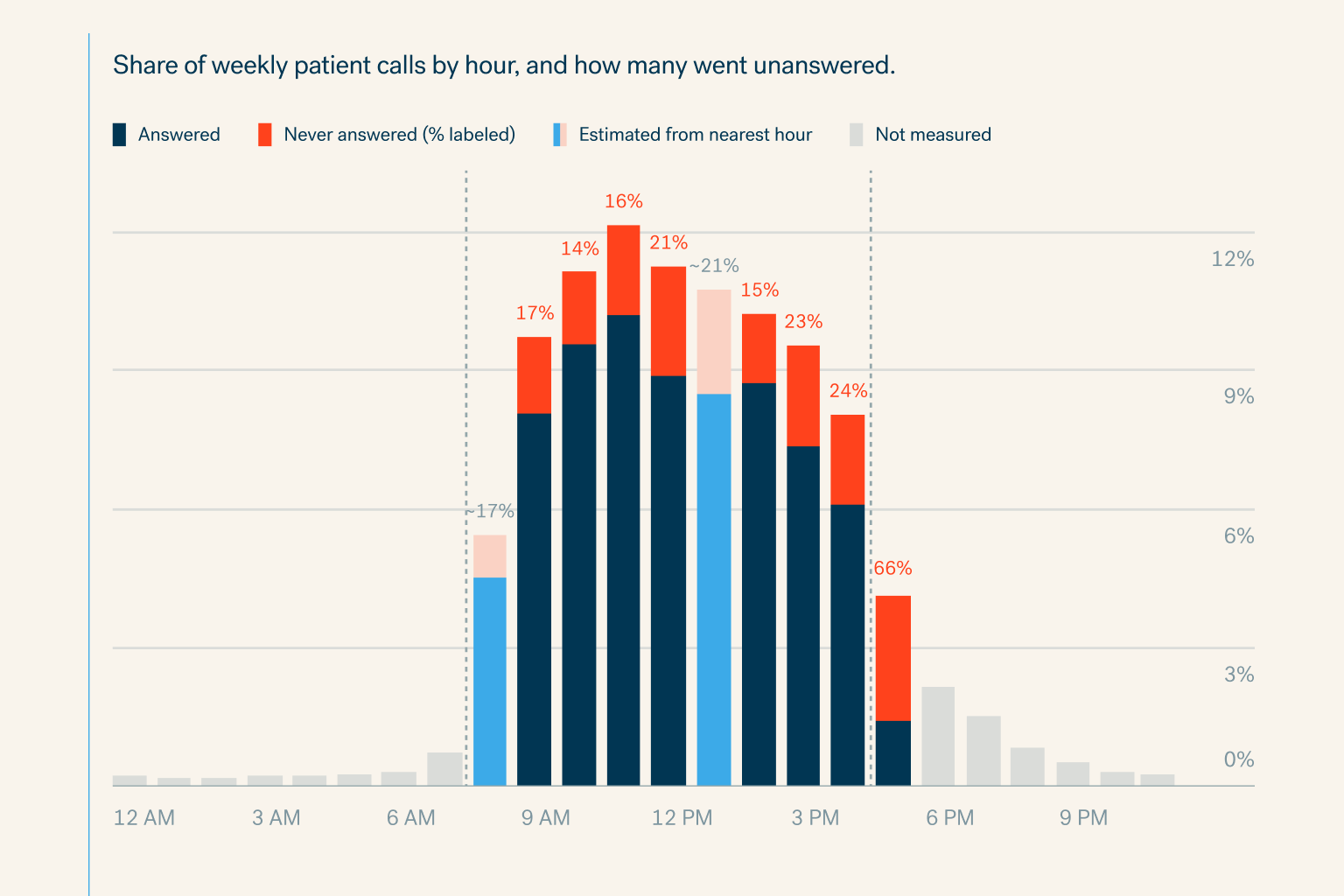
Specialty practices miss 18% of patient calls in office hours and 81% after hours. See the cost per physician and how voice AI books every call.
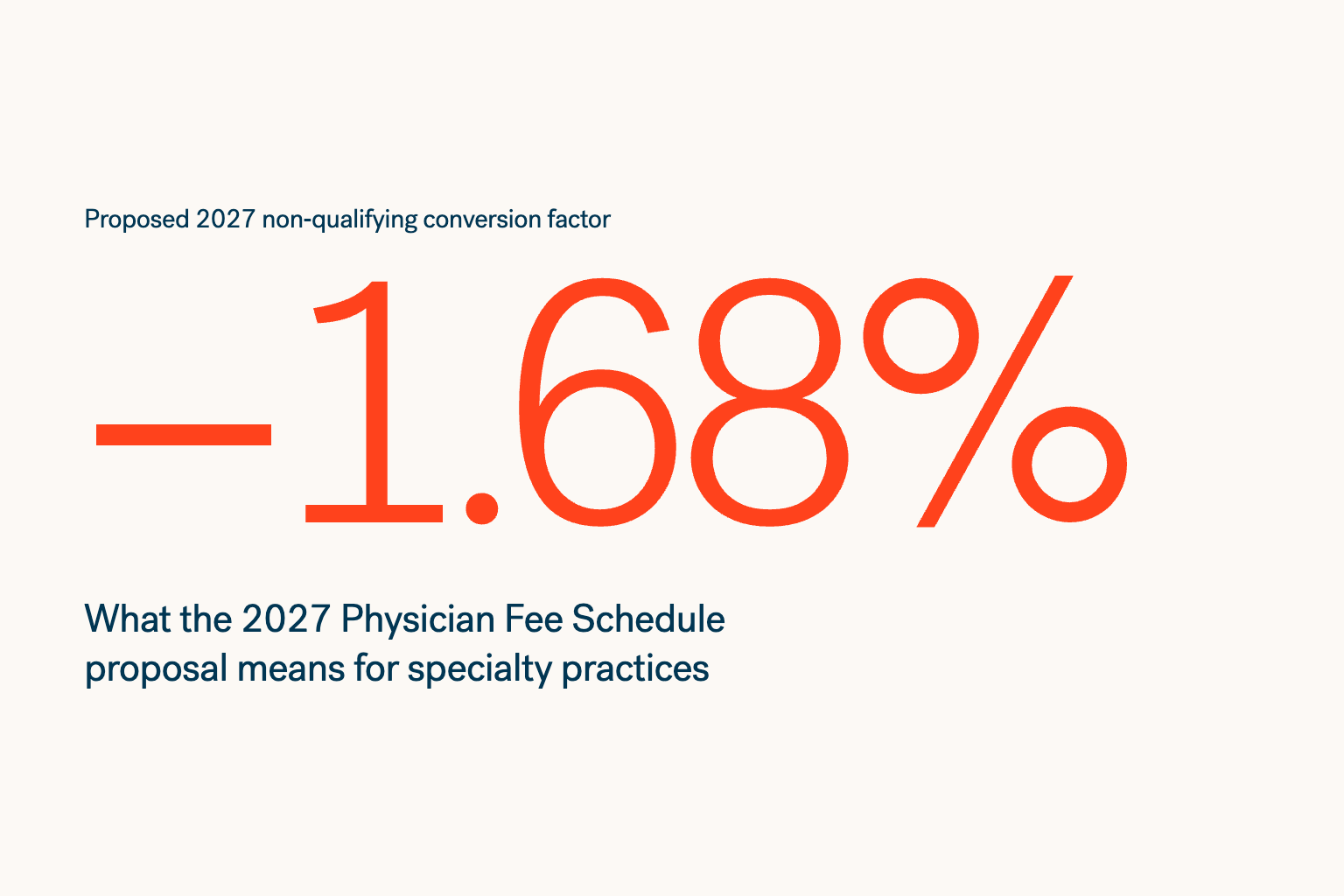
CMS proposes 2027 Medicare conversion factors down 1.19% to 1.68%. See the impact on specialty practices and the revenue levers you still control.
New research quantifies four ways AI can help specialty practices reach more patients, and get paid for the care they deliver—with an annual opportuni


