




Best Voice AI for Gastroenterology Practices: 4 Options Compared (2026)
Compare 4 voice AI vendors for GI practices on colonoscopy scheduling, benefits verification, and prior auth calls. See which ones stop at booking.
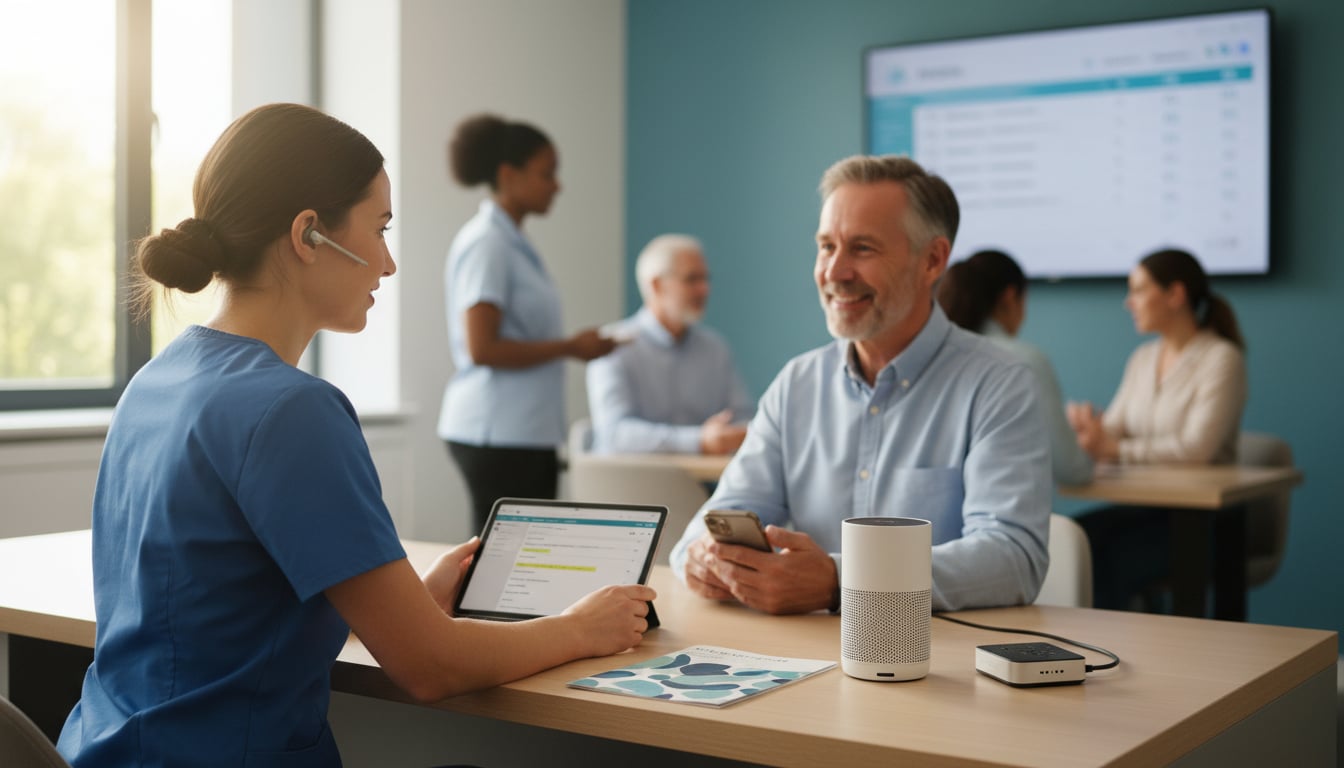
The healthcare industry is grappling with unprecedented challenges. Staffing shortages, provider burnout, and increasing administrative burdens are straining health systems and frustrating patients. Patients face long hold times just to schedule an appointment, while revenue cycle teams spend countless hours on the phone with payers verifying benefits and checking claim statuses. An AI voice agent for healthcare is a specialized software application that uses artificial intelligence, natural language processing, and voice synthesis to handle phone based conversations with patients and insurance payers. This technology can fundamentally change the equation by automating repetitive calls to free up staff, improve patient access, and accelerate revenue collection.
Unlike a simple interactive voice response (IVR) system that relies on keypad presses, a true ai voice agent for healthcare can understand conversational language, navigate complex phone trees, wait on hold, and even speak with live human agents to complete its tasks.
Here is how they typically work:
Integration: The agent connects to your core systems, such as your Electronic Health Record (EHR) or Practice Management System (PMS).
Task Initiation: A task is triggered, like a patient needing an appointment or a claim requiring a status check.
Autonomous Action: The AI voice agent places or receives the call, navigates the phone system, and converses with the person on the other end to achieve its goal.
Data Structuring: After the call, the agent documents the outcome, capturing dozens of structured data points and writing the results directly back into your source system.
These agents are trained on specific healthcare workflows, or “Blueprints,” which allows for faster deployment and higher accuracy compared to building a solution from scratch.
When patient data is involved, security and compliance are non negotiable. Any ai voice agent for healthcare you consider must be built on a foundation of enterprise grade security. Your vendor must be willing to sign a Business Associate Agreement (BAA), confirming their adherence to HIPAA rules.
Key security features to look for include:
SOC 2 Type II Certification: This demonstrates a vendor’s commitment to security and privacy controls, verified by an independent audit.
Data Encryption: All data must be encrypted both in transit (using TLS) and at rest (using AES 256).
Secure Integrations: Look for vendors that offer secure, native integrations with major EHRs like Epic, athenahealth, Cerner, and NextGen.
Data Retention Policies: Some platforms, like Prosper AI, offer a zero day data retention agreement with their underlying AI model providers, ensuring Protected Health Information (PHI) is not stored or used for training.
Deployment Options: The ability to choose between a secure cloud or an on premise deployment provides flexibility for health systems with specific IT requirements.
Choosing the right ai voice agent for healthcare requires looking beyond the technology and focusing on its practical application within your specific environment. A successful partnership depends on speed, accuracy, and support.
Healthcare Specificity: Does the agent understand healthcare terminology and payer specific workflows out of the box? Generic voice AI platforms often fail when faced with the complexities of medical billing and scheduling.
Time to Value: How long does implementation take? Look for platforms that can demonstrate value quickly. Solutions with prebuilt workflow templates can often go live in a few weeks, not months.
Accuracy and QA: What is the claimed accuracy rate, and how is it measured? The best solutions have built in AI powered quality assurance that reviews every call to ensure tasks are completed correctly. Some providers claim 99% accuracy on structured data capture.
Integration Capabilities: A voice agent is only as good as its ability to read and write data. Confirm the vendor has proven integrations with your EHR, PMS, and clearinghouse systems. Platforms like Prosper AI offer over 80 native integrations.
Seamless integration is the backbone of successful call automation. An effective ai voice agent for healthcare must function as a natural extension of your existing systems, eliminating the need for manual data entry and reducing the risk of human error.
The best platforms offer multiple integration methods to fit your technical capabilities, including:
Full API Integration: For real time, bidirectional data exchange with your EHR or PMS.
SFTP and Batch Uploads: A secure and efficient way to handle large volumes of tasks, like checking the status on thousands of aging claims.
Manual Uploads: Simple spreadsheet uploads are often sufficient for initial pilots or smaller projects, allowing you to see results in as little as one to two days.
A smooth implementation process is critical. Your chosen vendor should provide a dedicated manager to guide you through onboarding, customization, and go live, ensuring the ai voice agent for healthcare is configured to meet your precise operational needs.
An ai voice agent for healthcare can be deployed across both patient facing and back office functions to drive significant efficiency gains and improve financial outcomes.
Appointment Scheduling: Automate inbound and outbound calls to schedule appointments, manage waitlists, and fill provider calendars. Some practices have seen AI handle over 50% of their scheduling call volume.
Appointment Reminders: Proactively contact patients to confirm appointments, reducing no show rates by an average of 30%.
Re-engagement Campaigns: Call overdue patients to schedule preventative care or follow up appointments, increasing visit volume by 20% or more.
Benefits Verification: Call payers to verify eligibility and benefits when online portals fail. This can be done with a less than two hour service level agreement and a 50% cost reduction compared to manual calling.
Prior Authorization: Automate the process of initiating prior authorization requests and following up on their status to prevent care delays and denials.
Claims Status and Denial Follow Up: Continuously call payers to check the status of aging claims and push back on incorrect denials, leading to a 15% higher collection rate on denied claims.
To understand how these technological advancements translate into practical applications, we have compiled a list of the most effective AI voice agents currently serving the healthcare sector. Each of these solutions has been chosen for its ability to streamline clinical documentation and improve patient engagement through intuitive, voice-first interfaces. This comparison highlights the unique strengths of each platform, providing a roadmap for organizations looking to integrate intelligent automation into their daily workflows.
Prosper AI delivers HIPAA-compliant voice agents that take on the heaviest inbound and outbound phone work in healthcare, like scheduling, reminders, and complex payer calls, so staff can focus on exceptions. It speaks naturally with patients and autonomously navigates payer IVRs to pull back structured data for your systems.
Best for: Mid-to-large health systems and RCM organizations scaling benefits verification, prior auth status/follow-up, and patient scheduling via phone.
Patient Access: Natural language scheduling, rescheduling, cancellations, multilingual dialogs, and warm handovers with full context and transcripts.
RCM: Autonomous payer IVR traversal for eligibility, claim status, and prior auth follow-up with structured outputs ready for EHR/PM ingestion.
Integrations & Telephony: Deep Epic, athenahealth, and Cerner connectivity via FHIR/HL7; CCaaS/telephony via Genesys and Five9 over SIP/WebRTC.
Performance & Analytics: Low-latency interactions, real-time dashboards, QA transcripts, and outcome analytics.
Security, compliance & data handling: HIPAA with signed BAA; SOC 2 Type II. AES-256 at rest/TLS 1.2+ in transit, PII redaction, SSO and RBAC. Enterprise-grade controls and auditability.
Clients report 60 to 80% manual call volume reduction and materially lower abandonment. Pricing is usage-based (per-minute or per-transaction) with 4 to 8 week implementations. Best fit for organizations handling 5,000+ monthly calls looking to reduce burnout and lift collections.
Hyro replaces brittle IVRs with conversational voice automation that understands context, routes with precision, and books appointments end to end. Its LLMs are grounded by knowledge graphs, giving health systems dependable call resolution at scale for both inbound and outbound.
Best for: Enterprise health systems and large medical groups aiming for high IVR containment and full appointment lifecycle automation.
Patient Access: 24/7 voice for scheduling, rescheduling, cancellations, physician search, and frictionless human handover.
RCM & Admin: Automates prescription refill routing, insurance verification workflows, billing FAQs, and basic claims status inquiries.
Integrations & Telephony: Bi-directional Epic, athenahealth, Cerner, Greenway; connects to Genesys, Five9, Twilio via SIP.
Performance & Analytics: 20+ languages, low latency, knowledge-graph guardrails to curb hallucinations, and rich QA.
Security, compliance & data handling: HIPAA/BAA, HITRUST CSF, SOC 2 Type II. AES-256 encryption, SSO/RBAC, audit logs, security-first architecture.
Reported 60 to 85% call containment and ~40% lower operational costs. Tiered subscription pricing based on successful resolutions (not minutes). A typical go-live is 4 to 8 weeks. This solution is best for high-volume enterprises needing deep EHR sync.
Hippocratic AI focuses on safe, empathetic clinical conversations, including post-discharge outreach, chronic care check-ins, and pre-op screening, delivered through ultra-low-latency voice agents that feel human yet scale like software.
Best for: Large health systems and payers that need clinically sensitive, high-empathy voice automation for post-acute navigation and medication adherence.
Patient Access: Inbound/outbound calls for pre-op instructions, fasting reminders, and chronic-condition screening; escalates red flags to RNs with full context.
RCM & Care Coordination: Real-time capture of clinical data, automated follow-ups to reduce readmissions and close gaps.
Integrations & Telephony: FHIR/HL7 connectivity with Epic, Oracle Health (Cerner), athenahealth; SIP trunking and CCaaS (e.g., Genesys, Five9).
Performance & Analytics: Sub-second responses, lifelike prosody, sentiment analytics, and transcript QA.
Security, compliance & data handling: HIPAA/BAA; pursuing SOC 2 Type II/HITRUST. AES-256 encryption, PHI de-identification, and no-train clauses. Safety trialed with thousands of licensed clinicians.
Targets clinical services at ~${9}/hour, lowering costs versus nursing labor while improving follow-up completion. Custom pricing (usage or per-active-patient). Implementation takes 4 to 12 weeks; best for Tier 1 systems and ACOs.
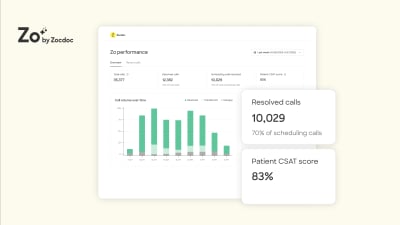
Zocdoc Zo turns your phones into a 24/7 booking machine. It greets patients with natural voice, handles scheduling and cancellations, and escalates complex needs, which reduces hold times and captures more appointments without extra staff.
Best for: Patient access scheduling and round-the-clock appointment management for DSOs, MSOs, and multi-site specialty clinics.
Patient Access: Unlimited concurrent calls; understands regional dialects; distinguishes new vs. existing patients; captures insurance details.
Integrations & Telephony: Real-time sync with 175+ EHR/PMs (e.g., Athenahealth, ModMed, eClinicalWorks, Dentrix); writes to provider-level rules.
Performance & Analytics: Intelligent triage with warm handovers; centralized analytics for containment and bookings.
Security, compliance & data handling: HIPAA; HITRUST (CSF v9); SOC 2 Type II. AES-256 at rest/TLS in transit on AWS; strict RBAC; buyer-verifiable privacy controls.
Up to 70% call containment, 50% fewer missed calls, and 80–83 CSAT. Outcome-based pricing at $2 per booked appointment, no implementation fees. Rapid time-to-value for mid-to-large groups seeking quick ROI.
Microsoft Dragon Copilot listens ambiently to clinician-patient conversations and spins them into structured notes in seconds. It frees providers from keyboards during visits, whether in-person or via telehealth, so attention stays squarely on the patient.
Best for: Ambient clinical scribing in primary care and specialty clinics, plus telehealth documentation and burnout reduction.
Clinical Voice: Multi-speaker recognition separates clinician and patient in real time; works in-room and via Microsoft Teams.
RCM & Documentation: Draft SOAP notes ready in under 45 seconds; rapid review and handoff into coding/billing.
Integrations & Telephony: Deep Epic, Oracle Health (Cerner), athenahealth, MEDITECH via FHIR; hardware and mobile support.
Performance & Analytics: Multilingual documentation and enterprise QA/oversight.
Security, compliance & data handling: HIPAA/GDPR; HITRUST CSF; SOC 2 Type 2. Hosted on Azure with AES-256, SSO/RBAC, audit logs. Audio deleted post-generation; no training on PHI.
Organizations see ~50% less documentation time, 70% lower burnout, and save ~7 minutes per encounter. Priced per provider (roughly $300–$500/month). Fast rollouts in ~14 days; ideal for systems needing deep EHR-native ambient scribing.
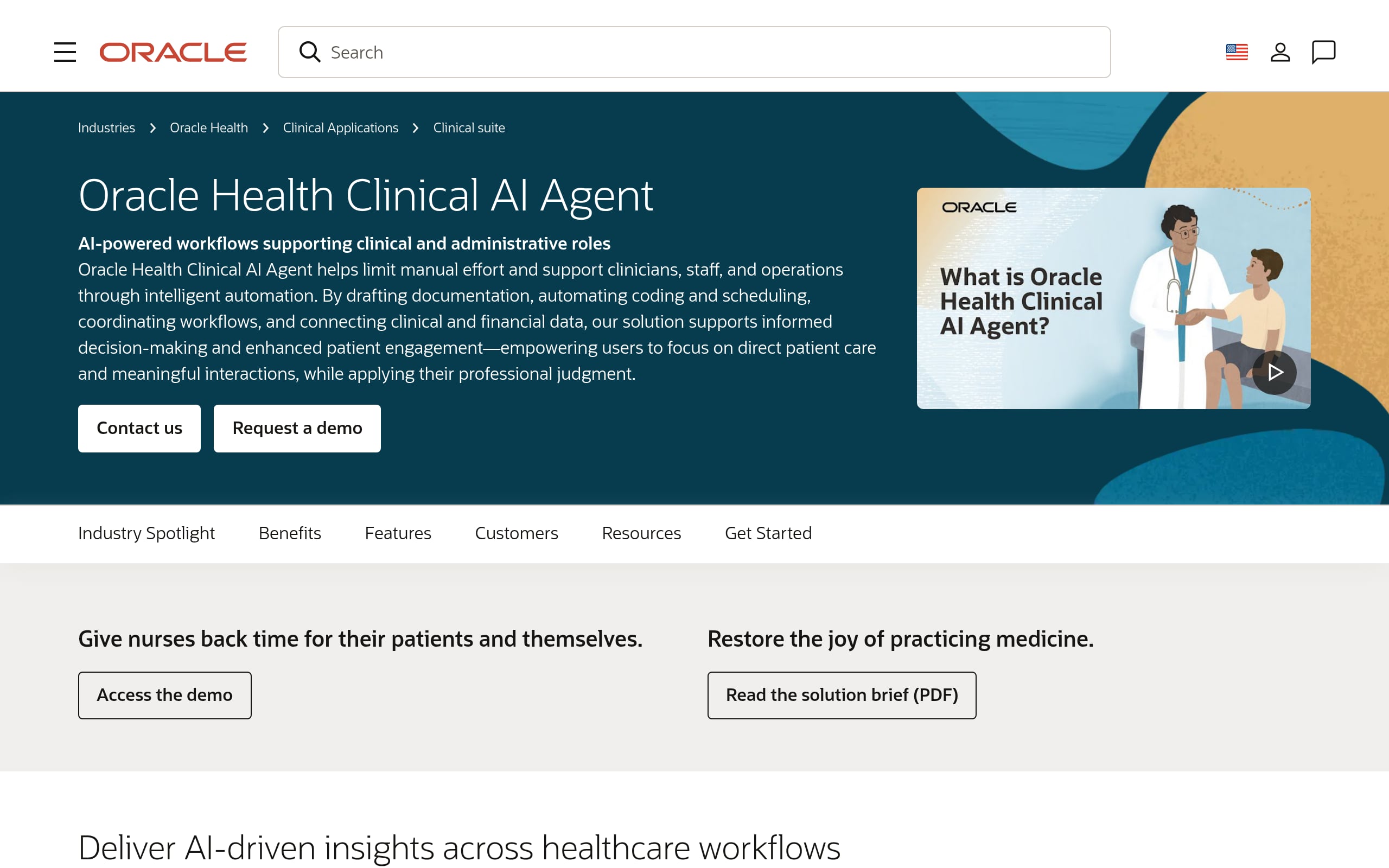
Oracle Health’s Clinical AI Agent blends ambient listening with voice-activated EHR commands, uniting documentation, patient engagement, and hands-free workflow navigation. This is especially powerful for Cerner-native environments.
Best for: Enterprise health systems on Oracle Health (Cerner) seeking unified ambient scribing and voice-driven EHR operations.
Patient Access: Voice self-scheduling, automated reminders, and AI symptom triage; inbound/outbound calling with clean human handover.
RCM & Workflow: Voice queries for history, order entry, and real-time SOAP generation.
Integrations & Telephony: Native Oracle Health (Cerner) Millennium; HL7/FHIR APIs; SIP trunking via Oracle Cloud Infrastructure.
Performance & Analytics: Ultra-low latency, multilingual support, and real-time note delivery.
Security, compliance & data handling: HIPAA-compliant and HITRUST-certified. OCI hosting with AES-256, SSO/RBAC, and a no-training-on-PHI policy.
Early adopters report 20–40% faster documentation and ~15% better appointment adherence. Per-provider subscriptions for scribing, with volume tiers for access use cases. Strong fit for large Cerner shops seeking rapid lift.
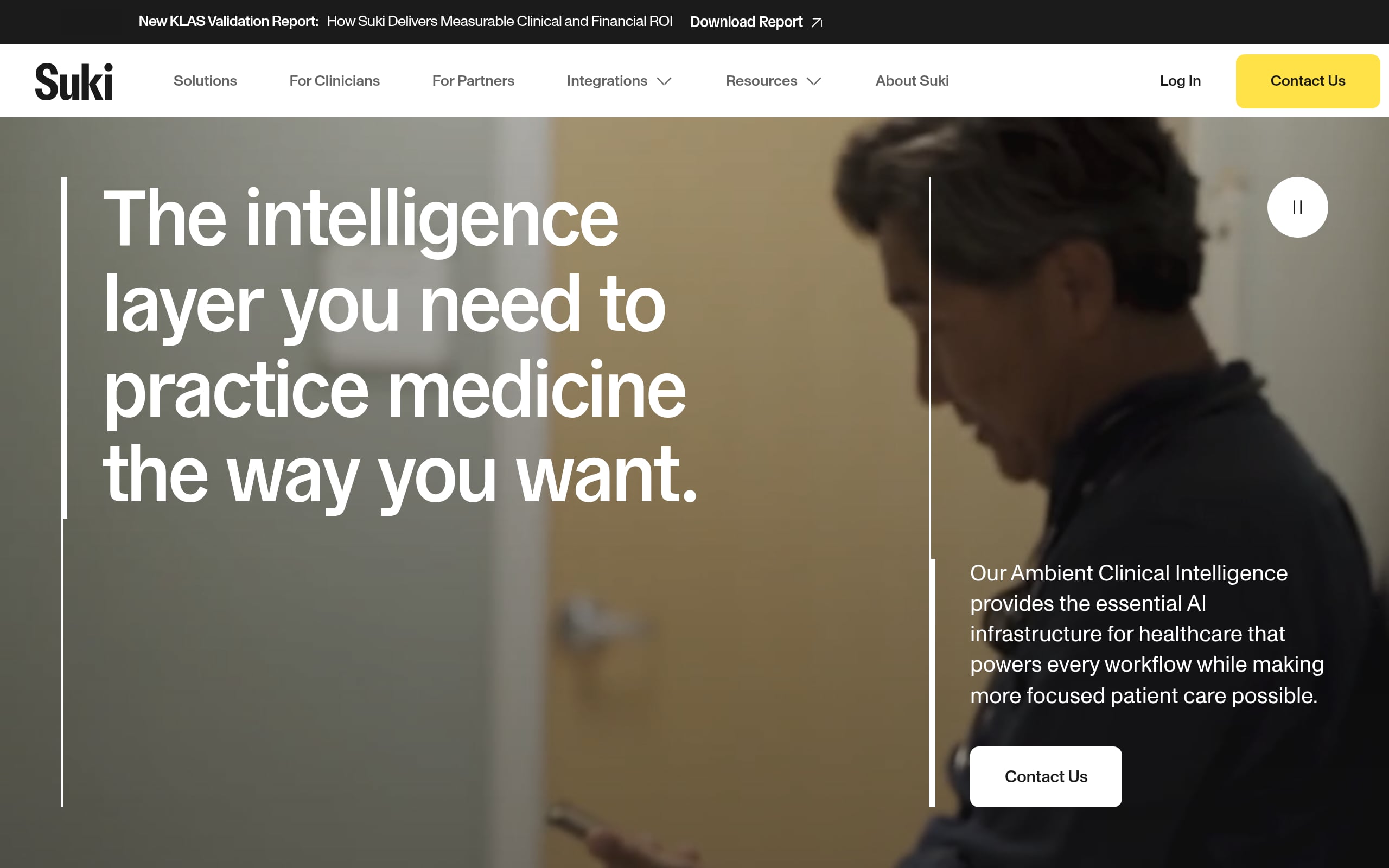
Suki is a voice-forward clinical assistant that captures encounters ambiently and lets clinicians command the EHR with natural language, from pulling vitals to coding with ICD-10, so notes finish themselves while care continues.
Best for: Ambient scribing and hands-free EHR task automation across outpatient settings.
Clinical Voice: High-fidelity ambient sensing turns live encounters into structured notes; “Command Mode” accelerates retrieval and coding.
Integrations & Telephony: Bi-directional Epic, Oracle Cerner, athenahealth, MEDITECH via FHIR/APIs; desktop and mobile.
Performance & Analytics: Low-latency drafts available immediately post-visit; English and Spanish supported. SDK (“Suki Engine”) for embedding voice in partner platforms.
Security, compliance & data handling: HIPAA; SOC 2 Type 2; AES-256 encryption; SSO/RBAC. Audio deleted after processing unless users opt in for training.
Users report a 72% reduction in documentation time, reclaiming ~3.3 hours daily per clinician. Per-clinician SaaS pricing; self-serve to 4 to 8 week deployments. Hardware-agnostic and scalable for health systems.
Corti is a real-time voice co-pilot for clinical and emergency calls, guiding triage, surfacing next-best questions, and auto-documenting as conversations unfold. It is built to spot what humans can’t hear and standardize what they can.
Best for: EMS dispatch, telehealth triage centers, and IDN hubs needing decision support and airtight QA.
Patient Access: Sub-second triage prompts, multilingual support (30+ languages), and 100% automated QA for protocol compliance.
Clinical Signal: Detects acoustic biomarkers (e.g., agonal gasps) and captures accurate documentation for high-stakes calls.
Integrations & Telephony: CAD systems (CentralSquare, Hexagon); EHRs via FHIR/APIs (Epic, Cerner, athenahealth); SIP/CCaaS integrations.
RCM & Reporting: SFTP/API exports for longitudinal analytics.
Security, compliance & data handling: HIPAA/BAA, GDPR, SOC 2 Type II. AES-256/TLS 1.2+, SSO/RBAC, full audit logs, privacy-first model controls. Hosted on AWS/Azure.
Outcomes include 80% less documentation time and 25% faster cardiac arrest detection. Enterprise SaaS priced by volume or annual subscription. Typical implementation is 4 to 12 weeks for large EMS/PSAPs and integrated triage teams.
Emitrr acts as a 24/7 virtual front desk that never misses a ring. It answers calls, books appointments directly into your EHR/PM, and flips missed calls into two-way texts, recapturing demand your staff can’t always reach.
Best for: Small-to-mid-sized medical and dental practices (and multi-location groups) focused on missed-call recovery and automated patient access.
Patient Access: Scheduling, rescheduling, cancellations; missed-call-to-text; FAQs for insurance/prep; instant human handover with live staff alerts.
RCM: Basic payment capture and insurance inquiry automation to deflect common billing calls.
Integrations & Telephony: Bi-directional sync with 500+ platforms (athenahealth, Open Dental, Eaglesoft, Dentrix, DrChrono, AdvancedMD, ModMed); works with existing VoIP via SIP/forwarding.
Performance & Analytics: Fast NLP that replaces touch-tone IVRs; built-in reputation management and business texting.
Security, compliance & data handling: HIPAA with signed BAA; SOC 2 Type II; AES-256, SSO/RBAC, audit logs. Secure AWS hosting; no unauthorized model training on patient data.
Practices report 20–30% appointment lifts and ~50% less staff phone time. Tiered subscription pricing; go live in 24–48 hours. Ideal for groups with 500+ calls/month and variable staffing.
My AI Front Desk is a round-the-clock voice receptionist that answers, qualifies, and schedules, then follows up with SMS links for booking, intake, or payment, so solo and small practices never lose a lead to voicemail again.
Best for: Small-to-medium private practices (dental, med spas, clinics) seeking affordable, always-on patient access and lead capture.
Patient Access: Automated inbound scheduling and triage; real-time SMS booking links and digital intake while the call continues.
RCM: Answers insurance/pricing questions and sends secure SMS billing links to collect on the spot.
Integrations & Telephony: Connects with Jane, Vagaro, Calendly; Zapier for EHR data flows; works with any phone system via call forwarding.
Performance & Analytics: Snappy responses, multilingual support, searchable transcripts, and QA analytics.
Security, compliance & data handling: HIPAA with BAAs; end-to-end encryption; secure cloud storage with centralized audit logs and RBAC for PHI access.
Clinics save 10+ hours weekly and grow revenue by converting missed-call leads. Flat $54.99/month pricing delivers outsized ROI; setup in ~15 minutes. Best for 1–5 provider practices needing fast, budget-friendly coverage.
To understand the true impact of an ai voice agent for healthcare, you need to track the right key performance indicators (KPIs). Moving beyond simple call volume, focus on metrics that directly affect patient satisfaction and your bottom line.
Patient Access:
Call Abandonment Rate: Top platforms claim to reduce this by nearly 89%.
Patient Wait Time: Aim for a zero second wait time.
Appointment No Show Rate: Measure the reduction after implementing automated reminders.
Schedule Utilization Rate: Track how full your provider schedules are.
Revenue Cycle Management:
Cost Per Call: Expect up to a 50% reduction for tasks like benefits verification.
Denial Rate: Monitor the decrease in denials related to missing benefits or authorization information.
Days in A/R: Measure how quickly you are getting paid.
Collection Rate: Track the increase in collections, especially on previously denied claims.
By benchmarking these metrics before and after implementation, you can build a clear business case and demonstrate a strong return on investment.
The world of AI is evolving rapidly, and the capabilities of the ai voice agent for healthcare are growing with it. The future will bring even more autonomy and intelligence. We will see agents that can handle multi step, complex conversations with less human oversight. Privacy preserving techniques will become standard, ensuring that AI models can be trained and operated without ever exposing raw patient data. As these technologies mature, the ai voice agent for healthcare will become an indispensable part of the administrative infrastructure for any modern medical practice or health system.
Staffing shortages and administrative burdens are not going away. Healthcare organizations that embrace automation will be better positioned to thrive. An AI voice agent for healthcare offers a proven path to reducing operational costs, improving staff satisfaction, and delivering the fast, convenient access that modern patients expect. By automating the millions of repetitive phone calls that bog down front and back office teams, you can free your staff to focus on what matters most: providing excellent patient care.
Ready to see how an AI voice agent can transform your operations? Explore the healthcare specific voice automation platform at Prosper AI, and get started.
1. What is the difference between an IVR and an AI voice agent for healthcare?
An IVR (Interactive Voice Response) is a simple system that follows a rigid, predefined script, usually requiring you to “press 1 for scheduling.” An ai voice agent for healthcare is conversational. It can understand natural language, ask clarifying questions, and navigate complex conversations with both patients and payer representatives to complete tasks like verifying benefits or scheduling a multi step appointment.
2. Is an AI voice agent HIPAA compliant?
Yes, a reputable ai voice agent for healthcare must be HIPAA compliant. This means the vendor will sign a Business Associate Agreement (BAA) and has implemented strict security controls like end to end data encryption, access controls, and regular security audits. Platforms like Prosper AI are also SOC 2 Type II certified.
3. How long does it take to implement an AI voice agent?
Implementation time varies, but it is much faster than you might think. With pre trained “Blueprint” models for common healthcare workflows, you can often go live with a pilot project using batch data in just a few days. A full integration with your EHR or PMS system typically takes around three weeks.
4. Can AI voice agents integrate with our existing EHR system?
Yes, leading ai voice agent for healthcare platforms are designed for deep integration. They should offer native, API based connections to major EHR and PMS vendors like Epic, athenahealth, Cerner, MEDITECH, and NextGen, ensuring data flows seamlessly and automatically.
5. What is the typical ROI for implementing an AI voice agent?
The return on investment is significant and comes from multiple areas. You can expect to reduce operational costs for phone based tasks by around 50%. Additionally, by reducing appointment no shows, increasing patient collections, and improving staff productivity, the financial benefits multiply quickly.
6. How does an AI voice agent handle complex calls with insurance companies?
Advanced agents are specifically trained to navigate payer IVR systems, wait on hold patiently, and converse with live agents. They can provide member ID numbers, ask for specific benefits information (like copays or deductibles), and document the entire exchange, capturing dozens of data points with over 99% accuracy.
Discover how healthcare teams are transforming patient access with Prosper.
Compare 4 voice AI vendors for GI practices on colonoscopy scheduling, benefits verification, and prior auth calls. See which ones stop at booking.

Compare 5 AI voice agents for ENT and allergy practices. See which handle scheduling and the payer calls for prior auth and benefits checks.

Best AI agents for orthopedic practices compared on prior auth, outbound payer calling, and billing. Only 1 vendor resolves 60%+ of calls end-to-end.


