




Best Voice AI for Gastroenterology Practices: 4 Options Compared (2026)
Compare 4 voice AI vendors for GI practices on colonoscopy scheduling, benefits verification, and prior auth calls. See which ones stop at booking.

Patient expectations are at an all time high, but healthcare staffing is at a critical low. The result is a frustrating experience for everyone. Patients face long hold times and confusing phone trees, while administrative teams burn out trying to manage appointment backlogs, billing questions, and endless calls to insurance payers. This operational gridlock doesn’t just hurt patient satisfaction, it directly impacts revenue through no shows, delayed pre authorizations, and slow collections. The solution isn’t just hiring more people, it’s about empowering your teams with smarter technology. Advanced AI for patient engagement is transforming how providers connect with patients, automating routine tasks and freeing up staff for higher value work. Platforms built for healthcare can reduce operational costs by 50% and triple team productivity, creating a better experience for patients and a healthier bottom line for your practice.
AI for patient engagement refers to the use of artificial intelligence technologies to manage and improve communications and interactions with patients throughout their healthcare journey. This goes far beyond simple website chatbots. Modern solutions, especially voice AI agents, can place and receive phone calls, navigate complex insurance phone systems, wait on hold, and have natural conversations with both patients and payer representatives.
True ai for patient engagement platforms are purpose built for the complexities of healthcare. For a solution to be considered safe for patient data, it must be fully HIPAA compliant. This isn’t just a claim, it’s a series of technical and procedural safeguards, including:
Business Associate Agreement (BAA): A signed contract that holds the AI vendor to the same data privacy and security standards as the healthcare provider.
Robust Encryption: All data must be encrypted, both in transit (TLS) and at rest (AES 256).
Audited Security Standards: Certifications like SOC 2 Type II demonstrate a vendor’s commitment to enterprise grade security controls.
Strict Data Handling: Policies like a zero day data retention agreement with underlying AI models (like OpenAI) ensure patient information is not stored or used for training.
A comprehensive AI for patient engagement strategy addresses workflows across the entire patient journey, from initial scheduling to final payment. Leading platforms offer pre built “Blueprints” for common tasks, enabling rapid deployment.
Appointment Scheduling and Reminders: AI agents can answer inbound scheduling calls 24/7 with zero wait time, reducing call abandonment by a claimed 89%. They also handle outbound appointment reminders, helping practices reduce no-shows by around 30%.
Inbound Billing Questions: AI can field common questions like “why was I billed for this?” and securely collect patient payments over the phone, increasing collection rates at a lower cost.
Patient Re-engagement: Proactive AI campaigns can call patients who are due or overdue for appointments, following up with SMS or email. This has been shown to increase scheduled appointments by over 20%.
Prescription Refill Management: AI agents can manage inbound calls for prescription refills, checking status and submitting requests to the pharmacy, often automating around 60% of these common calls.
When evaluating ai for patient engagement tools, security cannot be an afterthought. Healthcare IT leaders must prioritize platforms that demonstrate a deep commitment to protecting sensitive patient health information (PHI). Beyond a signed BAA, look for a multi-layered security posture (see our guide to HIPAA-compliant voice AI platforms).
Key elements include SOC 2 Type II certification, which validates a vendor’s security processes over time through an independent audit. Ask about data encryption standards for information both in transit and at rest. Furthermore, inquire about the vendor’s policies on large language model (LLM) usage. A vendor like Prosper AI, for example, maintains a zero day retention agreement with OpenAI, ensuring that no patient data is ever retained by the model. For health systems with the most stringent security requirements, some platforms even offer on premise deployment options, keeping all data within the organization’s own infrastructure.
An AI tool is only as good as the systems it can connect with. A standalone AI solution creates more work, not less. That’s why deep integration with your existing Electronic Health Record (EHR) or Practice Management (PM) system is non negotiable.
The best ai for patient engagement platforms offer a robust library of native integrations. Look for vendors who support connections with major systems like Epic, athenahealth, Cerner, MEDITECH, and NextGen. Prosper AI, for instance, lists over 80 pre-built integrations. This interoperability allows AI agents to read real time calendar availability for scheduling, access patient contact information for reminders, and, most importantly, write structured results and call notes directly back into the patient’s record. This creates a seamless, closed loop workflow that eliminates manual data entry and reduces the risk of errors.
The days of year long IT projects are over. Modern AI platforms are designed for rapid deployment and quick time to value. A key factor is the use of pre trained AI models, or “Blueprints,” that are already an expert in specific healthcare workflows like benefits verification or appointment scheduling. This approach drastically reduces setup time.
With a platform like Prosper AI, a practice can go live with batch-based workflows in as little as one or two days. A full EHR integration typically takes about three weeks (see how it works). Look for a vendor that provides a dedicated AI Agent Manager to oversee onboarding and ensure a smooth rollout. Another best practice is to choose a solution with no code customization tools. This empowers your operational teams, the ones who actually manage patient access and billing, to tweak call scripts and workflows themselves without needing to rely on engineers for every small change.
The impact of ai for patient engagement should be clearly measurable. Before implementing a solution, establish baseline metrics so you can track improvements and calculate a clear return on investment.
Key performance indicators (KPIs) to monitor include:
Patient Access Metrics:
Average patient hold time (aiming for zero).
Call abandonment rate.
No show rate.
New appointments scheduled.
Financial & Operational Metrics:
Cost per patient call.
Patient collection rates.
Staff time saved on administrative phone calls.
First time accuracy of data captured (e.g., insurance details).
Platforms with built in analytics and AI powered Quality Assurance provide dashboards to track these metrics in near real time, giving you constant visibility into agent performance and overall ROI.
As you evaluate ai for patient engagement solutions, focus on these key criteria to separate the enterprise ready platforms from the simple chatbots.
Healthcare Specialization: Does the vendor understand the nuances of payer conversations, HIPAA, and clinical terminology? Generic AI platforms often fail when faced with the complexities of healthcare.
Voice-First Capabilities: Can the AI handle real phone calls? This includes navigating IVR menus, waiting on hold, and having natural conversations with live agents. Many patient and payer interactions still happen over the phone, so this is critical.
Integration Depth: Does the platform have proven, native integrations with your specific EHR or PM system? Ask for a list of their 80 plus supported systems.
Verifiable Security Posture: Go beyond marketing claims. Ask for their SOC 2 Type II report, review their BAA, and confirm their data retention policies with third party AI models.
Speed to Value: How quickly can you go live? Platforms with pre built workflow “Blueprints” and dedicated onboarding support can get you started in weeks, not quarters. Ready to see what a modern platform looks like? Explore Prosper AI’s voice agents.
The terms “chatbot” and “AI agent” are often used interchangeably, but they represent different levels of capability, especially in healthcare.
Chatbots are typically text based and follow a predefined script or decision tree. They are best suited for simple, asynchronous tasks on a website, such as answering “What are your hours?” or providing a link to a patient portal. They struggle with complex, multi turn conversations.
AI Voice Agents, on the other hand, are designed for complex, synchronous communication over the phone. They can understand natural language, handle unexpected questions, and perform actions in real time. An AI voice agent can call an insurance company, navigate a phone tree, wait on hold for 20 minutes, and then have a detailed conversation with a human representative to verify benefits. This is a level of ai for patient engagement that chatbots simply cannot achieve.
Navigating the rapidly expanding healthtech market requires identifying the tools that consistently deliver measurable improvements in patient interaction and administrative efficiency. The following selection highlights the top ten AI platforms leading the charge, chosen for their robust feature sets and proven ability to streamline the patient journey from intake to follow-up. These industry-standard solutions offer diverse capabilities, ranging from sophisticated conversational agents to automated scheduling systems.
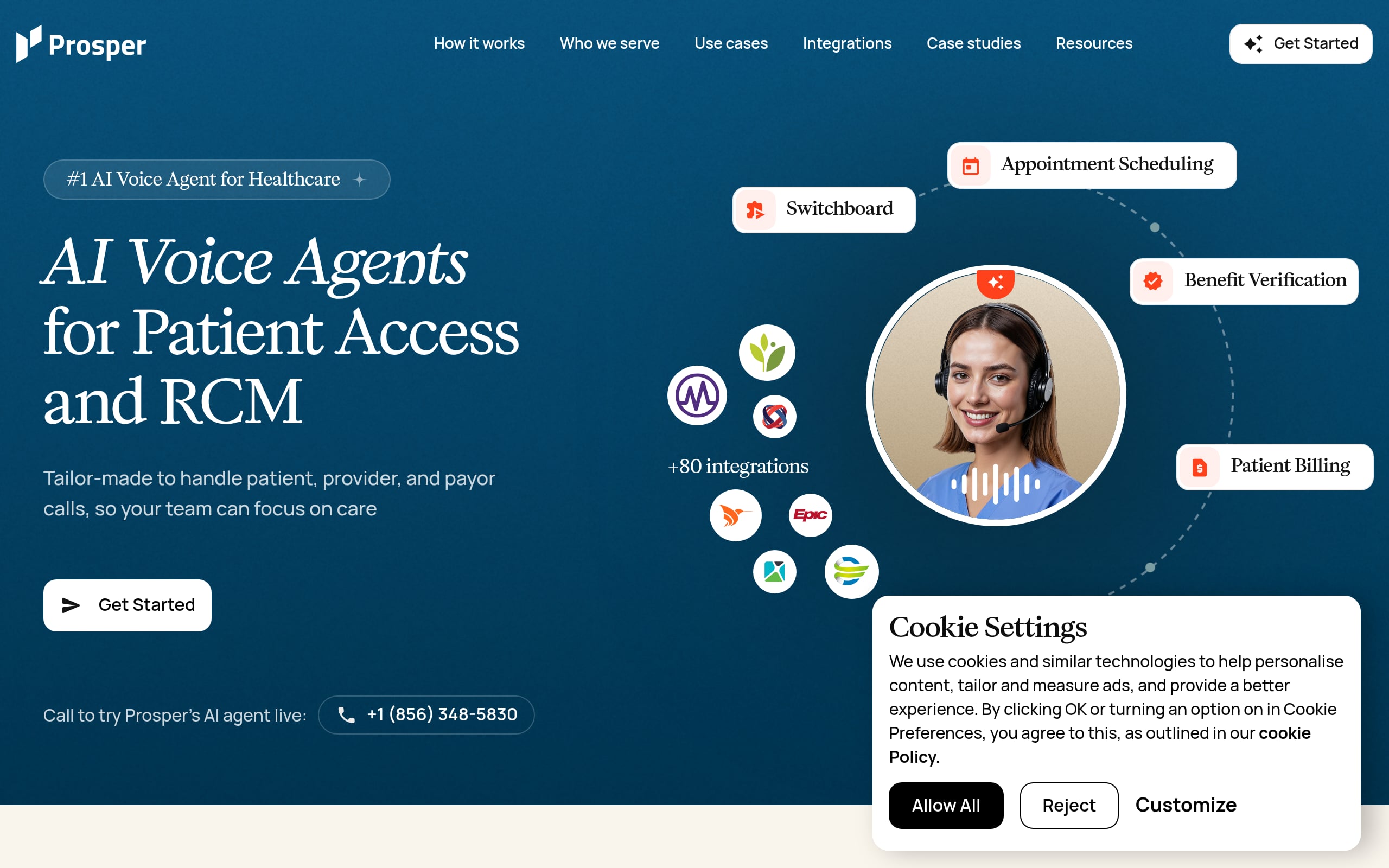
Prosper AI replaces legacy phone trees with HIPAA-compliant voice agents that handle high-volume, nuanced patient conversations across access and RCM. Built for enterprise systems, specialty groups, and billing teams, it automates scheduling, outreach, and billing so staff can focus on complex cases rather than repetitive calls.
Why it stands out: natural-language voice that books in the EHR, answers billing questions, and drives recalls, all without waiting on hold.
Bi-directional scheduling that books, reschedules, and cancels directly on EHR calendars in real time
Billing Q&A with secure balance lookups and phone-based payments
Intelligent routing to replace IVR; intent detection with immediate resolution
Proactive recalls and waitlist fills to keep provider schedules full
Pharmacy status and refills with patient authentication
24/7 multilingual coverage with context-rich warm handoffs
Enterprise fit: 80+ native integrations including Epic, Cerner, and athenahealth; connects to CCaaS (e.g., Genesys). HIPAA with BAA, SOC 2 Type II, AES-256, and VPC deployment options. No-code builders support a go-live in exactly four business weeks.
Impact: Northeast OB/GYN saw a 12% lift in appointments and 40% cost reduction (Northeast OB/GYN case study); typical deployments deliver 50-70% containment for Providence-affiliated systems and a Fortune 50 pharma hub.
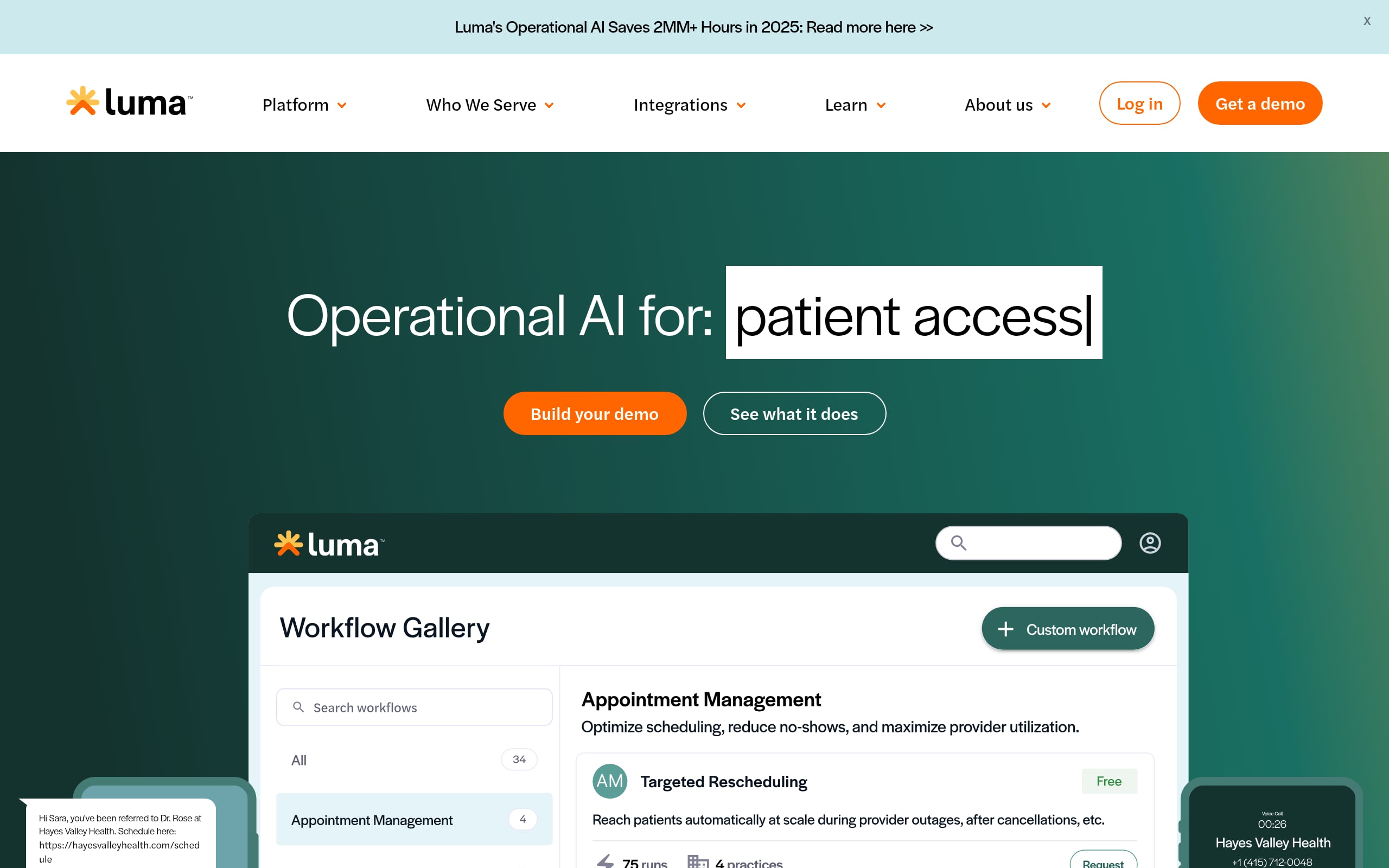
Luma Health’s Patient Success Platform™ streamlines the entire journey, from access and intake to follow-ups, for health systems, FQHCs, and multi-specialty groups. It centralizes workflows across fragmented EHRs, helping operations scale access and engagement without adding headcount.
Why it stands out: a mobile-first, multilingual platform that meets patients where they are via SMS and web, with no portal passwords required.
AI smart scheduling with 24/7 booking, rescheduling, and cancellations synced to EHR templates
Actionable waitlists that auto-fill last-minute gaps via targeted SMS offers
Digital intake, insurance uploads, and e-consents on patients’ own devices
Multilingual outreach in 20+ languages for equitable access
Referral automation that engages new referrals immediately to reduce leakage
Zero-login messaging for results, reminders, and payments
Enterprise fit: Bi-directional connectivity to 80+ EHRs (Epic, Cerner, athenahealth). HIPAA with BAA and SOC 2 Type 2; encryption, SSO, and audit trails. Typical enterprise go-live: 60-90 days with configurable “Luma Bedrock” workflows.
Impact: Cook County Health reports 32% no-show reduction and 2x referral conversions. Luma is a consistent KLAS top performer in patient outreach and engagement.
Now part of Kore.ai, Orbita delivers an enterprise-grade digital front door for complex health systems and life sciences. Its conversational AI spans intake, symptom triage, and proactive outreach across web, SMS, and voice, built for environments requiring clinically validated navigation.
Why it stands out: clinically guided triage plus omnichannel automation that shifts patients to the right care, fast.
Symptom screening and triage using validated pathways
Automated intake: insurance capture, consents, medical history
Natural-language self-scheduling, rescheduling, and cancellations
Chronic care support with adherence check-ins and RPM data collection
Pharmacy tools for refills, education, and trial recruitment
Omnichannel across SMS, web chat, and voice assistants with smooth agent handoffs
Enterprise fit: Bi-directional EHR integration (Epic, Cerner, Meditech) via FHIR. HIPAA with HITRUST and SOC 2 Type II; works with CCaaS stacks (Genesys, Avaya). Typical deployment: 8-14 weeks using a no-code orchestration layer.
Impact: Used by Mayo Clinic and Mount Sinai, Orbita achieves up to 80% admin inquiry deflection and 15% fewer no-shows, with portal enrollment often rising 20%.
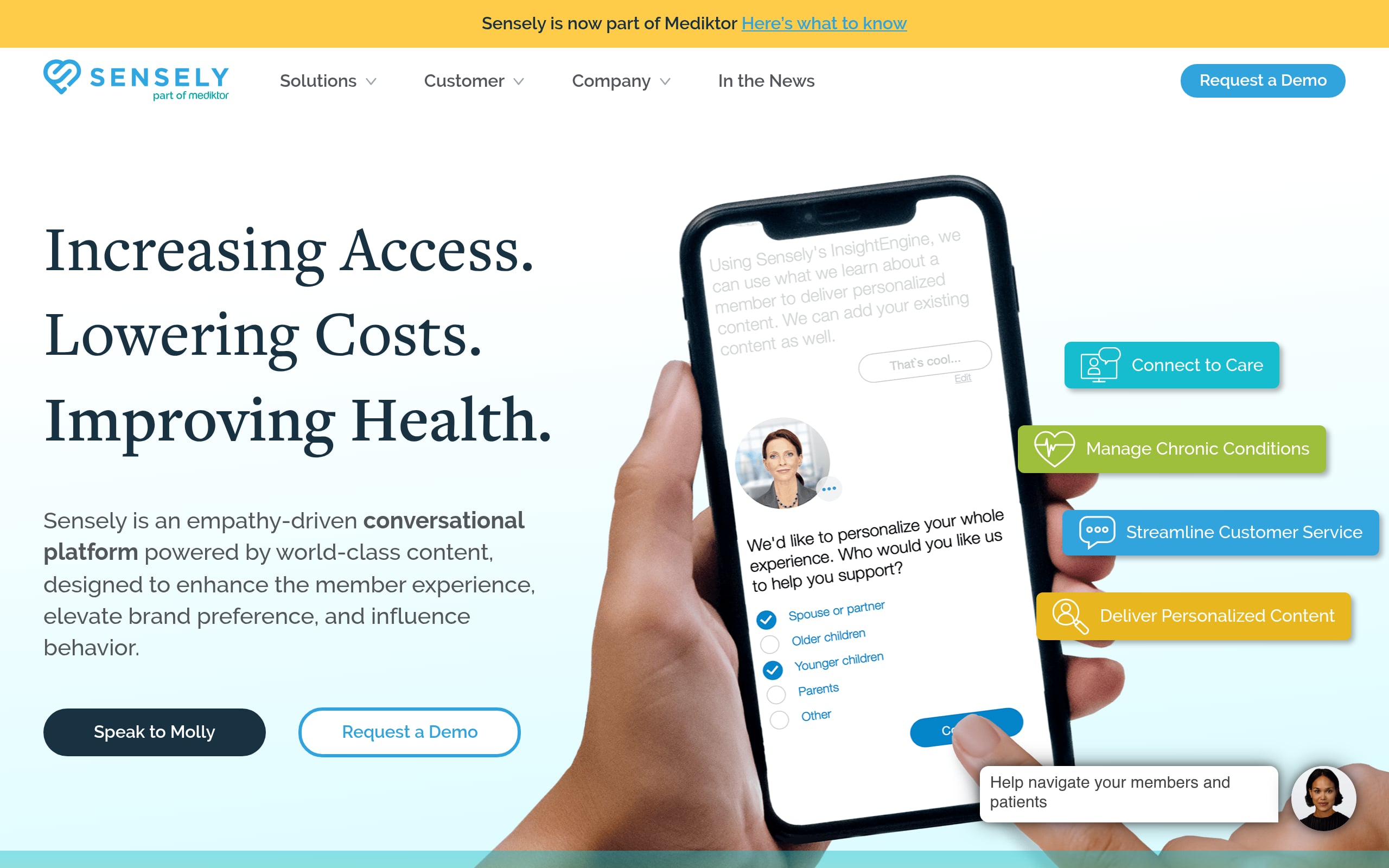
Sensely’s avatar-based assistant brings empathetic, always-on guidance to patients navigating symptoms, chronic conditions, and post-discharge recovery. It’s a strong fit for IDNs, payers, and pharma programs focused on sustained engagement and timely escalation.
Why it stands out: human-centered UX with clinically verified triage, at scale and in 30+ languages.
Symptom triage and navigation using Mayo Clinic-validated protocols
Chronic disease management (CHF, COPD, diabetes) with proactive daily check-ins
Automated post-discharge monitoring with red-flag alerts
Multilingual support to reach diverse populations
Administrative automation: intake, insurance verification, scheduling
Telehealth escalation and warm handoffs when clinical triggers fire
Enterprise fit: Integrates with Epic, Cerner, Allscripts via HL7 FHIR; compatible with telephony/CCaaS. HIPAA/GDPR compliant, SOC 2 Type II; BAAs supported. Typical go-live: 6-12 weeks via low-code CMS.
Impact: Programs report 20% fewer unnecessary ER visits and 80%+ engagement in chronic-care follow-ups. Partners include Mayo Clinic, Novartis, and Cigna.
Hyro offers adaptive conversational AI for healthcare that automates high-volume access tasks without brittle, intent-by-intent bot building. Health systems and AMCs use it to streamline scheduling, outreach, and navigation across voice, SMS, and chat.
Why it stands out: a Knowledge Graph approach that keeps answers accurate while scaling new use cases quickly.
24/7 natural-language booking, rescheduling, and cancellations
Proactive reminders and referral follow-ups to close care gaps
Automated refills and billing notifications with payment links and FAQs
Agentic routing with precise intent detection and context-rich transfers
Physician/location search by insurance, specialty, language, and proximity
Enterprise fit: Bi-directional integrations with Epic, Cerner, Salesforce, and CCaaS (Genesys). HIPAA with SOC 2 Type II. Typical voice deployments go live in 90-120 days.
Impact: Automates up to 85% of routine inquiries. Baptist Health saved $1M in 3 months; Intermountain Health cut call abandonment by 85%.
Kore.ai HealthAssist is a highly configurable enterprise platform that unifies patient and payer interactions. Large systems deploy it to orchestrate complex scheduling, intake, and triage workflows across channels and languages, with seamless escalation when needed.
Why it stands out: healthcare-specific accelerators on top of a powerful enterprise NLU stack.
Automated appointment management synced to provider templates
AI symptom checking and triage to the right site of care
Digital intake, insurance verification, and pre-registration
Outreach for adherence, screenings, and post-discharge follow-up
Real-time billing inquiries, balance checks, and pharmacy refills
Omnichannel across 30+ platforms and 100+ languages with transcripted handoffs
Enterprise fit: Pre-built connectors for Epic, Cerner, Meditech, Salesforce, and major telephony. HIPAA with HITRUST and SOC 2 Type II; cloud or on-prem. Typical go-live: 6-10 weeks via no-code configuration.
Impact: Up to 80% contact-center containment with improved satisfaction; referenced by organizations like Humana and recognized as a Leader in Gartner’s Enterprise Conversational AI.
Infermedica is a Medical Guidance Platform that powers clinically validated symptom checks and triage at the digital front door. Health systems and payers use it to direct patients to the right level of care while streamlining downstream intake.
Why it stands out: physician-aligned triage logic at population scale, with pediatric-specific pathways.
AI symptom checks spanning 800+ conditions for rapid self-assessment
Real-time routing to self-care, primary care, or emergency services
Digitized intake and medical history summaries for clinicians
Call-center scripting to guide non-clinical agents
Multilingual support in 30+ languages
Pediatric modules tailored for safety and caregiver clarity
Enterprise fit: Integrates with Epic and Oracle Health via FHIR/HL7 through its Medical Guidance API. HIPAA/GDPR with SOC 2 Type 2; Class IIb medical device status. Go-live ranges from weeks (modules) to months (deep EHR integration).
Impact: Over 15M health checks completed with 93% alignment to physician triage. Customers like Microsoft and Allianz report fewer unnecessary ER visits and faster navigation.
Ada brings an advanced clinical reasoning engine to the digital front door, guiding consumers to the right care while connecting them to next steps. Health systems and payers use Ada to reduce ER overuse and improve access matching.
Why it stands out: conversational assessments that hand off structured summaries and book the next step, without friction.
Dynamic symptom assessments with intelligent follow-ups for accuracy
Real-time triage to emergency, urgent, or primary care
Integrated scheduling post-assessment for immediate action
Clinical handover summaries to streamline provider intake
Multilingual support (10+ languages) with chronic-care pathways
Enterprise fit: API-first; integrates with Epic/Cerner via FHIR. HIPAA, ISO 27001, Class IIa medical device. Cloud hosting on AWS/Azure with regional data residency. Typical enterprise deployment: 8-16 weeks.
Impact: With 30M+ assessments, Ada reduces inappropriate ER visits by 15-20% and maintains ~90% user satisfaction. Partners include Jefferson Health and Sutter Health.
SmartBot360 offers HIPAA-compliant chat and messaging automation built for medical and dental groups. It helps mid-to-large practices convert more patients and cut phone volume with round-the-clock intake and support across web and messaging apps.
Why it stands out: fast time-to-value with prebuilt healthcare templates and seamless live-agent escalation.
Real-time scheduling and rescheduling tied to provider calendars
Digital intake for demographics, medical history, and consents
Omnichannel messaging via SMS, WhatsApp, and Facebook Messenger
Symptom triage and instant answers to common clinical FAQs
Post-discharge check-ins and preventative recalls
Re-engagement campaigns and reminders to reduce no-shows
Multilingual support and a centralized console for handoffs
Enterprise fit: Integrates with Epic, Cerner, athenahealth, Nextech via connectors or API. HIPAA with BAA and SOC 2 Type II; hosted on AWS. Typical deployment: 1-2 weeks using templates.
Impact: UCLA Health cites 30-50% inbound call reduction and 20% higher conversion; practices report 24/7 responsiveness and higher CSAT.
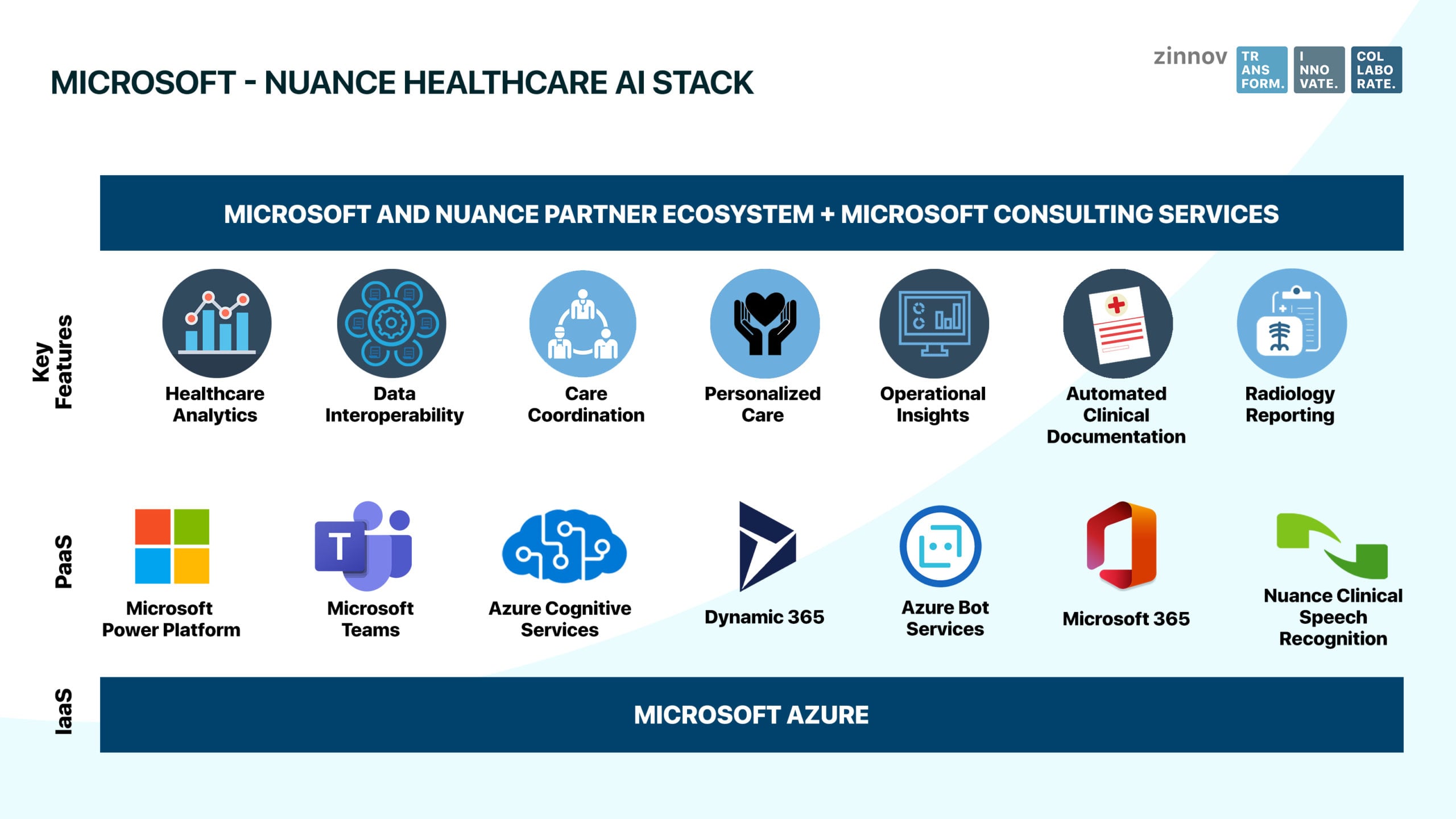
Part of Microsoft, Nuance brings enterprise-scale conversational AI to patient access through voice and digital channels. It’s a fit for IDNs and large systems seeking deep clinical integration, robust security, and automation across the end-to-end journey.
Why it stands out: proven IVR and virtual assistant tech, now supercharged by Azure and tight Epic/Oracle connectivity.
Self-service scheduling and changes via IVR, web, and mobile
Voice biometrics for secure, low-friction authentication
Proactive outreach for screenings, refills, and care gaps
Billing inquiries and payments handled conversationally
Triage and post-discharge follow-up with smart escalation
Enterprise fit: Deep Epic and Oracle Health integrations via Microsoft Azure. HIPAA with HITRUST and SOC 2 Type II. Consultative implementations typically go live in 3-6 months, aligned to telephony and clinical-workflow complexity.
Impact: Health systems report ~30% call containment and 40% fewer no-shows. Deployed across Walgreens and tier-one AMCs to cut admin overhead while sustaining high satisfaction.
The field of ai for patient engagement is evolving rapidly. Looking ahead, several key trends will shape the future of patient communication.
First, AI will become increasingly proactive. Instead of just reacting to inbound calls, AI agents will intelligently manage patient populations, conducting outbound campaigns to close gaps in care, schedule preventative screenings, and follow up on post discharge instructions.
Second, agentic workflows will become more sophisticated. AI agents will handle entire multi step processes autonomously, such as initiating a prior authorization, following up on its status daily, and then automatically scheduling the patient once approval is received.
Finally, security will become even more paramount. As AI takes on more critical tasks, expect a greater demand for on premise deployment options and even more stringent data control measures, making zero day data retention a standard requirement for any healthcare AI vendor.
Implementing a robust ai for patient engagement strategy is no longer optional for competitive healthcare organizations. Faced with persistent labor shortages and rising patient expectations, automation is the most effective way to improve efficiency, reduce administrative burden, and enhance the patient experience. By choosing a secure, integrated, and healthcare native platform, providers can automate high volume phone workflows, allowing staff to focus on direct patient care and complex problem solving. This strategic shift not only boosts financial performance but also builds a more resilient and patient friendly practice.
Ready to see how AI voice agents can transform your patient experience? Get started.
AI for patient engagement uses artificial intelligence, particularly conversational AI and voice agents, to automate and enhance communication with patients. This includes tasks like scheduling appointments, sending reminders, answering billing questions, and conducting proactive outreach campaigns, all with the goal of improving access and efficiency.
Yes, provided you choose a vendor that specializes in healthcare. A HIPAA compliant solution must include a signed Business Associate Agreement (BAA), end to end data encryption, access controls, and audited security standards like SOC 2 Type II. Always verify a vendor’s compliance and security posture.
AI improves patient scheduling by offering 24/7 availability with zero hold times, which dramatically reduces call abandonment. It integrates directly with EHR calendars to find open slots, sends automated reminders to reduce no shows, and can even manage waitlists to fill last minute cancellations, keeping provider schedules full.
A chatbot is typically a simple, text based tool for websites that answers basic questions. An AI voice agent is far more advanced, capable of making and receiving phone calls, navigating complex phone systems, waiting on hold, and having natural, unscripted conversations with patients and insurance representatives to complete complex tasks.
Implementation times have become much shorter. While custom projects can take months, modern platforms with pre built healthcare workflows, known as “Blueprints,” can be deployed much faster. Some batch processes can go live in a few days, with full EHR integrations often completed in about three weeks.
Discover how healthcare teams are transforming patient access with Prosper.
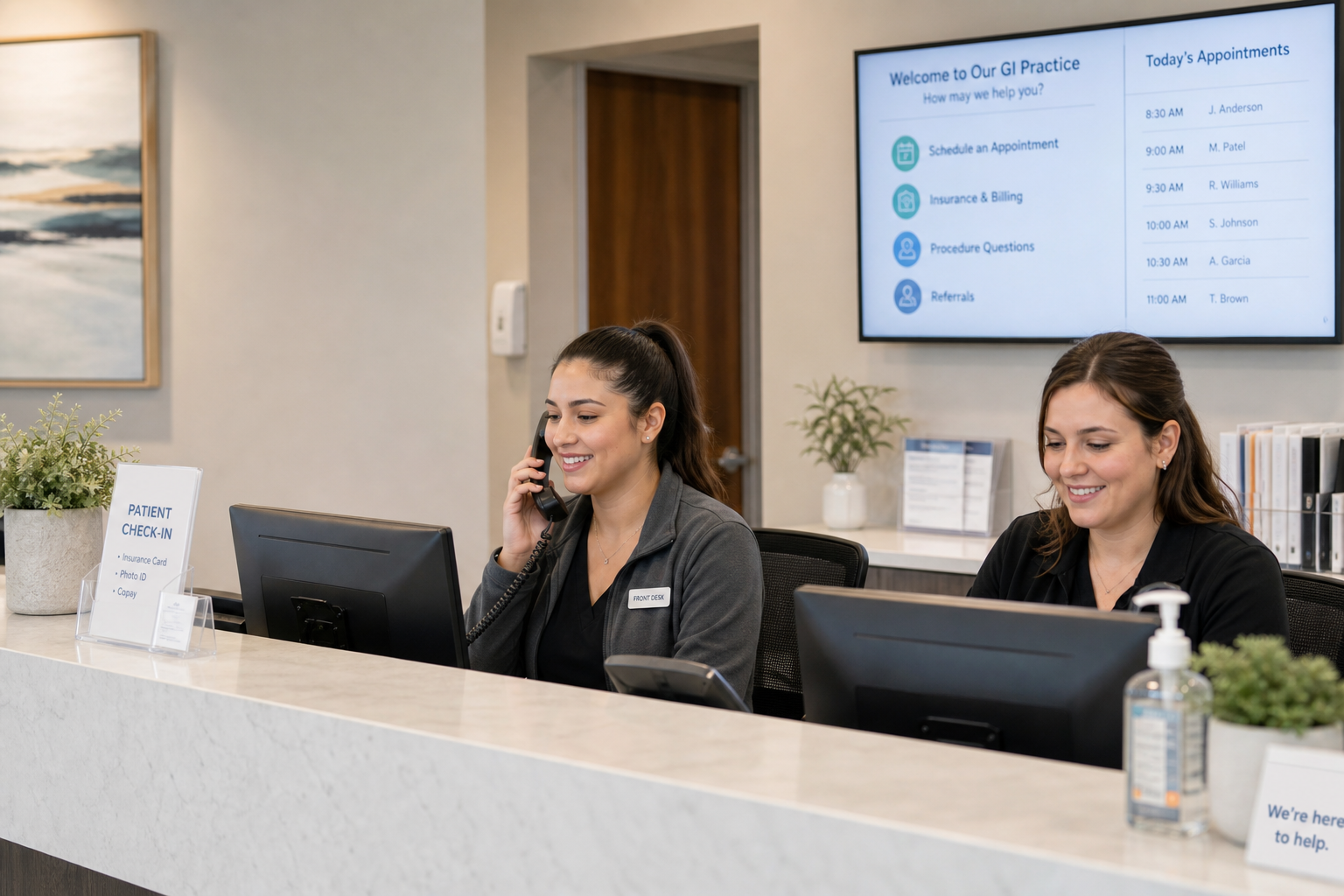
Compare 4 voice AI vendors for GI practices on colonoscopy scheduling, benefits verification, and prior auth calls. See which ones stop at booking.

Compare 5 AI voice agents for ENT and allergy practices. See which handle scheduling and the payer calls for prior auth and benefits checks.

Best AI agents for orthopedic practices compared on prior auth, outbound payer calling, and billing. Only 1 vendor resolves 60%+ of calls end-to-end.


