




The Best AI Voice Agents for Ophthalmology Practices in 2026
The 7 best AI voice agents for ophthalmology practices. Find platforms with ModMed & Nextech integrations, prior auth support, and patient automation.
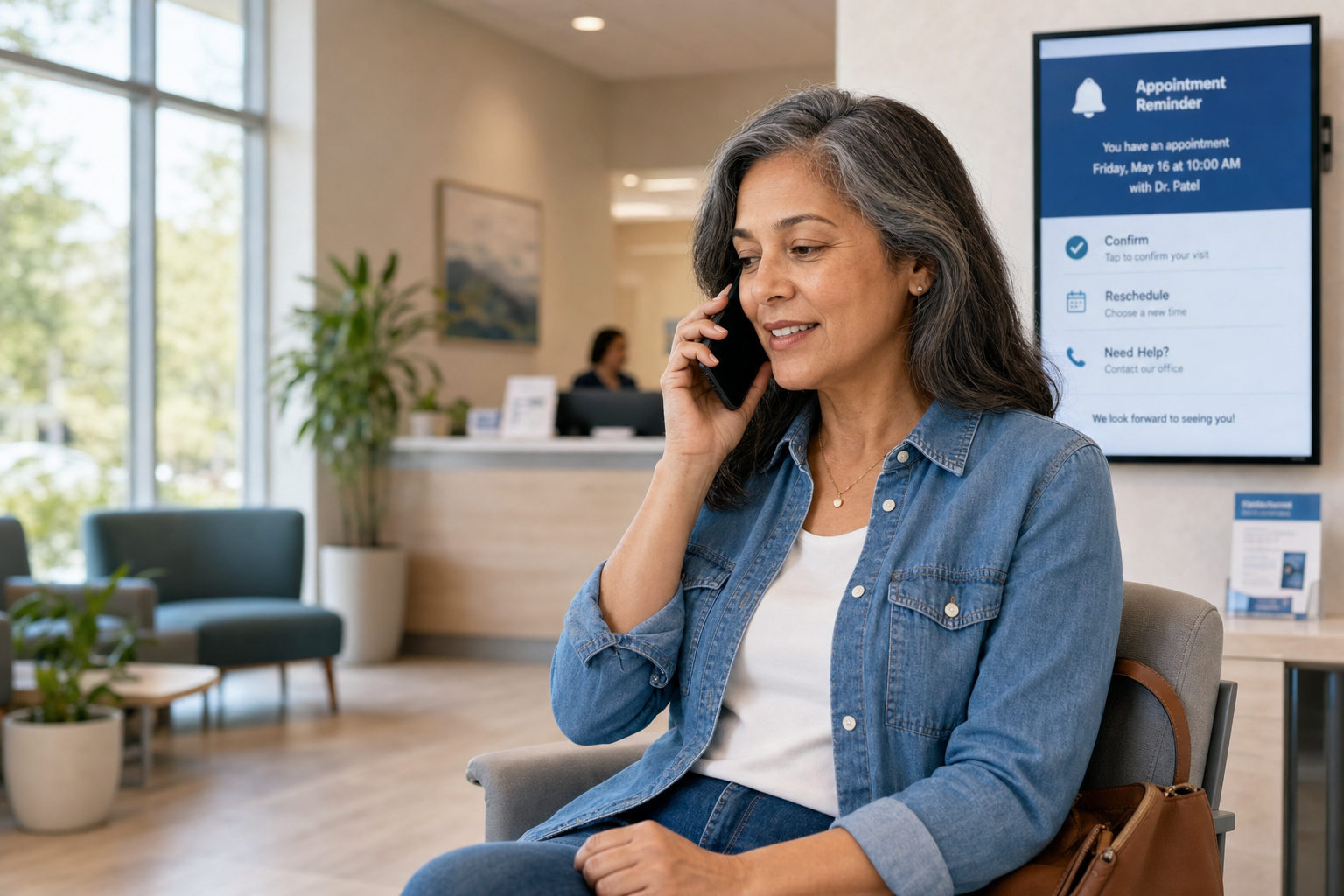
You send reminders, you have a cancellation policy, and many practices still lose 20% or more of their scheduled appointments each week to no-shows.
TLDR:
| Strategy | Implementation Details | Expected Impact | Best Use Cases |
|---|---|---|---|
| Automated multi-channel reminders | Send SMS at 48 hours and 24 hours before visit with one-tap confirm or reschedule links. Use email as backup and voice for older populations. | 38% reduction in no-show rates. SMS achieves 98% open rate. | All appointment types. Works across patient demographics when channels are matched to preferences. |
| Same-day and next-day scheduling | Reserve 20-30% of daily slots for same-day bookings. Release unbooked slots morning of. Move routine visits to open access model. | No-show rates drop from 33% (15+ day lead time) to 2% for same-day appointments. | Routine follow-ups, acute care visits, and practices with high schedule volatility. |
| Active waitlist management | Capture patient preferences at booking. Auto-match top three candidates by urgency and wait time. Send SMS with 30-minute accept window. | Recovers canceled slots same-day instead of leaving them empty. 40% of appointments can land in same-day or next-day windows. | Specialty practices with long booking lead times and procedures requiring advance prep. |
| Written cancellation policy | 24-hour cancellation window with $25-$75 flat fee for no-shows. Three missed visits in 12 months triggers discharge review. | 42% of medical groups now charge fees. Deterrent effect prevents repeat offenders. | Practices with chronic repeat no-show patients. Requires consistent enforcement across all providers. |
| Frictionless rescheduling | One-tap reschedule in reminder messages. Self-service portal with real-time availability. Show next three open slots automatically on cancellation. | Converts silent no-shows into advance cancellations you can backfill. Captures intent before appointment date. | Any practice where phone-only cancellation creates barriers. Critical for working patients who can't call during business hours. |
| Deposits for high-risk visits | $25-$50 for standard visits, $100-$200 for procedures. Apply toward visit cost. Require for new patients and repeat no-show offenders. | Creates financial commitment that reduces flaking. Works selectively for specific appointment types. | New patient visits, procedures requiring blocked time or prep, and patients with 2+ prior no-shows. |
| AI voice agents | 24/7 inbound and outbound coverage with live EHR integration. Handles confirmations, rescheduling, waitlist matching, and risk-aware outreach. | Drops call abandonment from 12% to 2%. Schedules 12% more appointments without adding staff. | High-volume practices where front desk capacity limits execution of other strategies. Runs all tactics above simultaneously. |
According to HC Innovation Group, missed appointments cost the US health system roughly $150 billion a year. Automated reminders are the cheapest fix: practices sending automated reminders see no-show reductions near 38%, and SMS hits a 98% open rate.
Timing and channel mix separate a reminder that works from one that gets ignored.
Make the action frictionless, and the no-show rate moves on its own.
The longer a patient waits between booking and visit, the more likely they are to forget, develop a conflict, or lose interest. appointments booked 15+ days out no-show roughly a third of the time, while same-day and next-day visits can run as low as 2%.
Shrinking lead time is an operations problem more than a clinical one.
Frederick Foot & Ankle saw 40% of AI-booked appointments land in the same-day or next-day window once shorter booking paths were available.
A cancellation is only lost revenue if the slot stays empty. An active waitlist turns it into a recovered appointment, often within minutes.
Build the list at booking. Ask every patient scheduled more than a week out if they want to be notified when an earlier slot opens, and capture preferred days, times, and providers in the EHR so matching runs automatically.
When a cancellation hits, the workflow should run on its own:
Practices that automate this loop recover slots same-day instead of watching them age out. The cancellation still happens. The revenue does not have to go with it.
A written policy sets expectations before a patient ever misses a visit, and 42% of medical groups now charge a no-show fee to reinforce accountability.
Keep the policy short and specific:
Communicate it at every patient touchpoint: booking, intake paperwork, reminder messages, and the confirmation page.
A policy buried in a 14-page new patient packet does nothing. Patients need to see it before they miss a visit, not after.
Enforce it consistently or not at all. Selective enforcement creates more friction with patients than the no-show itself. The point is deterrence, not collections.
Friction is the silent driver of no-shows. A patient who realizes Tuesday morning they can't make a 3 PM visit, but would have to call during business hours and sit on hold to cancel, will often pick the path of least resistance: skip it. The slot dies. The waitlist never gets a chance.
Easy rescheduling is schedule protection, not patient leniency. Every canceled appointment is a slot you can backfill. Every silent no-show is one you cannot.
Make canceling easier than ghosting, and most patients will choose the former.
A deposit converts intent into commitment. It works well for a narrow set of scenarios and poorly everywhere else, so apply it selectively.
Use deposits for:
Keep the amount meaningful but not prohibitive. $25 to $50 for a standard visit, $100 to $200 for procedures. The goal is friction against flaking, not friction against care. Apply the deposit toward the visit cost so it never reads as a fee.
Position it as standard scheduling practice in the booking flow, not a penalty tacked on at the end. For Medicaid patients or anyone reporting financial hardship, waive the deposit and document the exception in the EHR.
The first six strategies work in isolation. They compound when one system runs them together.
AI voice agents handle the execution load that makes the rest of this list feasible at scale. A single agent fields reminder confirmations at 2 AM, books a same-day cancellation backfill at 7:15 AM, takes a reschedule request mid-afternoon, and triggers the waitlist workflow when a slot opens, no added FTEs required.
What that looks like in practice:
Northeast OB/GYN ran this configuration and scheduled 12% more appointments with fewer front desk staff, while dropping call abandonment from 12% to 2%. The strategies above are not new ideas. What changes the math is whether your team has the capacity to run all of them at once.
No-show reduction strategies are not new, but most practices run them in isolation—reminders go out, but the waitlist sits idle; a cancellation policy exists, but rescheduling still requires a phone call. The compounding effect only kicks in when all seven tactics run together: reminders cut initial no-shows, same-day scheduling shrinks lead time risk, active waitlists recover canceled slots, and frictionless rescheduling converts silent no-shows into backfillable cancellations.
Most front desks don't have the bandwidth to run all of that at once. Prosper AI handles the execution layer—sending confirmation outreach at 2 AM, matching waitlist candidates the moment a slot opens, letting patients reschedule outside business hours, and writing back to the EHR without staff re-entry. Northeast OB/GYN scheduled 12% more appointments with fewer staff after deploying it. Frederick Foot & Ankle filled 40% of AI-booked slots same-day or next-day.
Get started with Prosper AI to see how it runs in your practice.
Start with automated SMS reminders sent 48 hours and 24 hours before the visit, with a one-tap confirm or reschedule link. Practices see no-show reductions near 38% from reminders alone, and the workflow runs without adding front desk hours.
Both work, but same-day scheduling prevents no-shows before they happen (appointments booked same-day have roughly 2% no-show rates vs. 33% for visits scheduled 15+ days out), while waitlists recover revenue after cancellations occur. Reserve 20 to 30% of daily slots for same-day bookings and run an automated waitlist to backfill last-minute openings.
Divide total missed appointments by total scheduled appointments, then multiply by 100. Track it monthly and break it down by provider, appointment type, and lead time to find where the problem concentrates.
Yes, when they handle the full confirmation and rescheduling workflow 24/7. Northeast OB/GYN dropped call abandonment from 12% to 2% and scheduled 12% more appointments after deploying AI that confirms visits, triggers waitlist outreach when slots open, and lets patients reschedule outside business hours—when those decisions actually happen.
A flat fee ($25 to $75 for primary care) works when it's part of a written policy communicated at booking and in every reminder, with consistent enforcement. Roughly 42% of medical groups now charge fees, but the deterrent effect matters more than collections; most patients will reschedule instead of risking the charge if canceling is frictionless
Discover how healthcare teams are transforming patient access with Prosper.

The 7 best AI voice agents for ophthalmology practices. Find platforms with ModMed & Nextech integrations, prior auth support, and patient automation.

Our September 2026 FQHC voice agent comparison covers Medicaid verification, payer calls, prior auth, and multilingual support across five tools.

AI front desk automation for multi-site groups: EHR write-back, full call coverage, HIPAA compliance, and realistic timelines. September 2026.


