




Patient Recall for Specialty Practices: How to Bring Back the 46% Who Miss Their Follow-Up
Only 54% of follow-up patients return on schedule. See what late and lost patients are worth per physician and how voice AI brings them back.
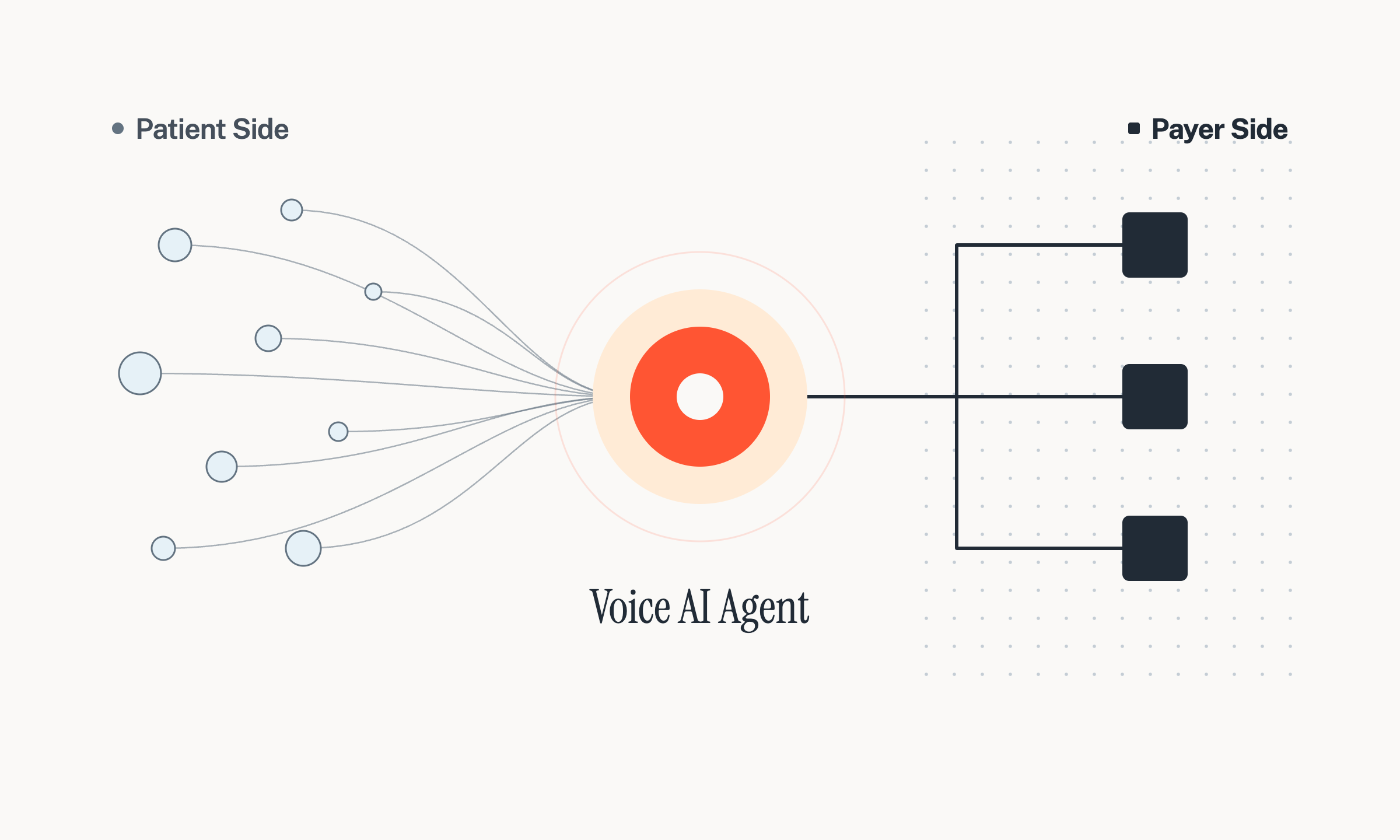
A healthcare voice AI agent is a conversational AI system that handles phone calls for medical practices — scheduling, insurance verification, prior auth follow-up, billing outreach, and more. Unlike basic phone trees, modern agents understand natural language, complete multi-step workflows end-to-end, and integrate directly with EHR and practice management systems to book appointments, verify eligibility, and document interactions without a human relay.
For most medical practices, the front desk is where patient access breaks down. 22% of practice leaders named phone access a top patient access priority in MGMA's December 2025 poll and that's before accounting for calls that never get answered. Staff spend their days on routine requests that repeat hundreds of times a week while nearly half of physicians report working with an incompletely staffed team more than a quarter of the time. Adding headcount to a broken call workflow doesn't fix the problem. Voice AI does, by automating the calls that repeat constantly so staff capacity goes to interactions that actually need a human.
Modern healthcare voice AI agents handle both patient-facing calls (scheduling, intake, reminders, billing, FAQs) and payer-facing calls (benefits verification, prior auth follow-up, claim status). That second category — payer-facing — is where most staff time gets consumed and where errors most directly affect reimbursement. Not all platforms cover both; this is the most important capability gap to ask about during vendor evaluation.
40% of medical appointments are booked outside of standard business hours: calls that go to voicemail under a manual workflow and frequently never convert. Voice AI answers every call instantly, captures after-hours demand, and books directly into the EHR.
Missed appointments cost the U.S. healthcare system an estimated $150 billion a year, and 32% of medical groups saw no-show rates climb in 2026. Two-way automated reminders (where the patient can confirm or reschedule directly) address this more effectively than broadcast-only systems.
According to an AMA survey, physicians complete an average of 40 prior authorizations per week, 94% say PA contributes to burnout, and nearly 1 in 3 report that requests are often or always denied. Insurers denied 10–18% of standard prior auth requests in 2025. Voice AI agents make outbound calls to payers to check status, submit supporting information, and escalate stalled requests. Staff get an update without picking up the phone.
For example, PA denials cost the average dermatology practice an estimated $83,200 a year in lost revenue. Even partial automation of the follow-up workflow is material at that scale.
Manual eligibility checks take over 10 minutes for more than half of providers still doing them by hand. Voice AI agents check eligibility via payer APIs first, then place an outbound call to the insurer for cases the API can't resolve.
41% of providers say at least 1 in 10 claims now get denied, and 54% say it's getting worse. Verifying coverage at booking is the most direct lever available to reverse that trend.
Practices collect only 26.83% of patient-due balances. Nearly three-quarters of what patients owe after insurance goes uncollected. Most of that gap isn't patients refusing to pay; it's that consistent outbound follow-up doesn't happen because staff don't have bandwidth for it on top of inbound call volume. Voice AI agents run those outbound sequences automatically, reaching patients about outstanding balances and arranging payment plans without staff involvement.
Referral leakage — patients who are referred but never schedule — is a revenue and care-continuity problem that's difficult to track and easy to underestimate. Voice AI handles inbound referral calls, confirms insurance coverage, and books appointments before the patient loses momentum.
Outbound follow-up catches patients who haven't scheduled within a defined window, keeping them in-network and closing gaps that manual follow-up routinely misses.
Protocol-based outreach — calling a patient on day 26 of a 28-day injection cycle — requires a consistency that staff rarely have bandwidth to deliver. Non-adherence costs between $100-300 billion annually in the United States. Voice AI agents run these outbound sequences automatically, confirm next doses, flag potential side effects for clinical review, and document the contact in the EHR.
Yes, but not all platforms do this. Leading healthcare voice AI systems make outbound calls directly to payers to verify eligibility and check prior auth status, not just through API lookups. When the API can't resolve the case (which happens frequently), the agent places an actual phone call to the insurer, waits on hold, and retrieves the answer, eliminating the manual hold time that currently consumes staff hours. This is a critical differentiator to ask about during vendor evaluation: confirm whether payer-side calls are native to the platform or require a human handoff.
The stakes are high enough that this question matters: a manual prior authorization costs $7.60–$15.12 depending on specialty, versus $4.47–$6.83 done electronically, roughly double the cost per request, across 40 requests per physician per week. And eligibility errors don't just waste staff time; they generate claims that get denied weeks after the visit, adding rework and revenue leakage that's hard to trace back to the original access failure.
▶ Case Study: How Arkansas Pediatrics automated 65%+ of calls with AI and saved 120+ hours monthly
Leading healthcare voice AI platforms integrate with major EHR and practice management systems including Epic, athenahealth, ModMed, eClinicalWorks, Veradigm, and dozens more. Integration depth matters more than the list: the system should read real-time provider availability and write bookings, eligibility results, and interaction notes back to the EHR automatically, without manual re-entry on either side.
When evaluating integration claims, ask specifically: Is the integration bidirectional? Does the AI write back to the EHR in real time, or does staff have to reconcile later? What happens when a booking is made in the EHR by staff while the AI is mid-call — does the system see the update? These are the questions that determine whether integration is genuine or a thin one-way data pull that creates reconciliation work downstream.
Also ask which workflows are actually integrated versus which require workarounds. A vendor may integrate with Epic for scheduling but not for benefits verification or prior auth documentation — a gap that matters if your goal is end-to-end automation.
Reputable healthcare voice AI platforms are built to be HIPAA compliant. The minimum requirements are: a signed Business Associate Agreement (BAA) with the vendor, data encryption at rest and in transit, strict access controls, and audit logging of who accessed patient data and when. Also ask for SOC 2 Type II certification and a documented breach response process. HIPAA compliance is a floor, not a differentiator. Verify credentials from security documentation directly, not marketing materials.
Beyond the legal minimum, look for vendors with a privacy-first architecture: automated PII sanitization in data used for model training or analytics, clear data retention and deletion policies, and a documented process for breach notification. These reflect how seriously a vendor treats privacy as an engineering principle rather than a compliance checkbox, and they matter if you're in a state with additional privacy laws beyond federal HIPAA requirements.
Communication law compliance is also required for outbound calls. Voice AI agents making outbound calls must comply with the TCPA. Healthcare-specific exemptions permit appointment-related communications, but patients must be able to opt out easily. Confirm with your vendor how opt-outs are managed, documented, and honored across subsequent outreach sequences.
A well-scoped pilot on a single use case — scheduling or after-hours calls — typically goes live in a few weeks with modern platforms that have pre-built EHR integrations. A full multi-department rollout takes longer and should follow demonstrated results from the pilot, not a predetermined schedule. Key questions to ask any vendor: what is the actual go-live timeline for your EHR, how are call exceptions handled during the build, and do they charge before the system is live.
Don't try to automate everything at once. Start with the call types that are highest in volume, most repetitive, and where missed calls or errors have a direct revenue cost. For most practices, that's some combination of scheduling and benefits verification. Analyze your actual call data — what's coming in, what's getting abandoned, what staff spend the most time on — before committing to a scope. The specialty context matters: dermatology no-show rates range 12–31% by clinic type; OB/GYN averages 18% nationally; behavioral health has the highest no-show rate of any specialty. Starting point varies by what you see in your own data.
Most vendors claim the same use case list. The meaningful differentiator is whether the system writes back to your EHR bidirectionally, which payer-facing workflows are native to the platform versus handed off, and how the system handles calls it can't complete — what gets transferred, why, and what context the staff member receives. Ask to see a live demo on your actual EHR and payer mix, not a curated environment.
Define success metrics before go-live so you have a clear basis for the decision to scale or adjust. Containment rate, first-call resolution, abandonment rate, no-show delta, and staff hours recaptured should all be baselined before launch. Scale based on demonstrated results from the pilot, not a predetermined timeline.
A healthcare voice AI agent's core stack: Automatic Speech Recognition (ASR) converts speech to text in real time; Natural Language Understanding (NLU) interprets meaning and intent; Dialogue Management governs conversation flow and handles mid-call pivots; Text-to-Speech (TTS) produces the agent's voice response. These components connect to a telephony gateway and APIs that integrate with EHR, PMS, and payer systems. The quality of each layer — especially dialogue management and EHR integration depth — determines how the system handles edge cases, which is where most voice tools fall short.
Medical speech recognition requires training on clinical vocabulary — drug names, procedure codes, specialty-specific terminology — that general-purpose ASR engines misrecognize consistently. Dialogue management is where most systems underperform: they handle the scripted path well and transfer everything else. A robust dialogue manager maintains context across turns, handles unexpected pivots, and reduces unnecessary transfers. That containment rate is the primary efficiency metric to track after go-live — and it should be tracked by call type, not just in aggregate.
The seven KPIs that matter: (1) containment rate by call type, (2) first-call resolution, (3) call abandonment rate vs. pre-implementation baseline, (4) no-show rate delta month-over-month, (5) denial rate on scheduled visits if the system handles eligibility, (6) patient-due collections rate if billing outreach is in scope, (7) staff hours recaptured per week. Track containment by call type, not just in aggregate — a high overall containment rate on easy calls masks underperformance on the ones that matter.
▶ Case Study: How Eastside Eye Physicians used Prosper AI to stop losing front desk staff
Voice AI offers a real opportunity to close access gaps that manual workflows tend to widen. In dermatology, Medicaid patients wait a median of roughly 13 days to book the same visit type that BCBS or Medicare patients book in about 7. A system that only optimizes for aggregate throughput can quietly reinforce those disparities.
When evaluating multilingual support, ask how many languages are fully supported versus which get a degraded experience — the gap between "we support Spanish" and "our Spanish-language workflows are as capable as English" is significant and worth testing in any pilot.
Prosper AI's voice agents handle both sides of the patient journey, not just patient-facing calls, but the payer-facing work most voice platforms don't touch: benefits verification, prior auth follow-up, claim status, and patient billing outreach, alongside scheduling, intake, and reminders. The goal is that every appointment on the calendar is financially cleared — eligibility confirmed, PA status known, patient balance communicated — not just booked.
The intelligence behind it is Prosper's knowledge graph across 27 specialties, over 190 million patient interactions, and proprietary data from over a million payer calls. Prosper AI integrates with 80+ EHR and practice management systems — including Epic, athenahealth, ModMed, eClinicalWorks, and Veradigm — deploys in a few weeks with $0 charged until go-live, and pairs every implementation with a forward-deployed consultant rather than a handoff to a CSM.
Book a demo with Prosper AI to see how it works for your specialty.
What exactly is a healthcare voice AI agent?
A healthcare voice AI agent is a conversational AI system that handles phone calls for medical practices — scheduling, intake, insurance verification, prior auth follow-up, billing outreach, and more. Unlike basic phone trees, modern agents understand natural language and complete multi-step workflows end-to-end, integrating directly with EHR and practice management systems to book appointments, verify eligibility, and document interactions without a human relay.
Can voice AI call insurance companies for prior authorization and benefits verification?
Yes, but not all platforms offer this. Leading systems make outbound calls directly to payers to check prior auth status, submit supporting information, escalate stalled requests, and verify patient eligibility when API lookups can't resolve the case. Physicians complete an average of 40 prior authorizations per week, and manual PA requests cost $7.60–$15.12 each versus $4.47–$6.83 done electronically. Confirm during evaluation whether payer-side calls are native to the platform or require a human handoff.
Which EHRs does healthcare voice AI integrate with?
Leading platforms integrate with Epic, athenahealth, ModMed, eClinicalWorks, Veradigm, and dozens of others. Integration depth matters more than the list: look for true bidirectional integration where the AI reads real-time availability and writes bookings, eligibility results, and interaction notes back to the EHR automatically, without manual re-entry.
How do voice AI agents improve the patient experience?
They improve the patient experience primarily by eliminating hold times and providing 24/7 access. Patients can get their needs met instantly, anytime, without the frustration of waiting in a queue or leaving a voicemail. This leads to higher satisfaction and better access to care.
Are healthcare voice AI agents secure and HIPAA compliant?
Reputable platforms are built to be HIPAA compliant. The minimum requirements are a signed Business Associate Agreement (BAA), data encryption at rest and in transit, strict access controls, and audit logging. Also ask for SOC 2 Type II certification and a documented breach response process. Verify credentials from security documentation directly, not marketing materials.
How long does it take to implement a voice AI agent?
A pilot on a single use case (scheduling or after-hours calls) typically goes live in a few weeks with modern platforms that have pre-built EHR integrations. A full multi-department rollout takes longer and should follow demonstrated pilot results. Key questions: what is the actual go-live timeline for your EHR, how are exceptions handled during the build, and does the vendor charge before the system is live.
Can these AI agents handle callers who don’t speak English?
Absolutely. Multilingual support is a key feature of modern voice AI agents. Top solutions can communicate fluently in dozens of languages, so you can serve all members of your community effectively.
How does voice AI reduce no-shows?
Two primary mechanisms: two-way automated reminders that let patients confirm, cancel, or reschedule directly (outperforming broadcast-only systems), and real-time waitlist outreach that fills canceled slots before they go empty. Only 27.4% of canceled visits get rebooked within 30 days under manual processes. Predictive no-show scoring — flagging high-risk appointments based on history, lead time, and time of day — concentrates outreach where it's most needed.
Will voice AI replace front desk staff?
No. Voice AI automates high-volume, repetitive call types so staff can focus on interactions that require human judgment. Physicians working with incompletely staffed teams more than a quarter of the time are more than twice as likely to report burnout. The goal is to reduce routine call burden on existing staff, not eliminate roles.
What KPIs should I track for healthcare voice AI?
The most important: containment rate by call type (not just in aggregate), first-call resolution, call abandonment rate vs. baseline, no-show rate delta month-over-month, denial rate on scheduled visits (if the system handles eligibility), patient-due collections rate (if billing outreach is in scope), and staff hours recaptured per week.
Discover how healthcare teams are transforming patient access with Prosper.
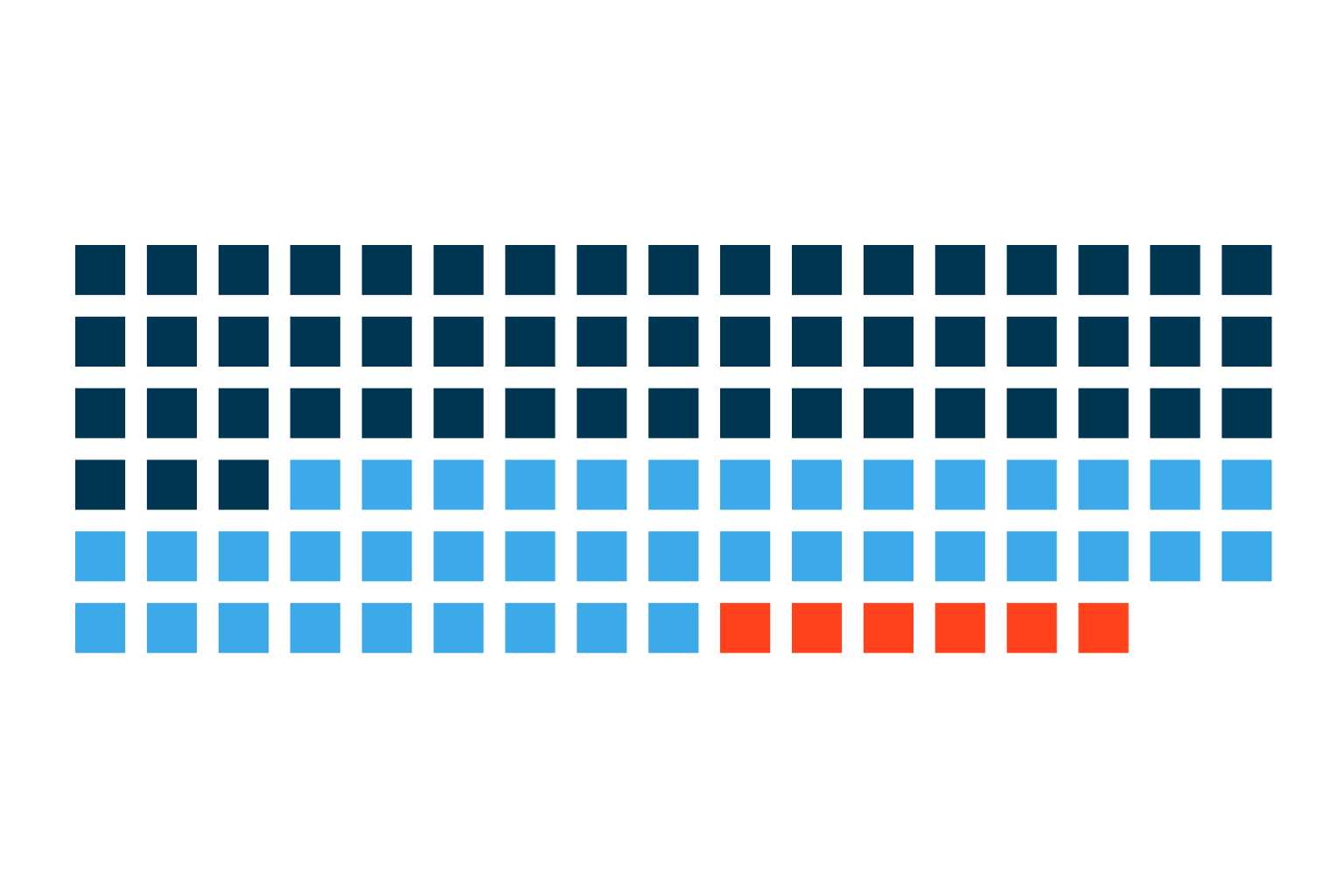
Only 54% of follow-up patients return on schedule. See what late and lost patients are worth per physician and how voice AI brings them back.
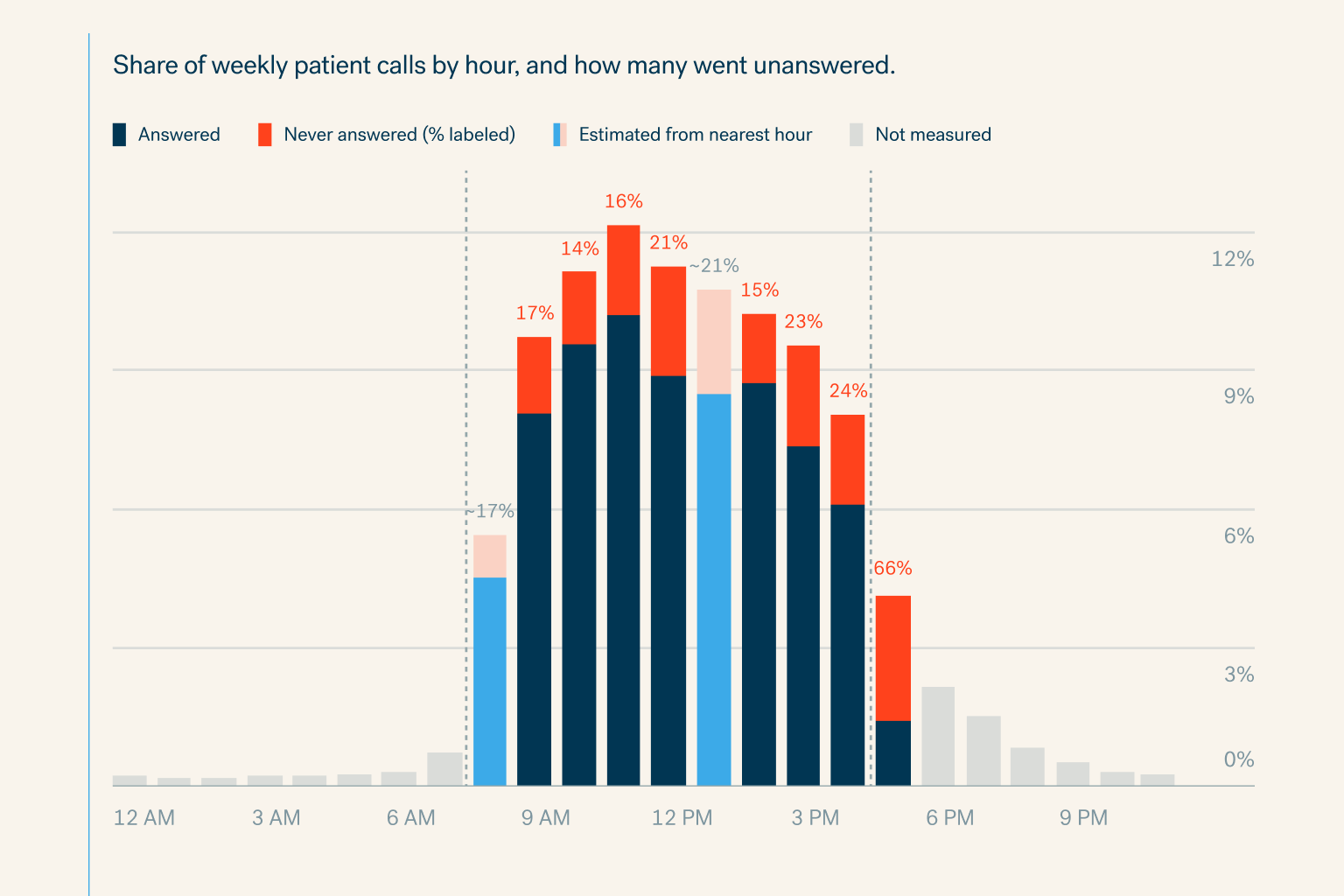
Specialty practices miss 18% of patient calls in office hours and 81% after hours. See the cost per physician and how voice AI books every call.
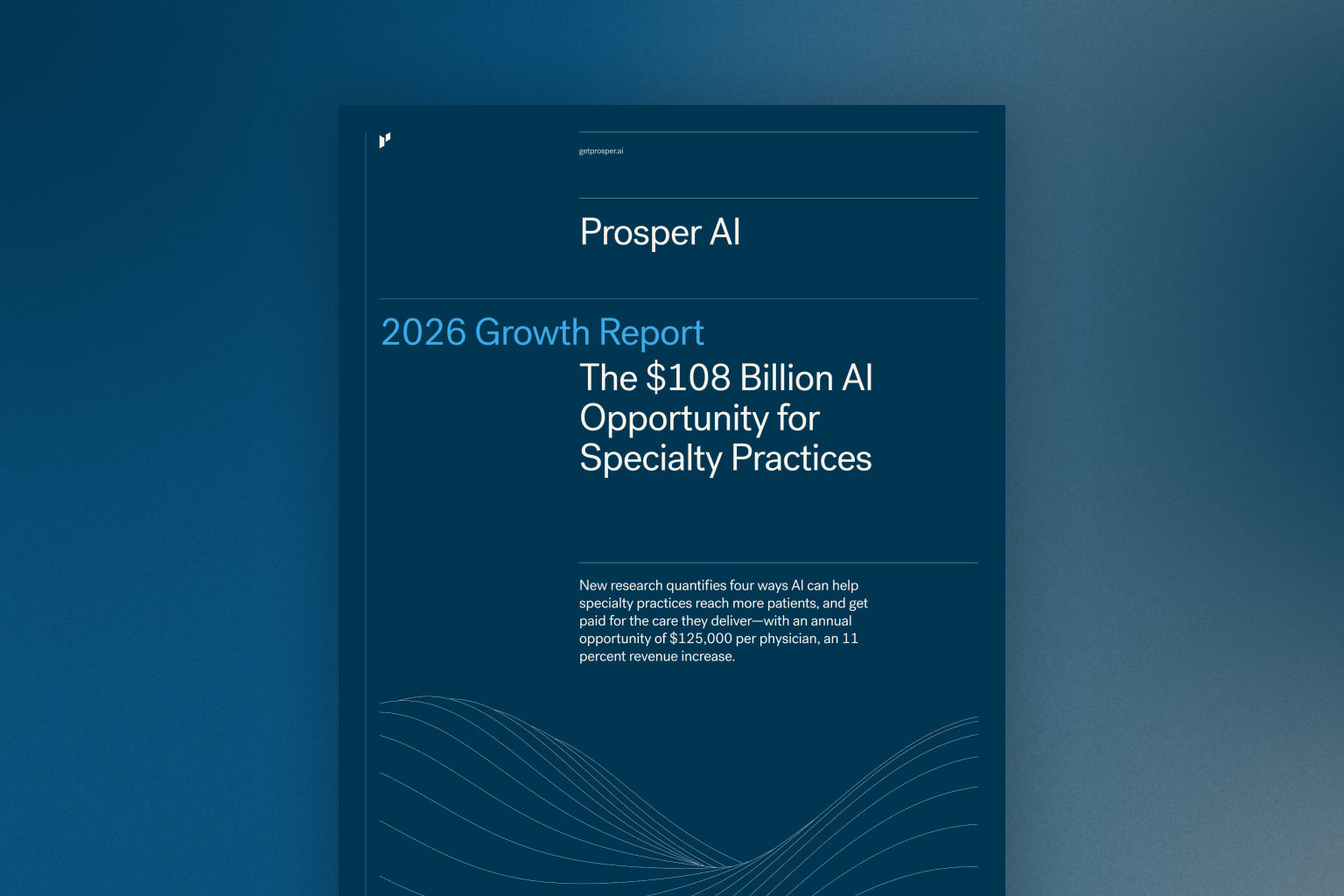
New research quantifies four ways AI can help specialty practices reach more patients, and get paid for the care they deliver—with an annual opportuni


