
Top 10 AI Agents Healthcare for 2026 (HIPAA-Compliant)

Published on

April 10, 2026

by

The Prosper Team

Healthcare is facing a perfect storm. Staffing shortages are reaching crisis levels, leading to burnout and high turnover rates that In 2023, healthcare call centers reported average turnover rates of 15% for non-clinical staff and 11% for clinical staff. This administrative strain directly impacts patient access and the financial health of providers. Patients are frustrated, with many experiencing long hold times, and About two-thirds of patients won’t wait on hold longer than two minutes. This friction contributes to the staggering $150 billion annual cost of patient no shows in the U.S. healthcare system. At the same time, complex revenue cycles are plagued by inefficiencies, with administrative errors contributing to high claim denial rates. It’s clear the old way of doing things is no longer sustainable. This is where AI agents for healthcare step in, offering a powerful solution to automate burdensome tasks, improve patient experience, and secure revenue.

What Are AI Agents for Healthcare?

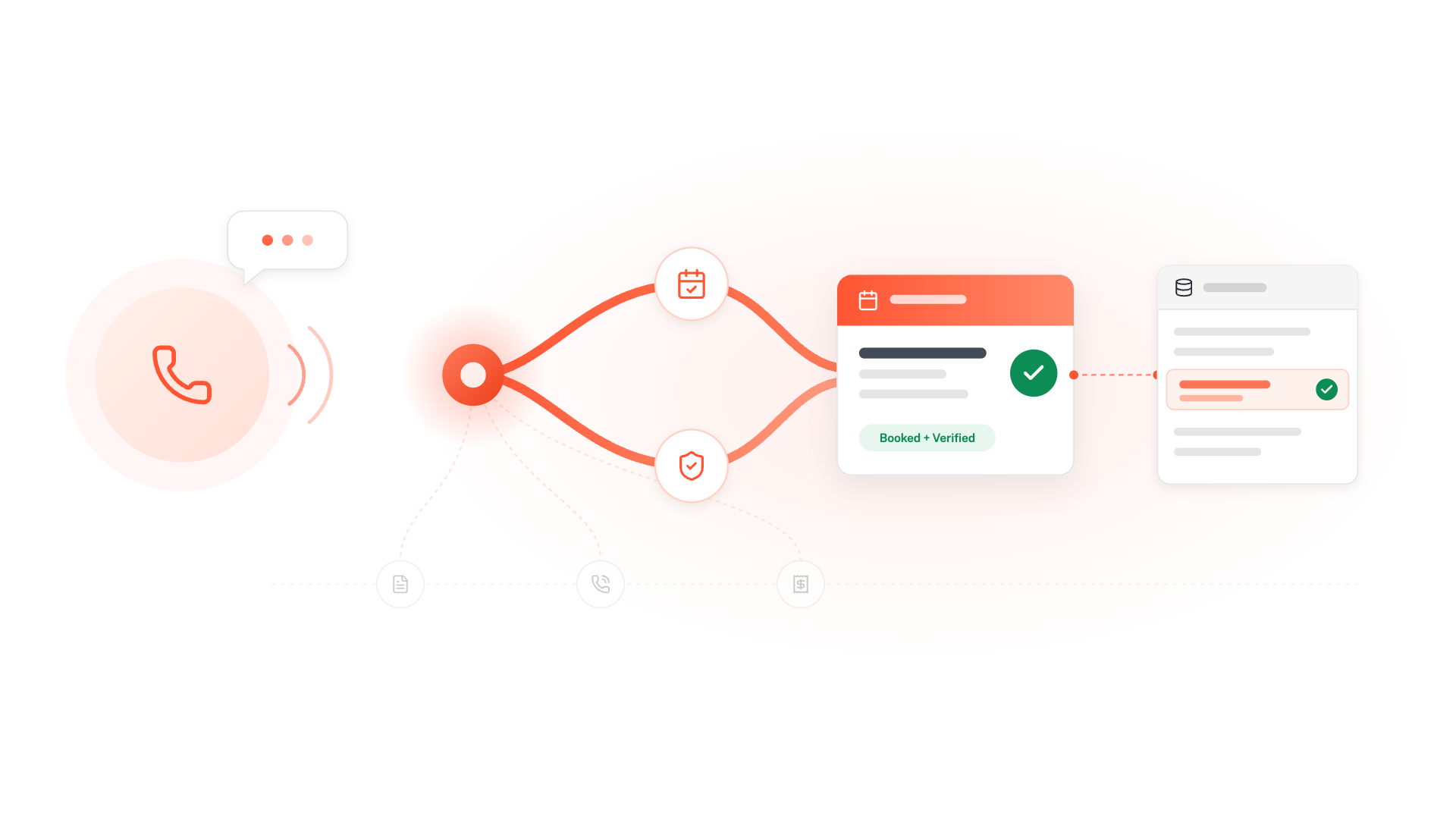
AI agents for healthcare are advanced software programs designed to handle complex, conversational tasks that traditionally require a human touch. Unlike simple chatbots, these AI agents can understand context, navigate intricate phone systems, and perform multi step workflows. They are not just deflecting calls, they are resolving them.

Specifically, voice AI agents can:

  • Place and receive phone calls.

  • Navigate complex payer IVR (Interactive Voice Response) systems.

  • Wait on hold, just like a human.

  • Converse with live agents at insurance companies.

  • Speak with patients to schedule appointments or collect payments.

  • Write structured data back into Electronic Health Record (EHR) and Practice Management (PM) systems.

Think of them as digital team members, purpose built to take on the most repetitive and time consuming phone based work in both patient access and revenue cycle management. Platforms like Prosper AI provide these specialized ai agents healthcare teams can deploy to immediately offload administrative burdens.

Security, Privacy, and Compliance Foundations

In healthcare, trust is non negotiable. The moment you involve patient data and automated systems, security and compliance become the top priority. Any platform providing AI agents for healthcare must be built on a foundation of enterprise grade security.

Key pillars of a compliant AI agent platform include:

  • HIPAA Compliance: The vendor must be willing to sign a Business Associate Agreement (BAA), legally obligating them to protect PHI according to federal standards.

  • SOC 2 Type II Certification: This independent audit verifies that a company has stringent internal controls for security, availability, processing integrity, confidentiality, and privacy over time.

  • Robust Encryption: All data must be encrypted both in transit (as it moves across networks) and at rest (when it is stored), using strong protocols like AES 256 and TLS.

  • Secure Integrations: Connections to EHRs and other systems must be protected, using methods like REST APIs with encryption and secure file transfer protocols (SFTP).

  • Zero Data Retention Agreements: When using third party large language models (LLMs) like those from OpenAI, it’s critical to have agreements that prevent them from storing any PHI, ensuring patient data is not used for model training.

Privacy Preserving AI Techniques and Data Governance

Beyond standard compliance checkboxes, leading AI agent platforms employ specific techniques to preserve patient privacy. This involves strict data governance policies that control how data is accessed, used, and managed throughout its lifecycle.

This includes daily backups with defined retention periods (e.g., 30 days) to ensure business continuity without holding onto data indefinitely. It also means providing deployment options, like on premise solutions, for large health systems that have stricter data control requirements. By choosing a partner with a transparent and robust approach to data governance, healthcare organizations can innovate with confidence.

Shared Responsibility and Vendor Due Diligence

Implementing AI agents for healthcare involves a shared responsibility model for security. While the AI vendor provides a secure and compliant platform, the healthcare organization is responsible for using it correctly, managing user access, and ensuring their own internal security practices are sound.

This makes vendor due diligence critical. When evaluating a potential partner, ask tough questions about their security posture, their compliance certifications, and their experience with enterprise healthcare deployments. A trustworthy vendor will be transparent, providing detailed documentation on their security architecture and practices.

Integration and Interoperability with Healthcare Systems

An AI agent is only as effective as its ability to connect with your core systems. Without seamless integration, you simply create another data silo. True interoperability means these AI agents for healthcare can read information from and, more importantly, write structured updates back to your EHR or PM system.

Leading platforms achieve this through a variety of methods to ensure flexibility:

  • Native API Integrations: Direct, real time connections to major EHRs like Epic, Cerner, athenahealth, and NextGen.

  • Secure File Transfers: The ability to work with batch data via SFTP or manual uploads for rapid piloting.

  • Custom Connections: Support for custom REST APIs to integrate with proprietary or less common systems.

With over 80 EHR and PM integrations, platforms like Prosper AI ensure that the data captured by AI agents flows directly into your existing workflows, creating a single source of truth and eliminating manual data entry.

How to Evaluate AI Healthcare Agents (Selection Criteria)

Not all AI agents for healthcare are created equal. When selecting a platform, move beyond the hype and evaluate vendors on the criteria that deliver real world results.

Key Evaluation Questions:

  • Healthcare Specialization: Is the platform built specifically for complex healthcare conversations, or is it a generic tool adapted for the industry? Look for vendors who understand payer IVRs and patient access workflows.

  • Speed to Value: How long does it take to go live? Can you start with a simple batch pilot in a few days, or does it require a months long implementation? The best solutions offer a go live time of integrated with your systems, live in 2–4 weeks.

  • Accuracy and QA: How is the accuracy of the agent’s work verified? Look for platforms that have an AI powered quality assurance process on every single call to ensure 99% accuracy.

  • Voice vs. Portal Focus: Does the solution focus on voice, where most patient and payer interactions still occur, or does it only automate web portals? True voice AI that can handle live conversations is a key differentiator.

  • Enterprise Readiness: Does the vendor meet all security and compliance requirements, including HIPAA with a BAA and SOC 2 Type II certification?

Healthcare Use Cases: Patient Access

Patient access is the front door to your organization, and it’s often where bottlenecks and frustrations begin. AI agents for healthcare can transform this experience, making it seamless and efficient 24/7.

  • AI Appointment Scheduling: AI agents like “Anna” can answer inbound scheduling calls with zero wait time, drastically reducing the 89% call abandonment rates some practices see. They can also proactively call patients from a waitlist to fill last minute cancellations, keeping provider calendars full.

  • Appointment Reminders & Re engagement: AI can automate reminder calls and texts, which has been shown to reduce patient no show rates by around 30%. For overdue patients, an agent like “Sara” can run re engagement campaigns, increasing scheduled appointments by over 20%.

  • Inbound Billing Questions: Instead of routing these calls to overburdened staff, an AI agent can handle common questions, take payments over the phone, and escalate complex cases, improving collections at a lower cost.

Healthcare Use Cases: Revenue Cycle Management (RCM)

The revenue cycle is notoriously complex and phone heavy. This is where AI agents for healthcare can deliver a massive return on investment by automating repetitive, high volume tasks.

  • Benefits & Eligibility Verification: When online portals fail, staff spend hours on the phone with payers. An AI agent like “Alex” can make these calls, navigate IVRs, and verify up to 60 data points with 99% accuracy in under two hours, often at a 50% cost reduction compared to manual work.

  • Prior Authorization & Status Checks: AI agent “Kate” can determine if a PA is required, initiate the request by phone, and perform relentless follow up to track the status, reducing delays and denials.

  • Claims Status & Denial Follow Up: Agents like “Lucy” and “Mary” can check the status of aging claims and even manage initial denial follow up, pushing back on payer errors and accelerating cash flow. This follow up can be done at half the cost of manual efforts, with a 15% higher collection rate on denials.

Healthcare Use Cases: Clinical and Admin Operations

The applications for AI agents for healthcare extend beyond the front and back office, streamlining other critical operational workflows.

  • Switchboard Automation: Replace frustrating, multi level phone trees with a conversational AI agent that can understand a caller’s intent and route them to the right person or department immediately. This improves patient satisfaction and containment rates.

  • Pharmacy & Prescription Refills: An AI agent can manage a significant portion, deflect 68% of inbound Rx calls away from staff, of inbound pharmacy calls, checking on refill status, submitting requests to the pharmacy queue, and reminding patients when prescriptions are ready for pickup.

Top 10 AI Agents in Healthcare

As healthcare systems face increasing pressure to resolve patient inquiries instantly while reducing administrative burden, a specialized group of AI agents for healthcare has emerged as the gold standard for clinical and operational automation. These platforms are grouped here because they offer the deep EHR integrations and HIPAA-compliant security necessary to handle complex tasks like medical scheduling, prior authorizations, and billing. By examining these industry leaders, organizations can find the right balance between cutting-edge conversational intelligence and the rigorous reliability required in a medical setting.

1. Prosper AI

Prosper AI deploys HIPAA‑compliant voice agents that take on high friction phone work in Patient Access and RCM, including navigating payer IVRs and handling patient scheduling, reminders, and billing questions. They then write structured outcomes back to your EHR/PM. Health systems use Prosper to lift containment, erase hold time, and curb abandonment while standardizing process quality.

Why it stands out: phone-native AI that speaks to both patients and payers, closing loops with real EHR/PM write-backs.

What it can do (Patient Access + RCM):

  • Patient Access: Automated scheduling and conversational switchboard/triage that replaces legacy IVR trees.

  • RCM: Phone-based eligibility checks, prior auth status tracking, and claims status follow-up with EOB retrieval.

  • Payments & Outreach: Inbound billing Q&A, balance collection, and proactive re-engagement to backfill schedules.

  • Integrations: 80+ native connections including Epic, athenahealth, Cerner, MEDITECH via FHIR/HL7, APIs, or SFTP.

  • Quality: AI-driven QA and analytics to score every call for accuracy and compliance.

Trust & compliance:

  • HIPAA with signed BAA; SOC 2 Type II and GDPR certifications.

  • Encryption: TLS in transit; AES‑256 at rest.

  • Identity & governance: SSO (Okta, Azure AD, Google) and 0‑day LLM data retention.

  • Flexible hosting: Cloud or on‑prem deployment.

Proof & buying notes:
Customers report ~50% call containment, ~40% cost reduction, and Appointments scheduled increased by 12%. Pricing is volume-based. Confirm BAA terms, EHR write-back methods, and zero‑retention settings; align KPIs for containment, abandonment, and collections before go-live.

2. Syllable

Syllable brings healthcare‑native AI to voice and digital front doors, automating scheduling, refills, routing, and FAQs across large health-system access centers. It’s built to run 24/7 and lighten staff load with intelligent triage and EHR‑integrated workflows that keep patient journeys moving.

Why it stands out: mature healthcare switchboard automation with Epic‑aware scheduling and strong analytics.

What it can do (Patient Access + RCM):

  • Patient Access: Always‑on intelligent switchboard and provider lookup.

  • Triage: Automated visit‑type triage with warm transfers to live agents.

  • Scheduling: EHR‑integrated appointment booking; first AI scheduler for Epic.

  • Outreach: Propensity‑driven activation to close care gaps.

  • Intake & Campaigns: Inbound/outbound SMS and voice to manage volume.

  • RCM: Streamlined eligibility checks and payment routing for simple billing flows.

  • Integrations: Epic, Veradigm, FHIR/HL7, SIP/PSTN; enterprise telephony via Azure Marketplace APIs.

Trust & compliance:

  • HIPAA with BAA; encryption in transit and at rest.

  • SOC 2 certified with enterprise audit logs.

  • Azure-hosted options, SSO/MFA, and zero‑retention capabilities for PHI protection.

Proof & buying notes:
Syllable automates >70% of calls, and lifts appointment capacity. Time‑to‑value is ~8 weeks for routing. Validate BAA terms, Epic write‑back approach, and usage‑based pricing against your KPIs.

3. Hyro

Hyro Screenshot

Hyro is a healthcare‑dedicated conversational AI that unifies voice, web chat, and SMS to shrink hold times, reduce abandonment, and move routine access tasks to self service, backed by deep Epic integrations.

Why it stands out: an omnichannel engine with proven health‑system deployments and crisp routing across CCaaS stacks.

What it can do (Patient Access + RCM):

  • Scheduling: End‑to‑end appointment scheduling and rescheduling with Epic MyChart write‑backs; Rx status via Willow.

  • Switchboard & Triage: SIP/DID routing for Cisco, Genesys, Five9; context‑aware handoffs.

  • Provider Search: NLU‑powered matching and dynamic FAQ resolution across web and mobile.

  • RCM: Benefits verification, claims status Q&A, and digital invoice generation.

  • Outreach: Proactive SMS/voice for referrals, billing support, and coverage redetermination.

  • Integrations: Epic, Salesforce Health Cloud, FHIR/HL7, and leading CCaaS/telephony APIs.

Trust & compliance:

  • HIPAA with BAA; SOC 2 Type II.

  • Encryption at rest and in transit; US-based Azure/Snowflake hosting.

  • SSO, MFA, RBAC, and detailed audit logging with clear retention policies.

Proof & buying notes:
Intermountain Health reached 44% automated inquiry resolution; Tampa General cut wait times by 58% and abandonment by 56%. Pricing follows enterprise subscription by volume/use case. Confirm Epic API methods and PII redaction settings; align KPIs for containment and AHT.

4. Kore.ai

Kore.ai is an enterprise conversational AI platform with healthcare toolkits for Patient Access and RCM across voice and digital. It’s built for complex, secure workflows, such as scheduling, notifications, and billing inquiries, that integrate with EHRs and CCaaS.

Why it stands out: breadth of enterprise controls and healthcare accelerators for sophisticated, multi‑channel automations.

What it can do (Patient Access + RCM):

  • Patient Access: Omnichannel scheduling, rescheduling, and reminders via voice, web, SMS, and mobile.

  • Clinical Triage: Symptom evaluation via partners like Infermedica for accurate routing.

  • RCM: Eligibility, deductible/co‑pay verification, prior auth support, real‑time claims inquiries.

  • Outreach: Proactive confirmations and digital intake forms.

  • Integrations: Epic/Cerner via FHIR/HL7; CCaaS (Genesys, NICE) for contact center orchestration.

Trust & compliance:

  • HIPAA‑aligned with BAA; SOC 2 Type II, ISO 27001, PCI DSS.

  • SSO/MFA/RBAC with configurable PHI redaction and pre‑LLM guardrails.

  • Deploy in multi‑region cloud, private VPC, or on‑prem; configurable retention.

Proof & buying notes:
Reported up to 24% containment and 468% ROI, often implemented in weeks. Expect platform licensing plus usage‑based session fees. Verify EHR write‑back scope and PII anonymization settings to match your risk profile and KPIs.

5. Replicant

Replicant is a voice‑first AI built for healthcare contact centers. It automates high‑volume Patient Access, imaging, and payer workflows across voice, chat, and SMS, with smooth live‑agent handoffs and real‑time system updates.

Why it stands out: natural phone conversations at scale with deep CCaaS connectivity and reliable escalation.

What it can do (Patient Access + RCM):

  • Patient Access: Creates, updates, and cancels appointments; automates outbound reminders.

  • Switchboard/Triage: Routes to clinics with priority paths for urgent needs.

  • RCM & Payments: PCI‑compliant updates and secure payment collection.

  • Claims/Utilization: Offloads repetitive status checks and shortens FNOL handle times.

  • Interoperability: Connectors for Genesys, Five9, NICE CXone, Talkdesk, Salesforce; APIs for EHR/PM integration.

Trust & compliance:

  • HIPAA with BAA; SOC 2 Type II and PCI DSS.

  • AES‑256 at rest, TLS 1.2+ in transit.

  • Automated PII redaction; zero‑retention LLM options.

  • Granular RBAC and SSO with enterprise IdPs.

Proof & buying notes:
SMIL reports 20% lower abandonment and ~700 automated calls per day. Typical launch in ~6 weeks; flat annual pricing. Confirm BAA scope, scheduling integration approach, and baseline containment metrics.

6. PolyAI

PolyAI delivers enterprise‑grade, voice‑first agents for patient access and front‑end RCM, handling complex scheduling, triage, and billing inquiries in natural conversation while tapping governed EHR data.

Why it stands out: remarkably human‑sounding conversations and strong call containment across languages.

What it can do (Patient Access + RCM):

  • Patient Access: 24/7 automated scheduling, intelligent triage, and prescription refills in 45+ languages.

  • RCM: Real‑time eligibility and prior auth status via External Events APIs.

  • Payments: Secure DTMF capture through PCI Pal and Stripe.

  • Interoperability: Epic SMART on FHIR for governed reads; bespoke write‑backs as needed.

  • Telephony: Prebuilt connectors for Five9, NICE CXone, Genesys, Amazon Connect with agent handoff.

Trust & compliance:

  • HIPAA‑ready with BAA; SOC 2 Type II, ISO/IEC 27001.

  • PCI‑DSS payment flows via PCI Pal; PII redaction for model training.

  • Regional AWS endpoints for residency and zero‑retention options.

Proof & buying notes:
Health customers report up to 74% containment and 72% handle‑time reduction. Typical deployment ~8 weeks with usage‑based pricing. Verify BAA terms, Epic write‑back scope, and KPIs (abandonment, CSAT) pre‑launch.

7. Talkdesk

Talkdesk pairs its Healthcare Experience Cloud with Autopilot to bring CCaaS‑native automation to Patient Access and Member Services. It blends EHR‑aware self‑service, analytics, and agent tools to cut abandonment and expand self‑service safely.

Why it stands out: a full CCaaS stack with prebuilt healthcare data models and Epic-aware bill pay.

What it can do (Patient Access + RCM):

  • Patient Access: Automated scheduling, cancellations, and provider search over voice/SMS.

  • RCM & Payments: Agentless Epic IVR bill pay via PCI‑compliant Sycurio with real‑time updates.

  • Payer Flows: Epic Tapestry workflows for benefits, claims status, and prior auth inquiries.

  • Outreach/Intake: Proactive notifications and Patient 360 texting to reduce no‑shows.

  • Integrations: Epic, Oracle Health, athenahealth; FHIR, Ellkay, and enterprise SSO.

Trust & compliance:

  • HIPAA with BAA; SOC 2/3, ISO 27001, and ISO 42001 (AI governance).

  • TLS 1.2+ and AES‑256 with regional data residency choices.

  • SAML SSO (Okta/Azure), RBAC, and Guardian anomaly monitoring.

Proof & buying notes:
Memorial Healthcare cut abandonment 3x and automated 50% of password calls; Evara Health reached 45% containment. Validate BAA, EHR write‑back specifics, and uptime SLAs (e.g., 99.999% vs. 100%) for clinical safety.

8. Kyruus Health

Kyruus Health, now part of RevSpring, unifies provider data, search, and smart scheduling to streamline access across web, chat, and voice. It’s a cornerstone for Patient Access and RCM teams aiming to boost conversion, reduce transfers, and reliably write back to core EHRs.

Why it stands out: market‑leading provider search with deep scheduling rules that fill calendars fast.

What it can do (Patient Access + RCM):

  • Patient Access: Clinical search and direct EHR scheduling for Epic, Oracle Health, and athenahealth.

  • RCM: Digital intake via Epion for insurance capture; omnichannel payments through RevSpring.

  • Access Centers: Guided triage and smart search to double agent conversion.

  • Conversational AI: Native AI directories; partners like Hyro and GYANT for automated scheduling.

  • Interoperability: FHIR/REST APIs plus SSO/SAML for enterprise connectivity.

Trust & compliance:

  • SOC 2 Type II and HITRUST.

  • HIPAA with BAA; encrypted data flows.

  • Enterprise SSO, MFA, RBAC; AWS hosting with audit trails and defined residency.

Proof & buying notes:
Providence boost demand conversion rates in the access center by 150%; Oaklawn tripled online bookings and cut call volume 20%. Confirm BAA terms, write‑back objects, and RevSpring component pricing to ensure ROI.

9. TeleVox

TeleVox’s omnichannel platform, anchored by its Engage virtual agent, automates reminders, recalls, scheduling, and text‑to‑pay across voice, SMS, and web chat. Built for Patient Access and RCM, it reduces no‑shows, deflects calls, and simplifies payments with reliable EHR write‑backs.

Why it stands out: long‑proven reach at scale with practical gains in no‑shows and collections.

What it can do (Patient Access + RCM):

  • Patient Access: Automated confirmations, rescheduling, and two‑way SMS/voice/web chat.

  • Virtual Agent: Eligibility and balance tasks with seamless live escalation.

  • Outreach: Recalls and referral scheduling to reduce leakage and speed cycle times.

  • RCM: Integrated text‑to‑pay and saved‑card flows to lift collections.

  • Interoperability: Bi‑directional Epic, Cerner, and athenahealth write‑backs via FHIR/APIs.

Trust & compliance:

  • HIPAA with BAA; HITRUST r2 certified.

  • Voice redaction, audit trails, and encryption for PHI.

  • Defined retention policies and secure messaging protocols.

Proof & buying notes:
Reported 35% no‑show reduction, 25% appointment lift, and 2–3x ROI. GPO pricing via Premier, Inc. Verify BAA, EHR write‑back objects, and encryption for SMS/email to meet your security bar.

10. Genesys

Genesys Cloud CX brings CCaaS strength, including routing, analytics, and bots, to healthcare providers and payors. With conversational IVR, Epic‑aware triage/referrals, and secure APIs for write‑backs, it’s a robust foundation for Patient Access automation.

Why it stands out: enterprise‑grade reliability and AI tooling that scale across service lines.

What it can do (Patient Access + RCM):

  • Patient Access: Conversational IVR and virtual agents for scheduling, triage, and reminders via voice, SMS, and chat.

  • RCM: Orchestrates 270/271 eligibility and claims status via clearinghouses; PCI‑compliant payments.

  • Outreach: Native outbound recalls and follow‑ups to reduce inbound demand and no‑shows.

  • Integrations: Epic Health CX plus FHIR/HL7 for broader EHR/PM connectivity.

  • AI Assist: Generative summaries and agent copilots to speed documentation and after‑call work.

Trust & compliance:

  • HIPAA with BAA; SOC 2 Type II, ISO 27001, PCI DSS.

  • AES‑256 at rest; TLS 1.2+ in transit; SSO/MFA/RBAC.

  • AWS microservices with regional residency; FedRAMP Moderate options.

Proof & buying notes:
RedSalud boosted bookings by 20%; AdaptHealth reduced abandonment by 84%. Pricing is seat‑based with AI token add‑ons. Verify BAA scope, Epic integration methods, and data residency settings; set clear targets for containment, abandonment, and AHT.

Implementation Best Practices and Governance

Successfully launching ai agents healthcare wide requires a thoughtful approach. Start with a pilot program focused on a high impact workflow, such as benefits verification or appointment scheduling. This allows you to measure results and build trust in the technology.

Establish clear governance from the start. Define who owns the process, how you will monitor the AI agents’ performance, and what your escalation paths are for exceptions. Partner with a vendor that provides a dedicated AI Agent Manager to guide you through this process and offers no code tools so your operational teams can easily customize workflows without needing engineering resources.

Measuring Success: KPIs, Outcomes, and Time to Value

The success of your AI agent initiative should be measured with clear, quantifiable metrics tied to your organization’s goals.

Key Performance Indicators (KPIs) to Track:

  • Patient Access: Reduced call wait times, lower call abandonment rates, increased appointment conversion rates, and lower patient no show rates.

  • Revenue Cycle: Reduced cost per benefits verification or prior auth check, faster turnaround times (SLA achievement), lower claim denial rates, and an increase in cash collections.

  • Operational Efficiency: Higher staff satisfaction and retention, reduced cost to collect, and increased patient containment rates for inbound calls.

A strong AI partner will provide near real time analytics dashboards to track these outcomes, proving a clear return on investment and demonstrating value quickly.

Future Trends to Watch

The field of AI agents for healthcare is evolving rapidly. In the coming years, expect to see agents with even more sophisticated conversational abilities, capable of handling more complex clinical and financial discussions. Deeper, bidirectional EHR integrations will become standard, allowing AI to not only pull data but also intelligently suggest actions within a patient’s chart. We will also see a rise in proactive, AI driven patient outreach for preventative care and chronic condition management, moving from reactive problem solving to proactive health engagement.

Conclusion: Summary and Next Steps

Staffing shortages, administrative burden, and patient access challenges are no longer sustainable. AI agents for healthcare offer a proven path forward, enabling providers to automate repetitive phone based workflows, reduce operational costs, and create a better experience for both patients and staff. By taking on the time consuming tasks of scheduling, benefits verification, prior authorizations, and claims follow up, these digital team members free up skilled staff to focus on higher value, patient facing work. The technology is secure, compliant, and integrates with the systems you already use.

Ready to see how AI agents can transform your practice? Request a demo with Prosper AI to get started.

FAQ

What is the difference between a chatbot and an AI voice agent?
A chatbot typically handles simple, text based queries within a website or app. An AI voice agent is far more advanced; it operates over the phone, understands complex spoken language, navigates IVR systems, waits on hold, and has conversations with live humans to complete multi step tasks like verifying benefits or scheduling appointments.

Are AI agents secure for handling patient data?
Yes, provided you choose an enterprise grade vendor. A secure platform for ai agents healthcare providers use will be HIPAA compliant, offer a BAA, hold a SOC 2 Type II certification, and use end to end encryption to protect all patient data.

How long does it take to implement AI agents in a healthcare setting?
Time to value is much faster than traditional enterprise software. With a platform that uses pre built “Blueprints” for common healthcare workflows, you can go live with a pilot using batch data in as little as 1 to 2 days, or achieve a full EHR integration in about three weeks.

What kind of ROI can we expect from AI agents for healthcare?
The ROI is significant and multi faceted. Financially, practices see returns from reduced operational costs (up to 50% on tasks like benefits verification), increased collections on denials (up to 15%), and more filled appointments (a 20%+ increase). Operationally, the value comes from improved staff satisfaction and retention, and a better patient experience with zero hold time.

Can AI agents integrate with our existing EHR system?
Yes, leading AI agent platforms are designed for interoperability. They offer dozens of native integrations with major EHRs like Epic, athenahealth, Cerner, and NextGen, using secure APIs and other methods to ensure data flows seamlessly back into your system of record.

How do AI agents handle complex calls with insurance companies?
Specialized ai agents healthcare vendors provide are trained extensively on payer interactions. They know how to navigate complex IVR menus, provide the right patient and provider details, wait patiently on hold, and converse with human agents to get the information needed for benefits, authorizations, or claims.

What happens if the AI agent can’t resolve an issue?
A well designed AI system includes clear escalation paths. If an agent encounters a situation it cannot handle, it intelligently routes the call or task to a designated human staff member with all the context it has gathered, ensuring a smooth handoff and resolution.

Why choose a specialized platform like Prosper AI?
A specialized platform offers pre built, “battle tested” workflows designed specifically for the nuances of healthcare phone calls. This means faster deployment, higher first time accuracy, and a deeper understanding of the security and compliance needs of providers compared to a generic AI toolkit.

Related Articles

Related articles

Discover how healthcare teams are transforming patient access with Prosper.
April 10, 2026

Artificial Intelligence in Call Centers for Healthcare (2026)

Learn how artificial intelligence in call centers streamlines patient access, automates RCM, and ensures HIPAA compliance. Explore real-world tips and KPIs.

April 10, 2026

AI Call Answering for Healthcare: 2026 HIPAA Guide

AI call answering for healthcare: 24/7 hold-free calls, HIPAA compliance, EHR integration, cost savings, and setup tips. Learn how to choose a solution.

April 10, 2026

Prior Authorization Workflow: 2026 AI-Powered Guide

Master the modern prior authorization workflow with FHIR, NLP, and voice AI. Cut denials, speed approvals, and free staff time. Get the 2026 step-by-step guide.