




Best Voice AI for Gastroenterology Practices: 4 Options Compared (2026)
Compare 4 voice AI vendors for GI practices on colonoscopy scheduling, benefits verification, and prior auth calls. See which ones stop at booking.

A medical appointment reminder service that only delivers notifications is doing half the job. SMS and email are fine for pushing information out, but neither one can handle what comes back: a patient who wants a different time, a question about fasting, a coverage concern. This post breaks down why the channel you use to remind patients shapes how much of that work your staff still has to do.
TLDR:
A medical appointment reminder service is a vendor category in its own right, separate from a basic notification toggle inside your practice management system. Full-service offerings typically cover several distinct functions:
Knowing what the category actually covers helps you ask the right questions before comparing options. See the medical answering service buyer's guide for a full vendor checklist.
The hidden cost of no-shows to healthcare is substantial: U.S. medical practices lose an estimated $150 billion annually, with each missed appointment representing roughly $150 to $200 in lost revenue per slot. For a busy specialty clinic running 80 appointments a day, even a 10% no-show rate can erase tens of thousands of dollars each month before a single overhead expense is counted.
The hidden damage compounds beyond the revenue line. Staff hours spent manually confirming appointments, rescheduling cancellations, and filling last-minute gaps carry an estimated $18 to $22 per handled call when fully loaded labor costs are factored in. A medical appointment reminder service that reduces that manual call volume directly reduces that cost per contact.
Each channel carries its own trade-offs, and the differences matter when you're deciding where to invest.
SMS reminders are fast and cheap. Patients see them quickly, and two-way text confirmations let patients reply to confirm, cancel, or request a reschedule directly from the reminder message. But SMS can't answer follow-up questions, can't verify insurance, and can't handle anything beyond a simple button-press response.
Email reminders work well for detailed pre-visit instructions. Open rates are lower, response rates lower still, and anything requiring back-and-forth falls flat entirely.
AI voice calls cover what both miss. Automated appointment reminder calls can confirm attendance, collect a cancellation reason, offer an immediate reschedule, and flag a coverage question, all in one interaction, without a staff member involved.
Two-way voice changes the fundamental nature of what a reminder can do. SMS and email push information out; a voice call pulls information back in during the same interaction, which is a key reason AI voice agents outperform SMS and email for patient reminders.
When a patient says they need to reschedule, an AI voice agent can offer available slots, confirm a new time, and write the update back to the EHR without staff touching the workflow. When a patient asks whether they need to fast before a procedure, the agent can answer that question instead of routing it to a voicemail queue.
This is the gap that separates a medical appointment reminder service built on voice from one built on text delivery.
Confirmation rate, no-show rate, and reschedule rate are the three numbers that tell you whether a medical appointment reminder service is actually working. A confirmation rate below 70% usually signals a delivery or engagement problem. No-show rate should trend down within 60 to 90 days of deployment, and appointment reminders that reduce no-shows depend on hitting that window. Reschedule rate shows whether patients are actively managing their own appointments or simply going silent.
AI outbound calls typically surface all three in a single interaction, since the call can confirm, capture a cancellation, or trigger a reschedule in real time.
Tracking aggregate confirmation rates across all channels masks where drop-off actually happens. Ask any vendor you are vetting to break out performance by channel:
High opt-out rates on any channel are a signal that message frequency, timing, or tone is misaligned with patient preference. A well-calibrated reminder service keeps opt-outs low by spacing contacts appropriately and giving patients a clear path to reschedule instead of simply ignoring the message.
Four pricing structures are common in this market:
The per-message model looks affordable for a single-location practice. Run it across a 20-provider group sending three reminder touches per visit and the math turns fast. At $0.05 per message, that's $3 per patient per visit cycle before a single slot is confirmed.
Before signing, check for EHR integration setup fees, voice surcharges added onto otherwise text-focused plans, per-location add-ons that compound as you grow, and contract lengths that lock pricing before go-live performance is proven.
Any medical appointment reminder service operating in a clinical setting must meet HIPAA's technical safeguards for protected health information (PHI). See the full breakdown of HIPAA-compliant AI for appointment reminders for implementation details. AI outbound voice calls can be configured to avoid leaving PHI on voicemail, confirm identity before sharing appointment details, and log every interaction directly into the EHR without staff intervention. SMS and email reminders, by contrast, often transmit PHI in plaintext or require separate patient portal logins to stay compliant, adding friction that reduces the confirmation rates those channels already struggle to achieve.
Before signing a contract, run any reminder service through a short checklist. The differences between vendors tend to be structural, not cosmetic, and they show up after go-live.
The answers tell you whether a vendor built a notification tool or a true medical appointment reminder service with the workflow depth to actually reduce front-desk load.
Here is a comparison of how major reminder service vendors stack up across the capabilities that matter most to a practice assessing this category.
Most vendors in this table cover confirmation workflows well. Where they stop is at the conversation itself. When a patient replies that they need to reschedule, or asks whether their insurance is accepted, a text-based reminder hands that back to staff. Luma and Relatient have recently added their own AI voice agents for scheduling-related calls, narrowing that gap. Prosper AI's voice calls go further: they handle scheduling, insurance, and RCM exchanges in the same call, with no human stepping in and no handoff to a separate system, as seen in the, as seen in the Northeast OB/GYN AI voice agent case study.
Prosper AI sends outbound reminder calls that hold a real conversation with the patient. The AI can confirm attendance, capture cancellations, offer rescheduling, and update the EHR record automatically, all within a single call. No staff member needs to dial out or follow up unless the patient has a request that requires clinical judgment.
The reminder workflow sits inside a broader patient access layer that also handles inbound scheduling, insurance verification, and post-visit follow-up. A cancellation caught during an outbound reminder opens the slot in the EHR and adds the patient to the waitlist, staff then work the waitlist to fill the gap.
Sending a reminder is the easy part. What your service does with the response is what actually moves your no-show rate. Two-way voice, real EHR write-back, and clear performance reporting by channel are the details worth pressing any vendor on before you commit. See Prosper AI's outbound reminder approach.
Prosper AI's outbound voice agent can confirm attendance, capture a cancellation reason, offer available slots, confirm a new time, and write the update back to the EHR, all within the same call and without a staff member involved. Text-based reminder tools stop the moment a patient responds with anything beyond a simple confirmation, routing the reschedule request back to your front desk.
Track confirmation rate, no-show rate, and reschedule rate, and ask your vendor to break each out by channel. A confirmation rate below 70% typically signals a delivery or engagement problem, and aggregate numbers can mask poor performance among older or lower-health-literacy patient populations who respond better to voice than SMS.
Luma Health's Navigator now handles live voice conversations for scheduling, rescheduling, and no-show recovery, closing part of the gap it used to have. But insurance verification still isn't resolved inside the call: Navigator pivots the patient to text, has them upload an insurance card image, and completes verification afterward — a channel switch and a delay. Prosper AI's outbound voice calls resolve scheduling, insurance, and RCM exchanges within the same call, with no pivot to a separate channel and no handoff to staff, and the reminder workflow connects to inbound scheduling, insurance verification, and waitlist recovery in a single system.
Yes, but the depth of that integration varies considerably by vendor. A service with true EHR write-back updates confirmation status, reschedule outcomes, and cancellations directly in the record with no staff reconciliation required. If the vendor's system only delivers the reminder and logs delivery status, your front desk still carries the follow-up work.
Ask four things: how the service handles a patient who does not respond; what happens when a patient wants to reschedule mid-call; how outcomes write back to your EHR; and whether call scripts can be updated by your team or require vendor engineering. The answers separate a notification tool from a reminder service with enough workflow depth to actually reduce front-desk load.
Discover how healthcare teams are transforming patient access with Prosper.
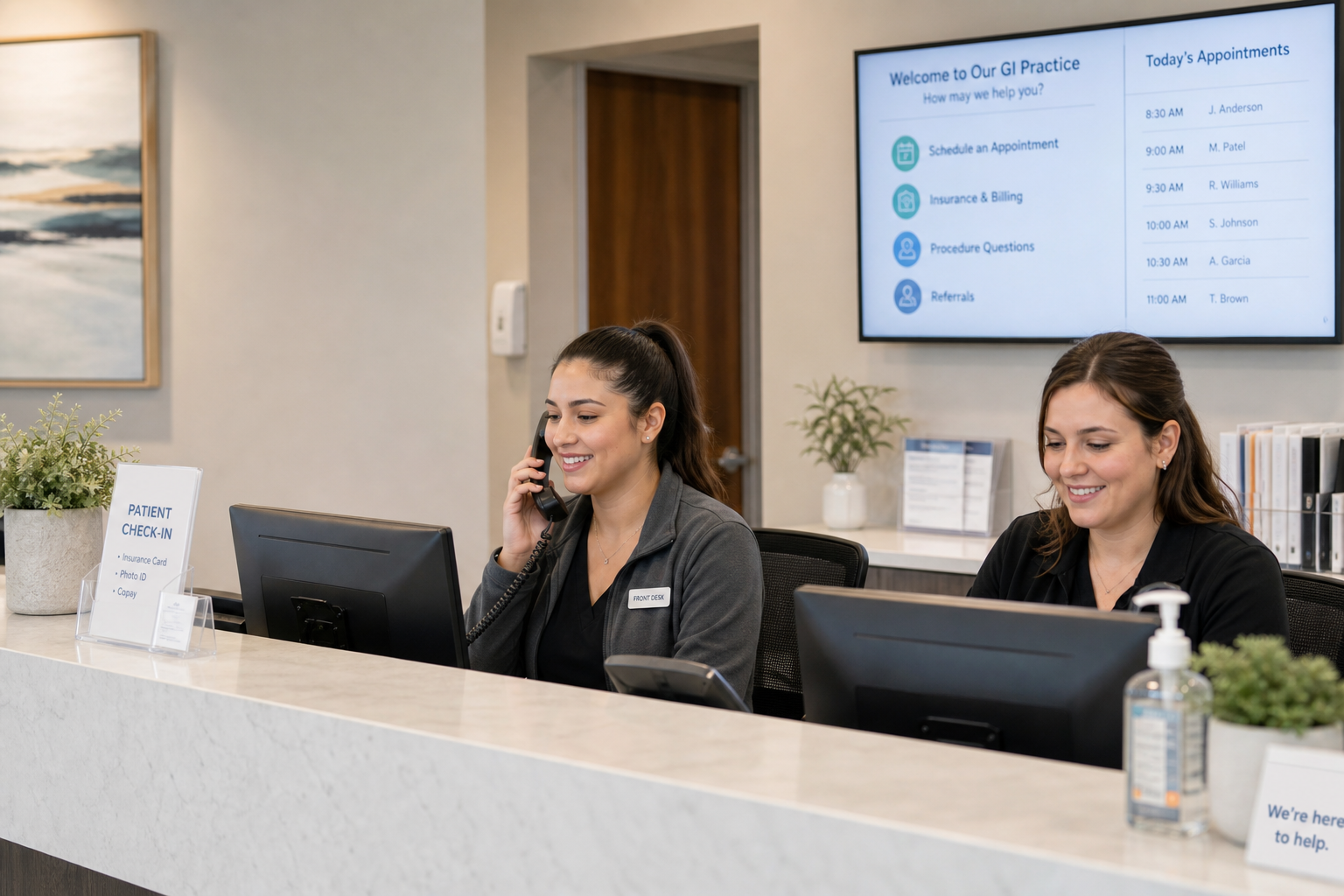
Compare 4 voice AI vendors for GI practices on colonoscopy scheduling, benefits verification, and prior auth calls. See which ones stop at booking.

Compare 5 AI voice agents for ENT and allergy practices. See which handle scheduling and the payer calls for prior auth and benefits checks.

Best AI agents for orthopedic practices compared on prior auth, outbound payer calling, and billing. Only 1 vendor resolves 60%+ of calls end-to-end.


