




Best Voice AI for Gastroenterology Practices: 4 Options Compared (2026)
Compare 4 voice AI vendors for GI practices on colonoscopy scheduling, benefits verification, and prior auth calls. See which ones stop at booking.

Healthcare administrative teams are under unprecedented pressure. Staffing shortages, rising patient expectations, and the sheer volume of repetitive phone calls create constant bottlenecks. Patients endure long hold times, and burned out staff struggle to keep up. This operational drag directly impacts patient access and revenue. AI agents for healthcare are emerging as a critical solution, automating routine calls 24/7 so human teams can dedicate their expertise to high value patient care. They are not a futuristic concept, but a practical tool available now to modernize provider operations.
An AI agent for healthcare is a specialized software program designed to automate administrative tasks that traditionally require a human to make or receive a phone call. Think of them as highly efficient, digital team members. These AI agents can place outbound calls to insurance payers, receive inbound calls from patients, navigate complex interactive voice response (IVR) systems, wait patiently on hold, and have natural conversations with both patients and payer representatives.
The best platforms provide pre trained agents using “Blueprints” for the most common healthcare workflows. This means instead of building an AI from scratch, a practice can deploy a specialized agent for tasks like patient scheduling, benefits verification, or prior authorization follow up in a fraction of the time. These AI agents for healthcare handle both patient facing (front office) and payer facing (back office) communication.
In healthcare, trust and data security are paramount. Any AI agent that interacts with Protected Health Information (PHI) must be built on an unshakeable foundation of security and compliance. This is a non negotiable starting point for evaluation.
HIPAA Compliance: The Health Insurance Portability and Accountability Act sets the standard for protecting sensitive patient data. A vendor providing AI agents for healthcare must be HIPAA compliant and willing to sign a Business Associate Agreement (BAA).
SOC 2 Type II Certification: This independent audit verifies that a vendor has stringent internal controls for security, availability, processing integrity, confidentiality, and privacy over a period of time.
Data Encryption: All data must be protected. This includes encryption in transit (using protocols like TLS) and encryption at rest (using standards like AES 256) to secure data as it moves and when it is stored.
Reputable vendors like Prosper AI build their platforms around these core principles to meet the rigorous demands of the healthcare industry.
Beyond certifications, leading platforms employ specific technical safeguards to protect patient privacy. For example, a critical feature to look for is an agreement that prevents long-term data retention by any underlying large language model (LLM) providers. This ensures that sensitive conversation data is not stored indefinitely by third parties. Additionally, robust backup policies, such as daily backups with a 30 day retention period, provide business continuity without exposing patient data for longer than necessary.
Implementing AI is a partnership. Your organization is responsible for using the tool in a compliant manner, while the vendor is responsible for providing a secure and reliable platform. During your due diligence, ask potential vendors for their security documentation. Do they have a clear uptime Service Level Agreement (SLA), often 99.9% or higher? Do they conduct regular third party penetration tests and vulnerability scans? A transparent partner will readily provide this information.
An AI agent’s value is directly tied to its ability to seamlessly connect with your core operational systems. It must be able to read patient information and write structured results back into your Electronic Health Record (EHR) or Practice Management (PM) system. Without deep integration, you simply create more manual work.
Leading AI platforms offer extensive integration capabilities, with some boasting over 80 native connections to major EHRs like Epic, athenahealth, Cerner, MEDITECH, and NextGen. This ensures that when an AI agent verifies benefits or schedules an appointment, the data flows directly into the patient’s record accurately and automatically.
When choosing a solution, move beyond the hype and focus on criteria that deliver real world value.
Workflow Specialization: Does the AI agent excel at the specific, high volume calls creating your worst bottlenecks? Look for proven, battle tested workflows for patient access and revenue cycle management.
Speed to Value: How quickly can you see a return on your investment? Modern AI agents for healthcare should not require multi year implementation projects. Platforms like Prosper AI can deploy pilots using batch data in as little as one or two days, with full EHR integrations going live in about three weeks.
Accuracy and Quality Assurance: How do you know the AI is performing tasks correctly? Insist on a platform with AI powered Quality Assurance that reviews 100% of calls, not just a small random sample. Top vendors can deliver 99% accuracy on core RCM data capture.
Enterprise Grade Security: Does the vendor meet the security and compliance standards discussed earlier? This should be a primary filtering question to protect your patients and your practice.
This is where the power of AI agents becomes tangible. They can automate a wide spectrum of administrative workflows across the entire patient journey.
AI Appointment Scheduling: AI agents handle inbound scheduling calls 24/7 with a 0 second wait time. This has been shown to reduce call abandonment rates by up to 88%.
Patient Re engagement: Proactive outreach campaigns run by AI can contact patients who are due or overdue for care, increasing scheduled appointments by 20% or more.
Appointment Reminders: Automated reminder calls are a simple but effective way to reduce no show rates by approximately 30%, keeping provider schedules full.
AI Benefits Verification: An AI agent can call insurance payers to verify patient eligibility and benefits, capturing dozens of data points with 99% accuracy and a 10-second average verification time, often at a 30% reduction in benefit verification-related costs.
AI Prior Authorization: Agents can determine if a procedure requires prior authorization, initiate the request, and perform follow up status checks, reducing care delays and denials.
AI Claims Status and Denial Follow Up: For claims older than 30 days, an AI agent can call the payer to check the status, request Explanation of Benefits (EOB) documents, and even push back on simple payer errors.
As we look at the landscape of medical innovation, several platforms have emerged as leaders in streamlining clinical workflows and enhancing patient interactions. This curated list explores the top fifteen AI agents that are defining the healthcare experience in 2026, categorized by their ability to reduce provider burnout and improve diagnostic accuracy.
Prosper AI brings healthcare‑tuned voice agents to the busiest front doors in care (access centers and RCM operations) so high‑volume calls get scheduled, verified, and resolved without the wait. It’s built for U.S. health systems, specialty groups, and RCM firms that want measurable call containment, deeper schedule utilization, and agents smart enough to navigate payer IVRs while writing back to the EHR.
Voice AI agents automating patient access and RCM phone workflows end-to-end.
Patient Access: 24/7 inbound/outbound scheduling, natural‑language reminders, and AI switchboard/routing to shrink hold times.
RCM/Billing: Automated eligibility/benefits, prior auth initiation, and claims status checks with structured EHR write‑backs.
Outreach/Intake: Proactive re‑engagement, waitlist backfill, and billing Q&A with integrated payment collection.
Integrations: 80+ native EHR/PM connectors (Epic, athenahealth, Cerner); telephony compatibility with Genesys, Twilio, NICE CXone.
HIPAA with BAA and SOC 2 Type II are standard, with AES‑256 encryption and a zero‑day OpenAI data retention agreement. Reported results include a 50% operational cost reduction and 89% lower call abandonment. Time‑to‑value ranges from 1 to 2 days for batch pilots to ~3 weeks for full EHR‑integrated production.
Syllable steps in as a voice‑first layer for health system main lines and access centers, taking on routine scheduling, refills, and routing so agents can focus on higher‑value cases. It’s best suited to enterprise health systems and large specialty groups that need dependable call containment, smooth EHR handoffs, and minimal friction alongside existing telephony.
Healthcare voice AI for switchboards automating scheduling and routing.
Patient Access: 24/7 natural‑language call handling for appointments, refills, and FAQs with context‑aware warm transfers.
Outreach/Intake: Inbound/outbound referral scheduling, balance outreach, and clinic‑level routing via SIP/PSTN.
RCM/Billing: Intelligent billing routing with custom API tools for payment processing and automated balance verification.
Integrations: Prebuilt Epic, Cerner, MEDITECH, and athenahealth connectors; works with existing CCaaS/telephony via SIP/PSTN.
HIPAA‑compliant with SOC 2, SAML SSO, TLS encryption, and RBAC. Reported wins include a 91% automation rate and 0% abandonment during surge periods (e.g., Houston Methodist). Expect days‑to‑weeks to value. Buyers should verify BAA terms and intent‑level containment goals during implementation.
Hyro deploys voice and chat agents built for patient access and switchboard automation, helping Epic‑centric health systems and large groups contain calls and lift online bookings fast. It’s a strong choice for teams running NICE CXone or Genesys who want enterprise‑grade orchestration and measurable reductions in abandonment without months of custom work.
Agentic patient access and call‑center automation for providers with deep Epic-first integration.
Patient Access: End‑to‑end scheduling, cancellations, physician search, and Rx refills (Epic Willow support).
RCM/Billing: Automated billing inquiries, claim status updates, and self‑service registration workflows.
Outreach/Intake: Smart routing, call‑to‑text deflection, and proactive patient re‑engagement campaigns.
Integrations: Deep Epic connectivity (REST/FHIR), Salesforce Health Cloud, and CCaaS (Cisco, Five9, RingCentral).
HIPAA‑aligned and SOC 2 audited, with Azure‑native hosting and SSO. Reported outcomes: Inova achieved 8.8x ROAI; Tampa General cut abandonment by 56% in weeks; Weill Cornell saw a 47% lift in online bookings. Web assistants launch in days; less than 120 days even for complex voice AI implementations.
Kore.ai HealthAssist packages omnichannel patient and member workflows for large providers and payers, bringing governance, security, and multi‑agent management to enterprise scale. If your teams run Epic, Cerner, or NextGen and need HIPAA‑ready automations across scheduling, claims, and self‑service, Kore.ai’s accelerators shorten the path to containment while keeping IT in control.
Automates patient access and payer-facing RCM touchpoints with enterprise-grade, HIPAA-ready, omnichannel AI agents.
Patient Access: Intelligent scheduling, multilingual reminders, prescription info, and symptom‑based triage via Infermedica.
RCM/Billing: Real‑time eligibility checks, claims status, payment processing, and prior authorization inquiries.
Outreach/Intake: Proactive referral management, automated switchboard routing, and visual IVR for call deflection.
Integrations: EHRs (Epic, Cerner, NextGen) via FHIR/HL7; CCaaS (Genesys, NICE, Amazon Connect); SSO (Okta/Azure AD).
HIPAA with BAA, SOC 2 Type II, and ISO 27001 certified; SaaS multi‑tenant or private VPC hosting options. Reported results include 51% containment for Medicaid partners and $3.2M in revenue gains from automated scheduling. Typical time‑to‑value is weeks. Confirm BAA scope and RCM transaction support for your current EHR version.
Replicant’s conversational AI resolves high‑volume voice, chat, and SMS interactions (from scheduling to claims) so provider, RCM, and payer teams can scale 24/7 without sacrificing experience. It’s a fit for organizations that need quick, HIPAA‑compliant coverage across after‑hours and surges, and that want tight integration with mainstream CCaaS and CRM stacks.
Voice AI resolving patient access and RCM calls 24/7.
Patient Access: Automated scheduling, authentication, and outbound reminders to reduce no‑shows.
RCM/Billing: Eligibility and claim status inquiries; secure IVR payments.
Outreach/Switchboard: Intent detection, smart routing, and QA scorecards across all agents.
Integrations: EHR/PM via APIs; native connectors for Genesys, NICE, Five9, Salesforce.
Security: SOC 2/HIPAA with AES‑256 encryption and granular RBAC/audit trails.
HIPAA/SOC 2 with signed BAA. Results include SMIL cutting abandonment from 25% to 5% and CorVel halving handle time. Deployments land in weeks with rapid prototyping. Verify EHR connectivity method (native vs. API) and data retention; validate “80% resolution” claims against your complex intents.
PolyAI delivers lifelike voice agents that excel at routine patient access tasks (think scheduling, FAQs, and routing) without forcing you to rip and replace your CCaaS. Health systems, FQHCs, and RCM teams pick it for fast containment, consistent experiences, and multilingual support anchored by strong Epic/MyChart connectivity.
Automated patient access, scheduling, and intelligent switchboard routing workflows.
Patient Access: 24/7 natural‑language scheduling, rescheduling, and cancellations via Epic/SMART on FHIR and MyChart.
RCM/Billing: PCI‑compliant payments via PCI Pal and balance inquiries with smart human handoff.
Intake/Switchboard: Department/provider routing, pre‑arrival intake Q&A, and automated outbound reminders.
Integrations: Epic, Genesys Cloud, Amazon Connect, Five9, Twilio, and standard FHIR/HL7 interfaces.
HIPAA compliant with SOC 2 and ISO 27001; supports mTLS and TLS/SRTP. Reported outcomes include ~30% call containment and 72% AHT reduction (Howard Brown Health). Typical deployment: 4 to 6 weeks. Confirm Epic read/write permission scopes and secure a BAA for all PHI‑touching workflows.
Luma Health blends AI access, reminders, and intake with deep bidirectional EHR connectivity to shrink call volume and fill schedules automatically. It’s ideal for enterprise health systems and FQHCs on Epic, Oracle Health, or athenahealth that want measurable no‑show reductions and cost‑to‑collect improvements through voice and SMS automations.
AI patient access and containment with deep bidirectional EHR integration.
Patient Access: EHR‑integrated self‑scheduling, automated waitlists, and digital call deflection with Google search integration.
Outreach/Intake: Navigator AI handles inbound calls, two‑way SMS reminders, and pre‑registration forms.
RCM/Billing: LumaPay for time‑of‑service copays; automated eligibility checks to reduce denials.
Integrations: Epic (Interconnect/MyChart), Oracle Health, MEDITECH, athenahealth, and 80+ EHRs via FHIR/HL7.
HIPAA, SOC 2, and HITRUST with TX‑RAMP Level 2. Reported outcomes: 86% call volume reduction and 40% fewer no‑shows, often saving $700k+ annually. Deployments are rapid, with AI agents configurable in minutes and ROI within 30 days. Verify which EHR APIs (Interconnect vs. FHIR) power your bidirectional flows.
Zo answers every inbound scheduling call instantly, collecting insurance and honoring practice rules so independent practices, multisite groups, and ambulatory clinics can eliminate hold music and capture after‑hours demand. Its outcome‑based pricing and lightweight EHR connectivity make it a fast path to lower abandonment and fuller calendars.
AI voice assistant for 24/7 inbound scheduling and EHR-integrated booking.
Patient Access: 24/7 multilingual scheduling and rescheduling against provider rules and insurance requirements.
Intake/Switchboard: Instant answer with caller authentication and smart routing for complex or billing‑related inquiries.
EHR/PM: Real‑time sync and calendar write‑back with 175+ platforms (Epic, athenahealth, Cerner).
Enterprise Connectivity: Works with existing telephony/CCaaS via REST APIs, webhooks, and SSO/SAML.
HIPAA with BAA; SOC 2 Type II/HITRUST posture. Vendors report up to 70% autonomous scheduling resolution and 50% fewer missed calls for high‑volume specialties. Implementation takes weeks with no upfront costs. Confirm data residency needs and SSO entitlements during the MSA.
Nuance, now part of Microsoft, pairs ambient documentation (Dragon Copilot) with a healthcare‑tuned IVR to boost access, utilization, and clinician productivity. Health systems and large specialty groups on Epic or MEDITECH choose it when they need HIPAA‑grade controls, measurable call containment, and deep EHR embedding over narrow RCM‑only automations.

Ambient clinical documentation and conversational IVR optimizing patient access and workflows.
Patient Access: NLU‑powered IVR for appointment look‑up and routing, often reaching ~40% containment.
Outreach/Intake: Omnichannel reminders with real‑time rescheduling to cut no‑shows by up to 25%.
Clinical Documentation: Dragon Copilot drafts notes within Epic and MEDITECH Expanse.
Integrations: Native EHR embeds; Microsoft Digital Contact Center; CCaaS (Genesys/Avaya) via FHIR/HL7 and SSO.
HIPAA with BAAs; Dragon Medical One is HITRUST CSF certified with SOC 2 controls. Azure‑hosted with robust encryption and SSO. Reported results include ~47% support cost savings and $2.3M in recaptured revenue. IVR containment lands in weeks; ambient documentation programs roll out over months.
Corti focuses on clinical‑grade speech intelligence: real‑time QA and documentation that improves safety and accuracy across EMS/911, virtual care, and health systems. Pick it when ambient scribing and clinical quality are the priority, and pair with separate tooling if you need turnkey prior‑auth or payer automation.
AI-driven speech intelligence for real-time clinical support and QA.
Patient Access: Real‑time ambient scribing, telehealth prompts, and SOAP‑ready note generation.
RCM/Billing: Automated clinical coding from notes; eligibility validation and prior‑auth packet creation.
Outreach/Intake: EMS/911 QA suite with automated call labeling and high‑volume review flags.
Integrations: Epic via SMART on FHIR/APIs; HL7 v2; Twilio; Microsoft Entra SSO.
HIPAA with BAA; SOC 2 Type II and ISO 27001 certifications; AES‑256 encryption and configurable retention. Public outcomes: 300% more QA review capacity for EMS and 85% sensitivity in cardiac arrest detection. Deployment takes weeks. Validate RCM‑specific API performance during pilots due to payer variability.
Talkdesk Healthcare Experience Cloud brings CCaaS reliability together with EHR‑aware automation, letting access centers deflect routine calls and resolve tasks in‑channel. It’s right for mid‑to‑large providers and RCM firms that want AWS‑hosted security, prebuilt workflows, and measurable abandonment reduction, while accepting some solutioning for deeply bespoke logic.
AI-powered patient access and contact center automation embedded with EHRs.
Patient Access: Autopilot for AI scheduling, Epic MyChart password resets, and multi‑provider availability searches.
RCM/Billing: Epic agentless payments via secure IVR (Sycurio) and automated workqueue outreach.
Outreach/Intake: Omnichannel virtual agents for triage, authentication, and EHR‑contextual routing.
Integrations: Native Epic, Oracle Health, and athenahealth; HL7/FHIR APIs; SAML SSO/SCIM; AWS hosting.
HIPAA with BAA, SOC 2, and ISO 42001. Memorial Healthcare System reported a 69% abandonment reduction and 47% faster answer times. Deployments land in days to weeks. Buyers should verify HITRUST status and align data retention terms in the BAA for generative features.
Genesys Cloud CX unifies voice, SMS, and web messaging with EHR‑aware journeys to lift schedule fill and lower handling times at enterprise scale. It’s a top pick for large health systems, IDNs, and RCM firms that value CCaaS resilience, analytics, and Epic integration, even if some RCM automations require custom build.
AI-powered patient access and switchboard orchestration for scheduling, billing inquiries, and multi-channel outreach.
Patient Access: AI IVR for intent‑based routing, appointment scheduling, and reminders via voice/SMS.
RCM/Billing: PCI DSS Level 1 “secure flows” for payments; automated balance notifications.
Outreach/Intake: Omnichannel switchboard with predictive routing and AI Agent Copilot for guidance and summaries.
Integrations: Native Health CX for Epic; HL7/FHIR, REST APIs; SSO (SAML/Entra ID).
HIPAA with BAA; HITRUST, SOC 2, and ISO 27001. Encryption, audit logging, and regional AWS data residency are standard. Outcomes include Steinburg Diagnostic cutting abandonment from 10% to 2.9% and Rush University reducing handle time by 15%. Core CCaaS goes live in weeks; deep EHR integrations take longer. Validate KPIs in pilot.
NICE CXone is a HIPAA‑ready CCaaS backbone for providers and payers that need enterprise‑grade self‑service, routing, and workforce engagement at scale. If your priority is unifying digital and voice with strong analytics while integrating to EHR/PM for RCM touchpoints, CXone provides the scaffolding, even if advanced RCM bots require partner configuration.
HIPAA-ready CCaaS orchestrating patient access and member services across voice and digital.
Patient Access: AI IVR and digital self‑service for scheduling, registration, and referrals with context‑aware escalation.
RCM/Billing: Secure balance inquiry, PCI‑DSS compliant payments, and agent‑assist analytics.
Outreach/Intake: Omnichannel reminders, care campaigns, and switchboard physician paging.
Integrations: Epic, Cerner, athenahealth, NextGen via APIs; enterprise SSO/RBAC with Okta or Microsoft Entra ID.
HIPAA with BAA, SOC 2, and HITRUST posture; AWS‑hosted with multi‑AZ resiliency and disposition‑based retention. Reported outcomes include 65% abandonment reduction and ~$500K annual savings for academic centers. Core IVR/SSO deploy in weeks; deeper EHR‑integrated automations need partner‑led configuration and validation.
Five9 couples mature CCaaS with Epic‑embedded experiences and IVAs to streamline access center workflows without disrupting clinicians. Large systems and specialty groups lean on its uptime SLAs and omnichannel tooling to automate scheduling and identity verification while keeping core clinical tasks inside Epic.
Epic-embedded patient access and switchboard automation with IVA and enterprise routing.
Patient Access: Epic‑native click‑to‑call, screen pops in Cheers/Cadence, and IVA for scheduling and identity verification.
RCM/Billing: STIR/SHAKEN‑compliant dialer for payment reminders; Resolute support via partner middleware.
Outreach/Intake: Omnichannel voice/SMS/chat with Agent Assist for summaries and fewer transfers.
Integrations: Approved Epic Toolbox integration; Cerner/Oracle via partners; SAML SSO and SCIM via Five9 Identity Service.
Five9 signs BAAs and holds SOC 2 Type 2/ISO 27001 with 99.999% uptime SLAs. Outcomes include ~28% AI containment and abandonment reduced to 5% to 7%. Epic‑embedded features launch in weeks; enterprise IVA programs may span months. Confirm data residency and retention for PHI compliance.
Ambience Healthcare tackles documentation and revenue integrity at the point of care, transforming patient‑clinician conversations into structured notes and accurate codes. For large health systems and multi‑specialty groups, it’s a path to lower burnout and tighter reimbursement through deep EHR embedding and real‑time guidance.
Ambient clinical documentation and point-of-care coding to protect revenue.
Patient Access: Pre‑visit chart summaries and pre‑charting; automated after‑visit summaries and referrals.
RCM/Billing: Point‑of‑care coding (E/M, ICD‑10, HCC); HCC Compliance Validator; inpatient CDI and Conditions Advisor.
Outreach/Intake: Impact analytics for revenue capture and audit trails for clinical complexity substantiation.
Integrations: Embedded in Epic, Cerner, and athenahealth via SMART on FHIR, REST APIs, and SSO.
HIPAA with SOC 2 Type II, SSO, and audit logging. Validated results include a 41% cut in documentation time and ~$13,000 annual revenue lift per clinician. Implementations typically take four weeks with white‑glove support. Verify ROI via KLAS reports or live references during evaluation.
A successful AI implementation starts with a focused approach.
Start with a Pilot: Identify one or two high volume, high friction workflows that are causing significant pain for your team.
Define Success: Establish clear Key Performance Indicators (KPIs) before you begin. What metrics do you need to move?
Lean on Vendor Support: Work with a vendor that provides a dedicated AI Agent Manager to guide you through setup, training, and optimization.
Establish Governance: Create a small internal team to review the AI agent’s performance analytics and identify opportunities to expand automation to other use cases.
You cannot manage what you do not measure. Track these key metrics to quantify the impact of your AI agents for healthcare.
Operational Efficiency: Cost per call, call resolution time, and percentage of total call volume automated.
Patient Experience: Average call wait time (should be zero), call abandonment rate, and patient satisfaction scores.
Revenue Impact: Increase in appointments booked, reduction in no show rate, decrease in claim denial rate, and acceleration of cash collections.
Staff Satisfaction: Reduction in time spent on repetitive phone calls and lower employee turnover in administrative roles.
The field of AI agents for healthcare is advancing rapidly. In the coming years, expect to see agents that can handle even more complex, multi turn conversations with greater nuance. We will also see deeper, real time, bi directional integrations with EHRs and the emergence of proactive AI that can use data to predict and prevent issues, such as likely claim denials, before they ever happen.
The administrative burden in healthcare is a systemic challenge that requires a scalable, technology driven solution. Staffing shortages and overwhelming call volumes are not sustainable. AI agents for healthcare provide a powerful, practical answer by automating repetitive phone based workflows, dramatically reducing costs, improving operational efficiency, and freeing human staff to focus on what matters most: the patient. By expertly handling everything from patient scheduling to complex claims follow up, these AI agents are quickly becoming an indispensable part of the modern healthcare technology stack. For real‑world outcomes, see our case studies.
Ready to see how voice AI can transform your practice? Schedule a demo.
AI agents for healthcare are specialized software programs that automate administrative communication tasks. They use voice AI to place and receive phone calls, helping with appointment scheduling, benefits verification, claims status checks, and more, integrating directly with systems like your EHR.
Yes, provided you choose a compliant vendor. Look for solutions that are HIPAA compliant, offer a Business Associate Agreement (BAA), and have achieved certifications like SOC 2 Type II. Top tier vendors use end to end encryption and have strict data privacy policies.
Implementation time varies. Simple projects using batch data can go live in a few days. A full integration with an EHR system typically takes a few weeks. The goal of modern platforms is to deliver value quickly, not in months or years.
The goal is not replacement, but augmentation. AI agents handle the high volume, repetitive calls, which frees up your human staff to focus on more complex patient needs, provide better in person service, and manage escalations. This often leads to higher staff satisfaction and reduced burnout.
Advanced AI agents for healthcare are specifically trained to navigate the complex phone systems (IVRs) used by insurance payers. They can wait on hold, provide necessary patient information, converse with human representatives, and capture detailed information like benefits and authorization status, structuring it for your records.
The return on investment comes from multiple areas: significant cost reduction (up to 50% on tasks like benefits calls), increased revenue from fewer no shows and better collections, improved staff productivity, and higher patient satisfaction from eliminating wait times.
Discover how healthcare teams are transforming patient access with Prosper.
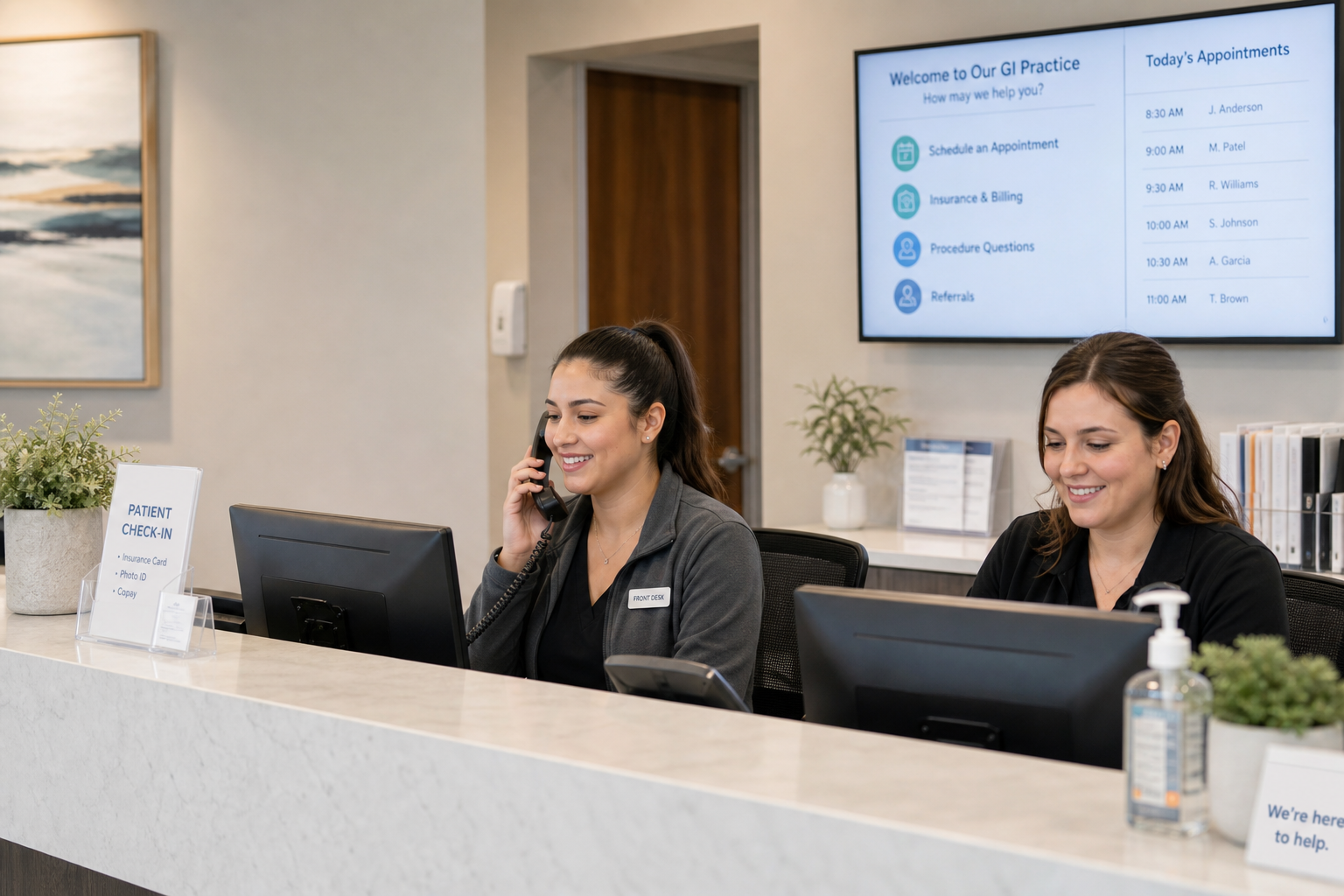
Compare 4 voice AI vendors for GI practices on colonoscopy scheduling, benefits verification, and prior auth calls. See which ones stop at booking.

Compare 5 AI voice agents for ENT and allergy practices. See which handle scheduling and the payer calls for prior auth and benefits checks.

Best AI agents for orthopedic practices compared on prior auth, outbound payer calling, and billing. Only 1 vendor resolves 60%+ of calls end-to-end.


