




Best Voice AI for Gastroenterology Practices: 4 Options Compared (2026)
Compare 4 voice AI vendors for GI practices on colonoscopy scheduling, benefits verification, and prior auth calls. See which ones stop at booking.

Navigating the world of healthcare billing is complex. At the heart of a healthy revenue cycle is one crucial, often underestimated step: insurance verification. When done poorly, it leads to denied claims, frustrated patients, and a cash flow crunch. When done well, it sets the stage for smooth, predictable revenue. This is where many practices are turning to a powerful solution: insurance verification outsourcing.
Insurance verification outsourcing is the process of hiring a third-party company to handle the task of confirming patients’ insurance coverage and benefits for you. Instead of your in-house staff spending hours on the phone or navigating clunky insurer websites, a dedicated team of specialists takes over. They confirm active policies, check copays and deductibles, and identify any pre-authorization requirements before a patient’s visit. This approach is gaining popularity as healthcare providers look for ways to boost efficiency and focus on what matters most: patient care.
This guide breaks down everything you need to know, from the core benefits to the advanced strategies that can transform your practice’s financial health. The data tells the story: eligibility errors are responsible for about 15 to 20% of all claim denials, a massive and preventable revenue leak. By partnering with an expert service, you can proactively catch these issues. One study even found that switching to an experienced outsourcing provider can cut eligibility-related claim denials by over 30%.
For practices that handle verification internally, the challenges are all too familiar. The process is often a manual, time-consuming grind that pulls staff away from patient-facing duties.
The main problems include:
Massive Time Sink: Staff members often spend long periods on hold with insurance companies. A single phone verification can easily take 15 to 30 minutes per patient. This is valuable time that could be spent scheduling appointments or helping patients at the front desk.
High Risk of Human Error: When staff are rushed, small mistakes happen. A typo in a policy number or a transposed digit in a date of birth can lead to a failed verification and a denied claim down the line. In fact, inaccuracies in patient demographic or insurance data contribute to more than a quarter of all claim denials.
Keeping Up is Impossible: With thousands of different insurance plans, each with its own unique rules and coverage details, it’s a full-time job just to stay current. It’s no surprise that 74% of medical practices reported a recent increase in claim denials, citing eligibility issues as a primary cause.
Staff Burnout: The repetitive, detail-oriented nature of this work can lead to employee burnout and high turnover, creating even more instability in your front office operations.
Deciding between keeping verification in-house or opting for insurance verification outsourcing comes down to a trade-off between direct control and specialized efficiency.
Feature | In-House Verification | Outsourced Verification |
|---|---|---|
Control | Full, direct oversight of the process and staff. | Less direct oversight, relies on a partnership. |
Cost Structure | Fixed costs (salary, benefits, training). | Variable costs (often per verification or a flat monthly fee). |
Expertise | Dependent on your staff’s training and experience. | Access to a dedicated team of insurance specialists. |
Efficiency | Can be slow and manual, subject to staff availability. | Highly efficient, often using automation and scalable teams. |
Scalability | Difficult to scale; requires hiring more staff. | Easy to scale up or down with patient volume. |
The cost difference is a major factor. A full-time insurance coordinator could cost your practice around $3,600 per month in wages and benefits. In contrast, many outsourcing providers charge on a per-verification basis, often in the range of $6.50 to $8.25 for a standard check. This model converts a fixed salary into a variable cost that directly aligns with your patient load.
Making the switch to insurance verification outsourcing can deliver significant, measurable benefits for your practice.
Fewer Denials and More Revenue: This is the biggest win. Expert teams catch eligibility issues upfront, which can cut related claim denials by more than 30%. Fewer denials mean more claims get paid on the first try, stabilizing your revenue.
Improved Cash Flow: Clean claims get paid faster. A denied claim can add weeks or even months to the reimbursement cycle. Outsourcing helps you get it right the first time, keeping cash flowing smoothly.
Lower Operational Costs: Outsourcing converts the fixed costs of an employee (salary, benefits, training) into a more manageable variable expense. Some providers report saving 30% to 50% on verification labor costs by partnering with a specialized firm.
Access to Expertise and Technology: Verification vendors are specialists. They often maintain accuracy rates above 99% and use advanced tools, including AI and real-time integrations, to get the job done quickly and precisely.
Happier Staff and Patients: Offloading this tedious task frees your staff to focus on patients. This reduces stress and improves the patient experience. When benefits are verified ahead of time, you can clearly communicate costs to patients, building trust and eliminating surprise bills. This transparency can even lead to patients paying their portion up to 30% faster.
Insurance verification isn’t just a front-desk task; it’s the foundational first step of a healthy revenue cycle management (RCM) process. Getting it right prevents a cascade of problems later on.
A strong verification process directly prevents claim denials. Nearly 20% of medical claims are denied or delayed on the first submission, and providers often fail to recover payment on about 65% of denied claims. Many of these denials are due to simple eligibility errors that could have been caught upfront.
Furthermore, every denial costs money to fix. Reworking a single denied claim costs an average of $25 in administrative time. This wasted overhead adds up quickly. By ensuring claims are clean from the start, you protect your revenue, shorten your accounts receivable (A/R) cycle, and improve your practice’s overall financial performance.
Closely related to verification is prior authorization management. This is the process of getting pre-approval from an insurer for specific services, like an MRI or a surgical procedure. Even if a patient’s policy is active, the service might not be covered without this step.
Managing prior authorizations is a huge administrative burden. Physicians report spending nearly two business days a week on these tasks, and a staggering 94% say that the process leads to delays in patient care. Failing to secure a required prior authorization almost guarantees a claim denial.
Effective management involves identifying which services need approval, submitting the required clinical documentation, and diligently following up until an authorization number is secured. Because it’s so time-consuming, many practices that use insurance verification outsourcing also look for partners who can handle prior authorization management.
Technology is transforming the slow, manual verification process into a fast, automated workflow.
Instead of having a human sit on hold, automation and artificial intelligence (AI) can handle the repetitive work. AI-powered voice bots can now call insurance companies, navigate their phone systems, and retrieve benefit information 24/7. This dramatically reduces the manual workload on your staff. For a deeper dive, see our complete guide to AI voice agents for healthcare. For example, the AI agent used by Prosper AI can connect to thousands of payers to automate eligibility and even prior authorization status checks, saving practices countless hours.
The benefits are clear:
Speed: An electronic query takes seconds, not the 20 minutes a phone call might.
Accuracy: Automation eliminates typos and other human errors.
Scalability: An AI system can verify 1,000 patients as easily as it can 10.
Real-time eligibility validation is the ability to check a patient’s insurance coverage instantly through an electronic transaction. This is typically done using the HIPAA standard 270/271 transaction. Your system sends a “270” inquiry, and the payer’s system sends a “271” response back with the patient’s coverage details, all within about 5 to 10 seconds.
This allows your staff to confirm coverage right when a patient schedules an appointment or checks in at the front desk. It’s a fast and efficient way to catch major issues like an inactive policy on the spot.
Choosing to outsource is the first step. Setting up the partnership for success is what comes next.
Not all vendors are created equal. Look for a partner with:
Proven Experience: They should have a solid track record in healthcare and understand the nuances of different medical specialties.
Advanced Technology: Do they use automation, AI, and EHR integration to work efficiently? A top-tier provider should offer real-time tools that can auto-populate data into your system. Explore how it works with Prosper AI.
High Accuracy: Ask about their quality assurance process and their accuracy rate. A good partner will commit to 98% or higher accuracy.
HIPAA Compliance: This is non-negotiable. They must sign a Business Associate Agreement (BAA) and have strict data security protocols.
Scalability: The provider should be able to grow with your practice and handle increases in patient volume without a drop in quality.
Transparent Cost: Understand their pricing model (e.g., per verification or a flat rate) and what it includes. The cheapest option isn’t always the best value.
To get the most out of your partnership, follow these best practices:
Verify Early: Don’t wait until the day of the appointment. Verify insurance at least 72 hours in advance to leave time to resolve any issues. Pair early verification with appointment reminders to reduce no-shows.
Collect Complete Info: Ensure your front desk captures accurate patient and insurance details. A simple typo can cause a denial.
Communicate with Patients: Use the verified information to inform patients about their expected out-of-pocket costs before their visit.
Demand Detailed Verification: Make sure your partner is checking more than just active status. They should confirm service-specific benefits, deductibles, and authorization needs.
Integrate Your Workflow: Use a provider that can integrate with your EHR or Practice Management system to create a seamless flow of information.
Establish Clear SLAs: Set up Service Level Agreements (SLAs) for things like turnaround time and accuracy to ensure everyone is on the same page.
Timing is everything. The industry best practice is the “72-hour rule”, which means verifying a patient’s benefits about 3 days before their scheduled visit. This provides a crucial buffer to handle any problems, such as an inactive policy or a newly discovered prior authorization requirement. Verifying too far in advance can be risky, as coverage can change, while waiting until the last minute leaves no time to fix problems.
A successful outsourcing relationship is built on a clear process and well-defined Service Level Agreements (SLAs). You should map out the entire workflow: how patient schedules are sent, how results are returned (ideally, directly into your EHR), and what to do when issues arise.
SLAs are the measurable performance targets your vendor agrees to meet. This includes metrics like:
Turnaround Time: e.g., “100% of patients verified 24 hours before their appointment.”
Accuracy Rate: e.g., “Maintain a 99% accuracy rate on all verified benefits.”
Completion Rate: e.g., “Successfully verify 98% of all scheduled patients.”
These agreements ensure accountability and provide a clear benchmark for measuring success.
You can’t improve what you don’t measure. Regularly monitor Key Performance Indicators (KPIs) to track the effectiveness of your insurance verification outsourcing.
Key KPIs include:
Claim Denial Rate: Specifically, track denials related to eligibility. This is the ultimate measure of success. Top performers aim for a denial rate in the single digits.
Verification Turnaround Time: Are verifications being completed within the agreed-upon SLA?
Verification Accuracy Rate: Spot-check verifications or track errors identified after the fact to ensure high-quality work.
Patient Upfront Collections: An increase in collections at the time of service often indicates that patients are being better informed about their financial responsibility.
Beyond the process, there are several foundational elements to consider.
Patient data is sensitive. Any partner you work with must be fully HIPAA-compliant. This means they must sign a Business Associate Agreement (BAA), use encrypted methods for all data transmission, and have strict security protocols in place. For a practical checklist, review our HIPAA-compliant AI guide for healthcare. A single data breach can result in massive fines and a devastating loss of patient trust. A reputable vendor will be proactive about demonstrating their security measures.
There are two levels of verification:
Basic Verification: This confirms the fundamentals: Is the policy active? What is the copay and general deductible? This can often be done quickly with an electronic, real-time check.
Advanced Verification: This is a deeper dive into the plan’s specifics. It answers questions about coverage for particular procedures, visit limits, frequency rules, and waiting periods. This level of detail is crucial for surgeries, specialized treatments, and dental procedures. Failing to perform an advanced verification when needed is a common cause of denials.
For maximum efficiency, your verification process should be integrated with your Practice Management (PM) system or Electronic Health Record (EHR). Integration streamlines the workflow by allowing information to flow automatically between systems. See how Prosper AI handles EHR and PM integrations. Staff can run a verification check from within the patient’s chart, and the results can auto-populate the relevant fields. This saves time, reduces manual data entry, and minimizes errors.
Dental insurance verification outsourcing is a rapidly growing niche, and for good reason. See how Prosper AI supports dental practices with specialized verification workflows. Dental plans are notoriously complex, with details like annual maximums, waiting periods, frequency limitations, and missing tooth clauses that can easily trip up a busy front-desk team.
An outsourced dental verification specialist knows exactly what to look for. They perform an advanced verification to get a full “breakdown of benefits”, confirming coverage percentages for preventive, basic, and major services. Studies show that nearly 30% of dental claims are denied due to eligibility issues. A specialized outsourcing partner can dramatically reduce that number, ensuring your practice creates accurate treatment plans and collects the correct patient portion every time. By handing this complex task to experts, your team can deliver a better patient experience and protect your revenue.
Tired of claim denials and administrative headaches? Shifting to insurance verification outsourcing is a strategic move that can reduce costs, boost revenue, and free your team to focus on patient care. By leveraging specialized expertise and technology, you can build a more resilient and efficient revenue cycle.
Ready to see how an AI-powered approach can transform your verification process? Explore the solutions at Prosper AI and get started today.
1. What does insurance verification outsourcing cost?
The cost varies, but it’s often more affordable than a full-time employee. Many companies charge a per-verification fee, typically from $6 to $12, while others may offer a flat monthly rate based on patient volume. This turns a fixed salary into a predictable, variable expense.
2. How does outsourcing improve the patient experience?
By verifying benefits 2 to 3 days before an appointment, you can inform patients of their estimated out-of-pocket costs upfront. This transparency eliminates surprise bills, builds trust, and allows patients to financially prepare for their care, leading to higher satisfaction.
3. Is outsourcing insurance verification secure?
Yes, provided you choose a reputable, HIPAA-compliant partner. A trustworthy vendor will sign a Business Associate Agreement (BAA) and use robust security measures like data encryption and secure networks to protect all patient information.
4. What is the difference between eligibility and prior authorization?
Eligibility verification confirms that a patient has an active insurance policy. Prior authorization is a separate step where the insurance company must approve a specific service (like a surgery or MRI) before it is performed to confirm it will be covered. Both are critical for preventing denials.
5. Can small practices benefit from insurance verification outsourcing?
Absolutely. Small practices often have limited administrative staff who are stretched thin. Outsourcing allows them to access specialized expertise and efficiency without the cost of hiring a dedicated insurance coordinator, leveling the playing field and protecting their revenue.
Discover how healthcare teams are transforming patient access with Prosper.
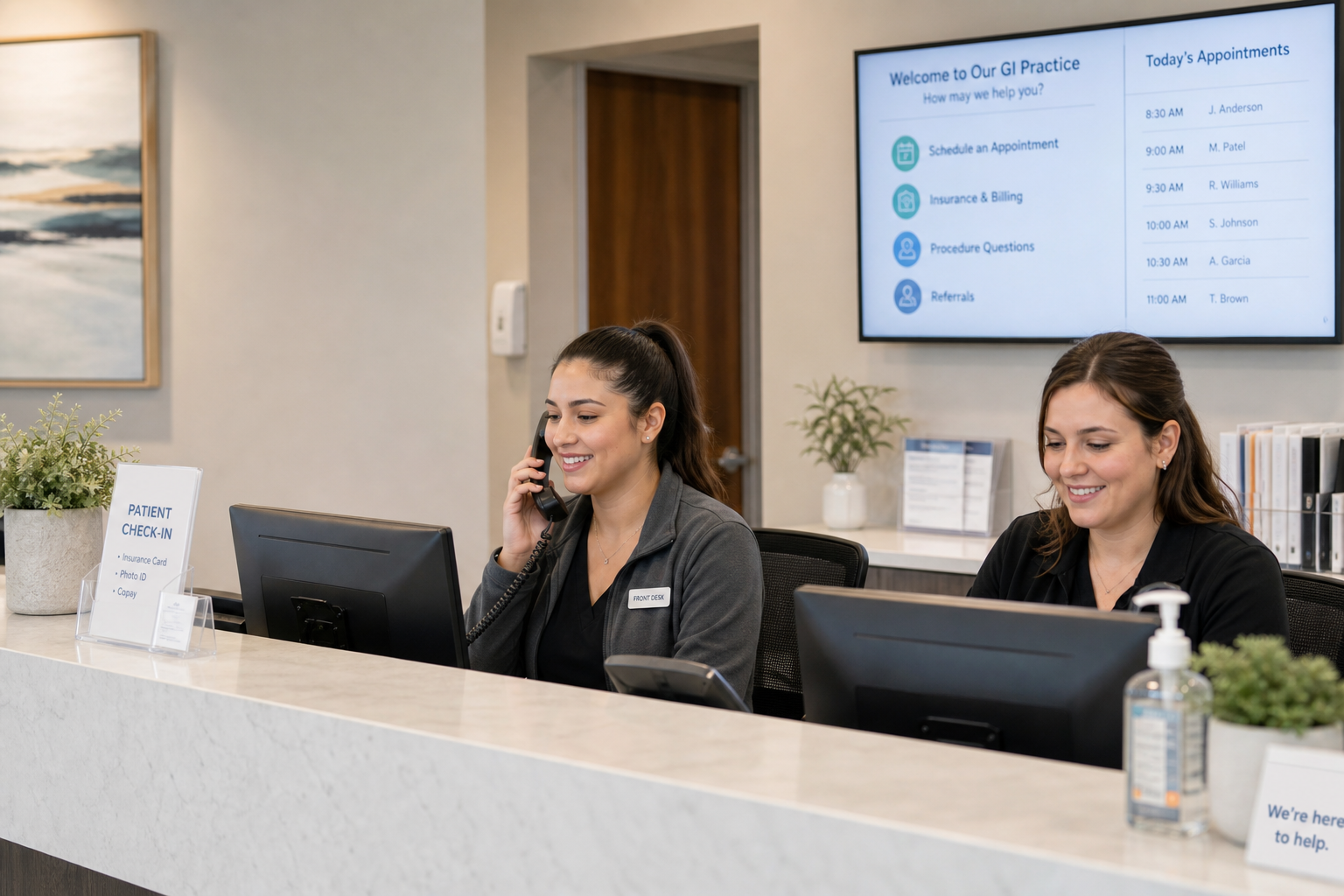
Compare 4 voice AI vendors for GI practices on colonoscopy scheduling, benefits verification, and prior auth calls. See which ones stop at booking.

Compare 5 AI voice agents for ENT and allergy practices. See which handle scheduling and the payer calls for prior auth and benefits checks.

Best AI agents for orthopedic practices compared on prior auth, outbound payer calling, and billing. Only 1 vendor resolves 60%+ of calls end-to-end.


