




AI Voice-Enabled Patient Engagement: What Specialty Practices Should Expect in 2026
AI voice-enabled patient engagement now covers scheduling, benefits verification, prior auth, and billing calls in one system. See what to evaluate be

We have all been there. You call your doctor’s office and are immediately met with a confusing phone menu, followed by what feels like an eternity on hold. It is a frustrating experience that has become all too common in healthcare. But what if there was a better way? The good news is that artificial intelligence in call centers is transforming this outdated process, making healthcare access faster, smarter, and more patient friendly.
From scheduling appointments at midnight to getting instant answers about a bill, AI is stepping in to handle the repetitive tasks that bog down healthcare staff. This guide explores how artificial intelligence in call centers is not just a futuristic concept but a practical solution being implemented today. We will cover everything from improving the patient experience and streamlining billing to ensuring every interaction is secure and compliant.
The first point of contact a patient has with a provider is often through a phone call. Making that experience smooth and efficient is critical. This is where voice AI for patient access truly shines, moving beyond clunky, traditional systems.
Imagine a world with zero hold times. A voice AI agent makes this possible by answering every call immediately, 24/7. This is more than a convenience, it is a necessity. A significant portion of patient calls happen outside of typical 9 to 5 business hours, and studies show two thirds of patients will not wait on hold longer than two minutes. An AI powered 24/7 patient support agent ensures no call is missed and every patient is greeted and helped instantly.
For providers like those using Prosper AI, this means capturing inquiries that might otherwise be lost. Whether a patient calls at 2 PM or 2 AM to schedule an appointment, the AI is there to assist, dramatically improving patient satisfaction and reducing call abandonment.
Traditional Interactive Voice Response (IVR) systems, with their rigid “press one for this, press two for that” menus, are a major source of patient frustration. IVR replacement with conversational AI is a game changer. Instead of navigating a confusing phone tree, a patient can simply state their needs in natural language, like “I need to reschedule my appointment for next Tuesday.”
The goal is to increase call containment, which is the percentage of calls fully resolved by the automated system without needing a human. Advanced AI can boost containment rates from less than 30% with old IVRs to over 50%, handling tasks from start to finish. This means fewer transfers, less frustration, and a much better first impression.
Did you know that as many as 88% of healthcare appointments are still scheduled over the phone? This massive volume puts a huge strain on front desk staff. Appointment scheduling automation using artificial intelligence in call centers offloads this burden. An AI agent can interact with patients, find open slots in the EHR, and confirm bookings in real time.
Automated reminder calls and texts are also incredibly effective. Practices using them report an average 30% reduction in costly no shows, which cost the U.S. healthcare system around $150 billion each year.
Modern patient communication is not just about phone calls. An omnichannel strategy integrates voice, text messages, email, and web chat into a single, seamless experience. A patient might receive a reminder via text, confirm by replying “C”, and later call to ask a question, with all interactions connected.
This flexibility is what patients now expect. Text messages, for example, have a nearly 98% open rate, making them perfect for reminders and quick confirmations. By using different channels for different purposes, providers can dramatically increase engagement and ensure important information is always received. This is a core part of how modern artificial intelligence in call centers operates.
Beyond the front desk, artificial intelligence in call centers is making a massive impact on the complex world of healthcare billing and insurance, known as the revenue cycle. AI agents can take on the time consuming, repetitive calls to insurance companies, freeing up staff and accelerating cash flow.
Confirming a patient’s insurance coverage before a visit is critical to avoiding claim denials, but it can involve long hold times with payers. Insurance eligibility verification automation tasks an AI agent to make these calls. The AI can navigate the payer’s phone system, wait on hold, and speak with a representative to capture dozens of data points, like copays and deductibles. This proactive verification reduces errors and ensures patients are not surprised by bills. 68% of providers say inaccurate or incomplete patient data at intake drives denials.
Prior authorization is one of the biggest administrative headaches in healthcare, with physicians spending an average of 14 hours per week on it. Automating the follow up process is a huge relief. After a request is submitted, an AI agent can persistently call the insurance company to check the status, find out if more information is needed, and capture the authorization number once it is approved. This relentless follow up can shorten approval times from days to hours, preventing care delays for patients.
What happens after a claim is submitted? Often, staff have to manually call payers to check if a claim has been paid, is pending, or has been denied. Claims status check automation lets an AI handle this tedious work. The system can systematically follow up on all unpaid claims, ensuring nothing falls through the cracks. Considering that over half of denied claims are never reworked, this automation can recover significant revenue that would otherwise be lost.
Introducing artificial intelligence in call centers, especially in healthcare, requires an unwavering commitment to security and patient privacy. Every piece of technology must be built on a foundation of trust, transparency, and strict adherence to regulations.
Any AI system that handles patient information must be fully HIPAA compliant. This means implementing robust technical, physical, and administrative safeguards to protect Protected Health Information (PHI).
A critical component of this is the Business Associate Agreement (BAA), a legal contract required by HIPAA when a healthcare provider shares PHI with a vendor. This agreement ensures the AI provider is legally obligated to protect patient data to the same standard as the provider.
For further assurance, many healthcare organizations now require vendors to have SOC 2 Type II compliance. This is an independent audit that verifies a company’s security controls over an extended period, demonstrating a mature and consistent approach to data protection. When evaluating a solution, you should look for both a signed BAA and a recent SOC 2 report.
Two powerful techniques for protecting data are encryption and zero retention.
Data Encryption: This process converts data into a secure code, both when it is traveling over a network (in transit) and when it is stored (at rest). Using strong standards like AES 256 encryption is a must.
Zero Retention: This policy means the system does not store sensitive data after it has been processed. For instance, an AI might process a call transcript to complete a task and then immediately delete it from its servers. This minimizes risk, because data that is not stored cannot be breached.
Platforms like Prosper AI are built with these principles, offering end to end encryption and a zero day retention policy for PHI processed by their AI models.
Strong governance is essential. Role Based Access Control (RBAC) ensures that users can only access the minimum information necessary for their jobs. A scheduling agent, for example, should not be able to view a patient’s full clinical history.
Audit logging complements this by creating a detailed record of who accessed what data and when. This creates an accountability trail that is crucial for security investigations and HIPAA compliance. Other privacy preserving techniques, like data anonymization and federated learning, allow AI models to improve without ever exposing raw patient data.
Trust is built on transparency. It is a best practice to inform patients when they are interacting with an automated system. A simple introduction, such as, “Hello, this is Anna, the automated assistant from Dr. Smith’s office,” sets clear expectations.
Consent is also key, especially for call recording. Many states require two party consent, meaning you must inform the caller that the conversation may be recorded. A well designed AI system will include these disclosures in its script to ensure legal and ethical compliance.
Deploying artificial intelligence in call centers successfully is about more than just technology. It requires careful planning, deep integration with existing systems, and a clear way to measure success.
For an AI to be truly effective, it cannot work in a silo. Deep integration with Electronic Health Record (EHR) and Practice Management (PMS) systems is vital. When an AI schedules an appointment, that booking should appear in the provider’s EHR schedule instantly, just as if a human receptionist had done it. Without this connection, staff would have to manually transfer data, defeating the purpose of automation. Leading AI vendors offer dozens of native integrations with major platforms like Epic, Cerner, and athenahealth.
A successful AI deployment follows a clear strategy:
Start Small: Begin by automating high volume, repetitive call types to demonstrate quick wins.
Involve Stakeholders: Create a governance team with members from IT, compliance, and operations.
Train and Test: Thoroughly test the AI in a controlled environment before it goes live with patients.
Measure and Iterate: Continuously track performance and make adjustments based on data and feedback.
To understand the impact of artificial intelligence in call centers, you need to track Key Performance Indicators (KPIs). Important metrics include:
Containment Rate: The percentage of calls fully handled by the AI.
Call Abandonment Rate: The percentage of callers who hang up before being helped. AI can drastically lower this from the industry average of 8.9% (US contact centers, 2024 average).
First Call Resolution (FCR): The rate at which an issue is solved on the first call.
Patient Satisfaction (CSAT): Surveys to ensure the AI is providing a positive experience.
By tracking these KPIs, organizations can quantify the value of their investment and identify areas for improvement. Ready to see what these improvements could look like for your practice? Request a demo to learn more.
1. How does artificial intelligence in call centers improve the patient experience?
AI improves the patient experience primarily by eliminating wait times, providing 24/7 availability for tasks like scheduling, and offering a more efficient, conversational alternative to confusing IVR menus. This leads to less frustration and faster resolutions for patients.
2. Can AI voice agents handle complex healthcare conversations?
AI is best suited for structured, high volume tasks like appointment scheduling, reminders, insurance verification, and answering frequently asked questions. For complex clinical questions or emotionally sensitive situations, a well designed AI system is programmed to seamlessly transfer the call to a human agent.
3. Is using artificial intelligence in call centers secure and HIPAA compliant?
Yes, provided you partner with a reputable vendor. A HIPAA compliant AI solution will include end to end encryption, sign a Business Associate Agreement (BAA), undergo third party security audits like SOC 2, and follow principles like data minimization and zero retention to protect patient information.
4. How difficult is it to integrate an AI call center solution with our existing EHR?
Leading AI platforms are designed for integration. Companies like Prosper AI offer over 80 native integrations with major EHR and practice management systems. A typical integration project can be completed in a few weeks, allowing the AI to read and write information directly into your existing workflows.
5. Will AI replace our human call center staff?
The goal of artificial intelligence in call centers is not to replace staff but to augment them. By automating repetitive, administrative calls, AI frees up human agents to focus on more complex, high value interactions that require empathy and critical thinking. This often leads to higher staff morale and reduced burnout.
Discover how healthcare teams are transforming patient access with Prosper.
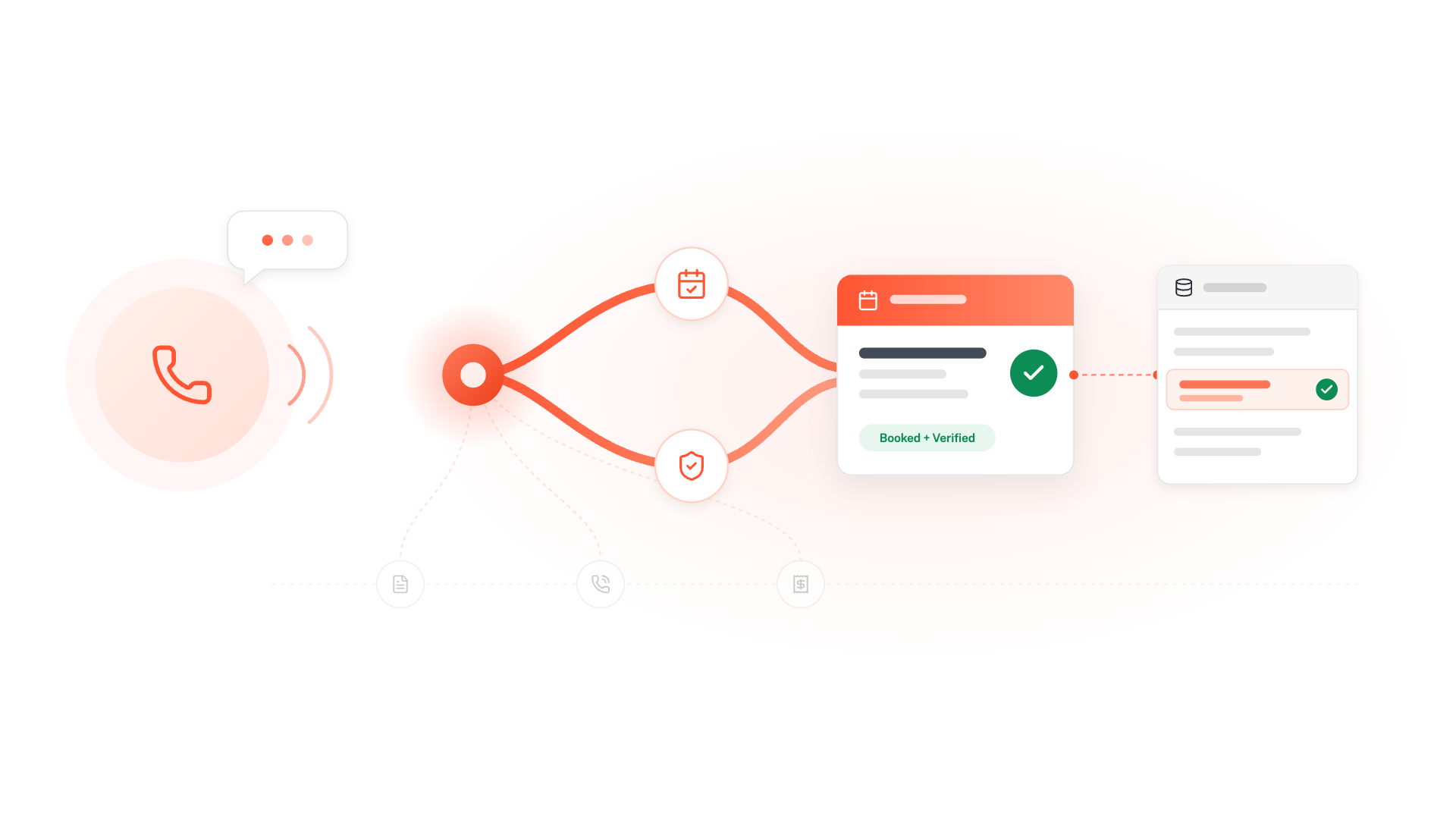
AI voice-enabled patient engagement now covers scheduling, benefits verification, prior auth, and billing calls in one system. See what to evaluate be

Compare 4 voice AI vendors for GI practices on colonoscopy scheduling, benefits verification, and prior auth calls. See which ones stop at booking.

Compare 5 AI voice agents for ENT and allergy practices. See which handle scheduling and the payer calls for prior auth and benefits checks.


