




AI Voice-Enabled Patient Engagement: What Specialty Practices Should Expect in 2026
AI voice-enabled patient engagement now covers scheduling, benefits verification, prior auth, and billing calls in one system. See what to evaluate be

The term “prior authorization” is enough to make any healthcare administrator or clinician sigh. It’s a process that began as a safeguard for expensive procedures but has since ballooned into a daily administrative grind. A prior authorization workflow is the complete sequence of steps a provider’s office follows to get this approval from an insurer—from discovering a service needs authorization to submitting documentation and managing the final decision. A manual workflow is notorious for causing care delays, frustrating patients, and contributing significantly to provider burnout. In fact, an overwhelming 94% of physicians report that prior authorization delays patient care.
But what if your prior authorization workflow could be less of a bottleneck and more of a smooth, efficient process?
This guide breaks down every component of a modern, intelligent prior authorization workflow. We will explore how to move from frustrating manual tasks to a streamlined, automated system that saves time, reduces denials, and gets patients the care they need, faster.
Before diving into the solution, let’s quickly define the problem. A traditional prior authorization workflow involves a series of manual steps: a staff member realizes a service needs approval, gathers paper or digital records, fills out forms on a payer portal (or worse, faxes them), makes phone calls to check the status, and then acts on the decision.
This isn’t just inefficient, it’s incredibly costly. Medical practices in the U.S. handle an average of 39 prior authorization requests per physician every week, which eats up nearly 13 hours of staff time. It is no wonder 40% of physicians have staff who work exclusively on prior authorizations. This is time and talent that could be focused on patient care. The goal is to evolve this process into an automated prior authorization workflow.
A modern workflow isn’t just about doing the same steps faster; it’s about making each step smarter. It is a strategic sequence that begins long before a request is ever submitted.
Getting prior authorization right starts with a strong operational and technical foundation. Rushing this stage is like building a house on sand.
Readiness Assessment: Before you can improve, you must understand your starting point. A readiness assessment evaluates your current processes, technology, and team capabilities. It involves mapping your existing prior authorization workflow, tracking key metrics, and identifying your biggest pain points.
Data Quality and EMPI: Automation runs on data. If your data is messy, your results will be too. Ensuring high data quality means patient information is accurate, complete, and consistent. A critical component is an Enterprise Master Patient Index (EMPI), a system that ensures each patient has a single, unique identifier across all your systems, preventing duplicate records and fragmented information. Inaccurate patient or eligibility data is a leading cause of denials, with some studies showing it accounts for up to 27% of them.
Terminology Alignment (SNOMED CT, LOINC, RxNorm): Your system and the payer’s system need to speak the same language. Terminology alignment involves using standardized coding systems like SNOMED CT for clinical terms, LOINC for lab tests, and RxNorm for medications. This ensures that when your EHR sends data, the payer’s system can interpret it automatically and accurately.
HIPAA Compliance and Audit Logging: Patient privacy is non negotiable. Any system or prior authorization workflow must be fully HIPAA compliant, protecting patient health information. This includes securing data and maintaining detailed audit logs that track who accessed information and when, which is a core requirement of the HIPAA Security Rule.
With a solid foundation, you can begin the process for a specific patient order with confidence.
Detect Requirement at Order Entry: The ideal time to know if a prior authorization is needed is the exact moment a clinician places an order in the EHR. Modern systems can provide this real time alert, preventing downstream delays.
FHIR API Prerequisites (CRD, DTR, PAS): This real time check is made possible by emerging technical standards. The key FHIR API prerequisites are Coverage Requirements Discovery (CRD) to ask if auth is needed, Documentation Templates and Rules (DTR) to specify what info is required, and Prior Authorization Support (PAS) to submit the request electronically. Pair these standards with robust EHR and payer integrations to enable end‑to‑end electronic submission and status updates.
Eligibility Check: Before investing time in a request, it’s vital to perform an eligibility and benefits verification. This confirms the patient’s insurance is active and the specific service is a covered benefit, preventing wasted effort on a request that would be denied for basic coverage issues.
Policy Requirement Discovery: Once you know an auth is required, the next step is to understand the payer’s specific rules. Policy requirement discovery involves researching the clinical criteria and documentation the insurer needs to see for an approval.
This is where you gather everything needed to prove medical necessity and submit a complete, approvable request.
Evidence Collection from EHR or HIE: This step involves gathering all relevant clinical documentation from the patient’s Electronic Health Record (EHR) or a Health Information Exchange (HIE). This can include notes, lab results, and imaging reports that justify the service.
NLP Data Extraction: A lot of crucial information is often buried in unstructured text like a clinician’s notes. Natural Language Processing (NLP) is an AI technique that can automatically read this text and extract key data points, like symptom duration or past treatments, saving hours of manual chart review.
Data Normalization and Validation: The collected data is then cleaned and standardized. Data normalization converts information into the formats payers expect (like mapping a diagnosis to a specific ICD 10 code), while validation checks that all required fields are complete and accurate.
Close Data Gap Tasking: After an initial review, you may find information is missing. The process of closing data gaps involves creating and assigning tasks to the right person or system to obtain that missing piece, like a lab result or a specialist’s note, before submission.
Clinical Rationale Drafting: For complex cases, a well written clinical rationale or letter of medical necessity can be the deciding factor. This is the narrative, often drafted by a clinician, that explains the patient’s story and justifies why the requested service is medically necessary.
Attachment Gathering and Labeling: Finally, all supporting documents are collected and clearly labeled. Whether you are uploading to a portal or, as is still common for 45% of prior authorizations for medical services are still done via fax, proper labeling helps the payer’s reviewer quickly find the information they need.
Before the request leaves your system, a few final quality checks ensure the highest chance of a first pass approval.
Pre submission Clinical Decision Support Validation: This step uses clinical decision support (CDS) tools to check the request against established medical guidelines (like MCG or InterQual). It’s like an internal mock review to see if the request is clinically sound before the payer even sees it.
Preflight Policy Check: This is one last review to ensure everything in the packet aligns with the payer’s known policies. It is a final check to confirm all required criteria are addressed and all documents are attached. For a deeper dive into common risks, rules, and ROI considerations, see AI prior authorization: risks, rules, and ROI.
RPA or API Submission and Status Tracking: Now it’s time to send the request. This can be done through an insurer’s web portal or via a direct Application Programming Interface (API). Robotic Process Automation (RPA) bots can automate portal submissions by mimicking human clicks, while APIs offer a more robust, direct machine to machine connection.
Once submitted, the work isn’t over. Proactive follow up is key to preventing requests from falling into a black hole.
Status Monitoring and Follow Up: This involves continuously checking on the status of the request. Staff can spend an enormous amount of time on hold with payers just to get an update. In some practices, this can add up to about four hours a day on the phone with insurance companies verifying benefits and obtaining authorizations, with hold times up to 45 minutes per call.
Voice AI Agent for Payer Calls: This is where technology can make a massive difference. A voice AI agent, like those from Prosper AI, can automatically call payers, navigate their phone systems, wait on hold, and verbally check the status of a request. This frees your staff from hours of frustrating phone calls, allowing them to focus on more complex tasks. A voice AI agent can get updates faster and with 99% accuracy. Interested in eliminating phone hold times forever? You can schedule a demo to see how it works.
The final step in the prior authorization workflow is acting on the payer’s decision.
Decision Handling: If approved, the authorization number is documented and the patient is scheduled. If denied, the reason is analyzed to determine the next steps.
Appeal Preparation: If a denial is unwarranted, the appeal preparation process begins. This involves gathering additional evidence, writing a formal appeal letter, and submitting it according to the payer’s guidelines. Success rates on appeal can be high, with some studies showing payers overturn their own denials over 50% of the time.
Writeback to EHR and Notification: Whatever the outcome, the result must be recorded back into the EHR. This “writeback” ensures the authorization number is available for billing and that everyone on the care team is notified of the outcome so they can take the appropriate next action.
A truly modern prior authorization workflow is not just a series of steps; it is an intelligent, interconnected system designed for continuous improvement.
Routing and Orchestration Hub: This is a central system that acts as an air traffic controller, routing tasks to the right person or bot and orchestrating the entire workflow from start to finish.
EHR and Payer Integration: The ultimate goal is seamless EHR and payer integration, where data flows electronically between systems without manual intervention. This eliminates redundant data entry and dramatically speeds up communication. Explore voice‑agent use cases across benefits verification, prior authorizations, and claims.
Specialty Specific Workflows: The needs of an oncology practice are very different from those of a radiology group. Effective optimization involves creating specialty specific workflows tailored to the unique requirements and high volume procedures of different medical fields.
Exception Handling and Human in the Loop: Automation is powerful, but it can’t handle everything. A smart system includes exception handling, which flags complex or unusual cases for a human to review. This “human in the loop” approach combines the efficiency of AI with the critical judgment of experienced staff.
Continuous Learning and Improvement: Your workflow should get smarter over time. This involves analyzing outcomes and feedback to refine processes and improve AI models.
KPI Tracking: You can’t improve what you don’t measure. Tracking Key Performance Indicators (KPIs) like turnaround time, denial rate, automation rate, and staff hours saved provides the data needed to prove ROI and guide future improvements. See real‑world results in our case studies.
By rethinking the entire prior authorization workflow, healthcare organizations can turn one of their biggest administrative burdens into a strategic advantage. An automated, intelligent process means clinicians can practice at the top of their license, administrators can focus on growth, and patients can get the care they need without unnecessary and stressful delays.
If you are ready to transform your prior authorization workflow, see how Prosper AI works and how voice AI can handle the administrative burden for you.
A prior authorization workflow is the sequence of steps a healthcare provider takes to get approval from a patient’s insurance company before a specific medication, service, or procedure is delivered. It typically includes verifying requirements, collecting clinical evidence, submitting a request, and managing the payer’s decision.
Automating the prior authorization workflow provides significant benefits, including faster approval times, lower administrative costs, reduced staff burnout, and fewer care delays for patients. It also lowers denial rates by ensuring requests are complete and accurate.
The time can vary widely. While, for many ACA-regulated plans, payers must decide urgent care claims in no more than 72 hours and pre-service (prior authorization) claims within 15 calendar days, the entire process, including preparation and follow up, can take several days or even weeks in a manual system. Automation can reduce this to hours or even minutes for some requests.
For many practices, the most time consuming parts are gathering all the necessary clinical documentation from the EHR and status monitoring. Status checks often involve long hold times on the phone with payers, a task perfectly suited for automation by a voice AI agent.
No, AI is best used to augment, not replace, human staff. AI can handle the repetitive, data driven tasks like making phone calls, extracting information, and submitting forms. This frees up human staff to manage complex exceptions, handle clinical judgments, and focus on patient communication, a model known as “human in the loop.”
Start by mapping your current process and identifying bottlenecks. Then, look for opportunities to automate repetitive tasks. Implementing solutions for real time requirement checks at order entry, automating evidence gathering with NLP, and using voice AI for payer phone calls are powerful ways to create a more efficient and effective prior authorization workflow. For RCM teams and billing outsourcers, review who we serve: medical billing for deployment options tailored to your workflows.
Discover how healthcare teams are transforming patient access with Prosper.
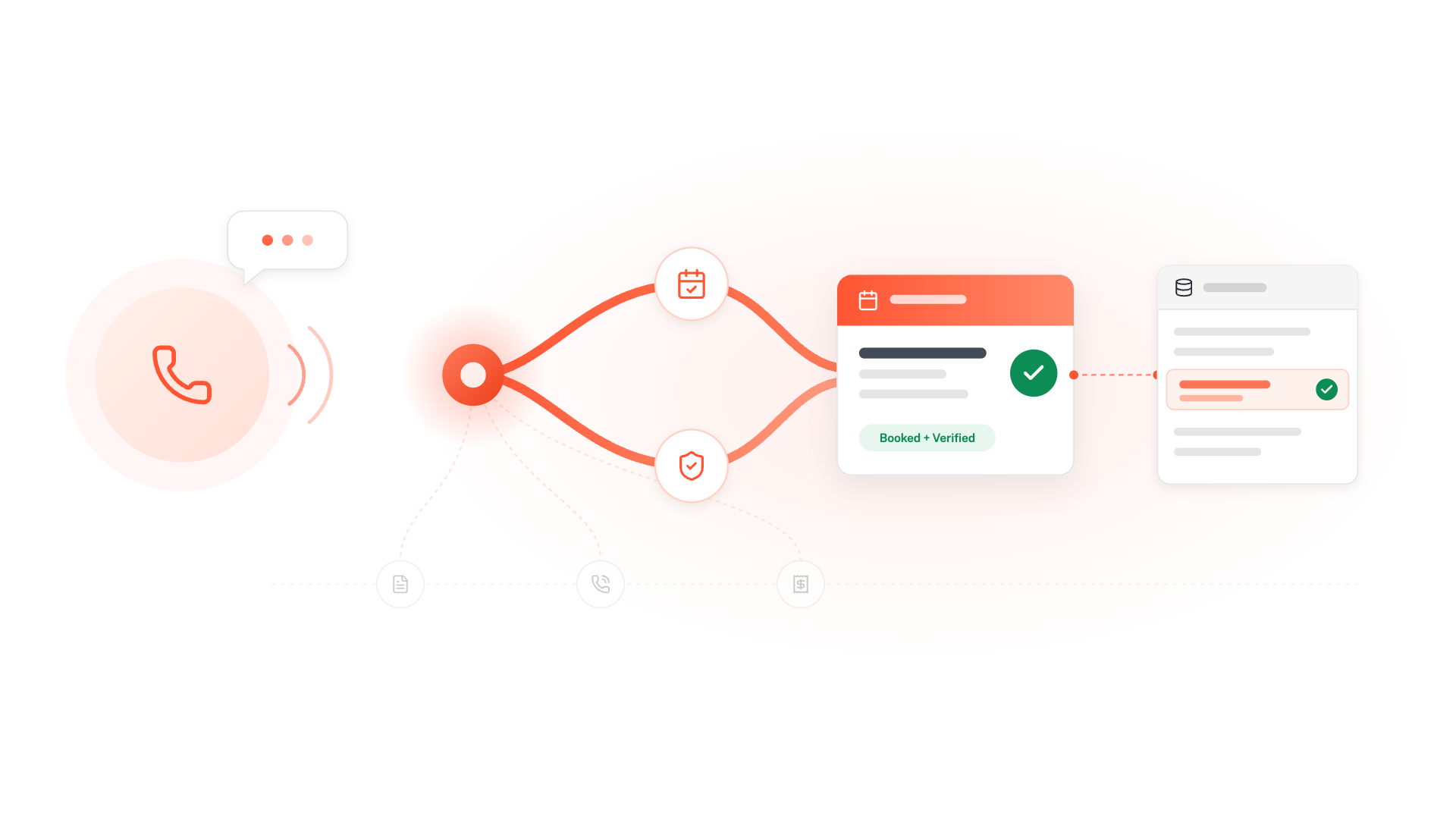
AI voice-enabled patient engagement now covers scheduling, benefits verification, prior auth, and billing calls in one system. See what to evaluate be

Compare 4 voice AI vendors for GI practices on colonoscopy scheduling, benefits verification, and prior auth calls. See which ones stop at booking.

Compare 5 AI voice agents for ENT and allergy practices. See which handle scheduling and the payer calls for prior auth and benefits checks.


