




Best Voice AI for Gastroenterology Practices: 4 Options Compared (2026)
Compare 4 voice AI vendors for GI practices on colonoscopy scheduling, benefits verification, and prior auth calls. See which ones stop at booking.

A patient outreach program is a strategic set of communications designed to proactively engage patients in their healthcare journey. In today’s landscape, a well executed program is more than just good practice; it’s a strategic necessity that can dramatically reduce no shows, improve health outcomes, and boost revenue. The scope is broad, covering everything from appointment reminders to chronic care management and preventative screening alerts.
Historically, these programs relied on manual phone calls and mailers. Today, with staffing shortages and patient expectations on the rise, healthcare organizations are turning to technology to bridge the gap. Modern channels include email, patient portals, and sophisticated AI voice agents that ensure every patient feels connected and cared for without overwhelming administrative teams. This shift allows practices to proactively manage patient relationships, moving from a reactive model to one that builds loyalty and ensures continuity of care.
Voice AI fits perfectly into a modern patient outreach program by automating phone based workflows that are still critical for many patient populations. An AI agent can:
Handle inbound scheduling and billing questions 24/7.
Place outbound calls for appointment reminders or re engagement campaigns.
Follow up with SMS and email to confirm details.
Collect patient feedback after a visit.
This multi channel approach, powered by automation, ensures your patient outreach program is both effective and scalable. For a tactical playbook across phone, SMS, and chat, read our AI‑powered healthcare contact center guide.
Any patient outreach program must be built on a rock solid foundation of compliance. The Health Insurance Portability and Accountability Act (HIPAA) governs how you can use and disclose protected health information (PHI). This means all communication channels, especially those involving third party vendors, must be secure and compliant. For a deeper dive into selecting compliant platforms, see our HIPAA‑compliant voice AI platforms guide.
When using technology for your patient outreach, it’s essential to partner with vendors who understand these regulations. For example, a platform like Prosper AI is designed for healthcare, offering a signed Business Associate Agreement (BAA) and ensuring all communications are encrypted. This commitment extends to emerging technologies, with policies like a zero day retention agreement with OpenAI to protect patient data used in conversational AI.
Beyond basic HIPAA compliance, thorough vendor due diligence is critical for protecting your patients and your organization. When evaluating a technology partner for your patient outreach program, consider the following:
Certifications: Do they have certifications like SOC 2 Type II, which demonstrates a commitment to security and operational excellence?
Data Encryption: Is all data, both in transit and at rest, encrypted using strong standards like AES 256?
Access Controls: Do they support Single Sign On (SSO) with providers like Google, Azure, or Okta to secure user access?
Data Handling: What are their data retention and backup policies? Look for daily backups with at least a 30 day retention period.
Deployment Options: Do they offer flexible deployment, such as secure cloud or on premise options, to meet your IT requirements?
A vendor’s security posture is a direct reflection of their ability to support a compliant and trustworthy patient outreach program.
For a patient outreach program to be truly effective, it must be seamlessly connected to your core systems. Manual data entry and siloed information create inefficiencies and increase the risk of errors. True interoperability means your outreach platform can read from and write back to your Electronic Health Record (EHR), Practice Management (PM), or Customer Relationship Management (CRM) system in real time.
Look for solutions with a broad portfolio of native integrations. Prosper AI, for example, connects with over 80 EHR and PM systems, including Epic, athenahealth, Cerner, and NextGen. This deep integration allows an AI agent to:
Access a patient’s record to confirm their next appointment.
Write back structured notes after a scheduling call.
Update a patient’s contact information automatically.
This level of connectivity makes your patient outreach program an intelligent and automated extension of your clinical and administrative workflows.
Launching a new patient outreach program requires thoughtful implementation and clear governance. Start with a specific, high impact use case, such as automating appointment reminders or tackling a patient scheduling backlog. This allows you to demonstrate value quickly and learn before expanding. Some platforms enable a go live in as little as one to two days with simple data uploads.
Building patient trust is paramount. Be transparent with patients about how you are using technology to communicate with them. Ensure the experience is positive and helpful. For instance, AI voice agents can offer a zero second wait time, a significant improvement over traditional call center queues that helps build patient satisfaction from the first interaction. A successful patient outreach program feels helpful, not intrusive.
To justify and optimize your patient outreach program, you must track the right Key Performance Indicators (KPIs). Instead of vague goals, focus on measurable metrics tied directly to operational and financial outcomes.
Patient Access KPIs:
Appointment Volume: Did proactive re engagement campaigns increase scheduled appointments by 20% or more?
No Show Rate: Did automated reminders reduce no shows by the industry average of around 30%?
Call Abandonment Rate: Did an AI powered switchboard reduce abandoned calls? Some providers see an 89% drop, as in this OB/GYN AI voice agent case study.
Patient Wait Time: Is the average time on hold effectively zero seconds for inbound scheduling calls?
Revenue Cycle KPIs:
Collections Rate: Are AI agents for billing questions increasing patient balance collections?
Cost per Call: Has automation reduced the cost of patient or payer follow up calls by 50%?
Staff Productivity: Are your teams able to focus on more complex tasks, effectively tripling their productivity on phone based workflows?
Tracking these KPIs provides clear evidence of the ROI from your patient outreach program.
Moving from general strategy to practical implementation requires selecting software that aligns with your clinic’s specific operational goals and patient demographics. The following list showcases ten of the most effective patient outreach programs that leverage automation and artificial intelligence to bridge the gap between providers and their communities; for background, see our complete guide to AI voice agents for healthcare. We have selected these platforms for their proven ability to simplify scheduling, automate reminders, and foster stronger long-term patient relationships through reliable digital communication.
Luma Health orchestrates the patient lifecycle with proactive recalls, smart scheduling, and SMS‑first, two‑way communication that meets patients where they are, on their phones. Built for large health systems and FQHCs, it closes care gaps and reduces manual work through automation while giving staff clear visibility for timely human follow‑up when needed.
How it works: A playbook at a glance
Triggers/segmentation: Continuously scans the EHR for overdue screenings, chronic‑care gaps, and schedule openings to launch targeted outreach.
Channel + cadence: Mobile‑first, two‑way SMS enables instant confirm/cancel/reschedule; email/voice serve as fallbacks to maximize reach.
Script/localization: Library of templates across 20+ languages ensures accessibility and equity; content tuned to patient reading levels.
Escalation: Complex inquiries route to role‑based staff dashboards for rapid human intervention and live scheduling support.
Data + integrations: Deep, bidirectional EHR write‑backs keep schedules accurate, surface audit logs, and maintain a single source of truth.
QA/analytics & consent: HIPAA/TCPA‑ready consent capture, outcome tagging, and dashboards enable continual optimization.
Compliance, integrations & time‑to‑value: HIPAA‑compliant and SOC 2 certified with TCPA consent workflows; integrates with 80+ EHRs. Typical go‑live in 60 to 90 days led by Patient Access, RCM, and IT.
Impact & KPIs: Expect ~35% fewer no‑shows, ~20% higher fill rates, and ~25% lower call volumes, tracked via real‑time conversion dashboards and monthly performance reviews.
Notable automates the journey from recall to eligibility, helping health systems and RCM teams scale access without adding headcount. Using SMS and mobile‑web experiences (no app required), it streamlines scheduling, intake, and follow‑ups to keep patients on track and staff focused on exceptions.
How it works: A playbook at a glance
Triggers/segmentation: Identifies care gaps and upcoming visits by scanning EHR data against clinical protocols.
Channel + cadence: Initiates SMS/email flows for self‑scheduling, digital registration, and insurance uploads using NLP‑driven prompts.
Data quality: Runs real‑time eligibility checks and pushes clean intake data back into the EHR.
No‑show reactivation: Auto‑sends rescheduling prompts within minutes of a missed appointment.
Escalation: Flags complex cases for staff via centralized dashboards with full context.
Write‑backs & consent: Writes back forms, consents, and updated contact details with audit trails.
Compliance, integrations & time‑to‑value: HIPAA/SOC 2 with deep Epic/Cerner integrations. Deploys in 4 to 12 weeks, led by Patient Access and IT.
Impact & KPIs: Realize 25% to 40% lower no‑show rates and ~50% less manual registration time, validated by real‑time analytics.
Emitrr powers proactive recalls, reminders, and review requests through text‑first automation, ideal for dental groups, multi‑specialty practices, and RCM teams. It replaces manual phone‑tag with coordinated SMS, email, and voice touchpoints to lift show rates and strengthen online reputation.
How it works: A playbook at a glance
Triggers/segmentation: EHR/PMS integrations surface overdue screenings, missed appointments, and unscheduled treatment plans.
Channel + cadence: Text‑first sequences with email and voice drops for non‑responders maximize reach without staff effort.
Two‑way assistance: A unified inbox supports real‑time 2‑way texting for complex scheduling and quick problem‑solving.
Data + integrations: Bi‑directional write‑backs to systems like athenahealth keep schedules and contact data current.
QA/analytics & consent: TCPA‑compliant opt‑out handling, sentiment capture, and feedback loops track satisfaction.
Reputation lift: Automated review requests drive ratings while closing the loop on service recovery.
Compliance, integrations & time‑to‑value: HIPAA and SOC 2 with 10DLC registration; native EHR connections support a 14‑day launch led by IT and Patient Access.
Impact & KPIs: See ~30% fewer no‑shows, ~25% higher recall conversion, and ~50% call volume reduction alongside higher patient satisfaction.
Zo is a 24/7 AI phone assistant that intercepts inbound calls, executes outbound schedule‑fill campaigns, and eliminates hold times. Geared to health systems and multi‑specialty groups, it combines high‑fidelity natural language voice with seamless human hand‑offs to reduce abandonment and keep calendars full.
How it works: A playbook at a glance
Triggers/segmentation: Monitors EHR for cancellations, unbooked recalls, and open slots; proactively calls to fill gaps while answering inbound rings.
Channel + cadence: Natural‑language voice for inbound/outbound; configurable retries and callbacks.
Rules & localization: Honors provider‑specific booking rules with multilingual support.
Escalation: Warm‑transfers urgent or complex cases to staff with context.
Data + integrations: Bidirectional sync with 175+ platforms ensures accurate availability and audit logs.
QA/analytics & consent: Captures opt‑ins/opt‑outs and provides daily compliance and performance reporting.
Compliance, integrations & time‑to‑value: HIPAA/BAA and SOC 2 with API connectivity; typical go‑live in 4 to 8 weeks under RCM/IT leadership.
Impact & KPIs: Target ~70% automated resolution, ~50% lower abandonment, ~20% higher fill rates, and CSAT above 80.
Hyro brings enterprise‑grade conversational AI across voice, web chat, and SMS to automate high‑volume access needs for large health systems and RCM teams. Its digital workforce resolves routine questions, launches proactive reminders, and reschedules missed visits while escalating nuanced scenarios to humans.
How it works: A playbook at a glance
Triggers/segmentation: Proactive Px™ campaigns initiate reminders, referrals, and post‑visit follow‑ups using live EHR signals.
Channel + cadence: Starts with automated outbound voice; SMS and chat provide immediate self‑service fallbacks.
Understanding & localization: LLMs support 20+ languages and tune to healthcare intents.
Escalation: Contextual hand‑offs to agents with transcripts for continuity.
Data + integrations: Bi‑directional sync with Epic, Cerner, and Salesforce Health Cloud; centralized consent tracking.
QA/analytics: Real‑time dashboards monitor containment, response quality, and campaign outcomes.
Compliance, integrations & time‑to‑value: HIPAA/BAA and SOC 2 Type II. Full voice telephony integration typically launches in ~90 days, led by Patient Access, RCM, and IT.
Impact & KPIs: Aim for up to 85% lower call abandonment, ~45% higher appointment fill rates, and ~35% reduced operating costs via high task containment.
Weave unifies telephony with practice management to automate recalls, reminders, and after‑hours routing. This is perfect for dental, optometry, and multi‑specialty groups. It blends automation with staff‑led texting so teams can move quickly from broadcast to one‑to‑one rescheduling.
How it works: A playbook at a glance
Triggers/segmentation: Real‑time EHR/PMS data drives hygiene recalls, overdue treatment nudges, and balance notifications.
Channel + cadence: SMS/email reminders with immediate text‑back for missed or after‑hours calls; optional voice fallback.
Targeting: Staff can send bulk SMS to curated cohorts for faster action.
Escalation: Moves from automated notice to conversational desk for human assistance.
Data + integrations: Deep write‑backs to Dentrix, athena, and others; robust audit logs and analytics.
Consent & QA: Native opt‑in/opt‑out capture and outcome tracking to refine scripts and timing.
Compliance, integrations & time‑to‑value: BAA and SOC 2 Type II with deep PM/EHR integrations. Standard launch in 7 to 14 days led by Patient Access and IT.
Impact & KPIs: Expect 30% to 50% fewer no‑shows, ~20% higher recall fill rates, and up to 4 hours/day staff time saved.
athenaONE activates clinical recalls and wellness campaigns directly inside a unified EHR/PM, making it a strong fit for multi‑specialty groups and FQHCs. It leans on automated SMS and email for scale, while enabling human follow‑up for high‑risk cohorts to protect outcomes.
How it works: A playbook at a glance
Triggers/segmentation: athenaCommunicator targets HEDIS measures, ICD‑10 codes, and overdue statuses using real‑time EHR data.
Channel + cadence: Secure SMS scheduling links first; email reminders and automated voice as fallbacks.
Script/localization: Templates in 20+ languages support health equity and comprehension.
Escalation: Patient replies route to clinical inboxes for appropriate triage.
Data + integrations: All communications log directly to the chart; no external systems required.
Consent & QA: Global opt‑out preferences synchronized across channels; TCPA/regulatory workflows enforced.
Compliance, integrations & time‑to‑value: HIPAA and SOC 2 Type II; native to the athena suite so deployments often complete in 30 to 60 days under Patient Access and enterprise IT.
Impact & KPIs: Higher fill rates and gap‑closure, ~40% lower manual call volume, and stronger portal activation, which is tracked via built‑in dashboards.
Kareo (Tebra) helps independent practices and small groups re‑engage patients and close preventive‑care gaps with set‑and‑forget SMS and email. Automation runs in the background so teams can focus on clinical care, not manual outreach.
How it works: A playbook at a glance
Triggers/segmentation: Targets by “Last Seen” date, diagnosis (ICD‑10), or service needs from the PM/EHR.
Channel + cadence: SMS first, followed by two email reminders at 7‑day intervals with booking links.
Script/localization: Pre‑built templates for annual physicals, follow‑ups, and chronic care that are customizable and brandable.
Data + integrations: Native bi‑directional sync updates schedules, demographics, and communications history.
QA/analytics & consent: TCPA‑compliant opt‑outs; dashboards quantify re‑engagement and revenue impact.
Staff workflow: Alerts surface to front‑office teams for quick callbacks when patients prefer voice.
Compliance, integrations & time‑to‑value: HIPAA with BAA and SOC 2 Type II. Native PM/EHR integration supports a 2 to 4 week launch led by Practice Managers.
Impact & KPIs: Expect higher appointment fill rates and patient retention, fewer care gaps, and improved lifetime value, tracked on monthly dashboards.
Kore.ai HealthAssist deploys virtual assistants to manage proactive reminders, wellness recalls, and access inquiries across voice, SMS, and web. It’s designed for large health systems and RCM teams ready to move beyond one‑way notifications to true conversational self‑service.
How it works: A playbook at a glance
Triggers/segmentation: Pulls EHR data to identify patients due for screenings, post‑discharge follow‑ups, or referral completion.
Channel + cadence: Secure SMS first, escalating to interactive voice calls for FAQs and rescheduling when needed.
Localization: Supports 100+ languages and dialects to broaden access and comprehension.
Escalation: Detects clinical red flags and routes to nurses with full transcripts and context.
Data + integrations: FHIR/HL7 connectors write back scheduling and clinical updates to the EHR.
QA/consent: TCPA‑compliant consent checks and global opt‑out synchronization for safety and consistency.
Compliance, integrations & time‑to‑value: HIPAA and HITRUST certified with pre‑built Epic, Cerner, and Genesys connectors. Typical implementation is 8 to 12 weeks under Patient Access and IT.
Impact & KPIs: Anticipate 25% to 40% fewer no‑shows, ~30% higher screening volume, and ~70% self‑service containment with real‑time dashboards.
My AI Front Desk answers every call, books appointments, and sends SMS follow‑ups so small‑to‑mid medical and dental practices never miss a patient. It ends phone tag with 24/7 automation while handing off complex calls to staff in seconds.
How it works: A playbook at a glance
Triggers/coverage: Automatically answers 100% of inbound calls, so there are no voicemail dead ends.
Scheduling: Syncs with calendars (e.g., Dentrix) to book or modify appointments in real time.
Triage: Resolves routine insurance, parking, prep, and hours questions with clear scripts.
SMS trail: Sends booking links and confirmations to create a dependable digital record.
Escalation: Detects complexity and transfers to staff with caller context.
Scale: Handles unlimited simultaneous lines to prevent holds and abandonment.
Compliance, integrations & time‑to‑value: Designed for non‑PHI workflows; connects via Zapier or direct calendar links. Go‑live can occur in ~30 minutes under Patient Access.
Impact & KPIs: Drive near‑zero call abandonment, ~30% higher appointment fill rates, and ~40% lower administrative burden for front‑office teams.
The cost of a patient outreach program can vary, but the return on investment is often swift and substantial. The primary drivers of ROI come from three areas:
Increased Revenue: Filling schedules through re engagement campaigns, reducing no shows, and improving collections directly impacts your bottom line.
Reduced Operational Costs: Automating manual calls frees up staff time, reduces the need for temporary help, and lowers the cost per interaction. Automating payer calls for benefits or claims status can cut costs by 50%.
Improved Staff and Patient Experience: Reducing staff burnout from repetitive phone calls and eliminating long hold times for patients creates a better experience for everyone, improving retention and satisfaction.
Modern platforms can deliver value in weeks, not months. With dedicated AI Agent Managers and no code tools, you can launch a pilot patient outreach program and start seeing results from your investment almost immediately.
The world of patient engagement is constantly evolving. Looking ahead, the most impactful patient outreach program strategies will likely involve hyper personalization and even more sophisticated AI. Imagine AI agents that can not only schedule an appointment but also answer complex pre visit questions based on a patient’s specific record. As technology advances, outreach will become more conversational, predictive, and seamlessly integrated into the entire patient journey. The goal will always be the same: to deliver the right information to the right patient at the right time.
A strategic patient outreach program is no longer a luxury, it is an essential component of a modern, efficient healthcare practice. By leveraging smart automation and focusing on key workflows like scheduling, reminders, and re engagement, you can fill your calendars, reduce the administrative burden on your staff, and provide a superior patient experience. Technologies built for healthcare can help you launch an effective patient outreach program that is secure, compliant, and delivers measurable results from day one.
Ready to see how AI can automate and improve your patient communications? Explore the Prosper AI platform today or get started with a demo.
What is the main goal of a patient outreach program?
The primary goal is to proactively engage patients in their health to improve outcomes, ensure continuity of care, and enhance operational efficiency for the provider. This includes reducing no shows, filling schedules, and communicating important health information.
How can AI improve a patient outreach program?
AI, particularly voice AI, can automate high volume, repetitive phone calls for tasks like appointment scheduling, reminders, billing questions, and re engagement. This provides 24/7 availability, eliminates patient hold times, and frees up staff for more complex patient interactions.
Is using AI for patient outreach HIPAA compliant?
Yes, provided you partner with a vendor that specializes in healthcare. A HIPAA compliant AI vendor will sign a Business Associate Agreement (BAA), encrypt all patient data, and have robust security controls like SOC 2 Type II certification.
What are some examples of a patient outreach program?
Common examples include sending automated appointment reminders, proactively calling overdue patients to schedule preventative screenings, following up on post discharge care instructions, and running campaigns to inform patients about new services or locations.
How do you measure the success of a patient outreach program?
Success is measured with clear KPIs such as a decrease in the patient no show rate, an increase in scheduled appointments, a reduction in call abandonment rates, and improvements in patient collections.
Can an AI patient outreach program integrate with my EHR?
Yes, leading AI platforms are designed for interoperability and offer native integrations with major EHR and PM systems like Epic, athenahealth, Cerner, and others. This ensures data flows seamlessly between systems.
How long does it take to implement an AI powered patient outreach program?
With modern platforms, implementation is surprisingly fast. A pilot program using batch data can go live in a few days, while a full EHR integration can be completed in as little as three weeks.
What kind of ROI can I expect from automating patient outreach?
Organizations often see a significant ROI through a combination of increased revenue (more appointments, fewer no shows), reduced operational costs (up to 50% cost reduction on calls), and higher staff productivity.
Discover how healthcare teams are transforming patient access with Prosper.
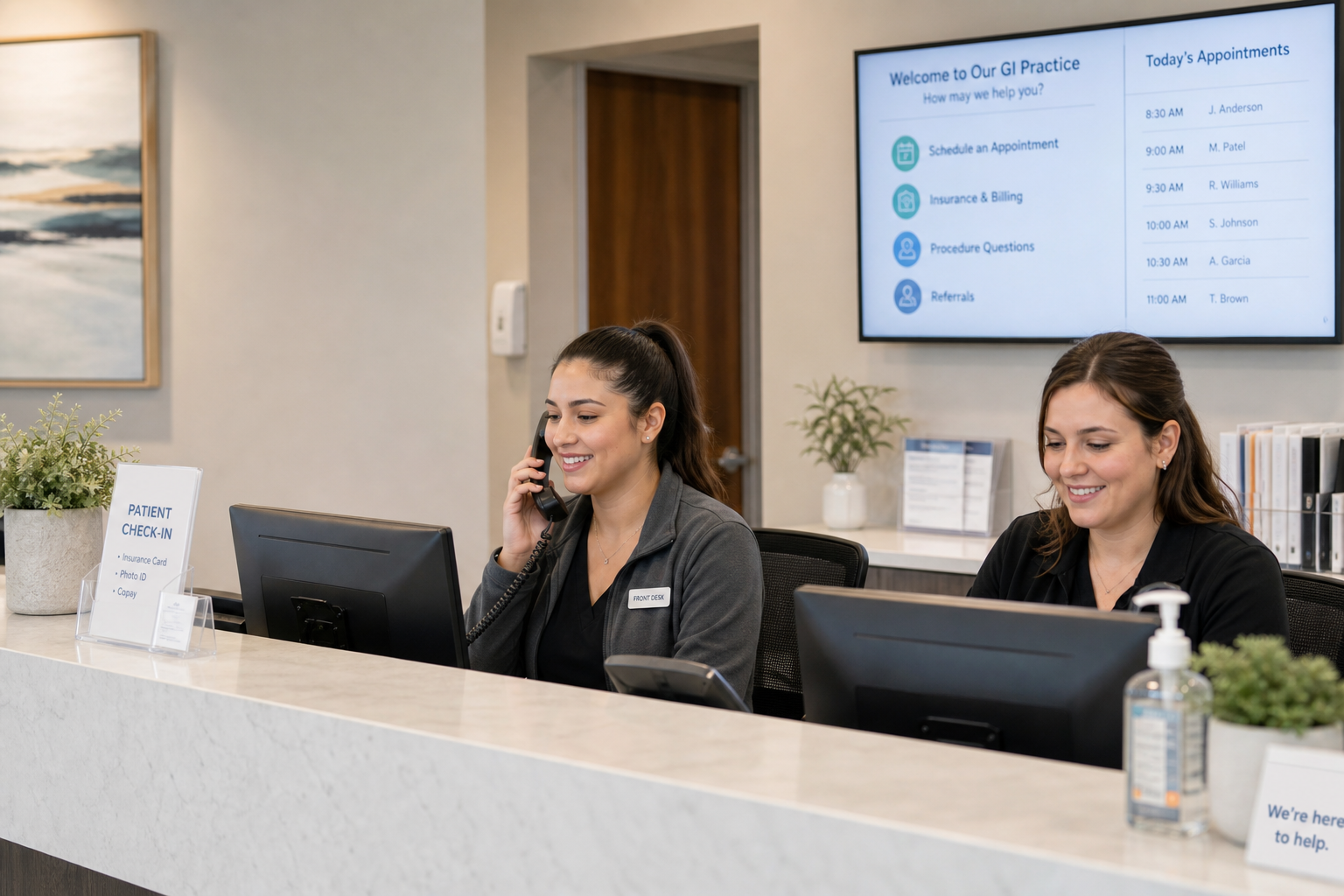
Compare 4 voice AI vendors for GI practices on colonoscopy scheduling, benefits verification, and prior auth calls. See which ones stop at booking.

Compare 5 AI voice agents for ENT and allergy practices. See which handle scheduling and the payer calls for prior auth and benefits checks.

Best AI agents for orthopedic practices compared on prior auth, outbound payer calling, and billing. Only 1 vendor resolves 60%+ of calls end-to-end.


