




Best Voice AI for Gastroenterology Practices: 4 Options Compared (2026)
Compare 4 voice AI vendors for GI practices on colonoscopy scheduling, benefits verification, and prior auth calls. See which ones stop at booking.

A medical answering service is a specialized call center that handles patient calls and communications for healthcare providers. Think of it as an extension of your front desk, ensuring no patient call is ever missed, day or night. These services are trained to protect patient confidentiality, comply with healthcare regulations like HIPAA, and handle everything from scheduling appointments to relaying urgent messages to on call staff. With the global market for these services projected to grow from around $6 billion in 2024 to $9.7 billion by 2031, it’s clear that demand for 24/7 patient support is soaring. By managing high call volumes and reducing wait times, a medical answering service helps free up your staff to focus on what they do best: providing excellent in person care.
Medical answering services are not one size fits all. They come in several forms, each designed to meet different practice needs, from fully automated systems to live, human support.
An automated answering service uses technology like interactive voice response (IVR) or artificial intelligence to manage calls without a live agent. Callers navigate menus or use voice prompts to get information or leave messages. These systems are great for basic tasks like providing office hours or routing calls. Modern AI driven voice agents, such as those from Prosper AI, represent the next evolution of this service. They can hold natural conversations with patients, schedule appointments, and answer questions with a human like touch. The main benefits are consistency and cost effectiveness, as they operate 24/7 and can handle many calls at once. With studies showing that practices can miss up to 30% of calls during business hours, automation helps capture these missed opportunities.
A live operator answering service connects your patients with real human receptionists. These operators are trained to handle calls with empathy and professionalism, often following customized scripts from your practice. Patients often feel more comfortable speaking to a person, especially when they are anxious or describing symptoms. Live operators can provide compassionate and knowledgeable responses because they understand medical terminology and can recognize urgent situations. This human element helps prevent miscommunication, where a single mishandled call could delay care. While typically more expensive than automated options, the quality and personal touch of a live medical answering service are invaluable for complex or sensitive calls.
An in house answering service is when your own practice staff handles all calls. The advantage is that your team is intimately familiar with your patients and workflows. However, this approach can be costly and difficult to scale, especially for after hours coverage. A full time medical receptionist requires a salary, benefits, and equipment, and you may need several people to cover evenings and weekends.
An outsourced answering service, on the other hand, is a third party company that specializes in handling medical calls. This is often more cost effective and scalable, as you pay a predictable monthly fee instead of funding salaries and benefits. Outsourcing also ensures you have coverage during staff vacations or sick days without any gaps. The key is choosing a reputable partner that can represent your practice professionally, making the experience seamless for patients.
An after hours answering service focuses specifically on calls that come in outside of normal business hours, including nights, weekends, and holidays. This is critical because patient needs don’t stop at 5 PM. Offering 24/7 availability for patients to get assistance is vital for those with sudden health concerns.
A bilingual answering service provides support in multiple languages, most commonly English and Spanish. With over 21% of the U.S. population speaking a language other than English at home, this service is crucial for diverse communities. Language barriers can lead to misunderstandings and prevent patients from accessing care. A bilingual service fosters inclusivity, ensuring every patient can communicate their needs comfortably and accurately.
A medical answering service performs a wide range of tasks that support a healthcare practice, acting as a virtual extension of your team. Here are some of the most common functions they handle.
Deciding to use a medical answering service often comes down to identifying specific pain points in your practice. Here are some clear signs it might be time to get help.
Selecting the right partner is crucial. Here are key answering service selection criteria to consider.
While beneficial, implementing a service comes with a few challenges to keep in mind.
A primary challenge is ensuring the service integrates smoothly with your existing workflow and systems. Without proper integration, you can end up with double bookings or lost messages. Choose a service that can connect with your EHR and scheduling software to create a seamless flow of information.
The service’s operators are the voice of your practice, so proper training and onboarding are essential. A lack of training can lead to a disjointed patient experience where callers feel disconnected from the clinic. Work closely with the service to develop clear scripts and protocols, and provide feedback to ensure they are followed consistently.
Entrusting a third party with patient data requires a strong focus on data security and privacy. You must verify that the service uses secure, encrypted communication channels and has strict protocols to prevent privacy lapses. Always sign a Business Associate Agreement (BAA) to ensure they are legally bound to protect your patients’ information.
Using a medical answering service can transform your practice’s efficiency and elevate patient satisfaction. The key is to choose the right partner and set it up for success. When done correctly, it functions as a dedicated, professional extension of your team that is available around the clock. Many healthcare organizations are now turning to advanced solutions, including AI driven agents, to reduce staff burnout and enhance patient communication. Some clinics, for example, have successfully automated over 50% of their scheduling calls using AI voice agents, clearing backlogs and nearly eliminating hold times.
If you are looking to modernize your call handling, it may be time to explore innovative solutions like Prosper AI, which provides HIPAA compliant voice agents that integrate directly with EHR systems, or request a demo.
1. What is the main difference between a medical answering service and a regular one?
A medical answering service is specialized for the healthcare industry. Its agents receive training on HIPAA regulations, patient privacy, and medical terminology to handle sensitive calls appropriately. Regular answering services lack this critical expertise.
2. Is a medical answering service expensive?
The cost varies based on call volume and services needed, but it is often more cost effective than hiring additional full time staff, especially for 24/7 coverage. Many services offer flexible plans that can save a practice significant money on labor costs.
3. How does the service know who is on call?
You provide the answering service with your on call schedule. Quality services offer an online portal or a dedicated contact number where you can easily update the schedule in real time, ensuring the right provider is always contacted.
4. Can an automated answering service handle complex patient questions?
Basic automated systems are best for simple tasks. However, advanced AI voice agents, like those offered by Prosper AI, are designed to handle more complex, conversational interactions, such as scheduling multi step appointments or answering detailed questions based on a knowledge base.
5. How are urgent calls handled after hours?
The service follows your custom protocols. For urgent calls, an operator will immediately contact the on call physician or nurse via their preferred method (e.g., phone call, secure text). For life threatening emergencies, they will instruct the caller to hang up and dial 911.
6. Is my patients’ data secure with a third party service?
Reputable medical answering services are required to be HIPAA compliant. They use secure messaging platforms, encrypted data storage, and other safeguards to protect patient information. Always ensure you sign a Business Associate Agreement (BAA) with your chosen service.
Discover how healthcare teams are transforming patient access with Prosper.
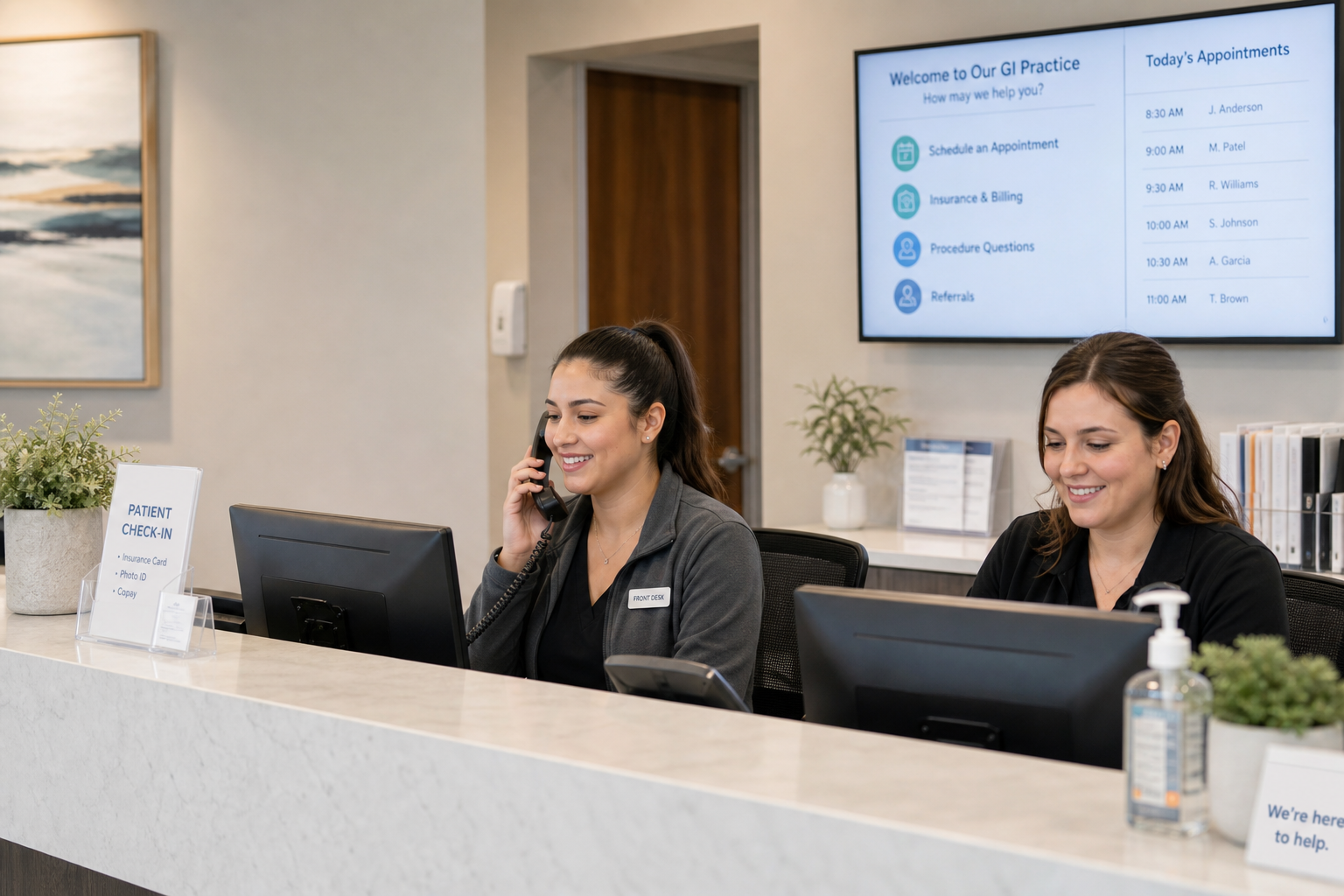
Compare 4 voice AI vendors for GI practices on colonoscopy scheduling, benefits verification, and prior auth calls. See which ones stop at booking.
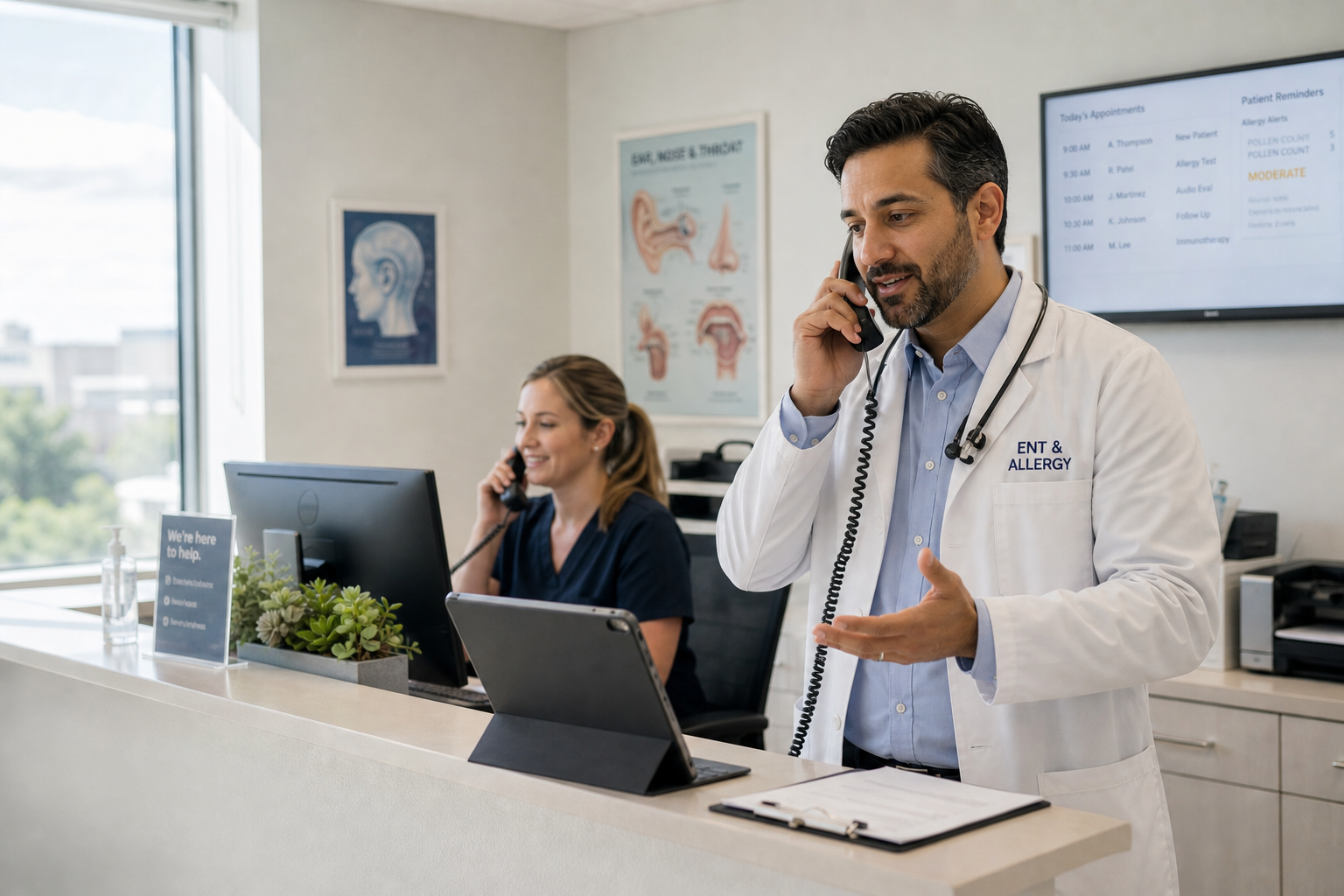
Compare 5 AI voice agents for ENT and allergy practices. See which handle scheduling and the payer calls for prior auth and benefits checks.

Best AI agents for orthopedic practices compared on prior auth, outbound payer calling, and billing. Only 1 vendor resolves 60%+ of calls end-to-end.


