




Best Voice AI for Gastroenterology Practices: 4 Options Compared (2026)
Compare 4 voice AI vendors for GI practices on colonoscopy scheduling, benefits verification, and prior auth calls. See which ones stop at booking.

A balance reminder is a simple prompt that helps patients or customers remember an unpaid amount, confirm benefits, or clear up billing questions. Done well, it reduces missed payments, eases staff workload, and improves the overall experience. Done poorly, it creates confusion and churn.
This guide explains how to plan a balance reminder program that is clear, kind, and compliant. It also shows how automation and AI voice agents can scale reminders without losing the human touch.
A balance reminder is a message or call that alerts someone to an outstanding amount, benefit responsibility, or next step related to a bill. The purpose is to inform, guide, and collect in a way that preserves trust. In healthcare and dental settings, the balance reminder often includes coverage details, expected patient responsibility, and easy ways to pay or ask questions.
Tip: Map each scenario to a specific balance reminder template so staff do not improvise under pressure.
Timing shapes outcomes. A simple cadence works well for most practices.
Healthcare teams using AI voice agents can layer intelligent timing based on patient responsiveness. For example, call in the evening for those who never answer mid day, and switch to text for quick confirmations.
Focus on clarity, action, and reassurance.
| Element | Why it matters | Example line |
|---|---|---|
| Who you are | Builds trust | This is City Health Clinic billing |
| What it is | Removes ambiguity | Balance reminder for your recent visit with Dr Lopez |
| Amount and due date | Creates a clear ask | Amount 128 dollars, due February 10 |
| How to act | Lowers friction | Pay online, call us, or ask for a plan |
| Context | Reduces disputes | Insurance processed your claim on January 20 |
| Support options | Shows empathy | Need a plan or have questions, we can help |
| Compliance notes | Keeps you safe | Message and data rates may apply, reply STOP to opt out |
Keep it short. Most people only skim a balance reminder, especially on mobile.
Start friendly, progress to firm, never aggressive.
Use plain language and avoid acronyms unless they are explained. A respectful tone increases right party contact and payment conversion.
Match the message to the moment.
Healthcare teams often combine channels. AI voice agents can answer billing questions live, collect payments, and route exceptions to staff. See how Prosper’s AI voice agents for healthcare handle inbound billing questions and balance collection while keeping staff focused on higher‑value tasks.
Automation keeps your balance reminder program consistent. Personalization keeps it human.
Facts from Prosper AI customer programs that inform balance reminder design
If you want to automate a compassionate balance reminder outreach program, explore a demo with Prosper AI.
A balance reminder touches protected health information, so compliance matters.
Prosper AI supports enterprise security controls including HIPAA with BAA, SOC 2 Type II, encryption, single sign on, daily backups, and optional on‑prem deployment. Learn more in our HIPAA‑compliant generative AI guide.
Measure before you scale. Key metrics for a balance reminder program
Review transcripts and analytics weekly. Adjust subject lines, call scripts, and payment options based on what actually works.
Not everyone responds to a balance reminder on the first try.
AI voice agents can wait on hold with payers, retrieve EOB details, and call back patients with accurate information. This shortens the loop and reduces avoidable denials.
Close the loop to build trust.
With the strategy in place, here are the top five apps that streamline balance reminders and patient billing follow-ups. They’re grouped because each one automates outreach through voice, SMS, and email while varying in integration depth, compliance safeguards, and customization. Use this shortlist to quickly match a tool to your workflow and budget without trialing a dozen platforms.
Prosper AI’s voice agents Emma and Ben bring a human‑sounding, always‑on approach to patient balance outreach, ideal for health systems, hospitals, specialty groups, and RCM teams that need to accelerate collections without adding headcount. They cover pre‑due nudges through final/collections notices, helping organizations collect faster while lightening staff workloads.
Behind the scenes, AI orchestrates outbound and inbound billing across voice, SMS, and email using configurable cadences, templates, secure payment links, and escalation notes. Campaigns load via API, SFTP, or file uploads, with outcomes returned through webhooks; 80+ EHR/PM and payment‑gateway integrations replace legacy IVR, post payments, and write results back in real time.
Customers report contacting 100% of eligible balances, collecting up to 15% on‑call, and containing ~60% inbound billing with ~50% cost reduction. Named adopters include Northeast OB/GYN and enterprise systems. Pricing is usage‑based with volume tiers; demos are available on request.
Who it’s for & key use cases (2‑sentence paragraph, ≈30 words):
Built for health systems, specialty groups, and RCM/billing teams managing aging balances. Covers pre‑due nudges, due‑today prompts, 30/60/90‑day reminders, and final collections warnings to collect faster and reduce staff workload.
How it works & healthcare integrations (compact paragraph, ≈45 words):
Omnichannel SMS, email, voice, and print deliver secure payment links via configurable templates and cadences; staff add escalation notes. Native Epic/MyChart, Oracle Health/Cerner, and PM integrations write back in real time. AI voice/IVR automates after‑hours outreach; gateways consolidate posting, payment plans, refunds, and audit trails.
Compliance, security & deployment (bulleted mini‑list, ≈25 words):
Performance & pricing snapshot (brief paragraph with inline metrics, ≈40 words):
Results: Novant Health achieved 87% self‑service and 43% faster collections; Experian clients collected $1.89M via Text‑to‑Pay; Waystar averages 61% self‑service with NPS 57. Notable customers include Novant and Hartford HealthCare. Pricing is usage‑based by module/volume; demos available; trials on request.
Use this final-notice program when balances persist despite earlier nudges, a fit for health systems, specialty groups, and RCM teams that need decisive, compliant follow‑through. It supports pre‑due through final/collections reminders to boost recovery while automation reduces staff handling.
SMS, email, voice/IVR, and paper statements run in coordinated cadences with payment links, pause‑on‑payment logic, payment plans, and clear escalation notes. A 24/7 AI agent and payment‑ready IVR deflect billing questions. Native connectors to Epic, athenahealth, NextGen, AdvancedMD, Kareo/Tebra, Greenway, Veradigm, and WebPT post payments and write back activity in real time.
Benchmarks show 85% of patient A/R collected in 15 days; AdvancedMD sites hit 98% digital payments in 60 days and ~800 fewer calls. Customers include CHE Behavioral Health, Eyecare Services Partners, and ConvenientMD. Quote‑based pricing aligned to channel usage; demos available on request.
When urgency matters, this overdue‑reminder track helps enterprise health systems, specialty groups, and RCM teams drive rapid balance recovery. It spans pre‑due to final/collections notices to lift payments quickly while trimming manual outreach and hold‑time bottlenecks.
The system combines SMS Text‑to‑Pay, email, print, and voice/IVR with configurable cadences, templates, payment links, and escalation notes. It natively integrates with Epic, Oracle Health/Cerner, MEDITECH, and major gateways. AI virtual agents replace hold queues; payments post instantly, demographics write back, and updates propagate to EHR/PMs in real time.
Reported outcomes: +3–7% payment uplift, 67% pay within three days, IVR conversion >75%, and digital‑payment adoption up 1,500%. Trusted by 250+ Epic clients, including Fisher‑Titus. Pricing blends software and transaction processing; Merchant Services can reduce fees 5 to 10%. Demo available; trials limited.
This policy-forward reminder, powered by Inbox Health, helps health systems, specialty groups, and RCM teams set clear expectations with a firm due date. It covers pre‑due, due‑today, 30/60/90‑day, and collections notices to collect faster while easing staff workload through automation.
Patients receive SMS, email, voice, and paper statements driven by configurable cadences and templates, complete with secure payment links and escalation notes. A HIPAA‑compliant AI voice/IVR answers billing questions, routes complex issues, and takes payments. Native PM/EHR and gateway integrations post in real time and write results back to source systems.
Healthcare results include 5× faster collection speeds, 98% digital payments within 60 days, and 70% AI‑contained inquiries with 95% satisfaction across 2,000+ practices. Pricing is quote‑based and usage‑driven. Notable examples include AdvancedMD customers. Demo available on request; no published free trial.
Consistency beats intensity. A good balance reminder program blends clear messaging, smart timing, and respectful tone. Automation handles the routine. People handle the complex and the sensitive. If you want scalable voice automation that plays nicely with your EHR and your policies, consider a quick demo with Prosper AI. See how AI voice agents can answer billing questions, collect balances, and improve access without adding staff.
A short notice by email, text, call, or portal that tells a patient about an outstanding amount and how to resolve it. It can also include context from insurance adjudication.
Start with three touches, for example day 0, day 14, day 30. Add a fourth escalation only if needed and always keep the option to set up a payment plan.
Identify the provider, state the amount and due date, provide a payment link or phone number, give brief context, and offer help. Keep it short and respectful.
Yes for short prompts with links. Keep sensitive details in a secure portal or live call. Always honor opt outs.
AI voice agents can answer billing questions, take payments, verify benefits, and log outcomes automatically. This reduces hold times and frees staff to handle exceptions. Explore Prosper AI.
Pause automated messages, acknowledge the concern, research EOB details, then resolve or set a clear next step. Document the outcome and resume only after closure.
With batch data a pilot can start in 1 to 2 days. With full EHR or API integration many teams go live in about 3 weeks with the right vendor support like Prosper AI.
Discover how healthcare teams are transforming patient access with Prosper.
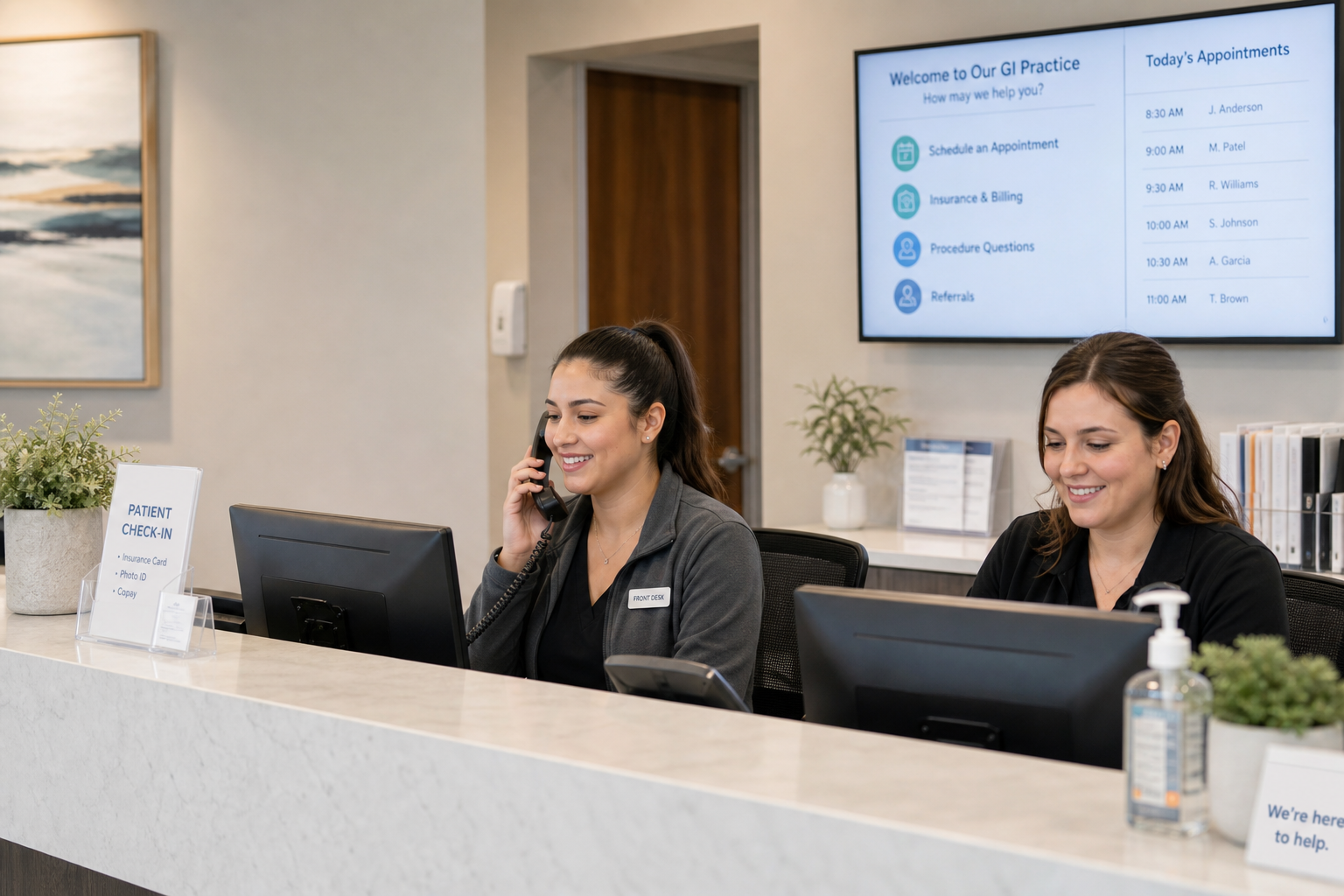
Compare 4 voice AI vendors for GI practices on colonoscopy scheduling, benefits verification, and prior auth calls. See which ones stop at booking.

Compare 5 AI voice agents for ENT and allergy practices. See which handle scheduling and the payer calls for prior auth and benefits checks.

Best AI agents for orthopedic practices compared on prior auth, outbound payer calling, and billing. Only 1 vendor resolves 60%+ of calls end-to-end.


