




AI Voice-Enabled Patient Engagement: What Specialty Practices Should Expect in 2026
AI voice-enabled patient engagement now covers scheduling, benefits verification, prior auth, and billing calls in one system. See what to evaluate be

Generative AI is transforming industries, and healthcare is no exception. From automating patient scheduling to streamlining insurance claims, the potential is enormous. But with great power comes great responsibility, especially when dealing with Protected Health Information (PHI). Navigating the world of the Health Insurance Portability and Accountability Act (HIPAA) can feel daunting.
This guide breaks down the 25 essential concepts you need to understand. In short, what makes generative AI HIPAA compliant is a combination of a signed Business Associate Agreement (BAA), robust technical safeguards like end-to-end encryption and strict access controls, and clear operational policies to protect patient data. We will move beyond the buzzwords to give you a clear, actionable framework for building and deploying a truly HIPAA compliant generative AI.
Before a single line of code is written or a single piece of data is processed, the legal groundwork must be solid. This is about establishing clear responsibilities and ensuring every partner in the chain is committed to protecting patient data.
It’s a common point of confusion, but the difference is critical.
HIPAA Eligible means a service or platform has the necessary security features and the vendor is willing to sign a Business Associate Agreement (BAA). Think of it as a toolkit. Major cloud providers like AWS and Azure offer many HIPAA eligible services.
HIPAA Compliant is the end state. It means you have taken that eligible toolkit and used it correctly, implementing all the necessary safeguards, policies, and procedures. Just using an eligible service does not automatically make you compliant. The responsibility is on the healthcare organization and its partners to configure and manage these services properly to create a HIPAA compliant generative AI environment.
A Business Associate Agreement (BAA) is a legally binding contract between a healthcare provider (a Covered Entity) and a vendor (a Business Associate) that handles PHI on their behalf. If you are using a generative AI tool that will interact with patient data, a BAA is non negotiable. Our HIPAA-compliant AI assistant buyer’s guide outlines the key BAA questions to ask vendors.
The BAA requires the vendor to protect PHI with the same rigor as the provider. It outlines permissible uses of the data, mandates the implementation of safeguards, and requires the vendor to report any breaches. Without a BAA, sharing PHI with a vendor is a direct HIPAA violation.
When you use cloud services or third party AI platforms, security becomes a team sport. The shared responsibility model clarifies who is responsible for what.
Typically, a cloud provider is responsible for the security of the cloud, this includes the physical data centers and core infrastructure. The customer, you or your AI vendor, is responsible for security in the cloud. This includes managing user access, configuring firewalls, and encrypting data. Understanding this division of labor is key to preventing security gaps where each party assumes the other has it covered.
Even with the best defenses, breaches can happen. The HIPAA Breach Notification Rule dictates what you must do. If unsecured PHI is compromised, you must notify affected individuals without unreasonable delay, and no later than 60 days after discovery. For breaches affecting 500 or more people, you must also notify the Department of Health and Human Services (HHS) and, in many cases, the media. A vendor with a solid HIPAA compliant generative AI platform will have clear procedures to immediately inform you if an incident occurs, helping you meet these obligations.
The strongest fortress is useless if you leave the keys lying around. Controlling access to PHI is a fundamental pillar of HIPAA compliance.
Access control is simple in principle: only authorized users should be able to access data. A core component of this is Role Based Access Control (RBAC). Instead of assigning permissions to individuals, RBAC assigns them based on job roles.
For example, a scheduler’s role might grant access to view and create appointments, while a clinician’s role allows access to medical histories. This enforces the “minimum necessary” standard of HIPAA, ensuring users only see the data required for their job.
The principle of least privilege is the philosophy behind RBAC. It states that any user, program, or process should only have the bare minimum permissions necessary to perform its function. If an account is compromised, this principle dramatically limits the potential damage. An attacker who gains access to a scheduler’s account can’t access billing information or alter clinical records if least privilege is properly enforced.
Passwords alone are no longer enough. Multi Factor Authentication (MFA) adds a crucial layer of security by requiring a second form of verification, like a code from a mobile app (“something you have”) or a fingerprint scan (“something you are”). The impact is staggering. According to Microsoft, enabling MFA blocks over 99.9% of automated account compromise attacks. For any system handling PHI, especially one accessed remotely, MFA should be considered essential.
Encryption scrambles data into an unreadable format, making it useless to anyone without the proper decryption key. It is one of the most effective technical safeguards for protecting PHI.
This protects data that is stored on hard drives, servers, or in databases. If a laptop containing PHI is lost or stolen, full disk encryption ensures the data remains inaccessible. Breaches involving lost or stolen unencrypted devices are tragically common. Since 2015, over 100 such HIPAA breaches affecting more than 1.5 million people could have been prevented with encryption.
This protects data as it moves across a network, like the internet. Using protocols like Transport Layer Security (TLS), the technology behind the padlock icon in your browser, creates a secure, encrypted tunnel for data. Today, it’s the standard, with an estimated 99% of Chrome browser traffic being encrypted over HTTPS. Any HIPAA compliant generative AI solution must encrypt data both when it’s stored and when it’s being transmitted.
Encryption is only as strong as the security of its keys. Proper key management involves securely generating, storing, rotating, and retiring encryption keys. Storing keys in a hardened, dedicated system, like a cloud provider’s key management service, is a best practice. It prevents a scenario where an attacker breaches a database and finds the decryption key stored right alongside it.
A secure application needs to be built on a secure foundation. This involves designing networks and systems to be resilient and to minimize the attack surface.
A Virtual Private Cloud (VPC) allows you to create an isolated, private section within a public cloud provider’s infrastructure. It is like having your own private data center in the cloud. By placing servers and databases that handle PHI inside a VPC with no direct internet access, you make them invisible to external threats. Access is then tightly controlled through secure gateways, like a VPN, creating a “walled garden” for your most sensitive data.
HIPAA requires you to have a contingency plan. This includes maintaining secure, accessible backups of PHI and a disaster recovery plan to restore data and operations after an outage or cyberattack. With ransomware attacks crippling hospitals, having tested, encrypted, and ideally offline backups is more critical than ever. A backup is only useful if you know you can restore from it.
You cannot protect what you cannot see. Audit logging means creating a detailed record of who accessed what data, when they did it, and what they did. This is crucial for detecting suspicious activity and for investigating security incidents. Continuous monitoring of these logs allows security teams to spot potential threats in real time. Any robust HIPAA compliant generative ai platform must provide comprehensive audit trails for all interactions involving PHI.
Generative AI introduces unique challenges. Its ability to learn from and generate human like text means special care must be taken to prevent the memorization and leakage of PHI.
HIPAA provides two official methods for de identifying data so it is no longer considered PHI:
Safe Harbor: This involves removing all 18 specific identifiers, such as names, addresses, and social security numbers. It is a straightforward, checklist based approach.
Expert Determination: A qualified statistician determines that the risk of re identifying an individual is “very small.” This method can preserve more of the data’s utility but requires formal documentation from an expert.
You should never train a general purpose Large Language Model (LLM) on raw PHI. LLMs can memorize and repeat parts of their training data. Therefore, any data used to train or fine tune a model must be properly de identified first. This prevents the model from inadvertently leaking a patient’s personal details in a future conversation.
A safer, more modern approach for giving AI access to specific information is Retrieval Augmented Generation, or RAG. For implementation details, see our EHR integration guide. For a HIPAA compliant generative AI system, this is ideal. The AI can be given just the “minimum necessary” information for a specific task, like pulling up a single patient’s appointment details, without ever being exposed to the entire database—provided you have secure EHR and practice management integrations in place.
Automated tools can act as a safety net to detect and filter Personally Identifiable Information (PII) and ePHI. These systems can scan text to identify patterns that look like names, phone numbers, or medical record numbers. In an AI context, they can be used to redact sensitive information from logs or prevent a model from a model from outputting PHI.
When choosing an AI partner, their data handling policies are paramount. Look for two key things:
A training opt out: A guarantee that your data will not be used to train their general AI models.
A clear data retention policy: The vendor should only retain your data for as long as necessary to provide the service and should have a process for securely deleting it. Some top tier vendors even offer zero day retention agreements, meaning data is deleted immediately after processing.
Platforms like Prosper AI are built on these principles, using a combination of RAG and strict data controls to ensure patient data is only used for its intended purpose and never co mingled or used for general model training. Discover how a secure AI platform can transform your operations.
Technology alone isn’t enough. A truly compliant AI strategy requires strong governance, proactive risk management, and the irreplaceable value of human judgment.
This is the high level framework of policies and processes that ensures AI is used ethically, fairly, and accountably. It involves creating an AI ethics committee, testing for bias, being transparent with users, and defining who is responsible when an AI makes a mistake.
The HIPAA Security Rule mandates that covered entities conduct regular risk assessments to identify potential threats to PHI. When implementing a new AI system, this process should be paired with a security design review. This means proactively examining the system’s architecture to ensure safeguards like encryption, access controls, and logging are built in from the start, not bolted on as an afterthought.
You must define and enforce clear rules for how an AI model can and cannot be used. For example, a policy might state that an AI agent can be used for appointment scheduling but is strictly forbidden from providing medical advice. These guardrails prevent the AI from being used for unapproved or risky tasks.
Users can sometimes trick AI models into bypassing their safety rules through clever prompts, an act known as “jailbreaking.” Robust guardrails are needed to prevent this. This includes system level instructions that define the AI’s boundaries, content filters that block harmful requests, and continuous testing to close loopholes as they are discovered.
AI is a powerful tool, but it’s not infallible. For high stakes decisions, a human should remain in the loop. This could mean a human reviews the AI’s output before it’s finalized, like a clinician confirming an AI generated summary. It could also mean the AI is designed to escalate complex or ambiguous situations to a human agent. This combines the speed of automation with the nuance of human judgment.
While not legally required by HIPAA, aligning with the HITRUST Common Security Framework (CSF) has become a gold standard in healthcare. It provides a prescriptive, certifiable framework that maps to HIPAA and other security standards. Achieving HITRUST certification demonstrates a mature and comprehensive security posture, giving healthcare partners extra confidence.
The use of chatbots and voice agents in healthcare perfectly illustrates how these concepts come together. To deploy a HIPAA compliant generative AI chatbot, you need:
A BAA with the chatbot platform provider.
Encryption for all data, both at rest and in transit.
RBAC to control which staff members can view chat logs.
Audit logs to track all interactions.
Prompt guardrails to prevent the chatbot from giving medical advice.
A clear policy informing patients they are interacting with an AI.
When implemented correctly, these tools can safely handle tasks like scheduling, prescription refills, benefits verification, and answering billing questions, freeing up staff and improving the patient experience.
Organizations are already seeing incredible results. For instance, a Northeast GI group case study shows how a group with over 100 providers used AI agents from Prosper AI to handle more than 50% of their front desk scheduling volume, significantly reducing call backlogs. See how healthcare providers are using AI to solve staffing shortages and improve patient access.
A generative AI solution is considered HIPAA compliant when it is deployed under a Business Associate Agreement (BAA) and incorporates all necessary technical, administrative, and physical safeguards. This includes features like end to end encryption, strict access controls, audit logging, and policies that prevent the use of PHI for model training. Compliance is an ongoing process, not a one time certification.
Using the public, free version of ChatGPT for patient information is a HIPAA violation. However, enterprise grade offerings, like the APIs from providers such as OpenAI or Microsoft Azure, can be used as part of a HIPAA compliant generative AI solution. This requires signing a BAA with the provider, ensuring they offer a zero data retention policy, and building the necessary safeguards around the API usage.
HIPAA eligible means the AI platform has the foundational security features and the vendor will sign a BAA. HIPAA compliant means the platform has been configured and is being used in a way that meets all of HIPAA’s requirements. Eligibility is the starting point, compliance is the goal.
A BAA is a legal contract that makes an AI vendor a “business associate” under HIPAA. It legally requires them to protect any PHI they handle on your behalf. You should never use a third party AI service that processes patient data without a signed BAA in place.
One of the biggest risks is data privacy violation through model training. If a vendor uses your patient conversations to train their general models, that sensitive data could be inadvertently exposed to other customers. This is why choosing a vendor with a strict training opt out and clear data retention policies is absolutely essential for any HIPAA compliant generative ai implementation.
Look for vendors that not only sign a BAA but can also provide evidence of their security posture. This includes third party certifications like SOC 2 Type II or HITRUST alignment, detailed documentation on their security controls, and transparent data handling policies. Ask tough questions about encryption, access controls, data retention, and how they prevent data from being used in model training.
Discover how healthcare teams are transforming patient access with Prosper.
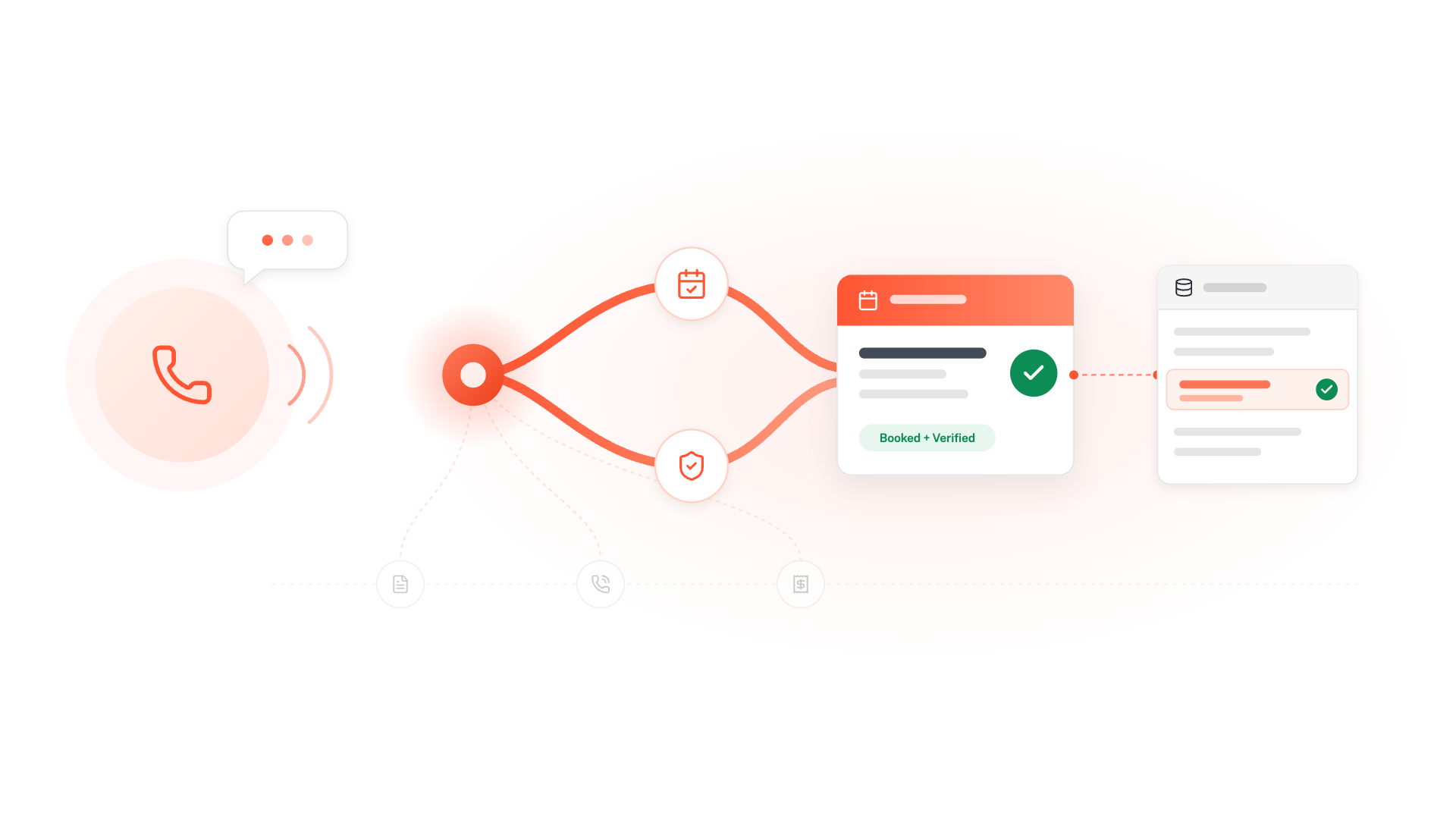
AI voice-enabled patient engagement now covers scheduling, benefits verification, prior auth, and billing calls in one system. See what to evaluate be

Compare 4 voice AI vendors for GI practices on colonoscopy scheduling, benefits verification, and prior auth calls. See which ones stop at booking.

Compare 5 AI voice agents for ENT and allergy practices. See which handle scheduling and the payer calls for prior auth and benefits checks.


