




AI Voice-Enabled Patient Engagement: What Specialty Practices Should Expect in 2026
AI voice-enabled patient engagement now covers scheduling, benefits verification, prior auth, and billing calls in one system. See what to evaluate be

Missed appointments cost the U.S. healthcare system a staggering $150 billion every year. Each empty slot can cost a physician around $200 in lost revenue, making patient no shows a massive operational and financial drain. While automated reminders are a proven solution, navigating the world of technology and patient privacy can be complex. This is where AI comes in, but not just any AI. Choosing the right HIPAA-compliant conversational AI vendor is a critical decision that requires evaluating their security posture, integration capabilities, and the quality of their AI, which ultimately impacts patient trust, operational efficiency, and your bottom line. See our HIPAA‑compliant AI assistant buyer’s guide for a vendor checklist.
This guide breaks down everything you need to know, from core compliance requirements to the technical features that define a great patient experience. We will explore how to evaluate vendors, measure success, and ensure your practice is not only filling its calendar but also protecting patient data with the utmost care.
A HIPAA compliant conversational AI for appointment reminders is an automated system, like a voice agent or chatbot, that communicates with patients about their appointments using natural, human like dialogue while strictly adhering to the Health Insurance Portability and Accountability Act (HIPAA). Think of it as a digital assistant that can call a patient and say, “Hi, I’m calling from Dr. Smith’s office to remind you about your appointment on Tuesday,” and can understand and respond to replies like “I need to reschedule.”
This technology must be built on two pillars: advanced conversational AI and robust healthcare security. It needs to handle protected health information (PHI) which includes patient names, appointment times, and provider details with extreme care. This means essential features like data encryption, audit logging, secure data storage, and a formal Business Associate Agreement are not optional, they are mandatory for any vendor in this space.
Using a non compliant tool for reminders is a risk no healthcare organization can afford to take. Appointment reminders, even simple ones, contain PHI. Mishandling this information can lead to privacy breaches, devastating fines, and a complete loss of patient trust.
The healthcare industry already suffers the costliest data breaches of any sector, with an average cost of $10.93 million per incident in 2023. The financial penalties for HIPAA violations are severe, reaching up to $1.5 million per year for each type of violation. For example, MD Anderson Cancer Center was fined $4.3 million for violations that included the loss of unencrypted devices. The case underscored that failing to implement basic safeguards like encryption is a direct and costly violation. Ultimately, when evaluating hipaa-compliant conversational ai vendors healthcare appointment reminders, their commitment to security is just as important as the technology itself.
A Business Associate Agreement (BAA) is a required legal contract between a healthcare provider (a covered entity) and a vendor (a business associate) that handles PHI. This document legally binds the vendor to protect patient data according to HIPAA standards. It outlines their responsibilities, requires them to report any data breaches, and ensures they implement all necessary safeguards.
Operating without a BAAs is a serious compliance gap. The Office for Civil Rights (OCR) has issued significant fines for this failure alone. In one case, a medical practice was fined $100,000 for not having a BAA in place with their EHR vendor. This proves that a BAA is more than a piece of paper; it is a fundamental requirement for any partnership involving patient data. When considering hipaa-compliant conversational ai vendors healthcare appointment reminders, a willingness to sign a BAA is the first box to check.
For a conversational AI to be truly effective, it must connect directly with your Electronic Health Record (EHR) or practice management system. This EHR integration allows the AI to read the schedule in real time, pull the correct appointment details, and most importantly, perform a “write back.”
Write back is the ability for the AI to update the EHR with new information, such as confirming an appointment, recording a cancellation, or even scheduling a new visit directly into an open slot. Without this capability, your staff would have to manually update every interaction, defeating the purpose of automation. With nearly 96% of U.S. hospitals having adopted certified EHR systems, integration is no longer a luxury but a necessity for a streamlined workflow. A vendor like Prosper AI, which offers native integrations with over 80 EHR systems including Epic, athenahealth, and Cerner, ensures the AI and your staff are always working from the same, perfectly synchronized calendar.
Today’s patients expect modern, convenient communication. A clunky, outdated phone system can cause frustration and lead to patients seeking care elsewhere.
Legacy Interactive Voice Response (IVR) systems, with their endless “Press 1 for…” menus, are a common source of patient frustration. Conversational IVR modernization replaces these rigid menus with an AI that understands natural language. A patient can simply say, “I need to check on my appointment,” and the AI can understand and assist, dramatically improving the user experience and reducing the number of callers who give up.
When an AI needs to hand off a call to a human, a warm transfer is crucial. This means the AI passes along all the context it has already gathered (like the patient’s name and reason for calling) to the live agent. This prevents patients from having to repeat themselves, which is a major point of friction in service calls. An AI that provides a screen pop with a summary for the agent creates a seamless and efficient handoff.
Omnichannel communication means engaging patients on their preferred channel, be it voice, SMS, or chat, in an integrated way. A patient might get a voice reminder but prefer to confirm via text. An omnichannel platform supports this fluid experience. Furthermore, with an estimated 40% of appointments being booked after hours, 24/7 AI coverage is essential to capture these opportunities and provide support when your office is closed.
The primary goal of an appointment reminder system is to reduce no‑shows. Automated appointment scheduling confirmation and rescheduling are the tools to achieve this. Research shows that proactive reminders significantly boost attendance rates. For instance, a Cochrane review found that text message reminders were highly effective at increasing attendance.
A quality improvement project even found that sending a second reminder text to high risk patients reduced no show rates by an additional 7% in primary care and 11% in mental health settings. The best systems do more than just remind; they make it easy for patients to confirm, cancel, or reschedule on the spot, helping you backfill open slots instantly without manual phone tag. These automated features can reduce no shows by 30% or more, directly recovering lost revenue.
For an AI voice agent to feel human, the underlying technology must be flawless. Two key components are voice quality and call deliverability.
Latency is the delay on a call between when someone speaks and when the other person hears it. For a conversation to feel natural, this delay must be imperceptible, ideally under 150 milliseconds one way. Higher latency causes awkward pauses and people talking over each other, making the experience frustrating. When choosing from hipaa-compliant conversational ai vendors healthcare appointment reminders, ask about their commitment to low latency audio processing to ensure your patients have a smooth, pleasant interaction.
For a reminder call to be effective, it first has to be delivered. Public Switched Telephone Network (PSTN) connectivity refers to how the vendor connects to the traditional phone network. A critical component of this is STIR/SHAKEN, a technology framework that helps verify caller ID and combat illegal call spoofing. Unwanted calls are the top consumer complaint to the FCC. A vendor that complies with STIR/SHAKEN ensures their calls are properly authenticated, which means they are less likely to be blocked or marked as “Spam Likely” by carriers, ensuring your reminders actually reach your patients.
Your clinic’s workflow is unique. A no‑code workflow builder is a visual tool that allows your team to design and customize reminder scripts and sequences without writing any code. You can drag and drop components to decide what the AI says, how it handles different patient responses, and what actions it takes, like sending a follow up text.
This empowers your operations staff to make changes on the fly without relying on developers. Gartner has projected that by 2025, 70% of new enterprise applications will use low code or no code technologies. Platforms that include a no code builder, like Prosper AI, put you in control, allowing you to quickly adapt and optimize your patient communication strategy. If you’re ready to see how simple customization can be, schedule a demo with Prosper AI today.
Beyond a BAA, several technical safeguards are essential for protecting PHI when working with hipaa-compliant conversational ai vendors healthcare appointment reminders.
Encryption is the process of scrambling data so it can only be read by authorized parties. Data should be encrypted both “in transit” (while it’s moving across a network) and “at rest” (while it’s stored on a server). This is a fundamental HIPAA requirement and a basic security measure that protects PHI from being intercepted or accessed if a device is stolen.
Audit logs are timestamped records of every action involving PHI, showing who accessed what data and when. They are crucial for accountability and for investigating potential security incidents. A data retention policy defines how long data is stored before being securely deleted. HIPAA requires that compliance documentation be kept for at least six years. A good vendor will have clear policies that align with healthcare best practices, ensuring data is not kept longer than necessary.
Data residency refers to the physical or geographic location where data is stored. Some regulations or organizational policies may require that patient data from a specific country or state be stored within that region. A vendor with a sophisticated infrastructure can accommodate these requirements, offering an additional layer of compliance and control over your data.
Respecting patient communication preferences is vital for both trust and legal compliance. Consent management involves tracking a patient’s permission to be contacted, while opt out management provides an easy way for them to unsubscribe.
Laws like the Telephone Consumer Protection Act (TCPA) regulate automated calls and texts, generally requiring consent. Every communication must offer a clear way to opt out, such as replying “STOP” to a text or pressing a button on a call. Failing to honor these requests can lead to significant fines, with statutory damages often starting at $500 per violation. A professional vendor will have automated systems to manage consent and process opt outs instantly.
Choosing the right partner requires a thorough evaluation of their security, compliance, and enterprise readiness. Here are the key criteria to consider:
SOC 2 Type II Certification: This is an independent audit that verifies a vendor’s controls for security, availability, and confidentiality over time. It provides strong third party validation of their security practices.
Single Sign On (SSO): SSO allows your staff to log in to the vendor’s platform using your organization’s existing credentials. This enhances security and simplifies user management, which is crucial given that compromised credentials are a leading cause of data breaches.
Compliance Attestation: Look for vendors who can provide clear documentation of their compliance posture, such as a HIPAA compliance whitepaper or a summary of their security audits.
Support and Uptime Guarantees: A Service Level Agreement (SLA) should guarantee a high level of system uptime (e.g., 99.9%) and define support response times, ensuring the service is reliable when you need it most.
A successful implementation is about more than just technology; it’s about process and people.
Instead of a full scale launch, begin with a pilot in a single department or clinic. This allows you to test the system, measure initial results, and make adjustments in a controlled environment before rolling it out more broadly. See our case study for a real‑world example.
Thoroughly test the AI with various scenarios to ensure it responds accurately and appropriately. This should be an ongoing process, using call transcripts and analytics to continuously refine performance and ensure a high quality patient experience.
Appoint a project owner and create a governance team to oversee the program. This team should monitor KPIs, address any issues, and ensure the AI aligns with your organization’s goals and policies. Clear governance turns a “set it and forget it” tool into a strategic asset.
To measure the success of your reminder program, track these key performance indicators (KPIs):
No Show Rate: The ultimate measure of success. A reduction here directly translates to recovered revenue and better provider utilization.
Call Abandonment Rate: The percentage of callers who hang up before their task is complete. A low rate indicates a positive, efficient patient experience. Prosper AI has seen clients reduce call abandonment by 89% by offering zero second wait times.
Average Hold Time: How long patients wait for assistance. AI can virtually eliminate hold times, drastically improving patient satisfaction.
Appointment Volume: An effective reminder and rescheduling system will lead to more completed appointments and a fuller schedule.
Pricing for AI solutions typically follows one of two models. Understanding them is key to assessing your return on investment (ROI).
Per Minute (Usage Based): You pay for what you use, typically per minute of call time. This model is flexible and cost effective for lower or unpredictable call volumes.
Seat Based (License Based): You pay a fixed monthly or annual fee per virtual agent or “seat.” This offers cost predictability and is often more economical for high, steady call volumes.
To calculate ROI, compare the cost of the AI solution to the value it generates. This includes the revenue recovered from reducing no shows, the labor costs saved by automating manual calls, and the value of an improved patient experience. An effective AI reminder system often delivers a strong ROI by simultaneously cutting costs and increasing revenue. To understand what your ROI could look like with a powerful AI voice agent, connect with the team at Prosper AI.
Selecting from the available hipaa-compliant conversational ai vendors healthcare appointment reminders is a strategic decision. By focusing on robust compliance, seamless EHR integration, enterprise grade security, and a provable ROI, you can implement a solution that not only solves the costly problem of no shows but also enhances the patient experience. The right AI partner will help you automate tedious tasks, empower your staff to focus on higher value work, and ensure your practice runs more efficiently than ever before.
A HIPAA compliant AI vendor must implement specific administrative, physical, and technical safeguards to protect PHI. This includes data encryption, access controls, audit logs, secure hosting, and signing a Business Associate Agreement (BAA) with the healthcare provider.
Yes. Any third party vendor that creates, receives, maintains, or transmits protected health information on your behalf is a business associate. An appointment reminder service handles PHI (patient names, appointment details), so a BAA is legally required.
Yes, leading hipaa-compliant conversational ai vendors healthcare appointment reminders offer integrations with major EHR and practice management systems. This “write back” capability allows the AI to read and update the schedule in real time, which is essential for automation.
AI reduces no shows by automating proactive reminders through channels like voice and SMS. It also makes it incredibly easy for patients to confirm, cancel, or reschedule on the spot, which helps clinics immediately backfill any openings without manual effort.
A traditional IVR uses rigid, number based menus (e.g., “Press 1”). A conversational AI uses natural language understanding, allowing patients to speak their requests in their own words, leading to a faster, more intuitive, and less frustrating experience.
Evaluate vendors based on their security credentials (like a SOC 2 report), their willingness to sign a BAA, the depth of their EHR integrations, the quality of their AI’s conversational abilities (low latency), and their pricing model’s fit for your call volume. Always request a live demo to see the technology in action.
Discover how healthcare teams are transforming patient access with Prosper.
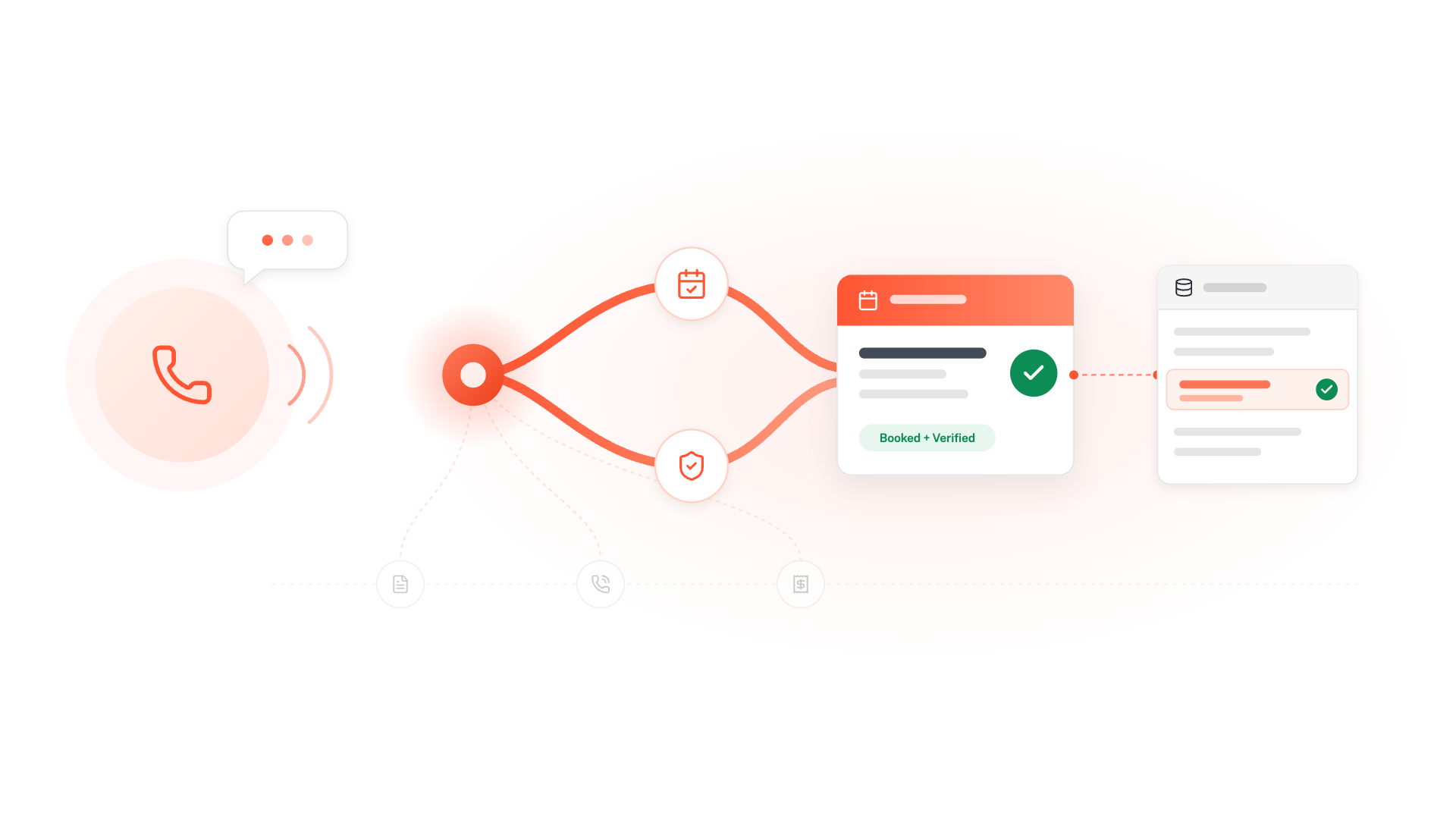
AI voice-enabled patient engagement now covers scheduling, benefits verification, prior auth, and billing calls in one system. See what to evaluate be
Compare 4 voice AI vendors for GI practices on colonoscopy scheduling, benefits verification, and prior auth calls. See which ones stop at booking.

Compare 5 AI voice agents for ENT and allergy practices. See which handle scheduling and the payer calls for prior auth and benefits checks.


