




Best Voice AI for Gastroenterology Practices: 4 Options Compared (2026)
Compare 4 voice AI vendors for GI practices on colonoscopy scheduling, benefits verification, and prior auth calls. See which ones stop at booking.

Patient calls are the lifeblood of any healthcare practice. From scheduling appointments to asking urgent medical questions, the phone is a critical connection point. But with healthcare organizations handling thousands of calls every day, this connection can easily become a bottleneck. Patients face long hold times, get bounced between departments, and grow frustrated. Staff feel overwhelmed, trying to manage a constant flood of calls while also caring for patients in the office.
It’s a major challenge, which is why nearly half of all healthcare executives rank call center upgrades as a top technology priority. The solution many are turning to is automated call routing in healthcare. This technology uses smart systems to manage, direct, and even resolve patient calls efficiently, creating a better experience for everyone.
This guide explores everything you need to know about automated call routing in healthcare, from the basic building blocks to advanced AI driven strategies that are reshaping patient communication.
Before diving into the technology, it’s important to understand the problem it solves. How do you know if your current phone system is holding you back? Assessing your practice’s needs is the first step.
Start by looking at the data and the human experience. Are patients complaining about long waits? Is your front desk staff constantly scrambling to keep up? Key metrics can reveal the hidden costs of an outdated system.
High Missed Call Rates: Even small clinics can miss up to 30% of their incoming calls during business hours, representing lost appointments and frustrated patients.
High Call Abandonment: The industry benchmark for abandoned calls is around 5% to 7%. If your rate is higher, it’s a clear sign that patients are giving up before they get help.
Negative Impact on Revenue: Missed calls are more than an inconvenience; they are missed revenue. One medical clinic discovered it was losing an estimated $950,000 per year from missed calls and appointments before upgrading its system.
If your practice is experiencing these issues, it’s time to consider a system designed to reduce call volume and handle inquiries more intelligently. An effective automated call routing in healthcare solution doesn’t just answer the phone; it ensures every call reaches the right destination quickly.
At its core, automated call routing in healthcare uses technology to direct incoming calls to the most appropriate person or resource without manual intervention from an operator. Let’s break down the key components.
Think of an automated contact center as the modern, tech powered version of a traditional call center. Here, a significant portion of interactions are handled by automated systems like AI voice agents or chatbots. This approach can slash operating costs by up to 30% by reducing the need for a large frontline staff. Instead of hiring more people to answer phones, you empower technology to handle routine requests, freeing up your team for more complex patient needs.
The most familiar piece of this puzzle is the Interactive Voice Response (IVR) system. This is the automated menu that greets callers with options like, “Press 1 for appointments, Press 2 for billing.” IVR systems qualify and distribute calls, but they can also be a source of major frustration for patients. In fact, 61% of consumers feel that a poorly designed IVR makes for a bad customer experience.
Most routing systems stop at distribution — they connect the call, but the real work still falls on staff. Platforms like Prosper AI take the next step by not just routing the patient, but handling the task itself. Instead of sending someone to a busy front desk, the voice agent can book the appointment, verify insurance benefits, collect missing information, or cancel and backfill a timeslot. This removes a major operational bottleneck and prevents calls from bouncing between departments.
Key advantages vs. traditional IVR:
No more phone tag or transfers between staff
No waiting for the “next available representative”
Higher first-call resolution because the task is completed immediately
Real-time writeback into the EHR or practice management system
This is the difference between “automating a menu” and automating the workflow.
The difference between a helpful IVR and a frustrating one comes down to call menu design. A poorly designed menu is a fast track to a hang up. Consider these shocking statistics:
65% of callers said their reason for calling was not even an option on the menu.
63% complained about having to listen to irrelevant options.
51% of consumers have abandoned a business entirely due to a frustrating phone menu.
Good design is simple. Keep menus short (no more than four or five options), use clear, patient friendly language, and always provide an easy way to reach a human operator.
Modern automated call routing in healthcare goes far beyond a simple “press 1, press 2” menu. It uses intelligent strategies to connect patients with the right resource on the first try.
Skill based routing directs calls to staff members based on their specific expertise. A clinical question goes to a nurse, a billing inquiry goes to a medical billing team, and a Spanish speaking patient is connected with a bilingual agent. This simple logic has a massive impact. It improves first call resolution because the patient isn’t transferred multiple times. This is critical, as 82% of consumers expect to resolve complex issues by speaking with a single person.
Skill-based routing gets the call to the right person, but smart platforms like Prosper AI go further. If the request is routine (appointment booking, cancellation, referral questions, benefits verification, self-pay quotes, etc.), the AI agent handles it. Only the edge cases escalate to staff. This preserves clinical time, keeps the schedule accurate, and reduces hold times dramatically.
In most implementations, this resolves 40–70% of inbound calls without human intervention.
This strategy directs calls based on the time of day or day of the week. Time based routing is the engine behind reliable after hours coverage.
When the clinic is closed, calls can be automatically forwarded to an on call provider, a nurse triage line, or an automated service that can schedule appointments for the next day. This ensures 24/7 coverage, which is vital for patient safety and satisfaction. Over 80% of patients prefer speaking to a live person after hours rather than waiting for the office to reopen.
For health systems with multiple locations, geographical routing sends callers to the clinic or office nearest to them. The system can determine the caller’s location based on their area code or by asking for a zip code, ensuring they connect with staff who understand their local facility.
Today’s best systems for automated call routing in healthcare include powerful features that offer patients more convenience, flexibility, and control.
Multilingual IVR Prompts: With over 20% of Americans speaking a language other than English at home, multilingual support is essential. Offering prompts in multiple languages ensures language barriers don’t prevent patients from accessing care.
Virtual Hold Callback: Nobody likes waiting on hold. A virtual hold callback feature gives callers the option to hang up, save their place in line, and receive a call back when an agent is free. Up to 75% of people prefer a callback to waiting on hold.
Call to Text Deflection: This feature offers callers the option to switch from a voice call to a text message conversation. It’s perfect for simple tasks like confirming an appointment or getting a link to pay a bill, and it frees up phone lines for more urgent issues.
Voicemail Transcription: This tool automatically converts audio voicemails into written text and sends them via email or secure message. Staff can quickly read and triage messages instead of listening to them one by one, speeding up response times.
Self Service Scheduling: Empowering patients to book, change, or cancel appointments through an automated phone system is a game changer. One healthcare network found that its automated system now handles 66% of all appointment cancellation calls without any human help.
For any call routing system to be truly effective, it must integrate seamlessly with your existing technology and workflows. This is where intelligent and secure call distribution becomes a reality.
Any technology that handles protected health information (PHI) must be HIPAA compliant. This is non negotiable. A compliant system includes safeguards like data encryption, secure data storage, and a willingness from the vendor to sign a Business Associate Agreement (BAA). The penalties for violations are severe, with fines reaching up to $50,000 for a single violation.
When your phone system connects directly to your Electronic Health Record (EHR), the magic happens. An AI agent or a human scheduler can book an appointment directly into the EHR in real time, eliminating double entry and preventing scheduling errors. This is crucial, as nearly 90% of patients in many specialties still book their appointments over the phone.
Screen pop integration automatically displays a caller’s information on an agent’s screen the moment a call comes in. The agent can immediately see the patient’s name, upcoming appointments, and reason for calling. This saves time and creates a smoother, more personalized experience for the patient.
Platforms like Prosper AI are built with deep, native integrations for over 80 EHR and practice management systems, ensuring that every call is informed by the right patient context. Learn more about how AI driven automation can streamline your practice.
Most solutions help route calls. Prosper AI helps finish them. That’s the operational leap clinics actually feel: fewer missed calls, fewer burned-out staff members, and fewer patients slipping through the cracks because the phone system couldn’t keep up.
If call routing answers the phone, Prosper solves the problem.
Implementing a new system is just the beginning. To truly optimize your patient communications, you need to measure what matters.
Modern platforms provide detailed call analytics and reporting. Dashboards can show you call volumes, average wait times, abandonment rates, and call reasons. This data allows you to spot trends, identify problem areas, and make informed decisions. For example, analytics might show that you need more staff available on Monday mornings or that your billing menu option is confusing callers.
First Call Resolution (FCR) is a critical metric that measures the percentage of calls resolved on the first attempt without a transfer or callback. High FCR is directly linked to high patient satisfaction. Low FCR means patients are frustrated and your staff is wasting time on repeat calls. Improving FCR should be a primary goal for any healthcare contact center.
Ready to make a change? Here’s a simple roadmap for moving forward.
Assess Your Needs: Start by analyzing your call data and gathering feedback from patients and staff. Identify your biggest pain points.
Choose the Right System: Look for a solution designed specifically for healthcare. Prioritize features like HIPAA compliance, deep EHR integration, and AI powered tools for tasks like scheduling and benefits verification. A partner like Prosper AI offers “battle tested” AI voice agents that can be deployed in weeks, not months.
Train Staff and Monitor Performance: Technology is a tool, and your team needs to be comfortable using it. Provide thorough training and use analytics to monitor performance and identify areas for improvement.
The goal of a modern automated call routing in healthcare system isn’t to replace humans but to empower them. By automating routine tasks, you free up your valuable staff to focus on what they do best: providing exceptional patient care.
If you’re ready to see how automated call routing in healthcare can reduce hold times, lower staff burnout, and create a better patient experience, it might be time to explore an AI powered solution. See how Prosper AI is helping practices transform their phone systems.
Automated call routing in healthcare is a technology that uses software to automatically manage and direct incoming patient phone calls to the appropriate destination, such as a specific department, a nurse, a self service menu, or an AI voice agent, without requiring a human operator.
It reduces wait times in several ways: by instantly directing calls to the right department, offering self service options for simple tasks like scheduling, providing virtual callbacks so patients don’t have to wait on hold, and handling multiple calls simultaneously with AI agents.
Yes, provided you choose a HIPAA compliant system. A secure system uses data encryption, access controls, and other safeguards to protect patient health information (PHI). Reputable vendors will always sign a Business Associate Agreement (BAA).
A basic IVR uses a rigid, touch tone menu (“Press 1, Press 2”). An AI voice agent is conversational. It uses natural language understanding to allow a patient to state their needs in their own words (e.g., “I need to schedule a follow up with Dr. Smith”) and can perform complex tasks like booking an appointment directly in the EHR.
Implementation time varies. A basic system could be set up quickly. More advanced, AI driven platforms with deep EHR integration, like those from Prosper AI, can often go live in just a few weeks, delivering value much faster than traditional enterprise software projects.
Absolutely. Modern systems with EHR integration allow patients to schedule, reschedule, or cancel appointments entirely through an automated, conversational AI voice agent over the phone, 24/7.
Discover how healthcare teams are transforming patient access with Prosper.
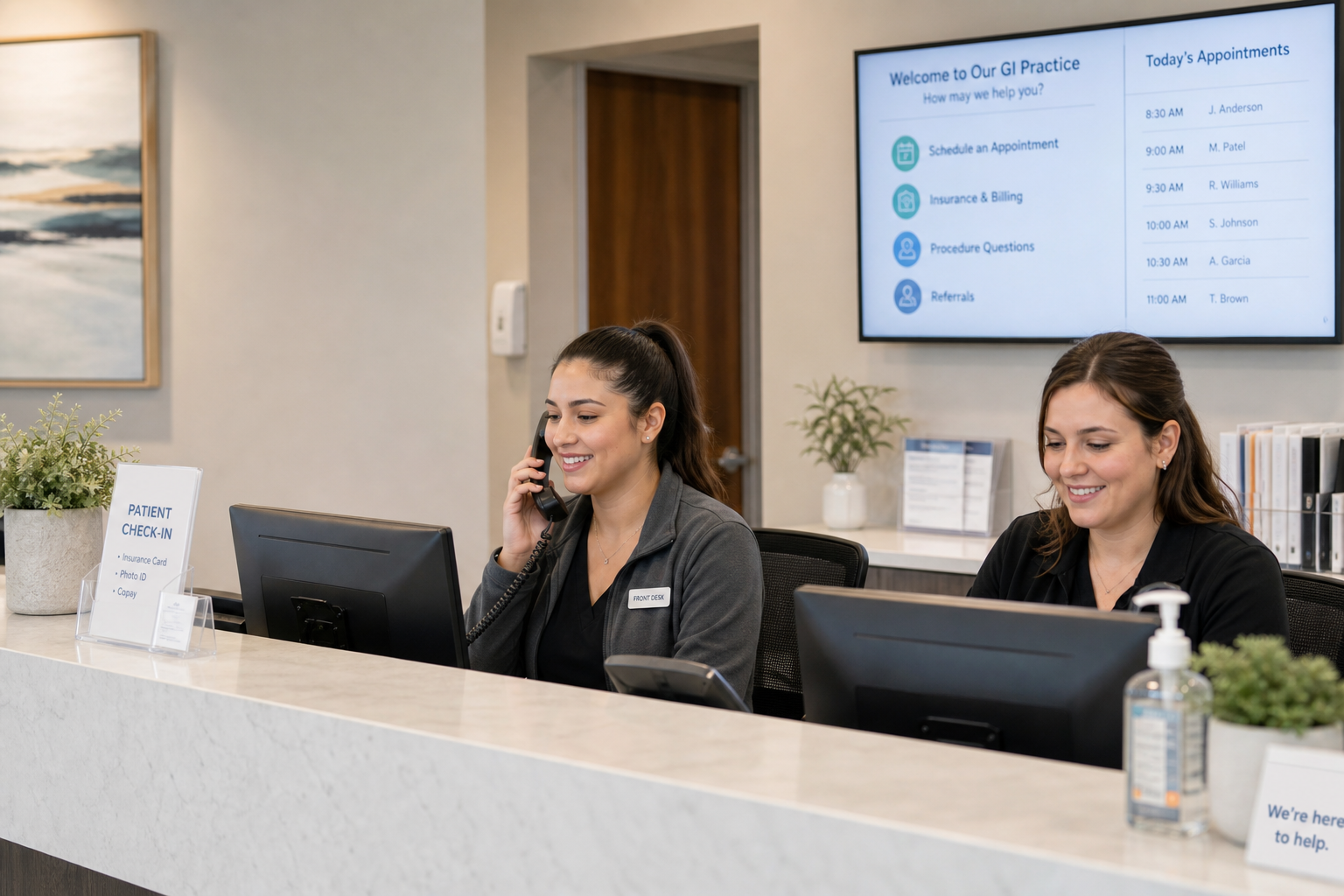
Compare 4 voice AI vendors for GI practices on colonoscopy scheduling, benefits verification, and prior auth calls. See which ones stop at booking.

Compare 5 AI voice agents for ENT and allergy practices. See which handle scheduling and the payer calls for prior auth and benefits checks.

Best AI agents for orthopedic practices compared on prior auth, outbound payer calling, and billing. Only 1 vendor resolves 60%+ of calls end-to-end.


