




Best Voice AI for Gastroenterology Practices: 4 Options Compared (2026)
Compare 4 voice AI vendors for GI practices on colonoscopy scheduling, benefits verification, and prior auth calls. See which ones stop at booking.

Waiting on hold with an insurance company feels like a time warp. For healthcare staff, it’s not just an annoyance, it’s a major bottleneck that costs time, money, and creates a frustrating experience for patients. This is where real time insurance eligibility verification changes the game. It swaps slow, manual checks for an instant, digital process that confirms a patient’s coverage in seconds.
Instead of phone calls and faxes, providers can use integrated software to send a patient’s details and get an immediate response on their coverage status, copay, and benefits. This is usually handled by a standard HIPAA 270/271 transaction, which is basically a digital way of asking a payer, “Is this patient covered?” and getting an answer right back. By confirming eligibility before a visit, clinics can catch issues upfront, prevent surprise bills, and stop claim denials before they ever happen.
Verifying insurance is one of the most critical steps in the healthcare revenue cycle. Why? Because mistakes at this stage are a leading cause of claim denials. Consider the numbers. Eligibility problems are the top reason for the roughly $262 billion in hospital claims that were initially denied back in 2016. The average hospital lost around $4.9 million a year just from these preventable issues.
Claim denial rates have been climbing, moving from 9% in 2016 to about 12% in 2022. The frustrating part is that over 85% of these denials are avoidable with better front end processes. In one analysis, a staggering 41% of all claim denials were traced back to front end errors in registration and eligibility.
Once a claim gets denied, it’s expensive to fix. Reworking a single denied claim costs providers an average of $118. Worse, about 60% of denied claims are never even resubmitted, which means that revenue is lost forever. Proper eligibility verification is the best defense against this revenue leakage. It protects the provider by ensuring services will be paid for, and it protects the patient from unexpected bills, making it a cornerstone of a healthy practice.
If it’s so important, why does verifying insurance cause so many headaches? Several common challenges can trip up even the most experienced healthcare staff.
Incorrect Patient Data: A simple typo in a name, birth date, or member ID can cause a search to fail. In fact, inaccuracies in patient demographics are responsible for about 26.6% of claim denials.
Multiple Insurance Plans: When a patient has primary and secondary insurance, figuring out the coordination of benefits (COB) is tricky. Billing the wrong insurer first is a guaranteed denial, and COB issues account for nearly 45% of denials related to registration.
Slow Manual Processes: Many offices still rely on calling insurers or logging into dozens of different payer websites. This is incredibly slow, with a single manual check taking anywhere from 30 to 45 minutes. For a busy clinic, this creates a major backlog.
Frequent Coverage Changes: Patients switch insurance plans more often than you’d think. About 5% to 10% of patients will have a change in their coverage between visits. If you don’t verify every single time, you risk billing an old, inactive policy.
Complex Payer Rules: Insurance policies are constantly changing. A service that was covered last year might need a prior authorization this year. Keeping up with the unique rules for every single payer is a huge burden for staff.
These challenges highlight why a seemingly simple task is actually quite complex. It’s not just about a yes or no answer; it’s about getting complete, accurate data in a timely manner.
Whether it’s done manually or with an automated system, the eligibility verification process generally follows these steps.
Collect Patient Information: At scheduling or check in, the front desk gathers the patient’s insurance card and personal details. This includes their name, date of birth, policy number, and group number.
Send an Electronic Inquiry (270 Transaction): The provider’s system formats this information into a standard HIPAA compliant message called an EDI 270 transaction. This is the official “question” sent to the insurer.
Transmit the Request: The 270 request is sent to the payer, often through a healthcare clearinghouse. A clearinghouse acts as a middleman, routing transactions to thousands of different insurance companies.
The Payer Processes the Request: The insurance company’s system receives the 270, finds the patient in its database, and pulls all the relevant benefit information.
Receive the Response (271 Transaction): The payer sends back an electronic response called an EDI 271. This message contains the answers, confirming if coverage is active and detailing the patient’s benefits, copays, and deductibles. With a real time insurance eligibility verification system, this entire exchange happens in seconds.
Review and Act on the Information: The provider’s staff (or their software) reviews the 271 response. They can now inform the patient of their copay, identify any needed referrals, or address coverage gaps before the appointment begins.
When this cycle is fully electronic and integrated, it becomes a seamless part of the check in process, happening in under a minute.
It’s helpful to compare the traditional manual workflow with a modern, real time approach.
Traditional (Manual) Verification is slow, reactive, and prone to error. Staff spend hours on the phone or navigating clunky web portals. A single phone call can easily take 30 minutes, and the information has to be manually typed into the patient’s record, introducing the risk of typos. This method is costly, with each manual check costing around $5.30 in staff time.
Real Time Verification is proactive, instant, and accurate. It uses technology to get answers in seconds for a fraction of the cost. Because it’s automated, it eliminates human error and frees up staff to focus on patient care. One study found that moving from manual to electronic verification saved the healthcare industry an estimated $12.8 billion annually.
Automation takes real-time insurance eligibility verification to the next level by removing human effort from the equation. Instead of an employee clicking a button, an automated system can handle the entire workflow. For instance, a practice management system can be set to automatically run an eligibility check for every patient on the schedule two days before their appointment.
The benefits are huge. Automation can save over 20 minutes of processing time and about $4.12 in costs for every single verification. It also boosts accuracy. While humans might achieve 70% to 80% accuracy when checking complex benefits, AI-powered systems can reach up to 96% accuracy. This means fewer errors and, ultimately, fewer denials.
Emerging technologies are making this even easier. AI voice agents, for example, can automatically call insurance companies, navigate their phone menus, and get eligibility details when an electronic connection isn’t available. These virtual assistants act like a digital employee, handling the tedious phone work so your staff doesn’t have to.
Client Insight: Solutions from Prosper AI are a great example of this. Their AI voice agents can call payers to verify benefits with 99% accuracy and deliver the structured data back into a clinic’s system in under two hours. This level of automation turns a difficult, time consuming task into a streamlined, hands off process.
The true power of automation is unlocked when it’s integrated directly into your Electronic Health Record (EHR) or Practice Management System (PMS). With an integrated solution, staff never have to leave their primary software.
No More Double Entry: The system automatically sends patient data for verification and writes the results back into the patient’s chart.
Automated Batch Checks: The PMS can run eligibility checks for all scheduled patients overnight, giving staff a clear report of any issues first thing in the morning.
Seamless Workflow: A “Verify Insurance” button right in the EHR makes on demand checks effortless. This tight integration can reduce administrative work by up to 60%.
An integrated real-time insurance eligibility verification process ensures that accurate, up to date coverage information is always just a click away, embedded right where your team works.
Adopting a real-time process delivers powerful benefits for providers, especially health systems, staff, and patients.
Fewer Claim Denials: This is the biggest win. By catching eligibility issues upfront, you prevent denials before they happen. One orthopedic practice saw its denial rate fall from 11% to just 4% after implementing real time checks.
Improved Cash Flow: With fewer denials, payments come in faster. The same practice saw their average time to get paid drop from 45 days to just 26 days. Faster payments and fewer unpaid claims create a healthier, more predictable revenue stream.
A Better Patient Experience: Nobody likes surprise medical bills. Real time verification allows you to provide patients with clear, upfront cost estimates. In fact, 75% of patients say that knowing their out of pocket costs beforehand influences their choice of provider. Transparency builds trust and reduces billing disputes.
Increased Staff Efficiency: Automating tedious tasks reduces administrative burden and burnout. Your team can be reallocated to more valuable, patient facing activities instead of spending their days on hold with insurance companies.
Real-time insurance eligibility verification is a provider’s best defense against claim denials. Since eligibility errors are the number one cause of denials, fixing the verification process at the front end has an immediate and dramatic impact.
When you verify coverage before treatment, you confirm several key things:
The patient’s policy is active on the date of service.
The specific service is covered under their plan.
You have the correct member and group ID.
A referral or prior authorization is not needed.
Catching a problem in any of these areas allows you to fix it before submitting a claim. Maybe the patient has a new insurance card, or maybe a referral needs to be obtained. Resolving these issues proactively prevents a claim from being automatically rejected. A multi specialty group that improved its upfront verification process was able to reduce its claim denials by 40% in just a few months. That’s a powerful testament to the impact of getting it right from the start.
To get the most out of your eligibility workflow, follow these proven best practices.
Verify Early and Often: Check insurance once when the appointment is scheduled and again at check in. This two step process catches any last minute changes. Remember to verify coverage for every patient at every visit, even established ones.
Get Complete and Accurate Data: Train staff to double check every detail, from the spelling of a patient’s name to their date of birth. Small errors can cause big problems.
Leverage Technology and Automation: Use an integrated solution to automate checks and reduce human error. If you’re looking to offload the entire process, explore how AI powered solutions can handle this for you.
Go Beyond Basic Coverage: Don’t just check if a policy is active. Verify the specific benefits for the scheduled service, including the copay, remaining deductible, and coinsurance amounts.
Check for Authorizations: The eligibility response will often note if a service requires prior authorization. Make it a routine to check for this and initiate the authorization process immediately.
Document Everything: Ensure the verification results are documented in the patient’s record. This creates an audit trail and keeps everyone on the same page.
For those interested in the technology, electronic verification relies on a few key concepts.
Traditionally, verification uses a format called X12 EDI. The provider sends a 270 request, a structured text file containing the patient, provider, and payer information. The payer responds with a 271 response, another text file with the benefit details. While effective, EDI is a legacy format that can be complex to work with directly.
Today, many modern systems use an API (Application Programming Interface) submission. This allows a provider’s software to communicate with a verification service using a more modern format like JSON. The API call still triggers a 270/271 exchange in the background, but it shields the user from the complexity of EDI.
A typical JSON request body for an eligibility check includes basic elements like:
Patient’s Name, Date of Birth, and Member ID
Payer ID (to identify the insurance company)
Provider’s NPI (National Provider Identifier)
Date of Service
What if you don’t know who the patient’s insurer is? Payer discovery services can help. These tools take a patient’s demographic information and search across a network of payers to find a match, often returning results in under two minutes.
Before you can send electronic requests, however, you must complete transaction enrollment. This is a one time setup process where a provider registers with each payer (or a clearinghouse) to become an authorized trading partner. Once enrolled, you can send and receive transactions freely. This is followed by a round of testing to ensure your system can properly format requests and interpret responses.
Because eligibility verification involves Protected Health Information (PHI), strict adherence to HIPAA is mandatory. For a quick checklist of what to look for in HIPAA‑compliant AI, see this guide. Key security considerations include:
Using HIPAA mandated standard transactions (270/271).
Ensuring all data is encrypted both in transit (using HTTPS) and at rest.
Implementing strong access controls so only authorized staff can view patient data.
Having a Business Associate Agreement (BAA) in place with any third party vendors who handle PHI.
A compliant real time insurance eligibility verification process protects patient privacy while delivering the efficiency your practice needs.
A comprehensive eligibility response provides more than just an active or inactive status. It delivers a wealth of key data elements, including:
Coverage Status: Confirms if the policy is active and provides the effective start and end dates.
Patient Financials: Details the copay, remaining deductible, and coinsurance percentages.
Plan Details: Outlines what services are covered, any benefit limits (like 20 physical therapy visits per year), and policy exclusions.
Authorization Requirements: Notes if a referral or prior authorization is needed for certain services.
Network Status: Confirms if the provider is in network or out of network for the patient’s plan.
Having this detailed information empowers your staff to have clear financial conversations with patients and ensures your billing team has everything they need to submit a clean claim.
1. What is real-time insurance eligibility verification?
It is the process of instantly checking a patient’s health insurance coverage using electronic systems. Instead of making phone calls, staff can submit a patient’s information digitally and receive an immediate response detailing their benefits, copay, and deductible status.
2. How does automation improve eligibility checks?
Automation handles the verification process with minimal human intervention. Systems can be set to run checks automatically for all scheduled appointments, reducing staff workload, eliminating manual errors, saving time, and cutting costs. Advanced tools like AI voice agents can even automate the phone calls to payers.
3. Why is verifying insurance so crucial for preventing claim denials?
Eligibility errors are the leading cause of claim denials. By verifying coverage before a service is provided, you can catch and correct issues like an inactive policy, incorrect patient ID, or a missing authorization. This ensures claims are accurate before they are submitted, dramatically increasing the first pass payment rate.
4. What information is needed for an eligibility request?
The basic elements required are the patient’s name, date of birth, and insurance member ID; the insurance company’s name or payer ID; the provider’s NPI; and the date of service.
5. Is electronic eligibility verification secure and HIPAA compliant?
Yes. When done correctly, it is fully compliant. The process uses HIPAA mandated transaction formats (X12 270/271) and requires that all patient data be protected with strong encryption and secure access controls. It is essential to partner with vendors who prioritize security and will sign a Business Associate Agreement (BAA).
6. How quickly can I get results from a real time eligibility check?
An electronic, real time check typically returns a response in seconds. This speed allows staff to verify coverage on demand while the patient is scheduling an appointment or standing at the check in desk.
7. Can I check for specific benefits, like dental or physical therapy?
Yes. An eligibility request can be tailored to inquire about specific service types. The response will then provide detailed coverage information for that particular benefit, including any limitations or authorization requirements.
8. What’s the difference between a manual and a real time workflow?
A manual workflow relies on slow, labor intensive phone calls and website lookups, making it prone to errors and delays. A real time insurance eligibility verification workflow is automated, instant, and integrated, providing accurate results in seconds while freeing up staff for more important tasks. Transforming your practice starts with embracing these modern tools. If your team is still buried in manual calls, get started to see how an AI solution can help.
Discover how healthcare teams are transforming patient access with Prosper.
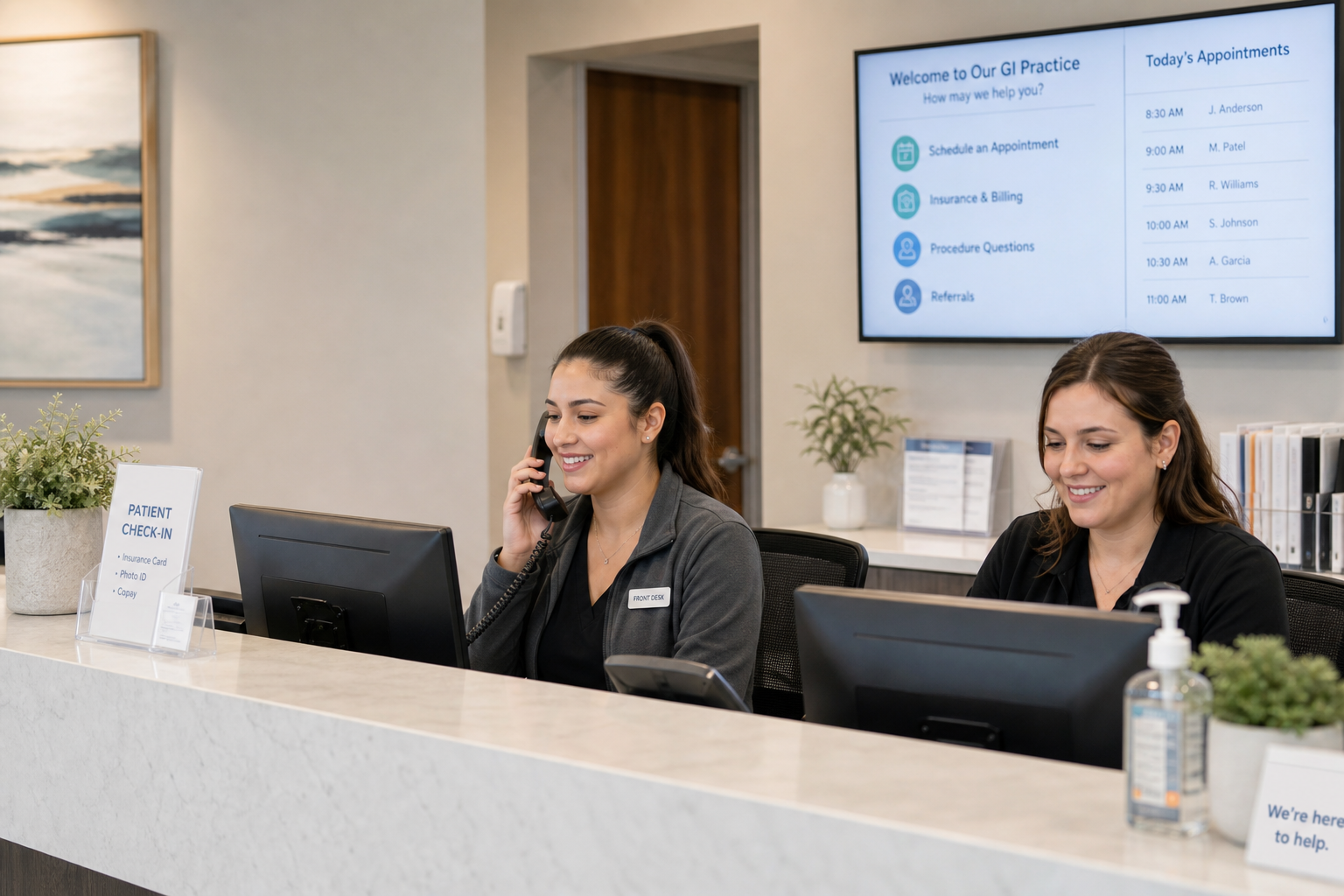
Compare 4 voice AI vendors for GI practices on colonoscopy scheduling, benefits verification, and prior auth calls. See which ones stop at booking.

Compare 5 AI voice agents for ENT and allergy practices. See which handle scheduling and the payer calls for prior auth and benefits checks.

Best AI agents for orthopedic practices compared on prior auth, outbound payer calling, and billing. Only 1 vendor resolves 60%+ of calls end-to-end.


